


Georgian Wooden Plinth
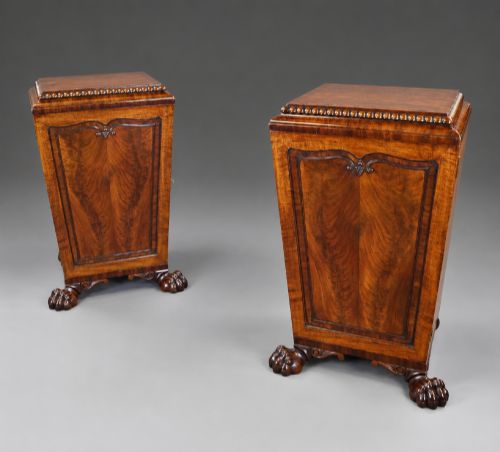
A georgian wooden plinth gives elevation to sculpture, display objects and standing figures with solid presence.
Georgian Wooden Plinth
A georgian wooden plinth provides a raised platform or support column for display items, sculpture and architectural elements. These pieces anchor decorative arrangements within a room by adding vertical scale and distinct form.
The selections encountered here span carved triform designs, column stands and sturdy display pedestals dating across the eighteenth and nineteenth centuries. Alongside dedicated pedestals, related forms appear in timber furniture and architectural supports.
Originating largely from the Georgian era and subsequent revival periods, these supports demonstrate the functional craftsmanship required to bear weight securely while presenting decorative objects to advantage.
Construction and materials
Makers utilised dense timbers such as mahogany, chestnut and painted wood to construct these pedestals and display stands. Flame mahogany veneer occasionally adds patterned surface movement over solid timber carcases.
Joinery techniques relied on sturdy internal framing and stable block construction to ensure the upper surface remains completely level under heavy loads. Selected pieces incorporate carved detailing, column shaping and painted or simulated marble finishes.
One remarkably specific nineteenth-century model replicates a muzzle-loaded field gun entirely in miniature.
Judging quality in pedestals
Superior examples reveal crisply carved detail, balanced proportions and heavy timber selection that prevents any wobble. The integrity of the internal structure dictates whether a tall column remains stable over decades of use.
Surface finish also separates standard utility stands from finer display pieces, particularly where original paint, simulated marble effects or polished timber patination survive intact.
Mawer & Stephenson·Freeman
The Georgian Wooden Plinth Glossary
- Plinth
- A heavy base or support block that elevates a statue, vase or column. It provides a stable footing on the floor.
- Triform
- A three-sided base or pedestal design offering distinct triangular symmetry. This layout ensures balance for central upward loads.
- Torchere
- A tall stand or ornamental pedestal originally designed to hold a candle or torch. The form evolved into a slender display pillar for decorative urns.
- Pedestal
- An upright architectural support or pillar used to raise an object above floor level. They appear in square, hexagonal and turned column profiles.
Georgian Wooden Plinth: Frequently Asked Questions
What holds up a georgian wooden plinth?
These pieces rely on solid timber construction, heavy internal framing and stable base platforms to distribute weight safely across the floor.
Larger columns and triform supports use engineered joinery to ensure the top surface remains level under heavy sculptures or display items.
How do I style a pedestal at home?
Position a stand in an empty corner, hallway or flanking a fireplace to introduce vertical interest and architectural punctuation.
Place a single sculptural object, urn or heavy ceramic vessel on top to let the combination of support and item draw the eye.
Are these pedestals solid mahogany?
Many examples utilise solid mahogany, chestnut or painted timber throughout their main structural columns and bases.
Certain pieces incorporate flame mahogany veneer over stable secondary woods to achieve decorative surface figure.
How do I identify a georgian period stand?
Examine the timber species, joinery methods and decorative vocabulary such as column fluting or carved triform feet.
Compare the proportions and surface patination against documented examples from the eighteenth and early nineteenth centuries.