


Cherub Carved Stand
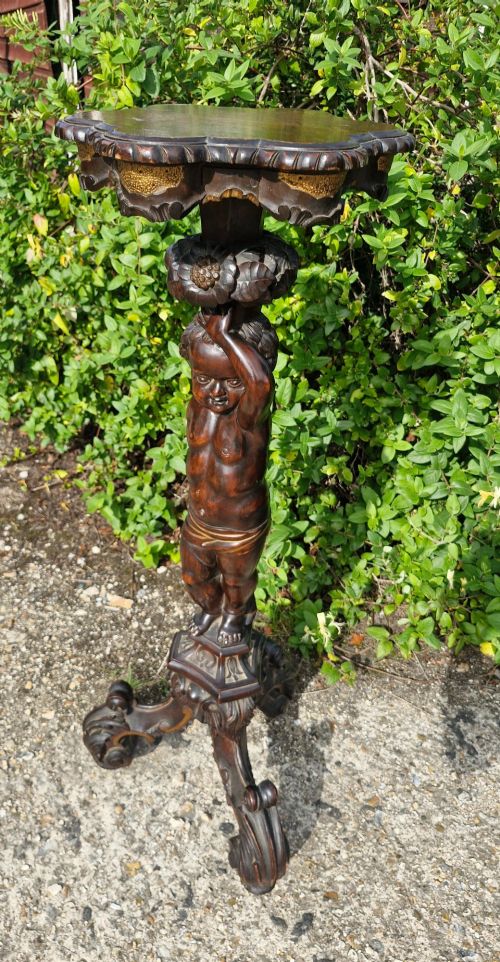
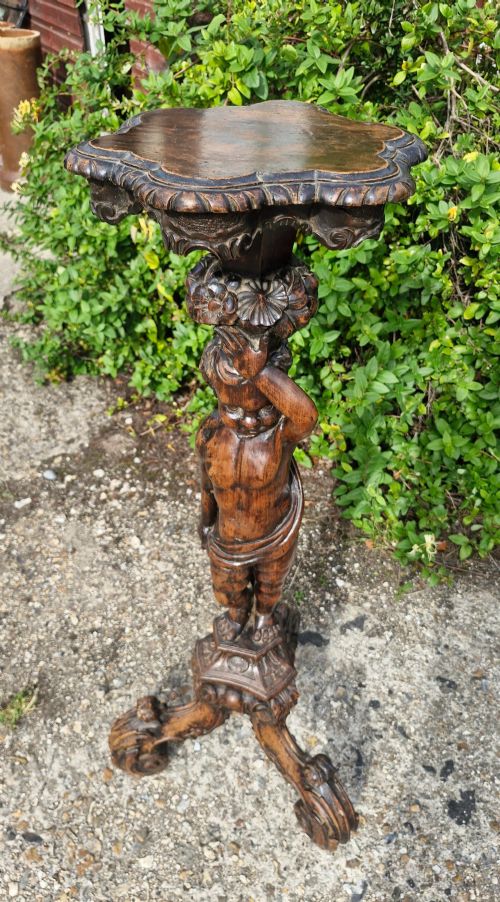
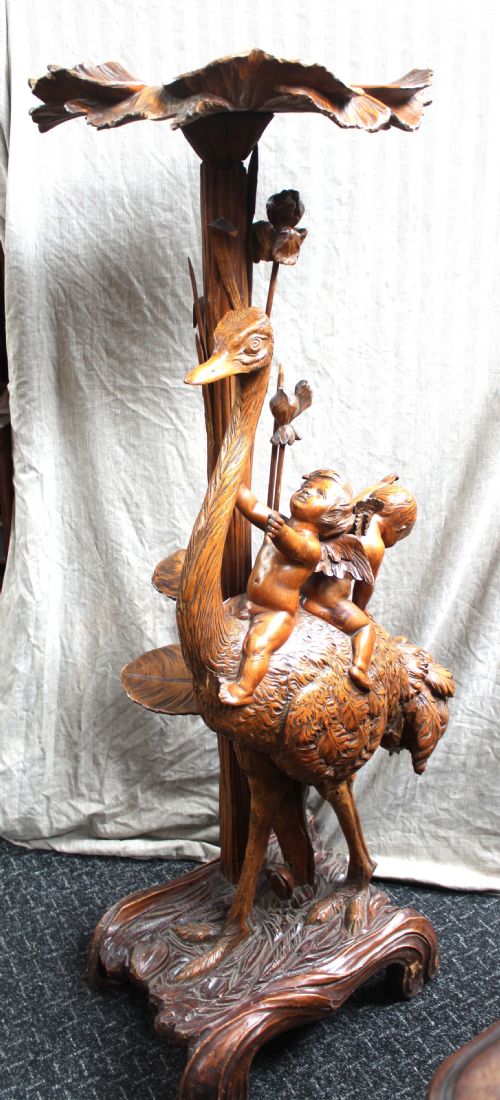
These cherub carved stand pieces bring carved timber and putti into a room with striking presence.
Cherub Carved Stand
A cherub carved stand takes the form of a pedestal, torchiere, or plant stand modelled with figures of putti or winged angels. These furnishings serve to elevate sculpture, lamps, or decorative objects within a grand interior scheme.
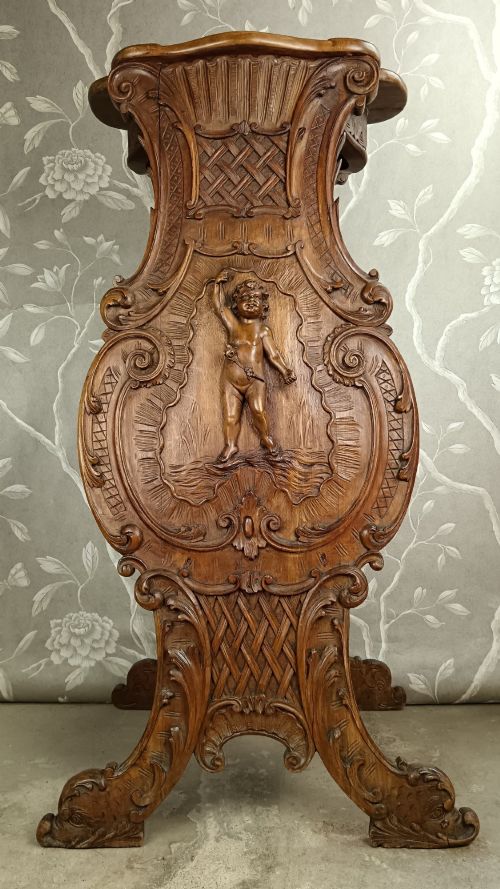
The most common examples on this page hail from nineteenth-century Italy, adopting revival styles inspired by the Renaissance and Baroque periods. Walnut and lime wood predominate, carved with considerable sculptural depth to form the supporting columns and bases.
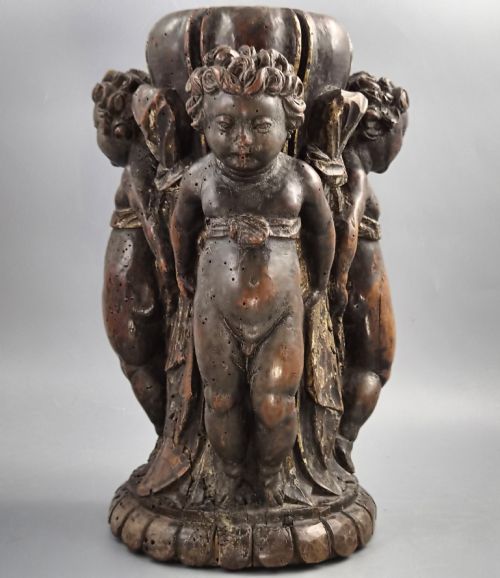
Beyond domestic plant stands and pedestals, related forms appear as pricket candlesticks and reading stands incorporating carved figures. Each piece unites utilitarian support with exuberant figural carving.
How they were made
Makers shaped these stands from dense hardwoods such as walnut, oak, and lime wood using traditional chisels and gouges to achieve deep undercut reliefs. The figures of putti emerge directly from the timber columns or support the upper capitals in architectural mimicry.
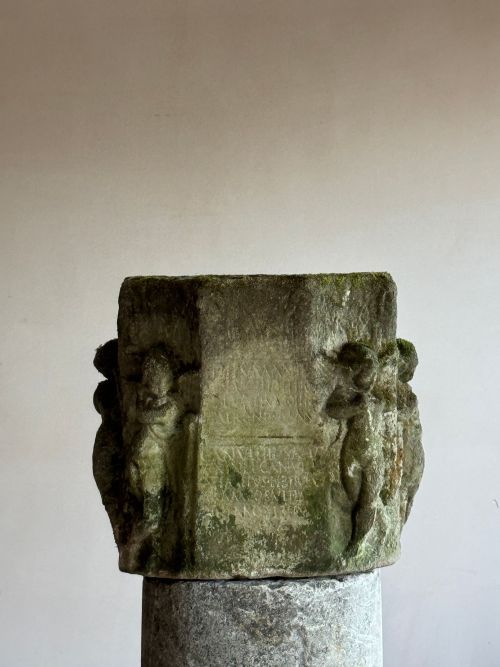
Selected surfaces receive applications of gold leaf to highlight specific decorative mouldings and figural details against the dark grain of the wood. Where stone variants appear, cast stone and reconstituted stone replicate the weight and texture of classical Roman altars.
Some winged putti bear expressions of profound mischief, having silently held up heavy lamps through generations of household commotion.
What varies in quality
Anatomy and expression separate the finer carvings from routine workshop production. The best examples render the limbs, faces, and hair of the putti with anatomical realism and fluid movement rather than stiff repetition.
The choice of material and depth of relief dictate the visual weight of the stand. Dense walnut and finely grained lime wood allow for crisper details that hold their definition across centuries.
The Cherub Carved Stand Glossary
- Putto
- A plump, naked male child figure often winged, frequently seen carved on Italian furniture and pedestals. These figures derive from classical art and Renaissance revivals.
- Torchiere
- A tall stand or candlestick designed to hold a light source. In carved wood, the shaft often takes the form of a twisted column or figural stack.
- Pricket stick
- A candlestick featuring a central spike upon which a candle is impaled. Older ecclesiastical examples often incorporate carved wooden figures into the stem.
- Renaissance Revival
- A nineteenth-century style drawing heavily on fifteenth- and sixteenth-century Italian motifs. Stands in this taste employ classical architectural orders combined with exuberant figural carving.
Cherub Carved Stand: Frequently Asked Questions
What holds up a cherub carved stand?
The structural support usually relies on a sturdy central wooden column or clustered figures of putti surrounding a core shaft. A solid circular or square base anchors the entire weight to the floor.
Heavier items utilise dense walnut or oak to ensure stability when supporting sculptures or heavy vases on the top platform.
Where do these stands originate?
The majority of these pieces originate from Italy, reflecting long traditions of woodcarving that extended from the seventeenth century into the nineteenth century. Workshops in Venice and other regional centres produced elaborate torchieres and pedestals for grand domestic interiors.
Revival movements later in the Victorian era continued these Italianate designs for British homes.
How do I care for carved wood?
Maintain the timber by keeping it away from direct heat sources and sudden humidity changes that can cause wood to split. Dust the intricate carvings gently with a soft brush to prevent dirt accumulation in the recesses.
Avoid modern liquid polishes, relying instead on occasional applications of appropriate wax to nourish the grain.
How are different periods told apart?
Seventeenth- and eighteenth-century pieces display the tool marks and patination native to active working periods of Baroque design. Nineteenth-century examples often employ revival styles that mirror earlier eras but reveal machine assistance or different timber preparation.
Examining the depth of the carving and the oxidation of the wood helps distinguish original age from later revivals.