


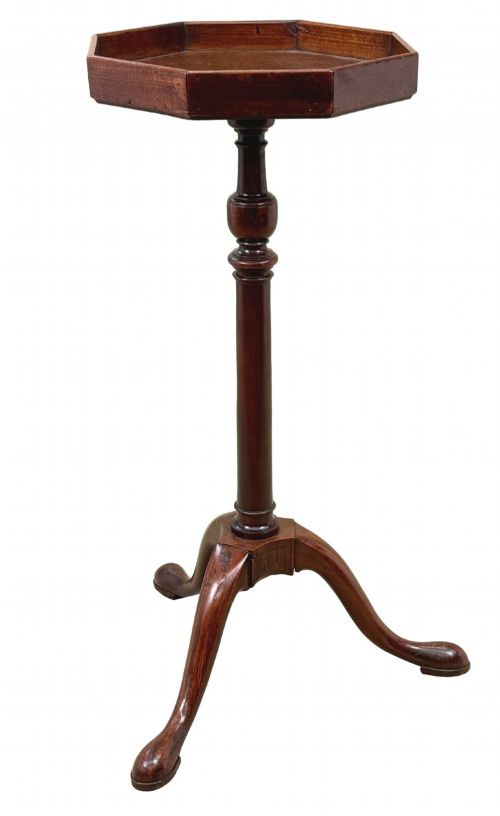


Vintage Tripod Torchere
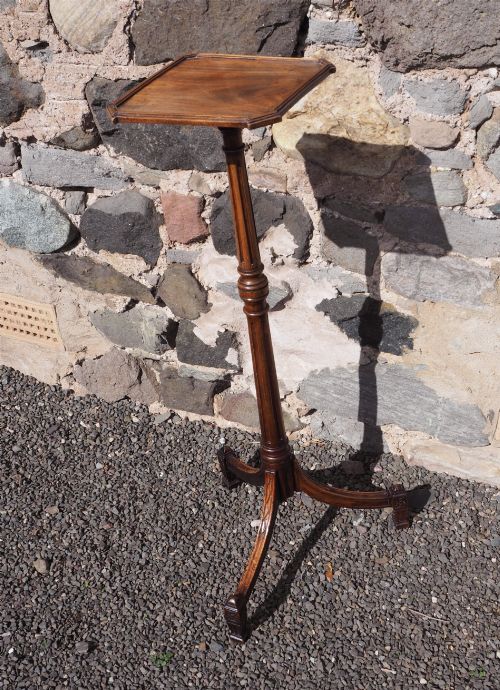
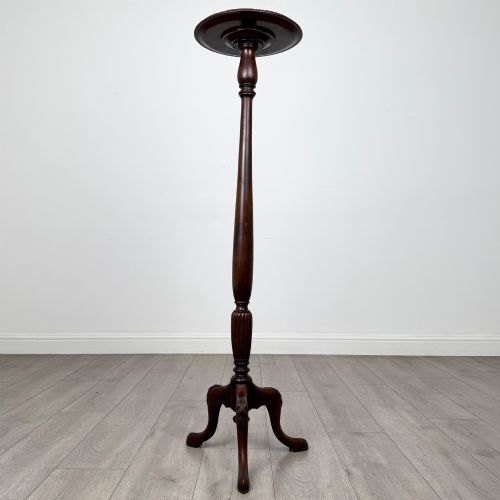
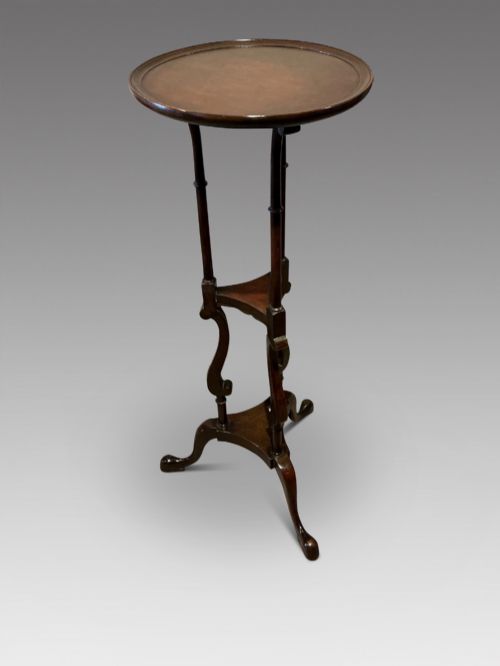
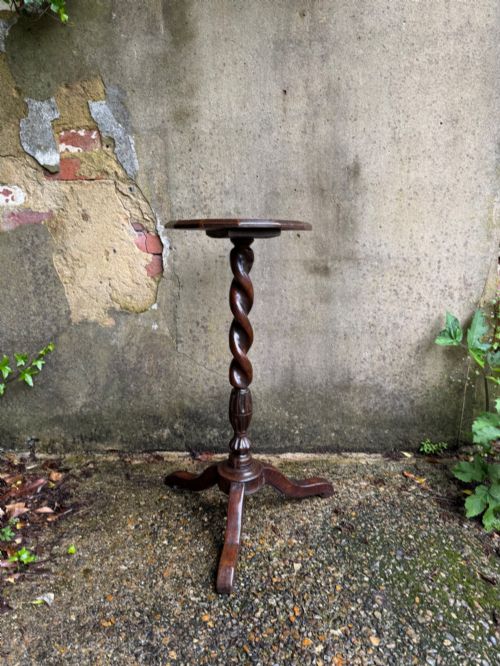
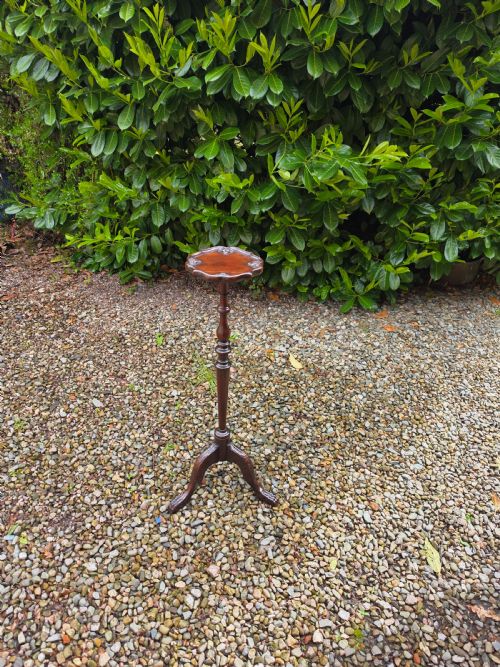
A vintage tripod torchere brings height and architectural presence to a corner, functioning historically to elevate a candle or lamp.
Vintage Tripod Torchere
A vintage tripod torchere is a slender, elevated stand designed to hold a light source, plant, or decorative object above floor level. These pieces serve primarily to draw the eye upward and fill empty vertical spaces within a room.
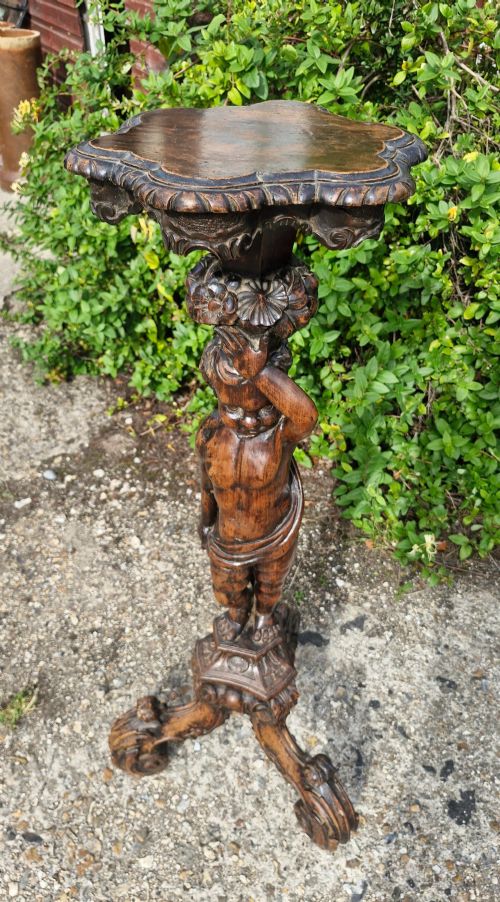
The selections available here span several centuries and movements, including Georgian, Edwardian, and Victorian eras, alongside revivals like William IV and Italian Baroque. Mahogany remains the most common primary material, accompanied by oak, walnut, hardwood, brass, and giltwood.
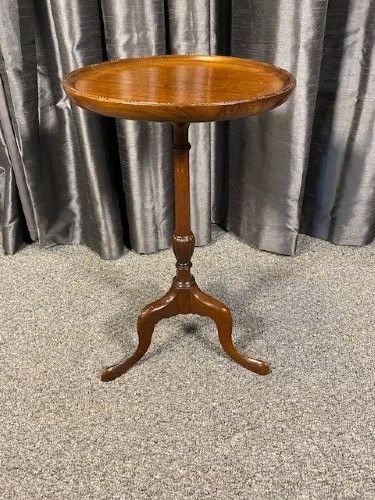
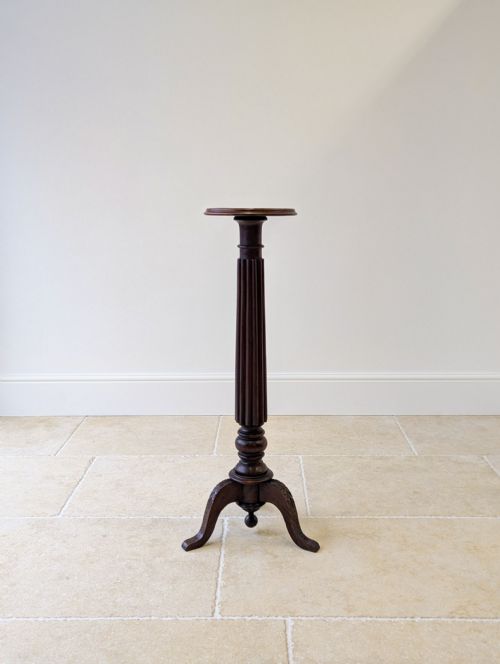
Forms range from dedicated candle stands and floor lamps to plant stands, tall jardiniere holders, and occasional side tables. Buyers frequently encounter pieces configured as slim pedestals supported by three distinct legs.
Materials and construction methods
Cabinetmakers constructed these stands using dense timbers such as mahogany, oak, and walnut, frequently selecting carved wood for decorative columns and tripod bases. Brass fittings and gold leaf applications occasionally provide metallic contrast and surface enrichment.
Joinery techniques focus on stability, ensuring slender shafts and three-legged bases support heavy items safely. Carved knees, turned columns, and detailed surface moulding reflect the prevailing aesthetic of each period, from Georgian restraint to Italian Baroque elaboration.
Functional forms include dedicated candle stands, plant stands, floor lamps, and tall occasional tables.
Differentiating quality across pieces
Quality rests in the crispness of the carving on the knees and columns, as well as the architectural proportion of the tripod base relative to the height of the shaft. Timbers selected for rich grain patterns and deep natural patination elevate an example above standard utility pieces.
Structural integrity dictates the longevity of these tall, slender forms. A well-balanced base that prevents wobbling indicates superior initial joinery and careful preservation over time.
The Vintage Tripod Torchere Glossary
- Torchere
- An ornamental stand designed to support a light, candle, or decorative vessel. The form originated to illuminate dark rooms before electric lighting.
- Tripod base
- A three-legged support structure that provides stability for tall, narrow furniture. This configuration ensures the stand remains balanced on uneven floors.
- Giltwood
- Timber treated with a thin layer of gold leaf or metallic paint. This finish creates a reflective surface that catches candlelight.
- Jardiniere stand
- A tall piece of furniture built to hold a plant pot or flower arrangement. These items share similar vertical proportions with traditional candle stands.
- Patina
- The surface sheen and colour acquired by wood through age, use, and polishing. Collectors value this natural indicator of antiquity.
Vintage Tripod Torchere: Frequently Asked Questions
What is a tripod torchere used for today?
These stands function well in corners or beside seating to display table lamps, heavy plants, or decorative pottery without occupying valuable floor space. Their slender profiles allow them to integrate easily into existing room layouts.
Historically designed for candlelight, modern interiors utilise them to introduce varied heights and vertical geometry into living areas and hallways.
How do I ensure a tall torchere is stable?
Place the stand on level flooring and verify that all three legs make firm contact with the surface. Distributing weight evenly across the top platform prevents tipping.
Heavier items placed at the base of the display or choosing pieces with wider tripod spreads naturally increase overall balance.
Can these stands support heavy lamps?
Most solid hardwood examples easily accommodate standard table lamps and decorative vessels. The key is matching the footprint and weight capacity of the stand to the item placed upon it.
Checking the rigidity of the central column and the tightness of the leg joints ensures the piece handles the load safely.
How do I identify a Georgian style torchere?
Georgian and Georgian Revival pieces typically feature classic proportions, dark mahogany timbers, and refined carving details such as carved knees or fluted columns. They reflect the architectural symmetry popular during the eighteenth century.
Later revival versions emulate these characteristics while exhibiting the structural traits of nineteenth or early twentieth-century workshop practices.