
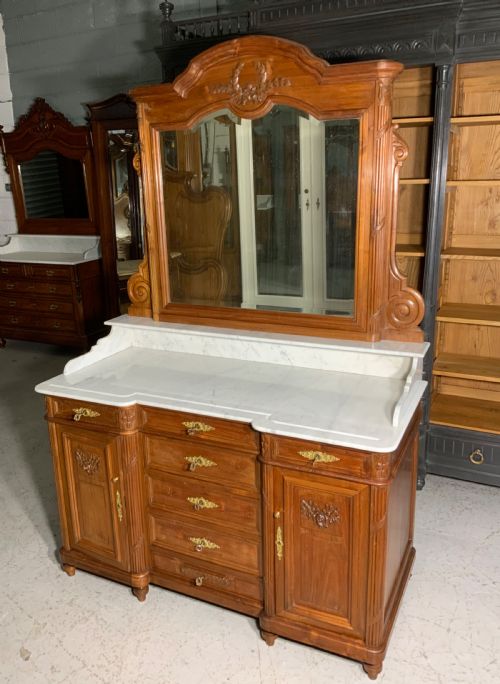
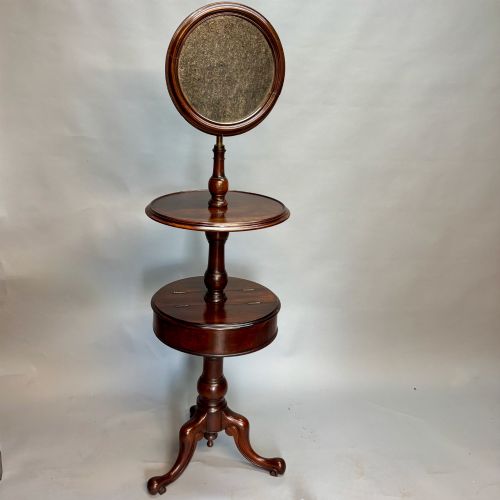
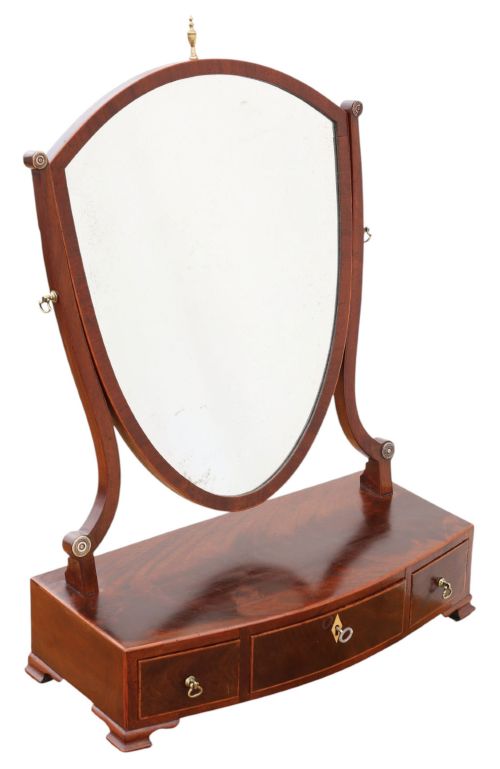
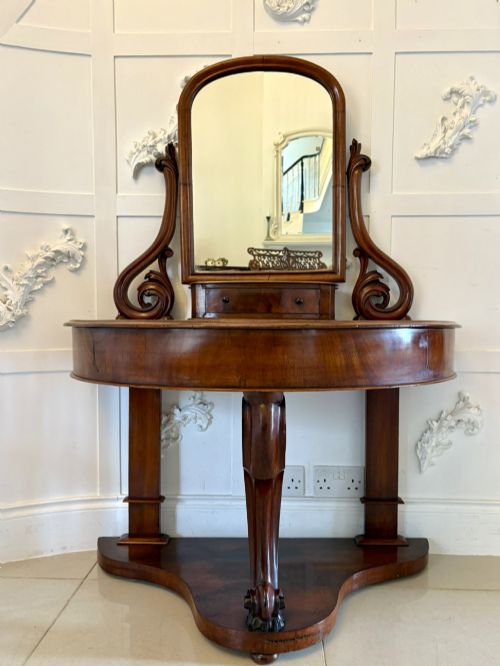
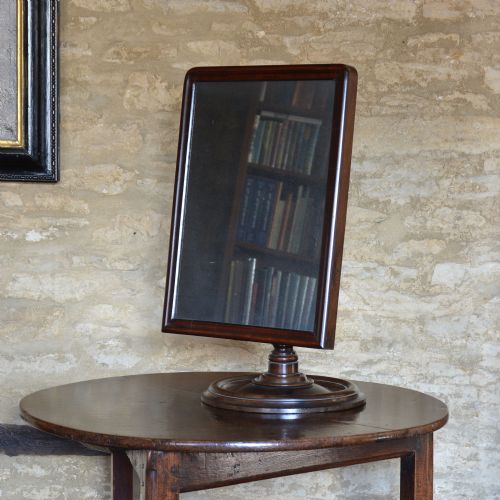
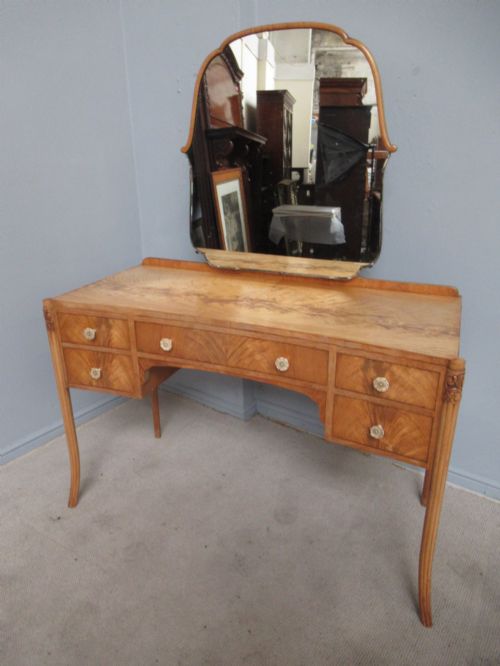
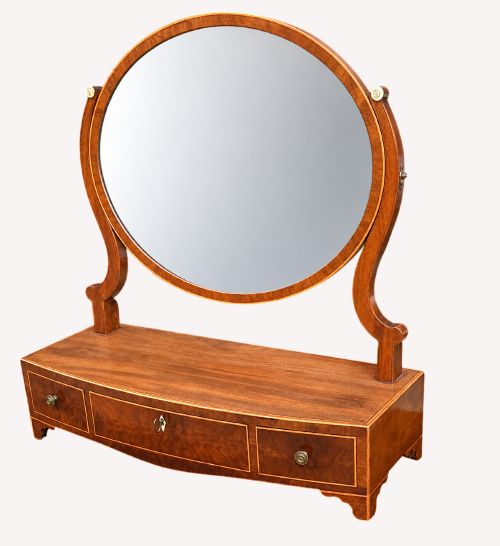
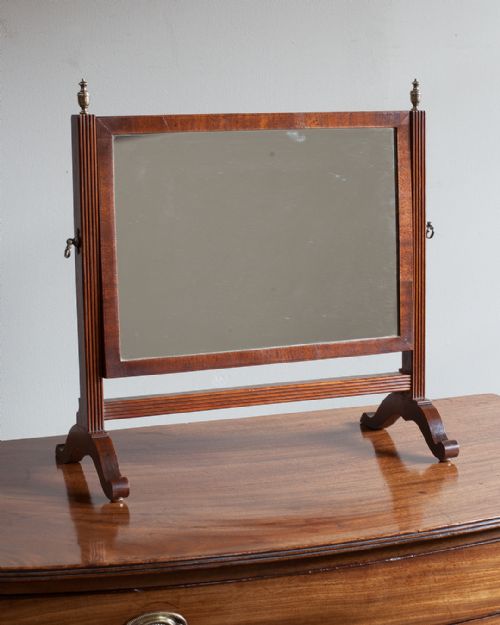
Vanity Table with Mirror
A vanity table with mirror organises personal grooming, bringing polished mahogany, walnut and fitted glass to the bedroom.
Vanity Table with Mirror
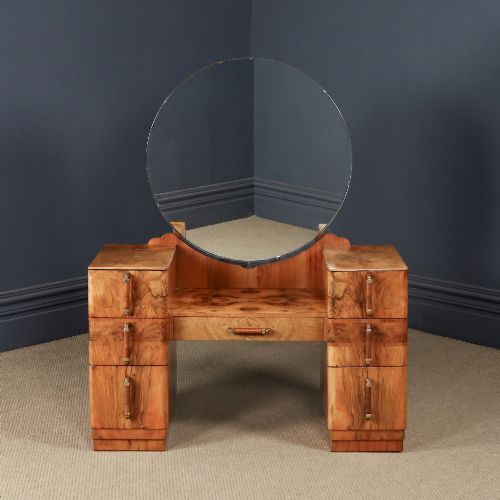
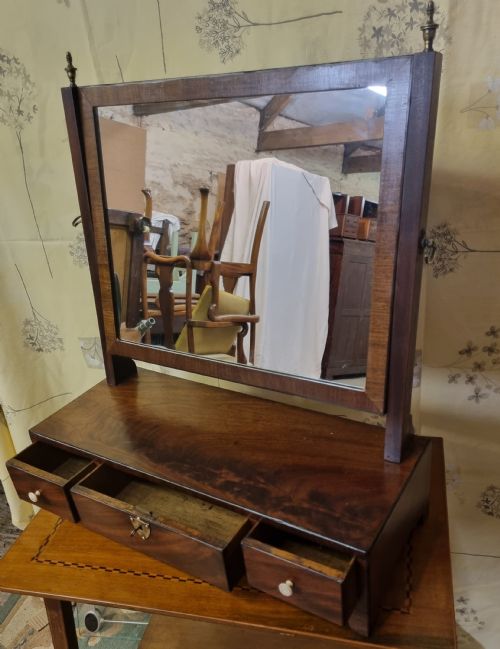
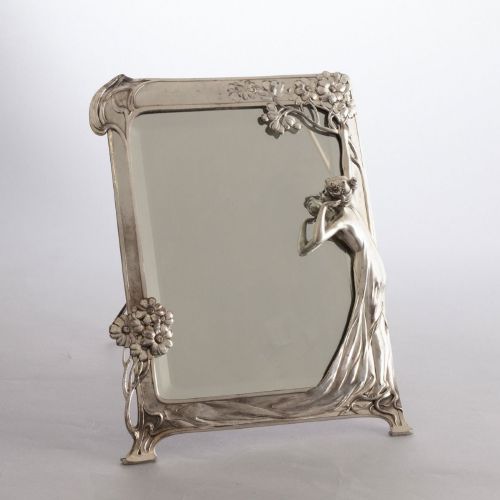
A vanity table with mirror encompasses large pedestal dressing tables and compact tabletop swing glasses from the eighteenth century to the art deco period.
Georgian and Victorian examples rely on rich mahogany and walnut timbers, whilst later nineteenth and early twentieth century pieces introduce oak, maple, and mirrored glass.
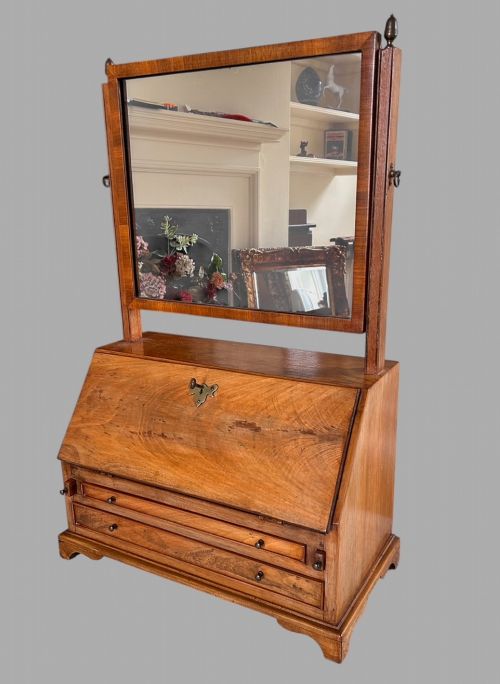
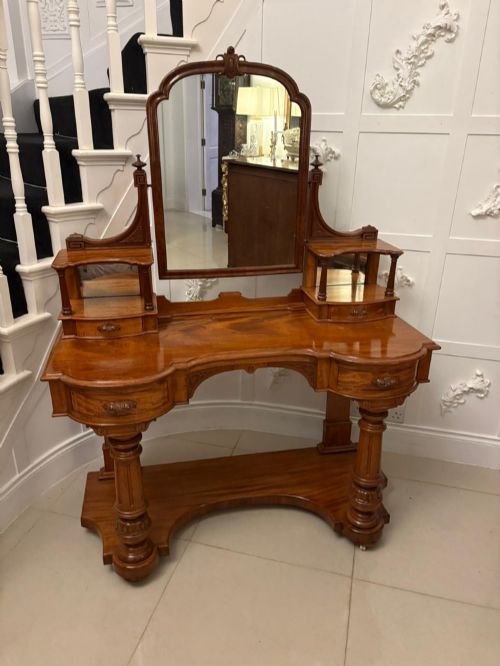
Buyers encounter everything from simple box mirrors with small drawers to elaborate duchess tables fitted with triple glass panels and matching stools.
Materials and construction
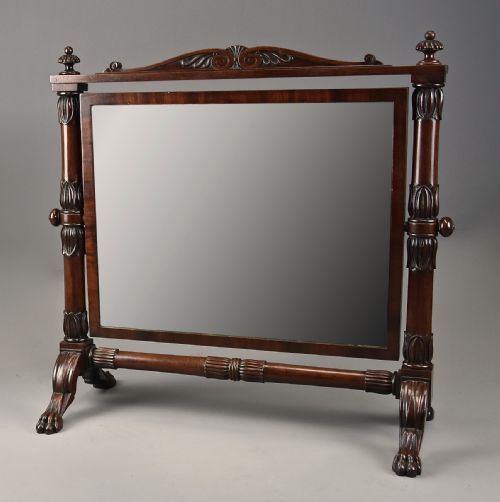
Cabinetmakers select solid and veneered timbers including mahogany, walnut, burr walnut, and satinwood, often pairing them with brass handles and adjustable mirror frames.
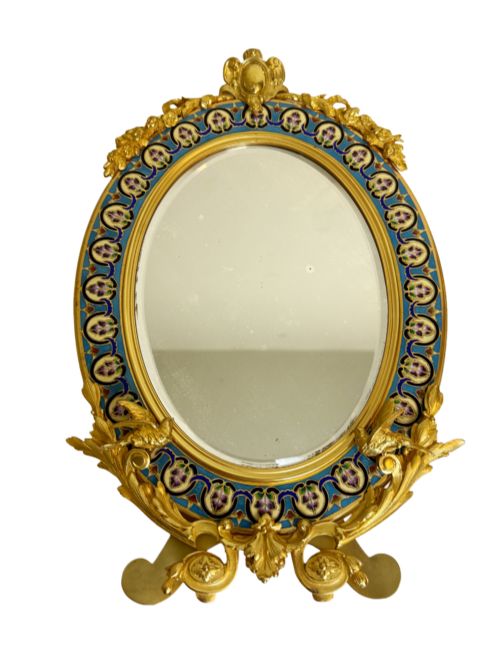
Surfaces feature figured wood grains and delicate carved details, whilst glass elements rely on traditional silvering techniques set within pivoting wooden or ormolu mounts.
Some dressing tables hide secret compartments beneath their swing mirrors for clandestine letters.
Judging execution and proportion
Superior execution shows in the crispness of carved details, the careful matching of wood veneers across drawer fronts, and the original clarity of the mirror glass.
Proportion and structural integrity dictate value, where well-balanced drawer linings, smooth pivoting mechanisms, and untouched original surfaces separate fine workshop output from later alterations.
Maple and Co·Heals·George Walton
The Vanity Table with Mirror Glossary
- Toilet mirror
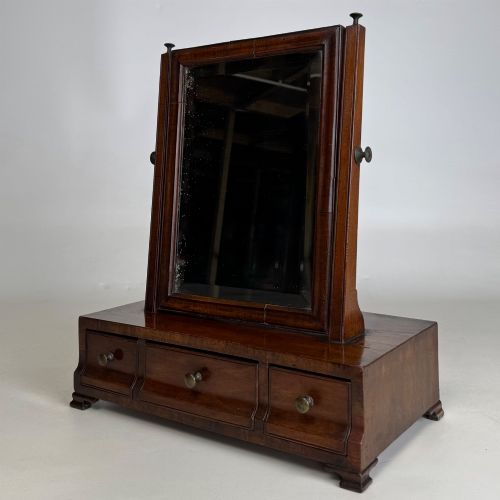
- A smaller tabletop mirror fitted with a small chest base containing drawers, designed to sit on top of a chest of drawers or a separate table.
- Shield mirror
- A mirror plate cut into the shape of a heraldic shield, popular on dressing mirrors during the Georgian and Edwardian periods.
- Duchess dressing table
- A large nineteenth-century dressing table featuring a large central mirror, often flanked by smaller auxiliary mirrors and jewellery drawers.
- Ormolu
- Gilt-bronze mounts applied to furniture, frequently seen on French Empire pieces to accent mahogany woodwork.
Vanity Table with Mirror: Frequently Asked Questions
How do I date a dressing mirror?
Dating relies on timber choice, construction methods of the drawer dovetails, and the bevel or thickness of the mirror glass.
Earlier eighteenth-century pieces display hand-cut joinery and subtle grain patterns, whilst later nineteenth and twentieth-century examples incorporate machine-sawn elements and different mirror silvering techniques.
Are the mirror plates original?
Original mirror plates frequently exhibit slight foxing, minor oxidation spots, and subtle imperfections in the glass due to historic manufacturing methods.
Replacement glass appears clearer and lacks the characteristic distortion or dark flecks accumulated over centuries of use.
Can I dismantle a pedestal vanity table?
Many pedestal dressing tables separate into distinct sections, including the base pedestals, the main writing or drawer surface, and the upper mirror superstructure.
Careful examination of internal fixing screws and wooden pegs reveals how cabinetmakers designed the piece for transport and assembly.
Where should I place a toilet mirror?
Toilet mirrors require a stable surface such as a chest of drawers, a low sideboard, or a dedicated dressing table that supports their weight.
Positioning them near natural light enhances their original purpose for grooming while preventing damp environments from affecting the wood veneer and mirror backing.