

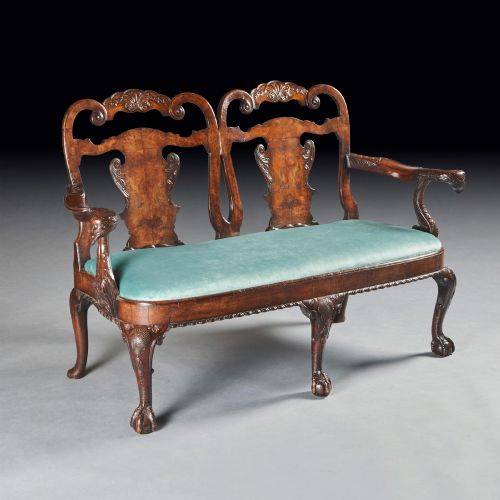
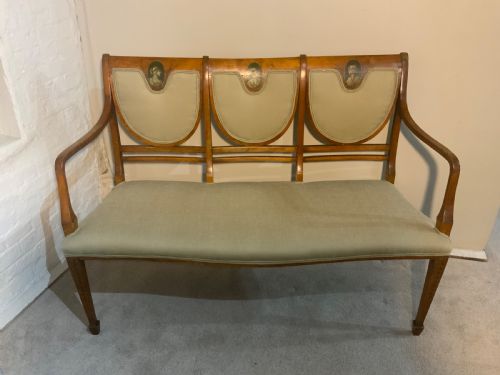
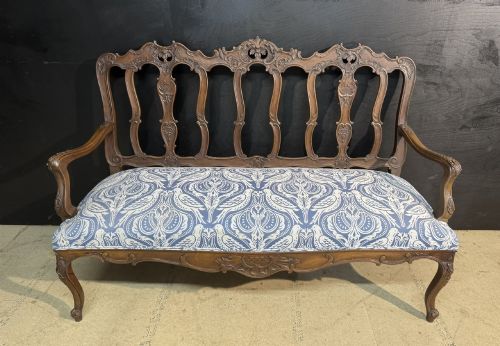
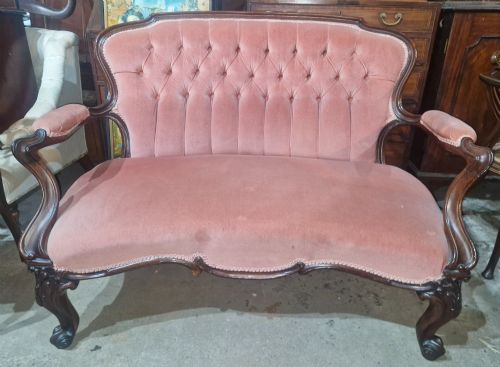
Upholstered Settee Bench
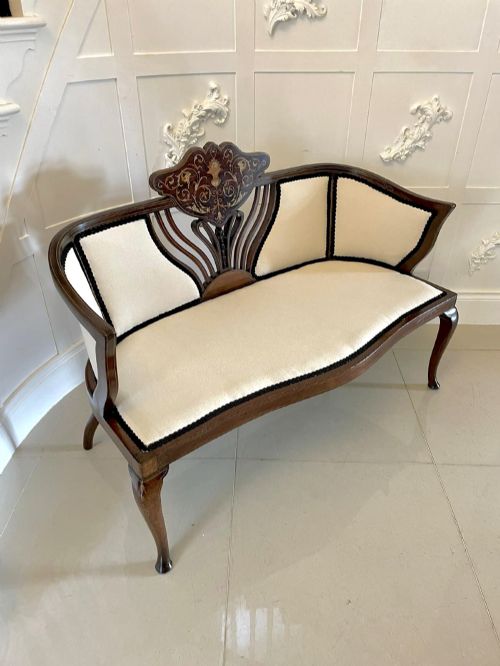
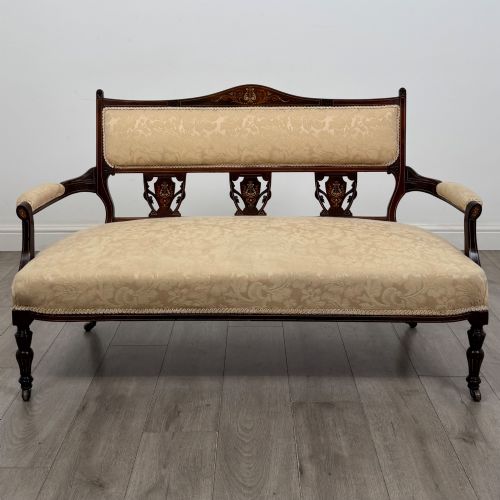
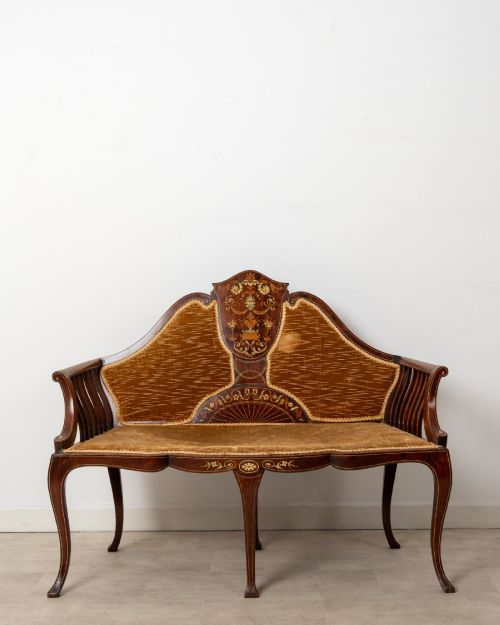
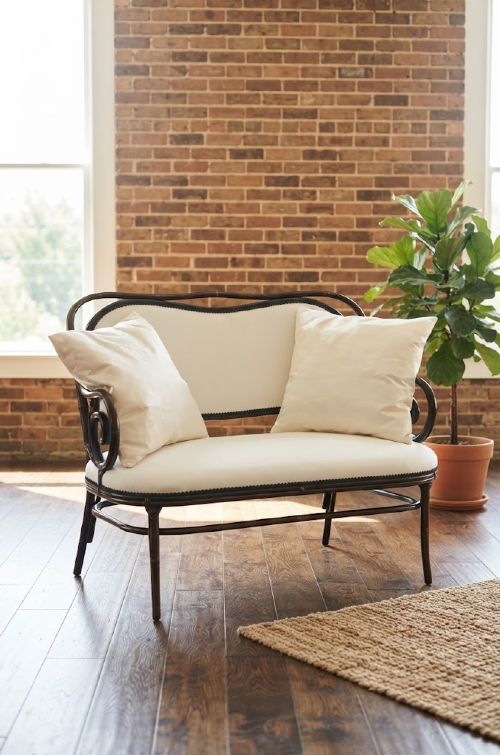
An upholstered settee bench provides substantial seating with traditional charm, drawing buyers who want both comfort and historic presence in a room.
Upholstered Settee Bench
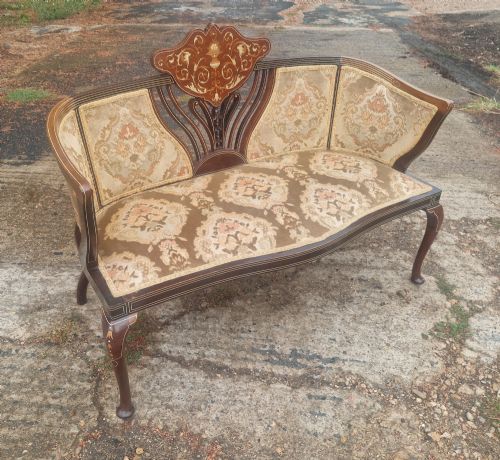
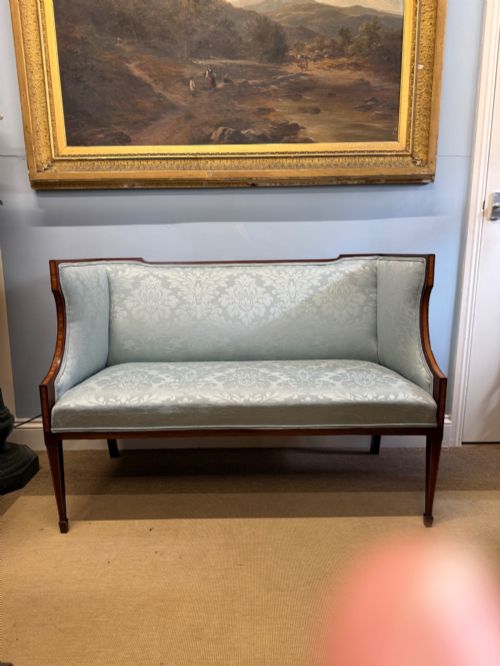
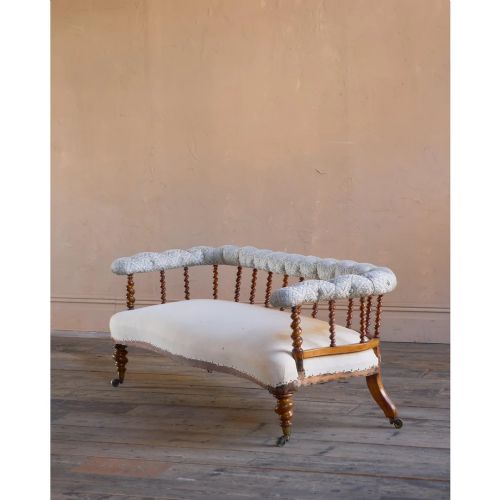
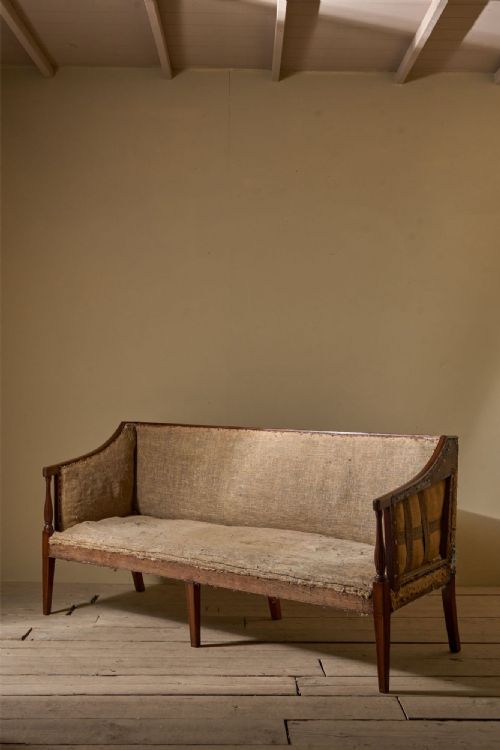
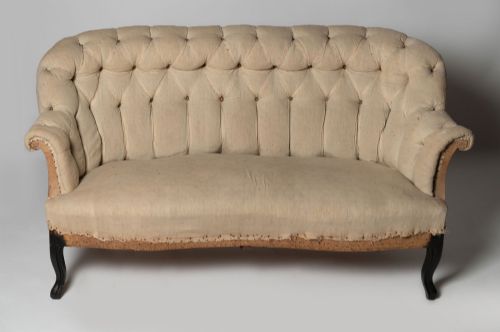
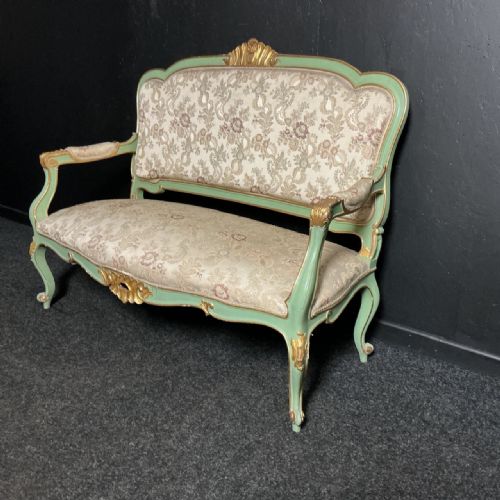
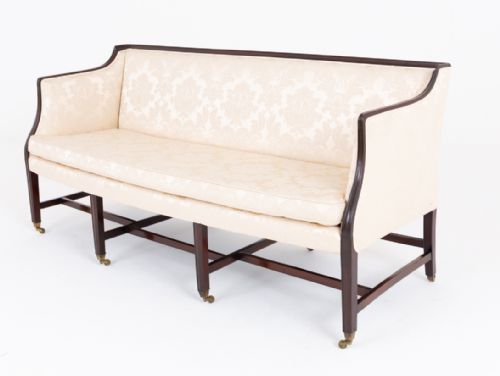
When you search for an upholstered settee bench, you encounter seating designed for parlours, drawing rooms and large halls across several centuries. The pieces on this page span the Georgian, Victorian and Edwardian eras, alongside French and Italian revival designs.
The forms vary widely, ranging from mahogany and rosewood framed settees to satinwood window seats, banquettes and canapés. Most examples date from the nineteenth and early twentieth centuries, reflecting the period's preference for cushioned comfort combined with formal woodwork.
Makers shaped these benches to serve multiple domestic functions, placing them at the foot of a bed, beneath a window, or alongside salon tables. Buyers will find both walnut twin chair back sofas and longer three-seater couches among the available items.
Materials and Construction
Cabinet makers utilised dense hardwoods such as mahogany, walnut and rosewood for the structural frames, frequently adding satinwood inlay or giltwood enrichment. Brass mounts and ormolu also appeared on revival pieces to emulate French models.
Upholstered surfaces relied on traditional stuffing and textile coverings, with velvet, fabric and silk satin found across the various periods. Frames were often carved with decorative motifs or shaped into bentwood, depending on the prevailing style.
Lion mask hairy paw feet occasionally support a George II sofa, staring out from beneath the upholstery.
Determining Quality
Quality rests primarily in the crispness of the timber carving and the integrity of the frame construction. Pieces displaying finely figured mahogany, subtle satinwood stringing, or substantial giltwood ornament stand apart from simpler iterations.
The proportion of the frame and the retention of original decorative details dictate the standing of a piece. Finer examples show careful attention to stylistic revival, whether following George II lines or Louis XV proportions.
C. Hindley & Sons·Thonet·Giles Grendey
The Upholstered Settee Bench Glossary
- Canapé
- An upholstered sofa or settee, usually in the French taste. These pieces often feature exposed carved woodwork and gilt finishes.
- Banquette
- A long upholstered bench or settee without a back or with low arms. They suited hallways and formal reception rooms.
- Settle
- A wooden bench with high backs and solid arms, sometimes fitted with upholstered pads. They date to earlier vernacular traditions.
- Inlaid
- Ornamented by embedding pieces of contrasting wood, such as satinwood, into the primary timber surface. This technique created geometric or floral patterns.
- Giltwood
- Timber coated with gold leaf or gold paint. It appears frequently on eighteenth-century revival furniture.
Upholstered Settee Bench: Frequently Asked Questions
How do I date an upholstered settee bench?
Dating relies on identifying the underlying timber, the framing style, and any decorative motifs. Victorian and Edwardian examples often employ machine-sawn elements and distinct revival ornamentation.
Earlier pieces from the Georgian era display heavier proportions and hand-carved details. Comparing the secondary woods and construction methods helps confirm the period.
Where should I place a settee bench?
These benches suit various rooms depending on their length and back design. Window seats fit neatly beneath low glazing, while salon sofas anchor formal seating arrangements.
Shorter banquettes and end-of-bed benches work well in sleeping quarters for temporary seating. Ensure the depth of the frame matches the available floor space.
What is the difference between a settee and a sofa?
Historically, a settee referred to a two-seater wooden or upholstered seat with a back and arms. Sofas often denoted larger, fully upholstered seating units designed for reclining.
Over time, makers used the terms interchangeably. Today's listings apply both labels to similar framed and cushioned furniture.
Are these benches comfortable for daily use?
Comfort depends on the age of the internal stuffing and the depth of the seat. Many antique pieces retain firm traditional padding rather than modern sprung cushions.
Buyers intending to use them daily often assess the seat height and back angle. Some pieces served primarily as decorative salon furniture rather than lounging seats.