


Louis XV Revival Sofa
A louis xv revival sofa brings sweeping rococo curves and rich upholstery into a room.
Louis XV Revival Sofa
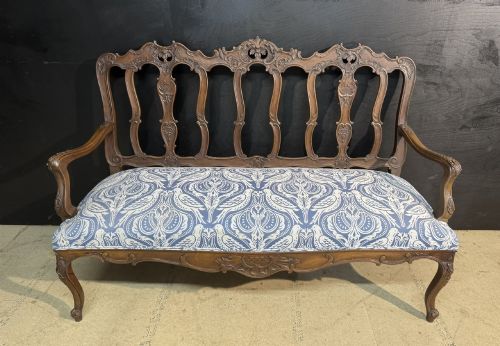
When you search for a louis xv revival sofa, you find seating shaped by nineteenth-century interpretations of eighteenth-century French design. These pieces include walnut, rosewood, and giltwood settees originating mainly from the nineteenth century, including Victorian periods.
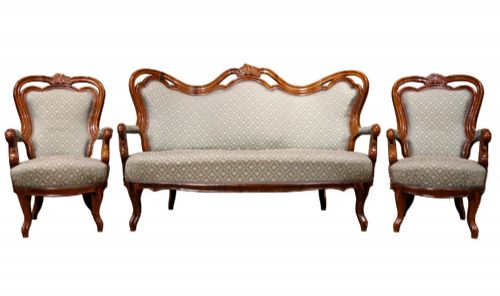
The version you are most likely to meet on this page is a carved walnut or giltwood two-seater or three-seater settee. They appear alongside related salon suites and occasional tables.
Makers drew on rococo revival and French chateau aesthetics, producing frames with serpentine rails and cabriole legs. These forms suit formal drawing rooms and sitting areas.
Materials and Construction
Frames rely on dense hardwoods such as walnut and rosewood, which accepted deep hand-carving along the crest rails and aprons. Giltwood and painted finishes also appear, applied over carved wooden structures.
Upholstery uses traditional textiles including velvet, silk damask, and modern revival fabrics like toile de jouy. Brass details and marquetry sometimes accent the supporting woodwork.
One nimble two-seater was designed specifically to perch at the end of a bed.
Assessing Quality
Quality rests primarily on the depth and crispness of the hand-carving on the wooden frame. Sharply defined foliage and scrollwork indicate superior craftsmanship compared to shallow or soft moulding.
The choice of primary timber and the integrity of the original gilt or painted surface also separate standard production from finer pieces. Structural rigidity in the serpentine frame remains essential.
The Louis XV Revival Sofa Glossary
- Cabriole leg
- A furniture leg that bends outward and then tapers downward to a small foot. This shape mimics animal legs and defines rococo revival seating.
- Canape
- A traditional French term for an upholstered sofa or settee. These pieces often feature exposed wooden frames and generous padding.
- Giltwood
- Wood that has been covered with a thin layer of gold leaf or gilt paint. It provides a bright, reflective finish popular in formal nineteenth-century salons.
- Damask
- A reversible figured fabric woven on a jacquard loom with patterns visible in contrasting matt and glossy threads. It frequently appears on period parlor suites.
- Marquetry
- The art of applying pieces of veneer to a structure to form decorative patterns. It appears on related tables within these listings.
Louis XV Revival Sofa: Frequently Asked Questions
What is a louis xv revival sofa?
A louis xv revival sofa is a nineteenth-century seating piece inspired by the ornate curves and naturalistic motifs of the French eighteenth century.
These pieces typically feature exposed carved wooden frames, cabriole legs, and upholstered seats designed for formal reception rooms.
How were these sofas used?
Historically, these settees served in formal drawing rooms, parlours, and salons for social gatherings and receiving guests.
Today, they function as statement seating in living rooms or bedrooms, combining decorative presence with padded comfort.
How do I live with a antique sofa?
Living with a period settee involves placing it away from direct sunlight to protect sensitive silk damask, velvet, or walnut finishes.
Routine care requires gentle dusting of the carved wooden frame and professional cleaning for delicate upholstery fabrics.
How do I date a settee?
Dating relies on examining the timber species, the style of hand-carving, and construction methods visible in the frame.
Nineteenth-century revival pieces often blend rococo revival forms with Victorian manufacturing techniques distinctive to the era.