


Upholstered Seat Dining Chairs
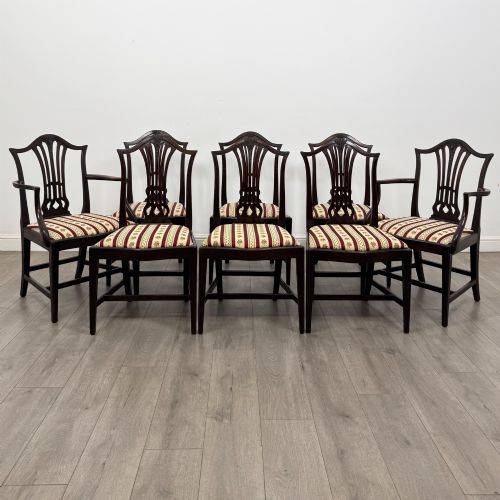
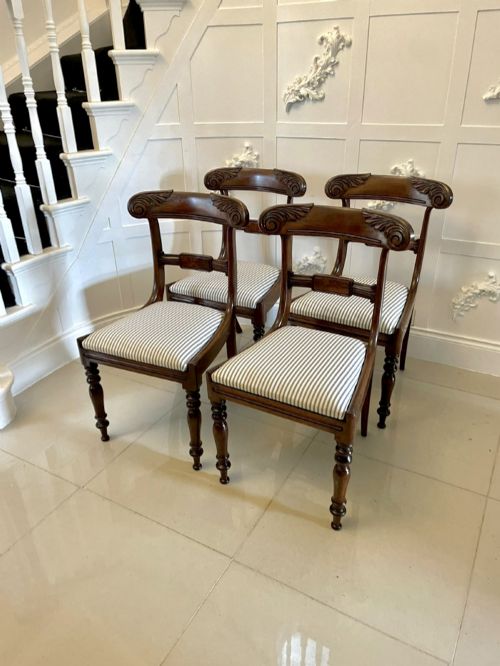
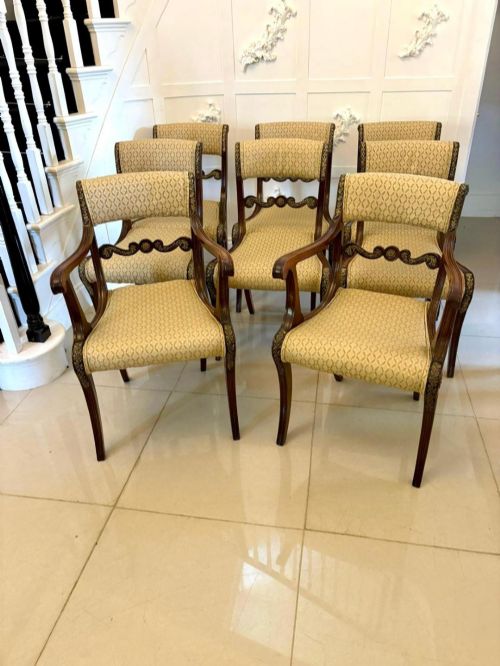
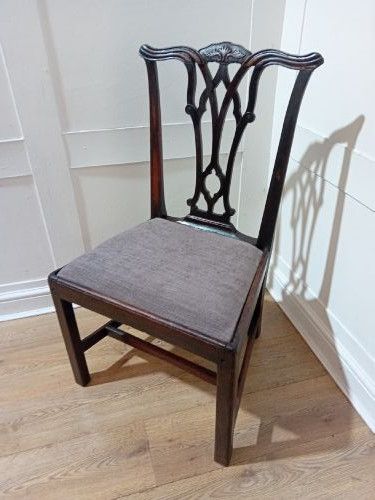
These upholstered seat dining chairs bring functional period character to a room, offering enduring timber frames paired with comfortable padded surfaces.
Upholstered Seat Dining Chairs
When browsing for upholstered seat dining chairs, you encounter a wide selection spanning the eighteenth, nineteenth, and early twentieth centuries. The inventory ranges from single pairs and sets of four up to extensive matching groups of ten or twelve seats.
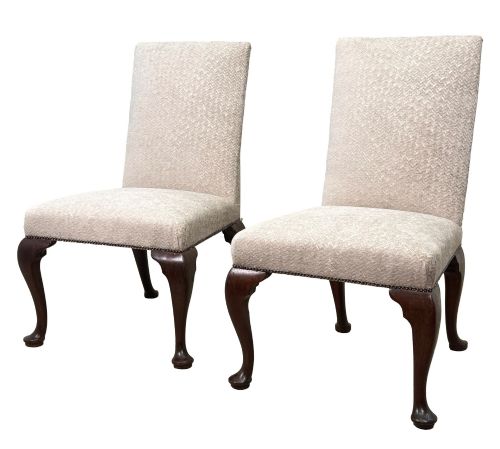
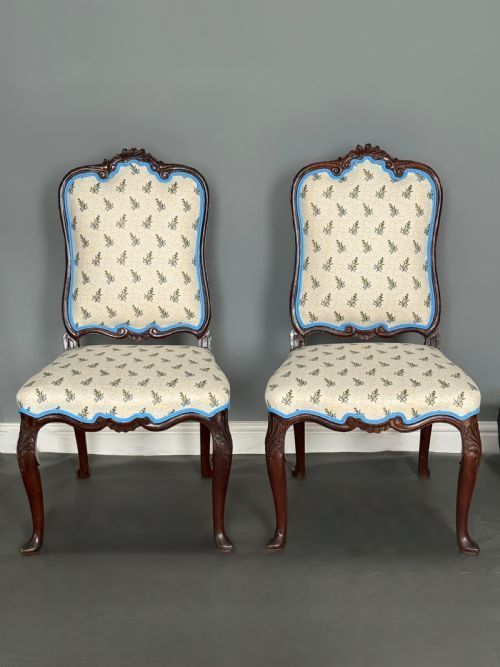
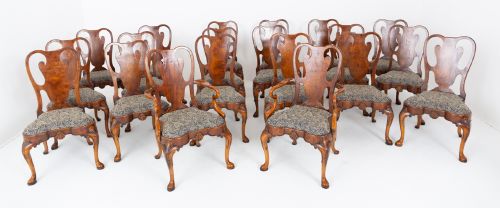
Most examples found on this page date from the Victorian and Edwardian eras, executed in styles that recall earlier Georgian, Regency, or Queen Anne periods. These pieces appear primarily as side chairs or armchairs intended for formal dining rooms and reception spaces.
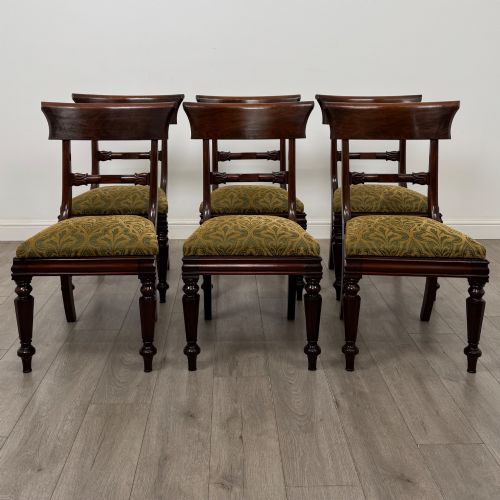
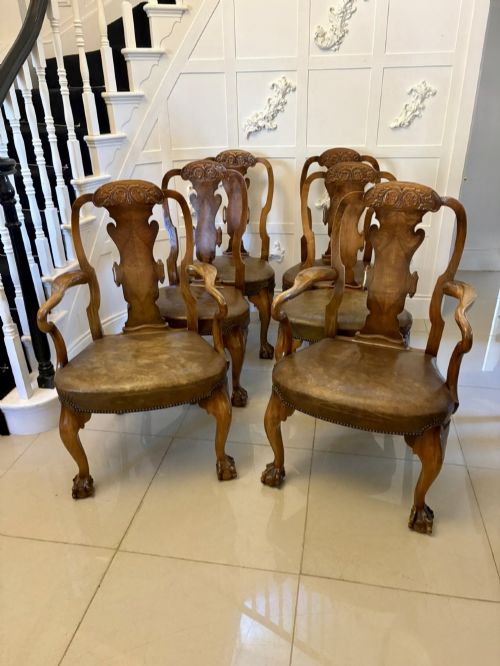
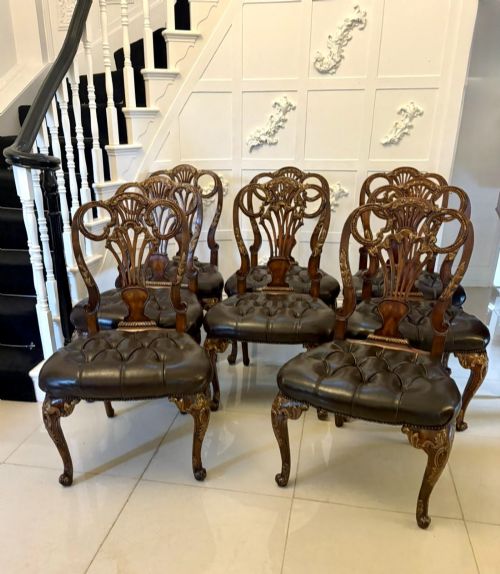
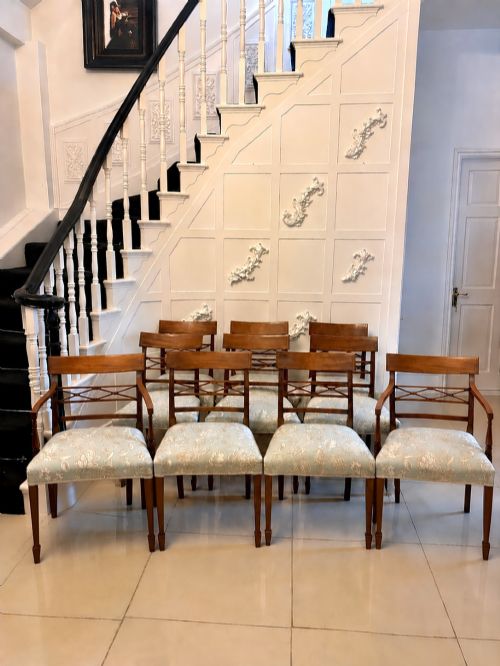
The construction typically involves exposed timber frames supporting padded drop-in or overstuffed pads covered in various textiles. Common forms include balloon backs, bar backs, shield backs, and carved walnut or mahogany frameworks.
Materials and construction
Cabinetmakers relied heavily on dense hardwoods such as mahogany, walnut, and oak to construct durable chair frames that could withstand daily domestic use. Secondary timbers often provided structural integrity beneath seat frames and stretchers.
Surface decoration frequently incorporated hand-carved motifs, brass inlay, or gilded accents, alongside turned or reeded legs characteristic of specific periods. Seats were built up using traditional webbing and stuffing before being finished with fabric, tapestry, leather, or upholstery fabric.
Some nineteenth-century dining chairs include concealed numerical stamps beneath the rails to ensure servants returned each seat to its exact position.
Assessing quality
The standard of a chair depends largely on the crispness of the timber carving and the architectural proportion of the frame. Sets that retain their original matching components and uniform timber grain command greater appreciation than assembled groups.
Attention to structural joinery, such as robust corner blocks and tight tenons, dictates the longevity of the piece. Superior examples exhibit refined detailing in the woodwork and high-grade upholstery materials that complement the period of the frame.
Charles Tozer·Gillows·Maple and Co
The Upholstered Seat Dining Chairs Glossary
- Bar back
- A chair back featuring a horizontal crossbar, often carved or curved, popular during the nineteenth century. This design provides ergonomic support while displaying decorative woodwork.
- Balloon back
- An oval or rounded chair back shape resembling a balloon, characteristic of Victorian seating. This form allowed makers to showcase figured timber veneers.
- Shield back
- A chair back designed in the outline of a heraldic shield, commonly associated with late eighteenth-century and revival dining chairs. The framework typically encloses open splats or carved tracery.
- Overstuffed
- A seat upholstery technique where the padding extends completely over the wooden seat frame to conceal the timber edges. This method provides a softer visual profile and additional seating comfort.
- Elbow armchair
- A seating piece featuring low armrests attached to the sides of the frame, frequently created as carvers to accompany a set of dining side chairs.
Upholstered Seat Dining Chairs: Frequently Asked Questions
How do I care for antique wood frames?
Maintain the timber by dusting regularly with a soft cloth and applying appropriate beeswax periodically to nourish the surface. Avoid placing chairs in direct sunlight or near heat sources to prevent the wood from drying out.
Keep upholstered areas clean by gentle vacuuming using a low suction attachment. Professional cleaning is recommended for antique textiles and delicate period fabrics.
Can I mix these chairs with a modern table?
Period seating can introduce textural contrast and historical depth when paired with contemporary dining tables. Ensure the seat height allows adequate legroom beneath your specific table.
Matching timber tones or unifying the upholstery fabric helps integrate antique chairs into a modern interior scheme.
How do I distinguish between original and revival periods?
Examine the construction methods, tool marks, and timber ageing characteristics visible beneath the chair frame. Revival pieces often display late nineteenth or early twentieth-century manufacturing techniques despite adopting earlier Georgian or Queen Anne styles.
Look for consistency in the wear patterns and screws or fixings that align with the stated period of manufacture.
What is the difference between a side chair and a carver?
Side chairs are built without armrests, allowing several seats to fit neatly alongside each other around a dining table. They typically function as the primary seating units within a matching set.
Carvers feature integrated armrests and were traditionally placed at the head and foot of the table for the host and hostess.