
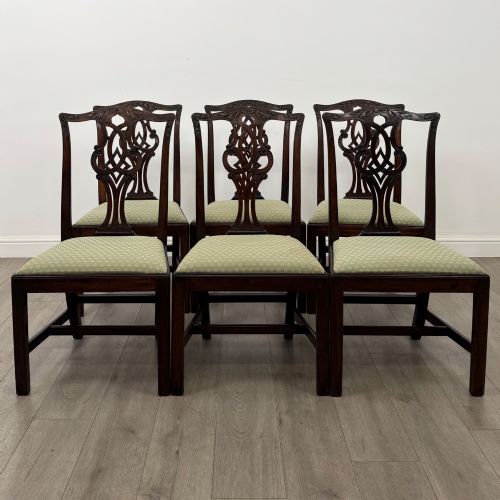
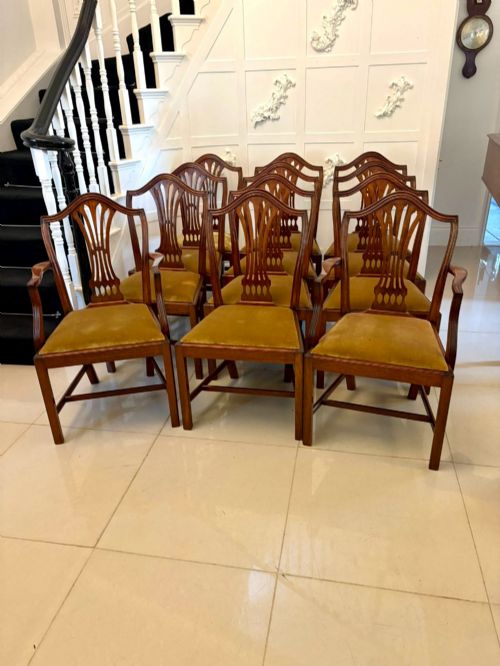
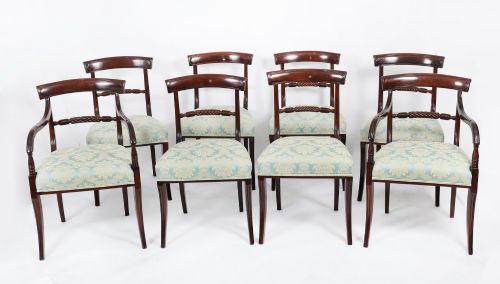
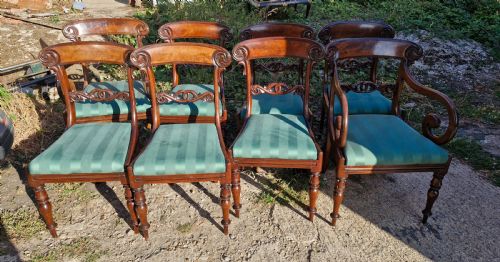


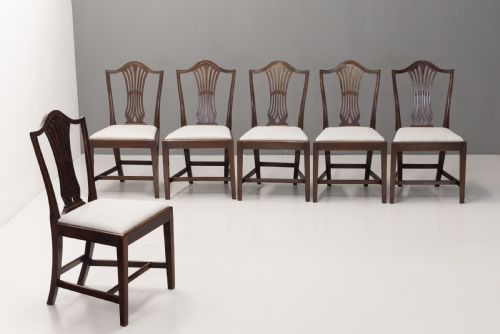
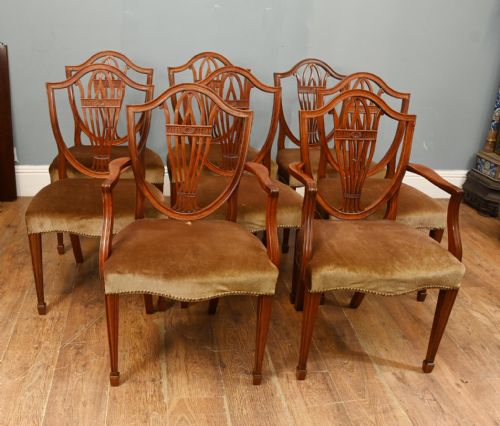
Period Style Dining Room Chairs
Period style dining room chairs bring historic timber and classic craftsmanship to the table, offering lasting utility for formal interiors.
Period Style Dining Room Chairs
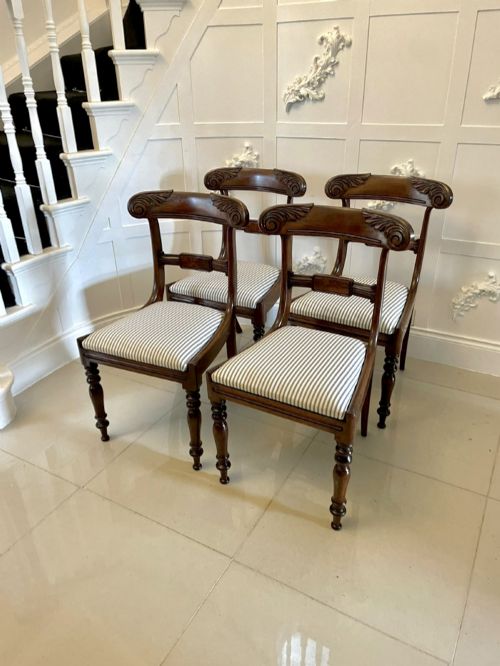
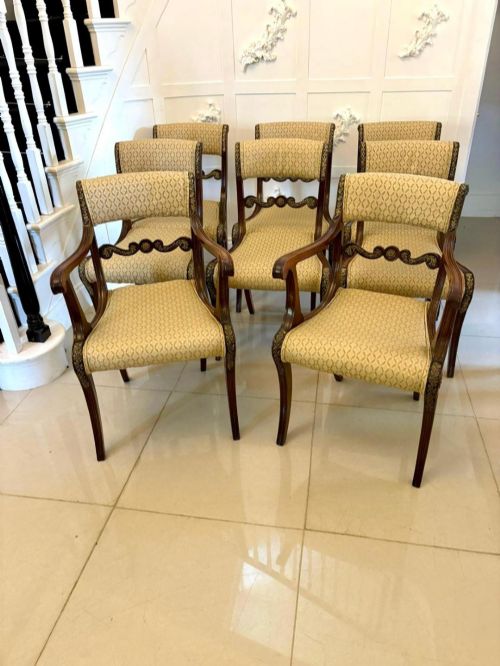
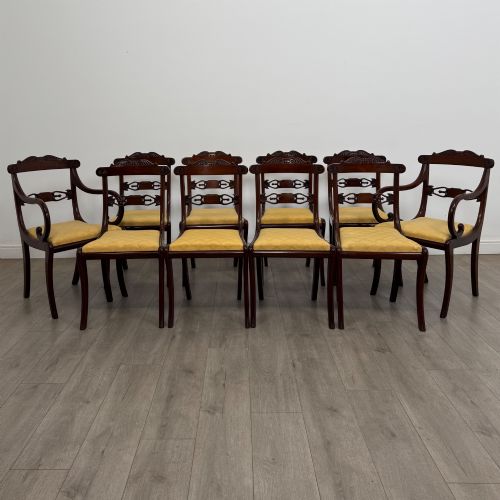
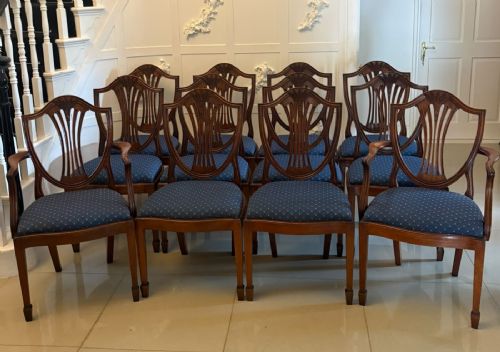
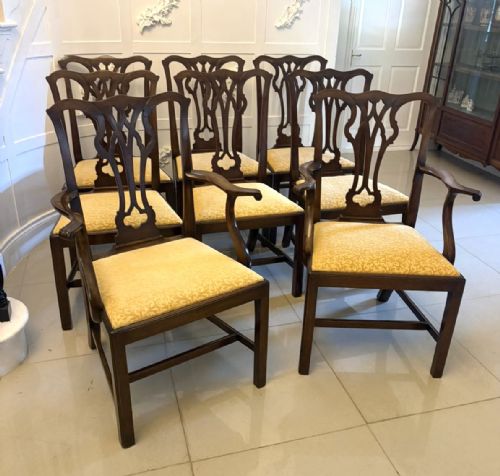
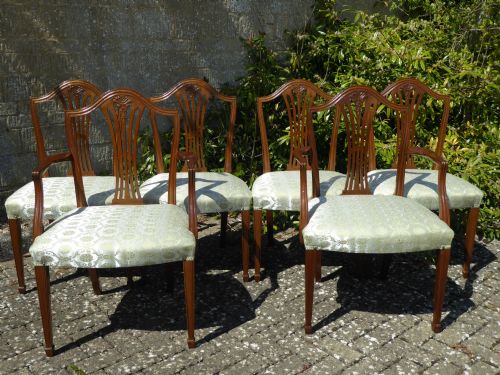
Period style dining room chairs span centuries of design, encompassing Georgian, Regency, Victorian and Edwardian iterations alongside later revivals. Buyers encounter everything from compact sets of six side chairs to extensive dining suites comprising dozens of matching seats with armchairs included.
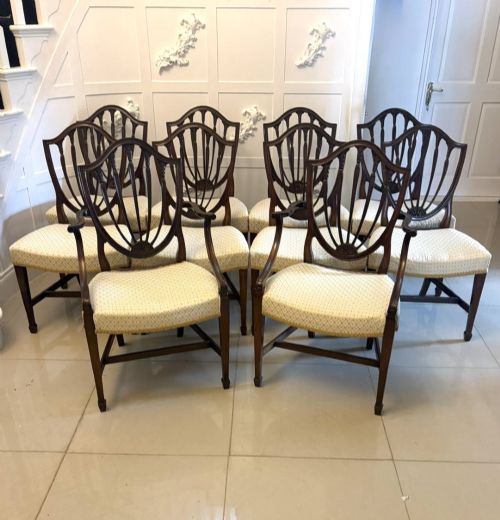
Mahogany predominates across the selection, shaped into forms ranging from shield backs to highbacks and upholstered variations. These pieces reflect historical British dining habits where seating needed to combine formality with robust construction.
Materials and Construction
Makers utilised solid mahogany, rosewood, maple and elm, often pairing timber frames with drop-in seats covered in leather, velvet, fabric or upholstery textile. Brass accents and detailed inlay work frequently appear on Georgian and Regency examples.
Joinery relies on traditional techniques such as mortise and tenon frames, while seat bases incorporate webbing and stuffing to support leather or textile coverings.
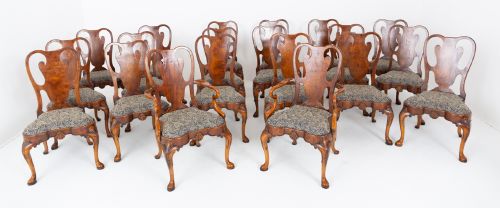
Elm trees provided the timber for a set of twenty matching chairs, proving that even humble farm wood could find a grand dining room.
Judging Quality
The distinction between standard examples and exhibition quality sets rests on the crispness of carved details, the matching of timber grain across large sets, and the original integrity of the frames. Larger groupings of ten or twenty matching chairs naturally represent greater consistency in workshop output.
Subtle variations in inlay precision, the choice of secondary timbers, and the handling of curved crest rails separate ordinary workshop production from pieces attributed to notable makers.
Maple & Co·William Walker & Sons·Gillows
The Period Style Dining Room Chairs Glossary
- Carver
- An armchair designed with armrests, traditionally placed at the head of a dining table. They frequently match a larger set of single side chairs.
- Side chair
- A dining chair manufactured without armrests, intended to sit along the sides of a table. These form the numerical majority in most antique dining sets.
- Splat
- The vertical central strip of wood within a chair back, connecting the crest rail to the seat. Carved or pierced splats define much of the decorative style across Georgian and revival periods.
Period Style Dining Room Chairs: Frequently Asked Questions
How many chairs come in a typical set?
Sets vary widely, ranging from four or six chairs up to large dining groups of ten, twelve, or twenty pieces. Many larger sets include a combination of single side chairs and arm-carrying carvers.
Buyers searching for matching seating will find that sets exceeding eight chairs often incorporate professional workshop expansions or later revival matches created to meet formal dining requirements.
What is the difference between carvers and side chairs?
Carvers are armchairs traditionally designated for the host and hostess at either end of the dining table. Side chairs lack arms, allowing them to tuck neatly beneath the table surface.
Both forms share identical design motifs, timber choices, and leg structures within the same dining suite.
How do I identify a revival chair from an original period piece?
Revival chairs, such as Edwardian Hepplewhite or Georgian revival pieces, exhibit machinery precision, specific secondary timbers, and twentieth-century hardware or upholstery techniques. Original eighteenth-century pieces display hand-cut joinery and period-specific timber patination.
Examining the construction beneath the drop-in seat often reveals the true age of the frame.
What seat materials should I expect to find?
Original and restored seating incorporates hand-dyed leather, velvet, woven textile, and standard upholstery fabric. Many chairs utilise drop-in frames that lift out easily for reupholstery.
Leather seats frequently feature blind tooling or brass tack detailing around the wooden borders.