


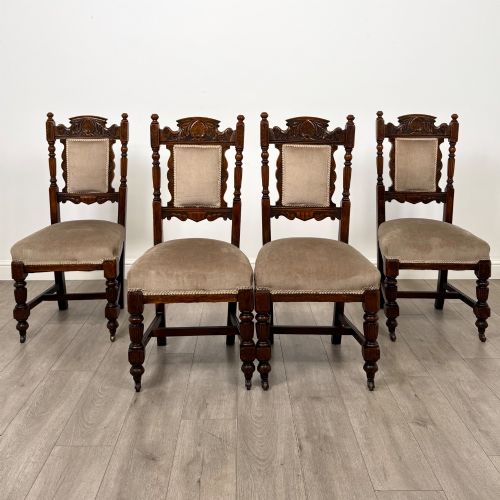
Upholstered Oak Chairs
When choosing upholstered oak chairs for a room, buyers connect sturdy native timber frames with tactile textile surfaces spanning multiple historical revivals.
Upholstered Oak Chairs
Upholstered oak chairs encompass seating ranging from single fireside armchairs to large matching dining sets produced across the eighteenth, nineteenth, and early twentieth centuries. The domestic timber provides a robust structural cage for varied padding and textile covers.
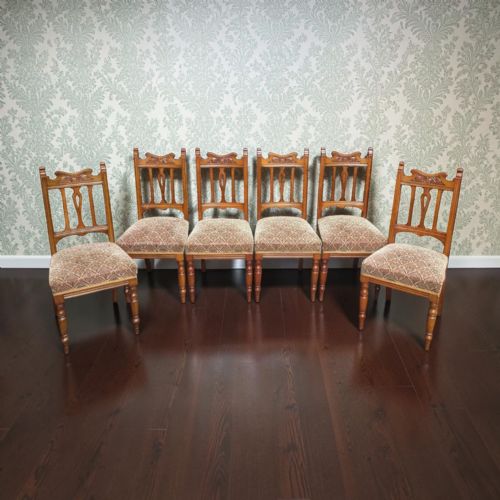
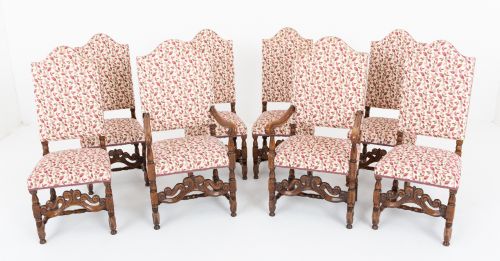
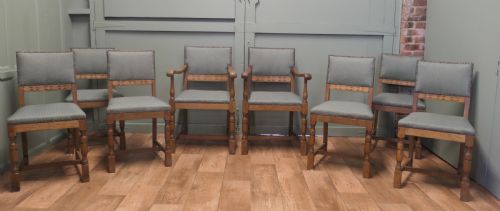
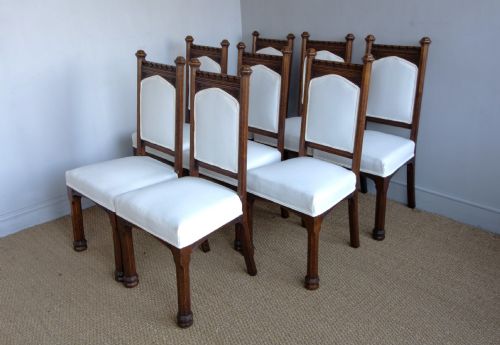
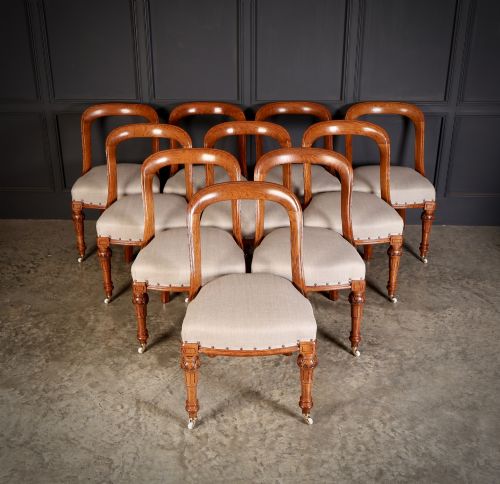
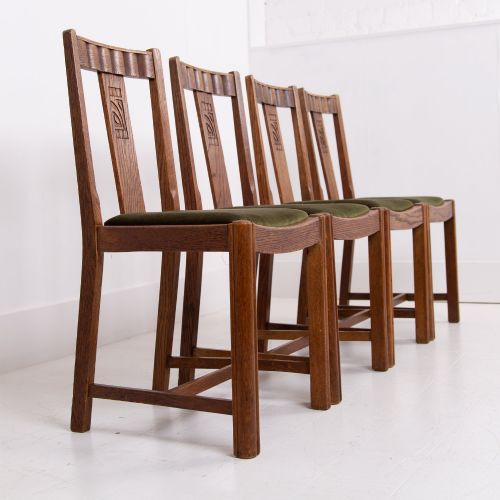
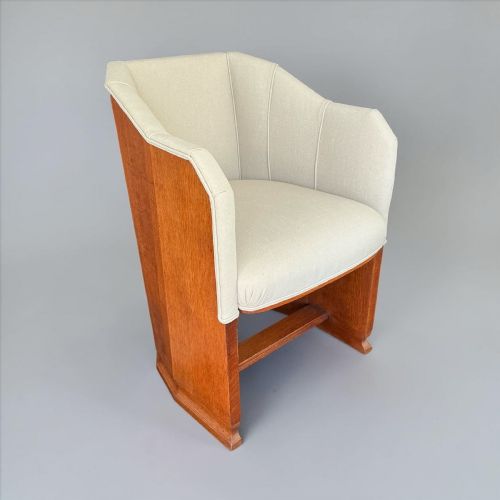
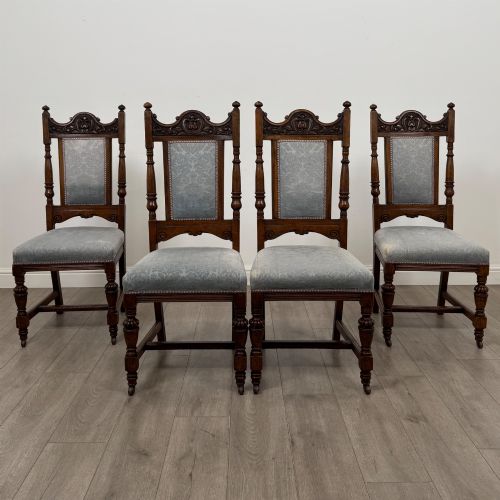
Dining chairs appear frequently in sets of four, six, or eight, often shaped by revival movements referencing Jacobean, Queen Anne, or Gothic styles. Armchairs and library seating provide deeper proportions designed for domestic comfort.
Origins stretch across British, French, and Scandinavian workshops, reflecting regional preferences for carved decoration or clean Arts and Crafts lines.
How They Were Made
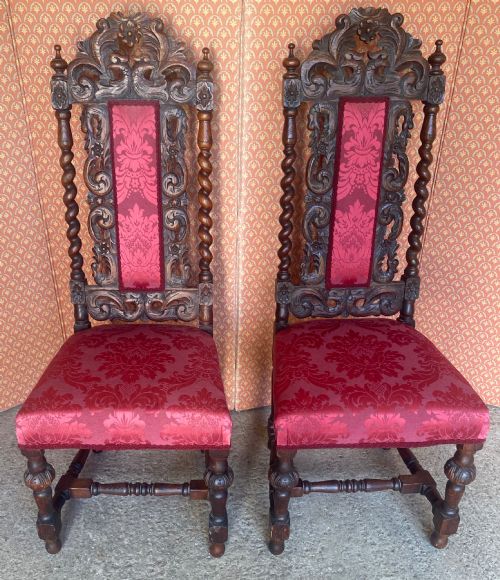
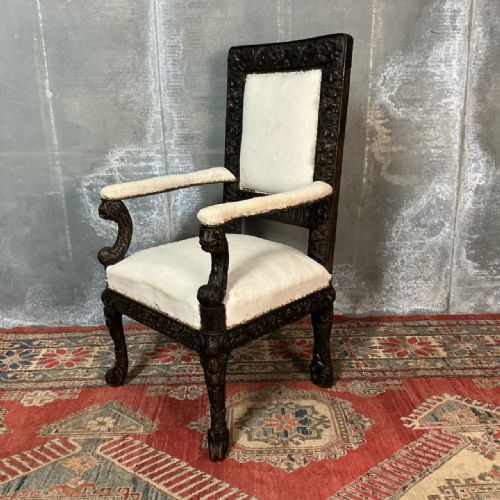
Carpenters utilised solid oak for frames, employing mortise and tenon joinery alongside turned structural supports like barley twists and bobbin mouldings. Frames frequently display hand-carved detailing, linenfold panels, or exposed grain.
Upholstery layers relied on traditional stuff-over techniques, webbed bases, and horsehair or wool stuffing secured beneath textiles such as leather, velvet, wool, and patterned upholstery fabric.
Several armchairs are recorded as library or smoking chairs, designed specifically for long hours of seated contemplation.
What Varies in Quality
Construction integrity separates robust daily-use seating from fragile examples, depending on the tightness of frame joints and the density of internal stuffing. Original timber surfaces retain patination that heavy stripping or improper sanding obscures.
The precision of hand-carved details and the suitability of applied coverings dictate the visual balance of each piece. Sets that remain uniform across all chairs command distinct attention compared to assembled groupings.
Howard and Sons·Bruce Talbert·Rigaux
The Upholstered Oak Chairs Glossary
- Barley Twist
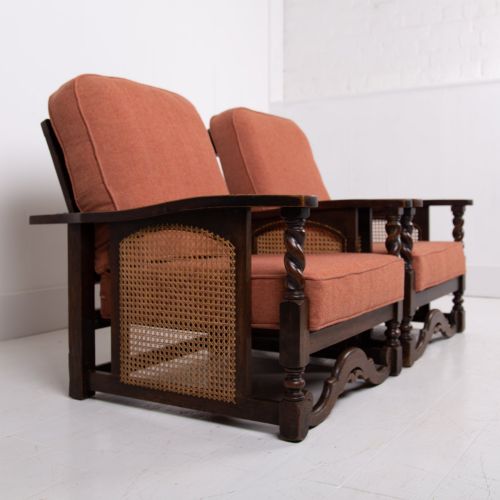
- A turned wooden furniture leg or stretcher carved in a spiral resembling a twisted rope. This technique gained popularity during the seventeenth century and saw major revivals in Victorian and Edwardian joinery.
- Bergere
- An enclosed upholstered armchair with wooden framing and woven cane or fabric side panels. The style originated in France and provides a lighter profile than solid upholstered library chairs.
- Gothic Revival
- An architectural and decorative style drawing inspiration from medieval forms, pointed arches, and heavy tracery. Pieces in this manner display dramatic vertical lines and deep relief carving.
- Arts and Crafts
- A design movement prioritising honest construction, visible joinery, and materials that highlight natural grain. Chairs from this tradition reject industrial excess in favour of solid craftsmanship.
- Stuff-over
- An upholstery method where the fabric covers the frame entirely and is tacked directly to the wooden rails. This technique leaves little or no wood exposed on the seat or back.
Upholstered Oak Chairs: Frequently Asked Questions
How do I date an oak chair?
Dating relies on examining tool marks, joint construction, and the specific revival style influencing the design. Earlier pieces display hand-sawn timber and peg joinery, whereas later examples incorporate machine-turned elements.
Secondary indicators include the style of upholstery tacks and the wear patterns present on the feet and stretchers.
Are dining sets historically matching?
Many larger dining sets originate from periods where furniture was made to order in substantial quantities by workshops. Sets numbering six, eight, or ten chairs usually share identical turning and carving details.
Assembled sets occasionally occur where individual chairs share common stylistic traits but vary slightly in wear or timber tone.
How should I care for leather upholstery?
Leather surfaces require protection from direct sunlight and artificial heat sources that cause drying and cracking. Regular dusting with a soft cloth prevents abrasive particles from settling into the grain.
Conditioning balms applied sparingly help maintain suppleness in older hides without altering their historic patina.
What is a corner chair?
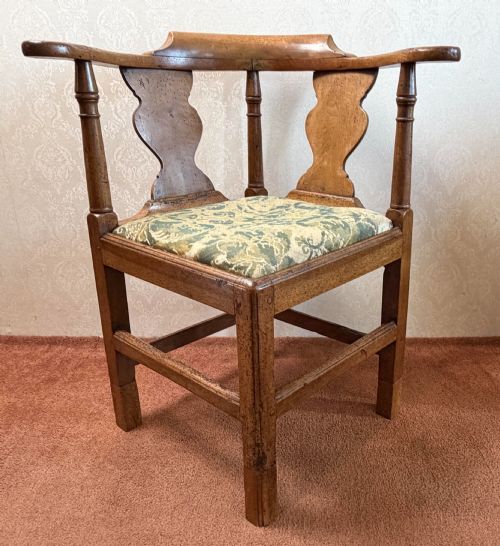
A corner chair is designed with a square seat rotated diagonally, featuring a semicircular backrest supported by turned columns. These pieces fit neatly into room angles or served as writing desk seating.
Examples appear in both eighteenth-century forms and later nineteenth-century revival interpretations.