
Edwardian Carved Furniture
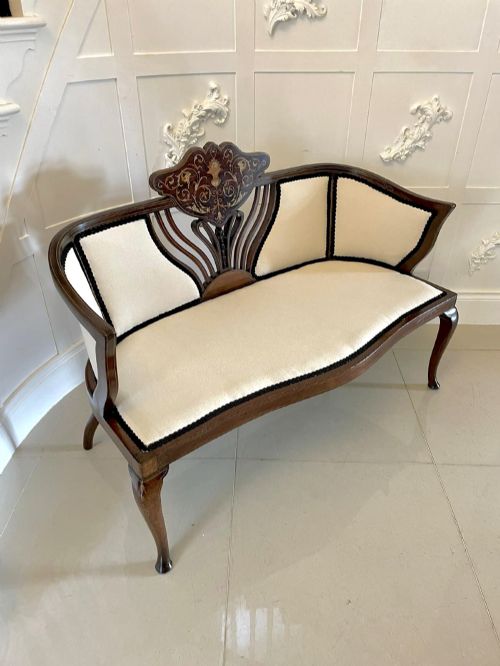
Edwardian carved furniture brings together solid oak, walnut and mahogany forms shaped by Arts and Crafts, Jacobean Revival and Gothic influences for domestic use.
Edwardian Carved Furniture
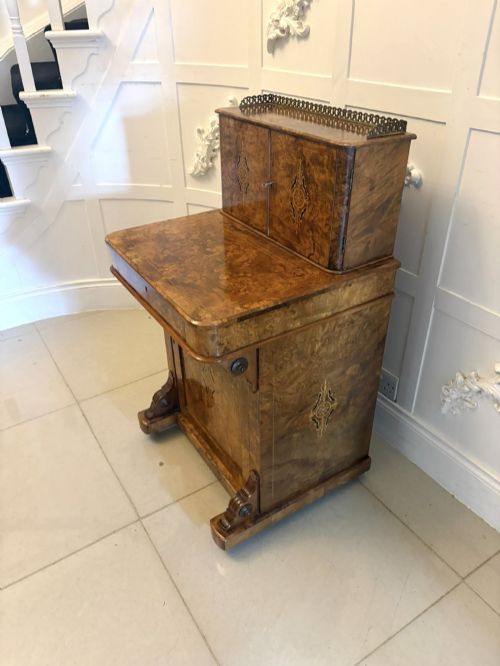
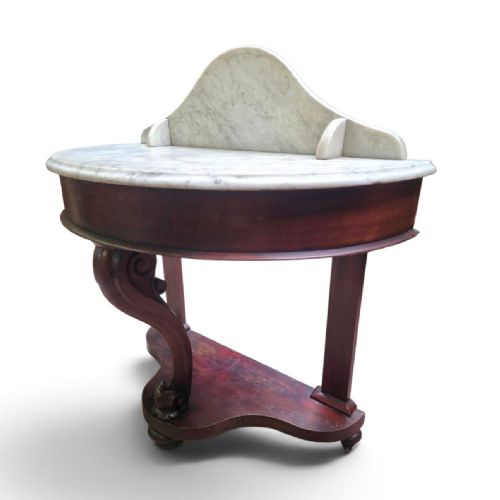
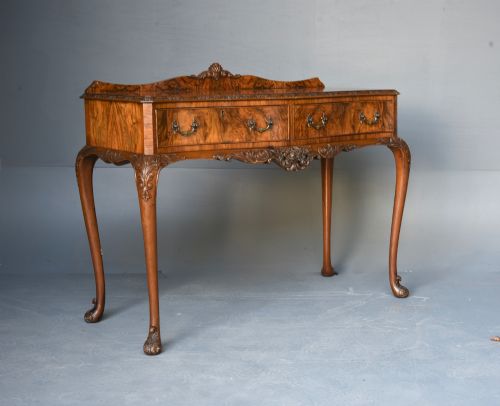
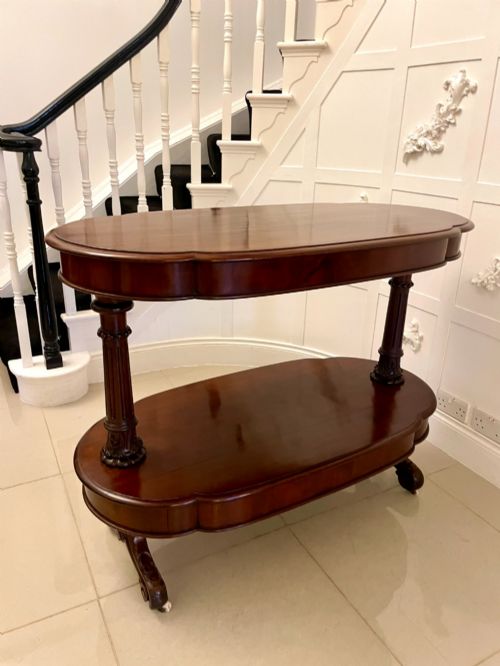
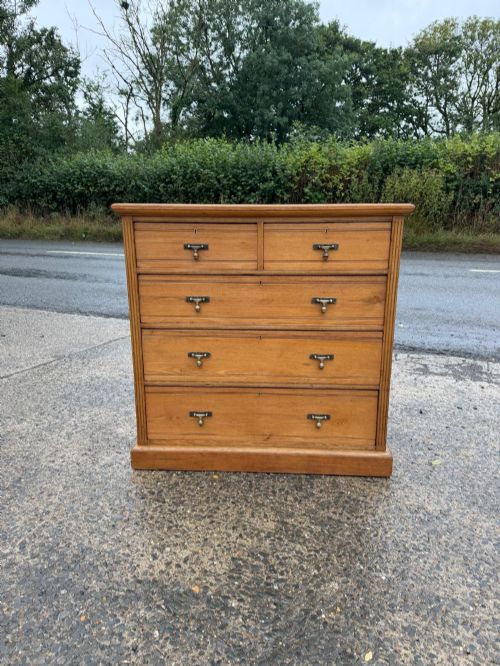
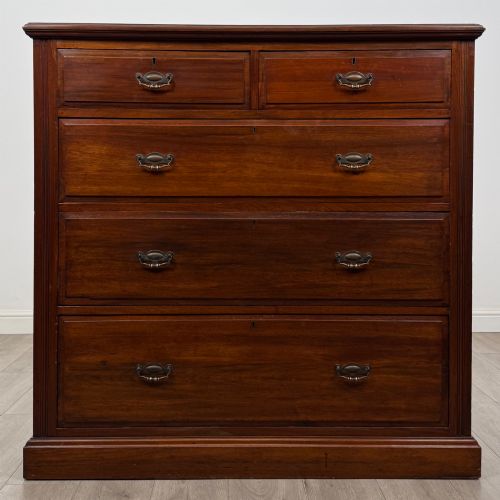
When searching for edwardian carved furniture, buyers encounter pieces spanning side tables, hall stands, bookcases, chests of drawers, and dining chairs originating mainly from the early twentieth century and the late nineteenth century. These items reflect prevailing domestic needs of the period, offering practical storage and seating alongside ornamental carving.
Solid oak and mahogany versions dominate the selections available, often bearing stylistic touches from Arts and Crafts, Jacobean Revival, and Gothic Revival movements. Pieces range from large wardrobes and sideboards to smaller occasional tables and canterburys, each showing the period's reliance on sturdy timbers.
Materials and construction
Makers utilised solid oak, walnut, and mahogany as the primary structural woods, frequently pairing them with brass hardware, leather inserts, and glass panels. Timbers were selected for their grain and durability, providing the dense foundation required for deep relief carving and structural stability.
Joinery methods of the era relied on traditional techniques to support heavy forms such as revolving bookcases, monks benches, and draw-leaf dining tables. Carved details were executed directly into the solid timber or applied as moulded elements, reflecting stylistic revivals from earlier centuries.
Church altars and hymn boards occasionally find their way into domestic listings alongside hall stands and umbrella racks.
Assessing construction and design standards
The standard of carving distinguishes superior examples from standard workshop production, with crisp relief work and well-balanced proportions marking out better items. Wood selection also plays a part, as figured burr walnut or carefully matched oak grain elevates the overall visual impact.
Makership and structural integrity separate robust pieces from ordinary utilitarian items. Sound joinery in drawers, cabinets, and tables ensures longevity, while documented makers or retailers add identifiable provenance to specific furniture forms.
Trevor Page & Co·Shoolbred & Co·Denby & Spinks·Maple & Co·Gillows
The Edwardian Carved Furniture Glossary
- Canterbury
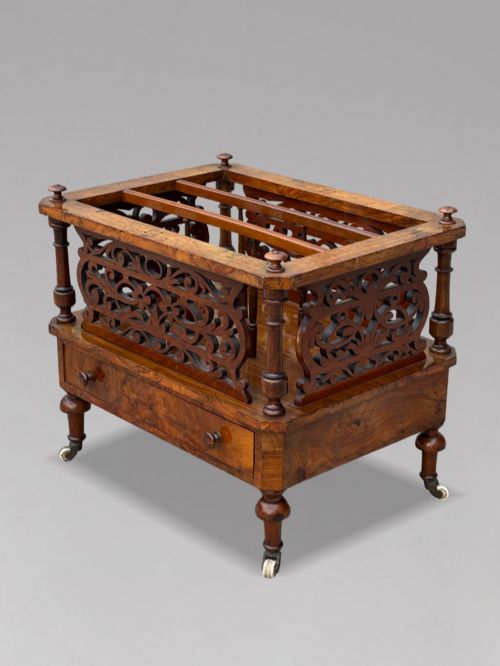
- A low stand fitted with partitions for holding sheet music, books, or magazines, often featuring small drawers underneath and mounted on castors. These pieces date across the nineteenth and early twentieth centuries in walnut and mahogany.
- Draw leaf table
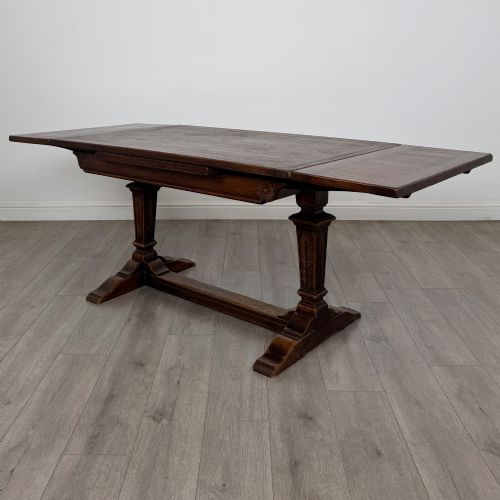
- A dining table equipped with sliding extension leaves stored beneath the main surface, which pull out to lengthen the top. They appear frequently in solid oak during the Edwardian period.
- Monks bench
- A multifunctional seat with a hinged back that folds down over the arms to form a table top, frequently constructed in solid oak. This form draws on earlier vernacular traditions.
- Revolving bookcase
- A freestanding bookcase designed to rotate on a central spindle for easy access to volumes from any angle, often made in large formats using solid oak.
- Hall stand
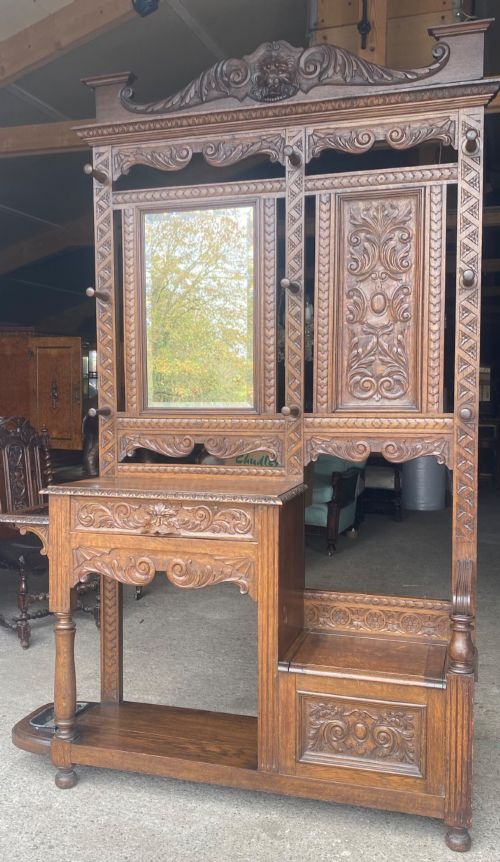
- A piece placed near an entryway combining umbrella wells, coat hooks, a mirror, and sometimes a small glove drawer. They utilise oak, mahogany, and brass fittings.
Edwardian Carved Furniture: Frequently Asked Questions
What defines Edwardian furniture carving?
Carving from this period draws heavily on Jacobean Revival, Arts and Crafts, and Gothic styles, featuring strapwork, foliate motifs, and geometric panels.
Craftsmen applied these details to solid oak, walnut, and mahogany surfaces on items ranging from sideboards to hall stands.
Where were these pieces used originally?
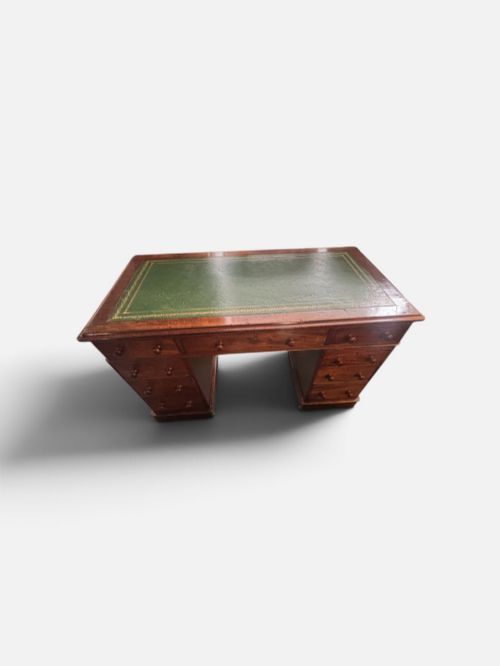
Edwardian furniture filled entrance halls, libraries, dining rooms, and bedrooms of period homes with purpose-built items like hall benches, bookcases, and pedestal desks.
Their robust construction in oak and mahogany was intended for daily domestic utility and heavy household traffic.
How do I care for solid oak furniture?
Solid oak requires stable indoor humidity levels away from direct heat sources to prevent timber movement or splitting.
Regular dusting with a dry cloth and occasional application of appropriate wax preserves the natural finish of the wood.