


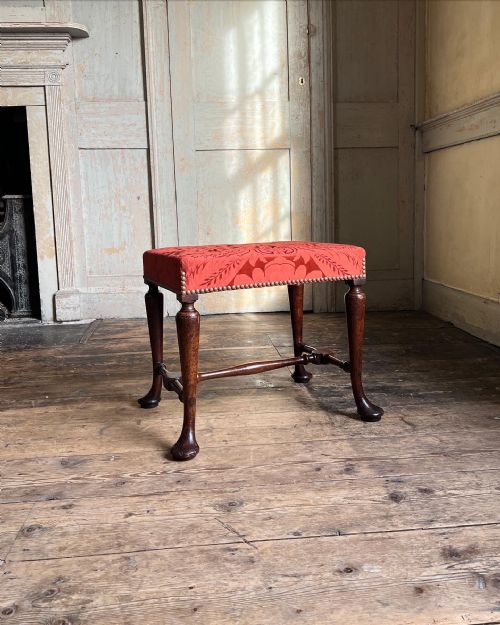


Upholstered Hearth Stool
These pieces are an upholstered hearth stool, low seats designed to sit before the fire in comfort, and you want one for the warmth and character they bring to a room.
Upholstered Hearth Stool
When you search for an upholstered hearth stool, you are looking at low seating designed to sit directly before an open fireplace. The versions you are most likely to meet on this page span the Georgian, Regency, and Victorian periods, with walnut and mahogany standing as the dominant timbers.
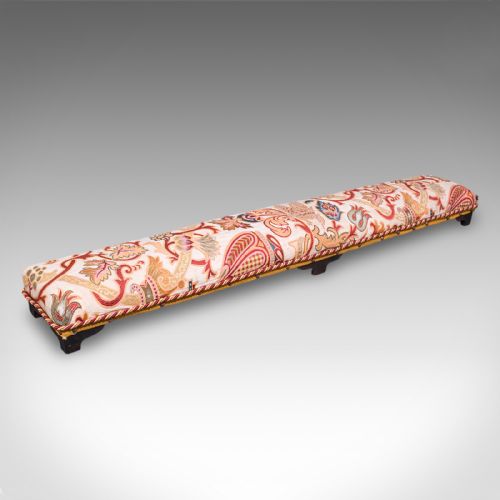
Forms range from oblong and oval shapes to long fender stools intended to stretch along the width of a hearth. Makers shaped these pieces in styles such as Victorian Rococo Revival, Scottish Baronial, and Georgian Irish, offering both freestanding forms and low rests for carriage or fireside use.
How they were made
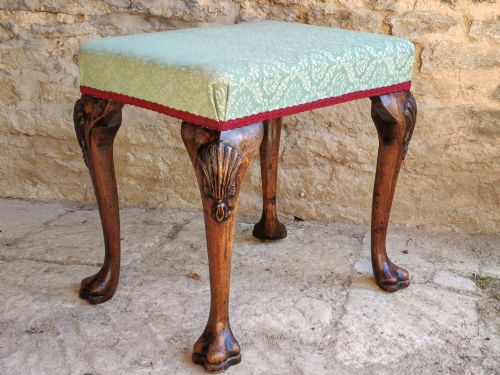
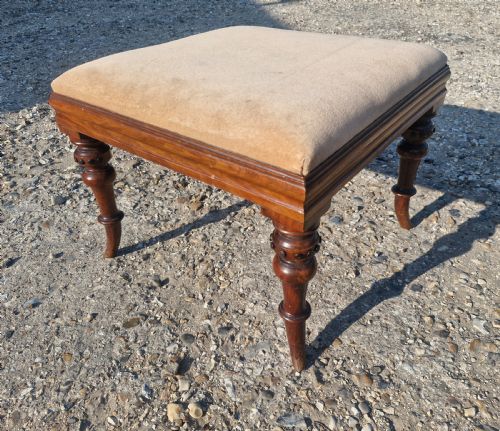
Carpenters built the frames of these stools primarily from hardwoods such as walnut, mahogany, rosewood, and oak, often shaping the timber into cabriole or sabre legs. Carving frequently defines the woodwork, appearing on knees and rails in styles reflective of Victorian and Georgian tastes.
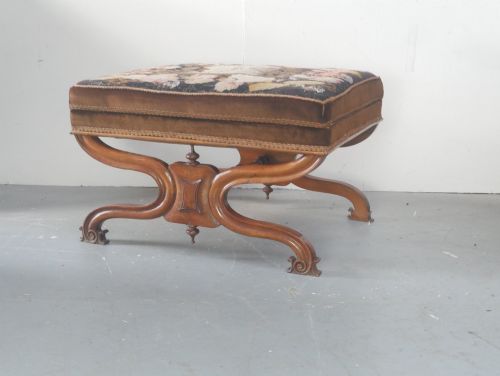
Traditional textiles complete the top surface, utilising original needlepoint, tapestry, velvet, tweed, and various fabric upholsteries. These covers were secured directly to the wooden framework to provide a sturdy and supportive platform for the feet.
Listings feature walnut, mahogany, rosewood, and oak frames paired with textiles including needlepoint, tapestry, and velvet across Georgian and Victorian periods.
What varies in quality
The standard of timber selection and the crispness of the carved details set the finer pieces apart from simpler examples. A well drawn frame with balanced proportions and robust cabriole legs demonstrates a higher degree of initial craftsmanship.
The survival and integrity of original textile elements, such as needlepoint or tapestry, heavily influence the character of each piece. Heavier frames and deeply carved walnut or rosewood structures generally represent the upper tier of the range.
The Upholstered Hearth Stool Glossary
- Hearth stool
- A low seat designed to sit directly in front of a fireplace. These pieces often feature long proportions to accommodate multiple people or to stretch along the length of a fender.
- Fender stool
- A narrow, elongated footstool traditionally placed immediately outside a hearth fender. They allow occupants to warm their feet close to the fire without blocking the heat.
- Cabriole leg
- A furniture leg that curves out and then in, resembling the leg of an animal. This form became popular during the Georgian period and returned during Victorian revivals.
- Needlepoint
- A type of canvas work embroidery used historically for durable upholstery. It frequently appears on period footstools in floral or geometric patterns.
- Sabre leg
- A concave, outwardly curving furniture leg that tapers toward the foot. This form is characteristic of the Regency period.
Upholstered Hearth Stool: Frequently Asked Questions
What is a hearth stool used for?
These low seats were placed directly before the fireplace to rest the feet and keep warm during colder months. Their long, low profile allowed them to sit near the fender without obstructing the heat of the fire.
Over time, they also served as convenient extra seating in sitting rooms and parlours when larger chairs were fully occupied.
How do I tell a Victorian stool from a Georgian one?
Georgian stools tend to display restrained classical proportions, often featuring mahogany or walnut with simpler lines or early cabriole supports. Pieces from this era frequently date back to the eighteenth century.
Victorian examples often embrace revival styles like Rococo or Scottish Baronial, showing heavier carving, ebonised finishes, or rosewood frames with bolder ornamental details.
Are these stools comfortable to use daily?
Most period stools provide a firm platform due to their traditional construction and historical stuffing methods. They function well as occasional seats or footrests in a modern living space.
Placing them in front of a fireplace or sofa matches their original purpose while adding period character to the room.
What woods were commonly used for frames?
Cabinet makers relied heavily on dense hardwoods like walnut and mahogany for their strength and rich grain. Rosewood and oak also appear, particularly on pieces from the nineteenth century.
These durable timbers supported the weight and pressure placed on low seating near hearths.
What is an ebonised finish?
Ebonising is a process where wood, often fruitwood or beech, is treated to resemble ebony. This dark, polished finish became popular during the Victorian era for decorative and formal furniture.
It provides a striking contrast against bright or patterned textile upholstery on stools.