

Upholstered Foot Stool
An upholstered foot stool offers quiet comfort and proportion, grounding a room with centuries of timber and textile history.
Upholstered Foot Stool
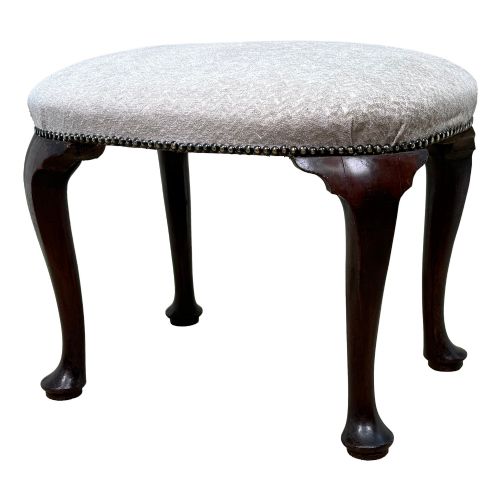
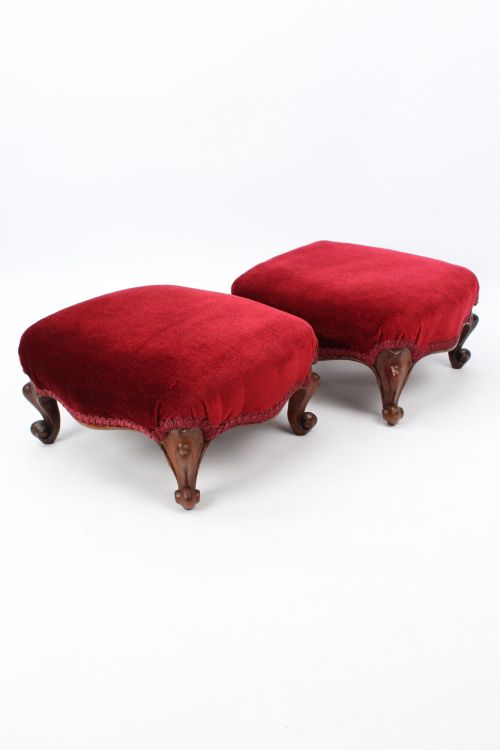
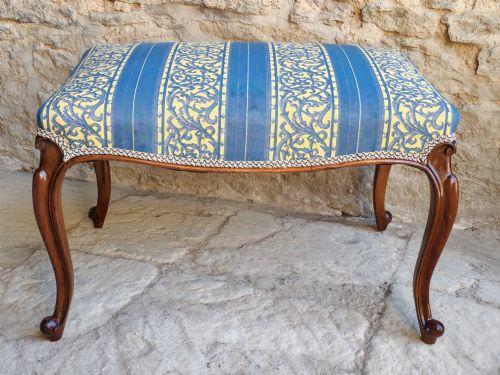
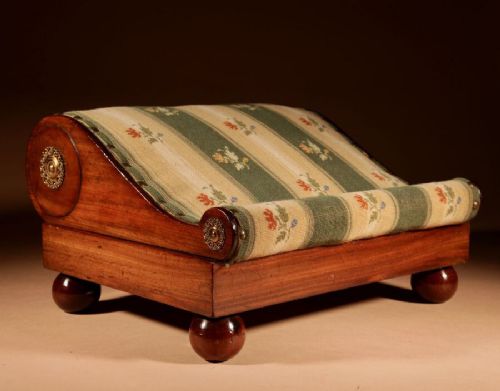
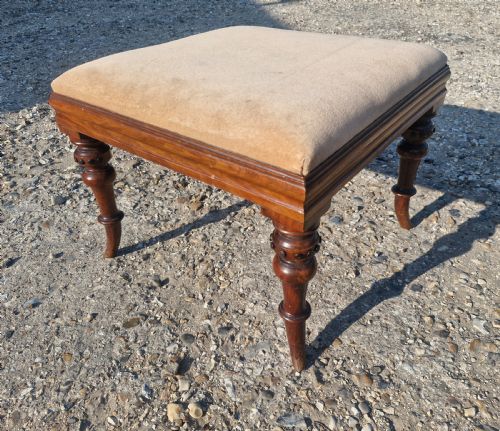
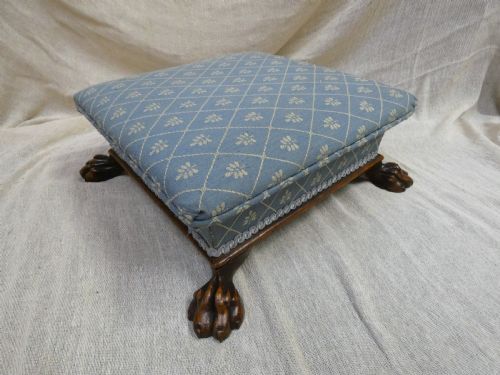
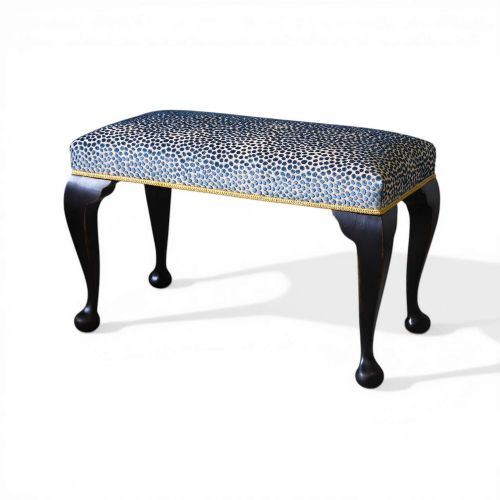
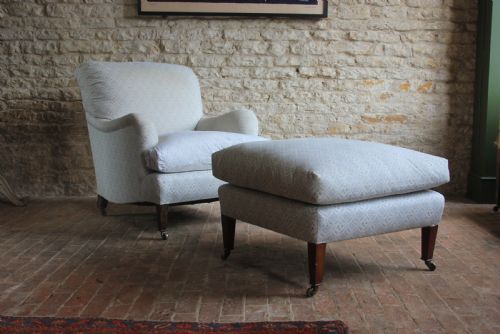
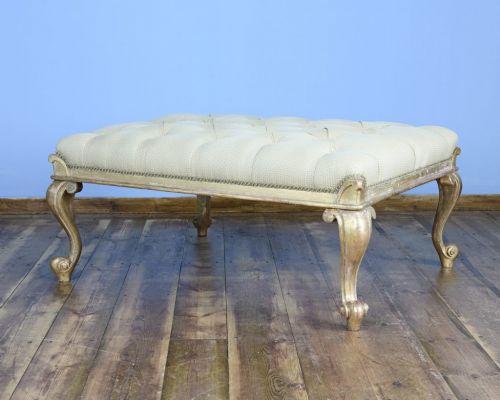
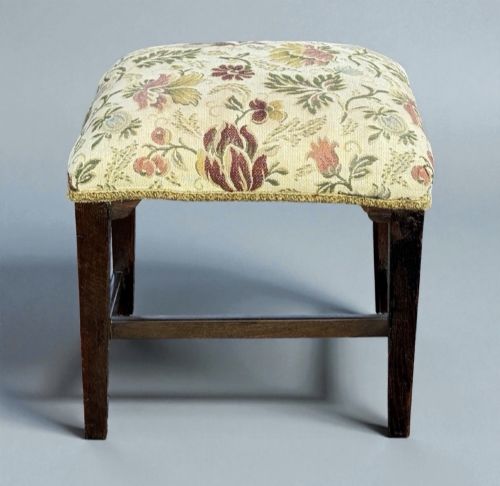
An upholstered foot stool provides a low support for resting feet or sitting, frequently taking the form of compact benches, square ottomans or long fireside seats. These pieces range from restrained Georgian frames to elaborate Victorian and Edwardian iterations.
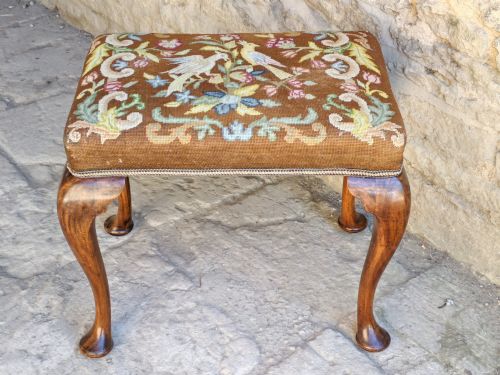
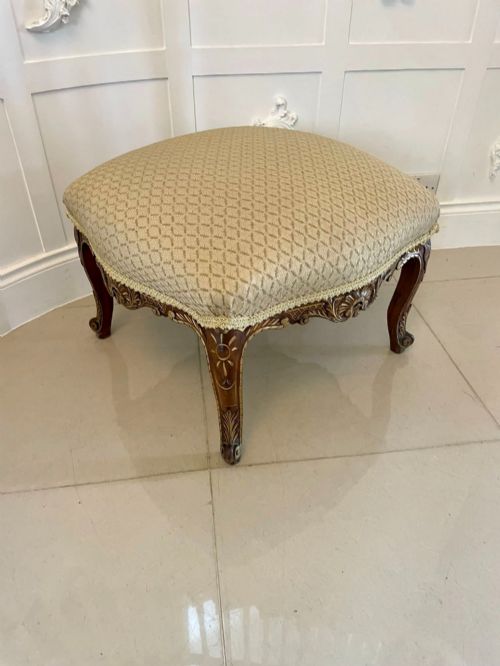
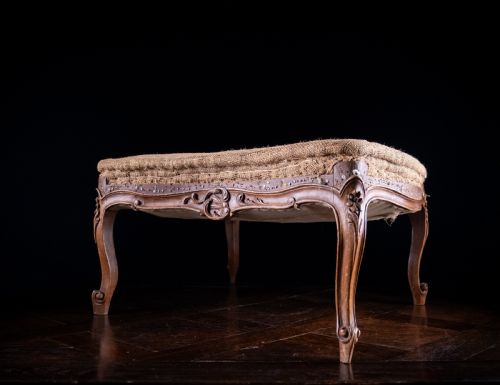
The most common examples encountered here date from the nineteenth century, built in mahogany or walnut and covered in velvet, leather, or antique tapestry. Many pieces reflect formal revival idioms such as Louis XV and Chippendale styles.
Beyond simple resting supports, larger variants function as window seats or low storage ottomans. The selection spans domestic dressing stools and grander library pieces.
How they were made
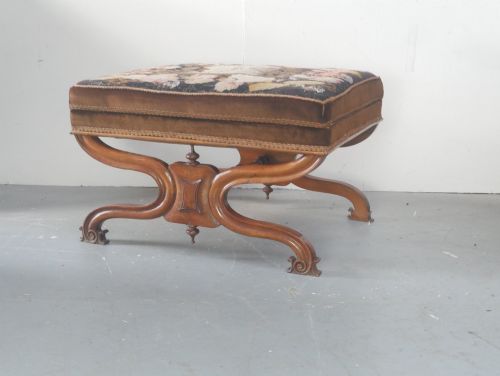
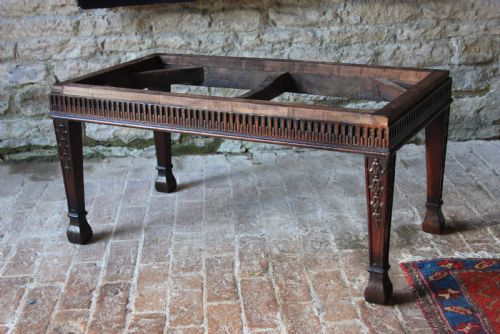
Makers shaped timber frames primarily from solid mahogany, walnut, and rosewood, employing carved cabriole legs, turned supports, or scroll terminals. Brass castors frequently appear on nineteenth-century examples to assist movement.
Upholstery relies on traditional textiles including wool tapestry, velvet, leather, and needlepoint. Interior padding sits above webbed or sprung bases depending on the period of construction.
Several Victorian footstools hide sturdy brass castors beneath their carved frames, ready to roll across the carpet at a moment's notice.
What varies in quality
The calibre of timber carving and the architectural sharpness of the frame define the upper tier of pieces. Dense hardwoods like rosewood and figured walnut indicate superior workshop output.
Proportion and the integrity of the joinery separate standard domestic seating from bespoke library or salon examples. The choice of covering textile, whether historic needlepoint or supple leather, further distinguishes the grade.
Howard & sons·Miles & Edwards
The Upholstered Foot Stool Glossary
- Ottoman
- A low upholstered seat without arms or back, often containing internal storage space.
- Cabriole leg
- A furniture leg that curves outward in a convex arc and tapers inward in a concave arc to a foot.
- Needlepoint
- Canvas work embroidery using a tent stitch, frequently seen on historic seat covers.
- Curule
- An ancient Roman shape featuring intersecting curved legs forming an X-frame structure.
Upholstered Foot Stool: Frequently Asked Questions
What is the difference between a footstool and an ottoman?
An ottoman traditionally provides a larger surface area and sometimes incorporates internal storage beneath the upholstered top. Footstools tend to be more compact pieces designed specifically to support seated legs.
Both forms share similar timber frames and textile upholstery across the Georgian and Victorian periods.
How do I date an antique footstool?
Dating relies on timber choice, such as eighteenth-century mahogany transitioning into nineteenth-century walnut and rosewood. Leg styles like cabriole, barley twist, or sabre feet provide clear chronological markers.
Construction methods and upholstery backing also help assign pieces to Georgian, Regency, or Victorian eras.
Were these stools used only for feet?
Many examples served multiple domestic functions including piano seating, fireside perches, and dressing table seats. Longer variants were frequently positioned as window benches in larger rooms.
Sturdy library examples were built to bear the weight of a person reaching for high shelves.
How do I care for antique upholstery?
Historic textiles require gentle surface cleaning and protection from direct sunlight to prevent fibre degradation. Leather elements benefit from occasional nourishing to maintain suppleness.
Wooden frames should be dusted with a dry cloth without applying modern chemical polishes.