



Queen Anne Vanity Seat
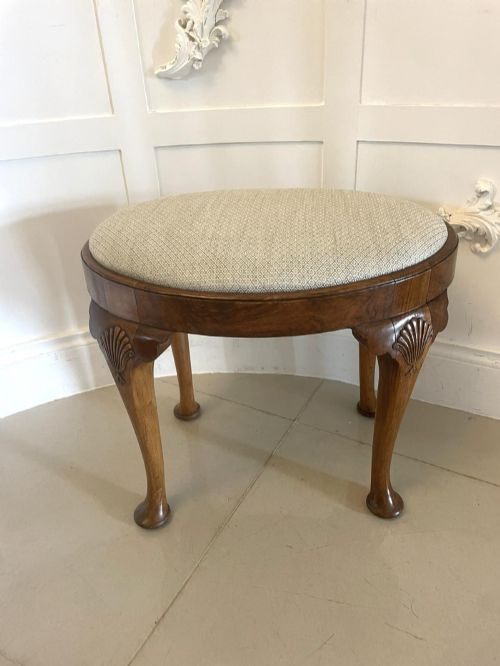
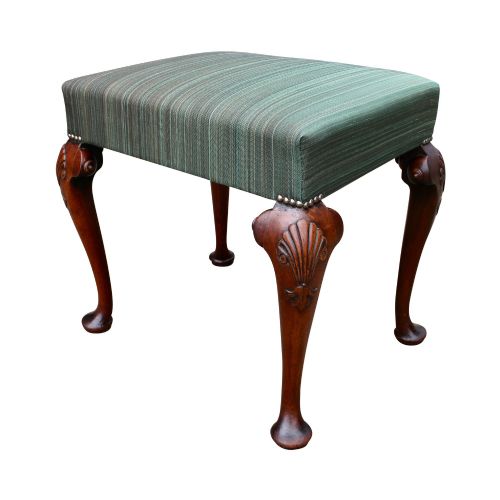
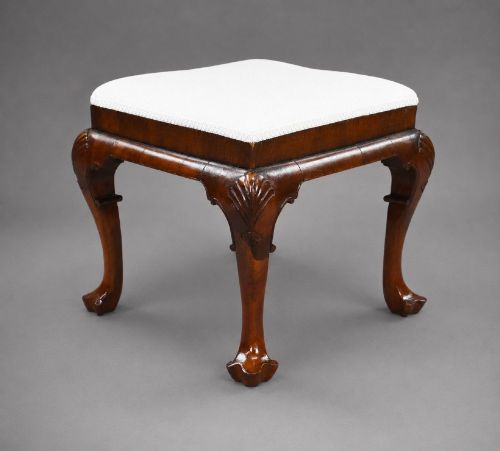
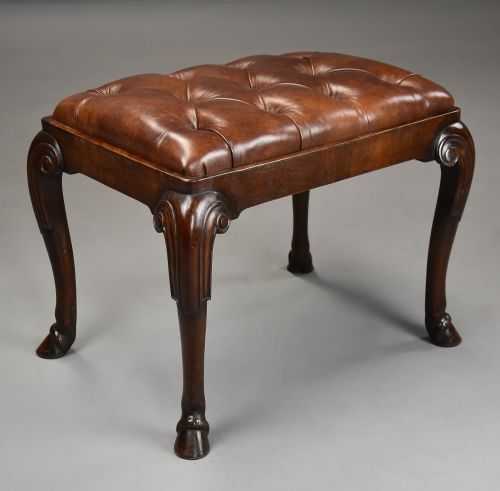
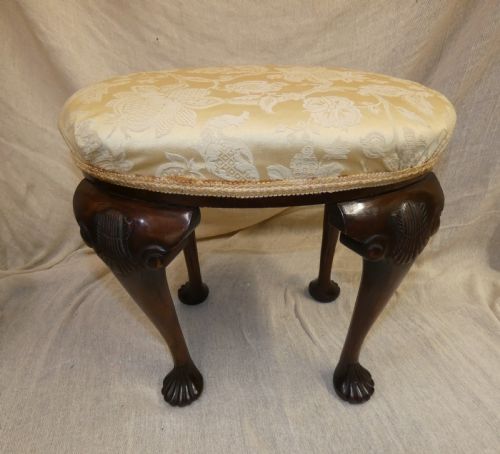
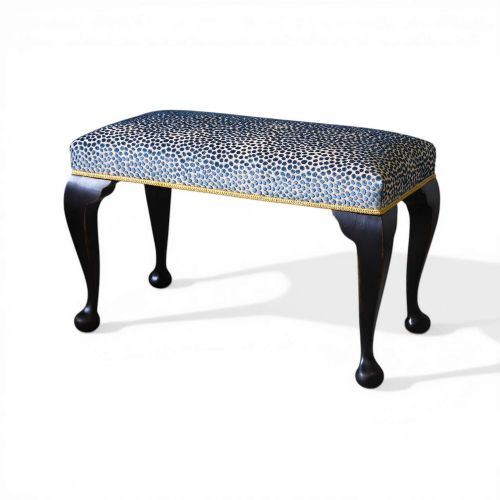
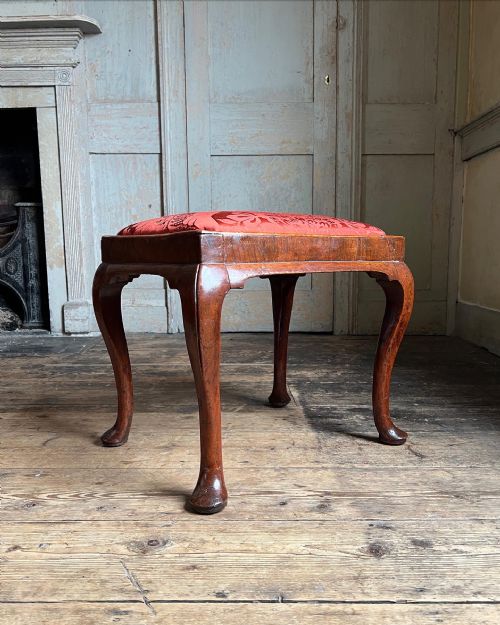
These queen anne vanity seat examples offer classic cabriole legs and supportive upholstered pads suited for dressing tables.
Queen Anne Vanity Seat
A queen anne vanity seat provides a low, compact perch designed specifically for use at a dressing table or vanity. These practical items serve primarily as bedroom or dressing room seating.
The selections encountered here span from the Georgian period through nineteenth century revivals and into the early twentieth century. Walnut and mahogany frame woods dominate the available offerings.
Stools and dressing stools appear frequently across the inventory, often sharing forms with piano stools and small footstools. Revival styles from the Victorian and Edwardian eras form a large portion of the current stock.
How they were made
Makers shaped the structural frames using solid walnut or mahogany, employing traditional joinery to secure the legs to the seat rails. Turning and shaping created the characteristic cabriole legs seen on many examples.
Upholstery forms an essential component of each piece, utilising fabrics such as textile, wool, and tapestry secured over padded seats. Brass details and turned woodwork occasionally appear as secondary elements.
Listings include items spanning from the Georgian period through to 1920, with walnut and mahogany as the primary frame materials.
What varies in quality
The calibre of a queen anne vanity seat depends largely on the crispness of the woodwork and the proportion of the cabriole legs. Superior examples display refined carving and substantial framing timber.
Upholstery execution and the selection of covering textiles also separate standard pieces from finer specimens. Older frames originating from the Georgian period carry distinct historical weight compared to later twentieth century revivals.
The Queen Anne Vanity Seat Glossary
- Cabriole leg
- A furniture leg that curves outward at the knee and tapers inward toward the foot, mimicking animal limbs. This form defines the classical silhouette of the Queen Anne style.
- Upholstery
- The materials, including padding, webbing, springs, and fabric cover, that form a soft seating surface. Historical pieces utilise textiles like wool and tapestry.
- Dressing stool
- A low seat manufactured for use at a dressing table or vanity mirror. These items typically feature padded tops and compact dimensions.
- Revival style
- A design movement that reinterprets historical aesthetics from earlier centuries, such as Georgian or Queen Anne forms. Many nineteenth and twentieth century pieces adopt these historic designs.
- George I
- The British regnal period spanning the early eighteenth century, associated with the origins of the Queen Anne style in furniture. Pieces from this era hold significant age.
Queen Anne Vanity Seat: Frequently Asked Questions
Where should I place a vanity seat?
These low seats fit comfortably beneath dressing tables, desks, or in bedroom corners where extra seating is useful.
Their compact footprint allows them to tuck away neatly when not in active use.
How do I identify a revival piece?
Revival items combine historical silhouettes, such as cabriole legs, with construction methods typical of the Victorian, Edwardian, or early twentieth century eras.
Examining the wood ageing and interior joinery helps distinguish nineteenth or twentieth century revivals from eighteenth century originals.
What woods were used for frames?
Walnut and mahogany serve as the primary timber materials for constructing the structural frames of these stools.
Some examples also incorporate ebonised finishes or alternative secondary woods beneath the upholstery.
Can I use needlepoint seats daily?
Needlepoint and tapestry covers offer durable surfaces suitable for regular sitting when the underlying frame remains sturdy.
Gentle placement and appropriate fabric care preserve the textile work over years of domestic use.