


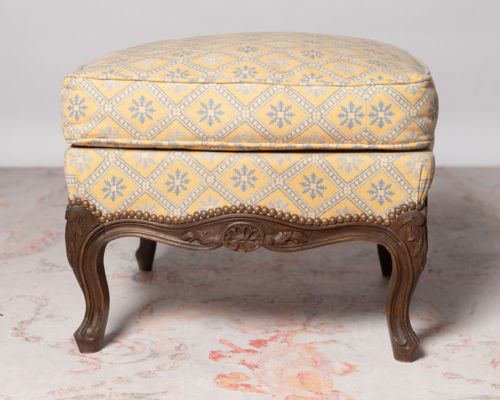


Carved Walnut Footrest
A carved walnut footrest provides solid timber framing and traditional upholstery, offering domestic comfort through Victorian and revival designs.
Carved Walnut Footrest
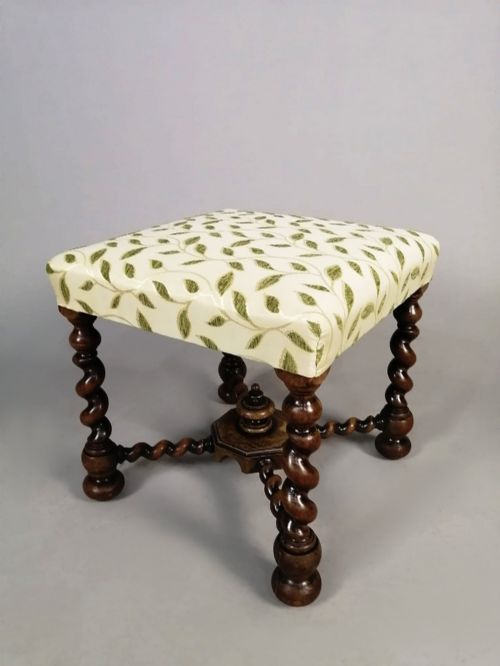
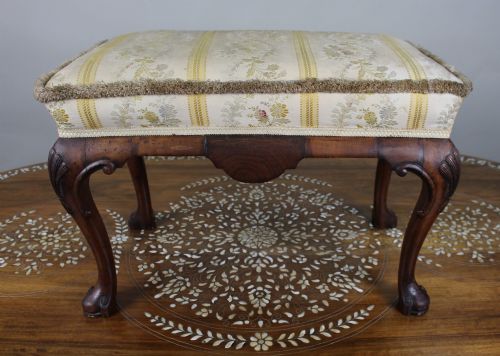
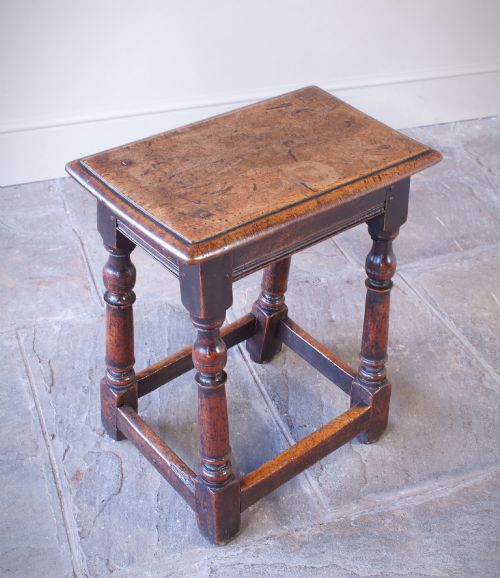
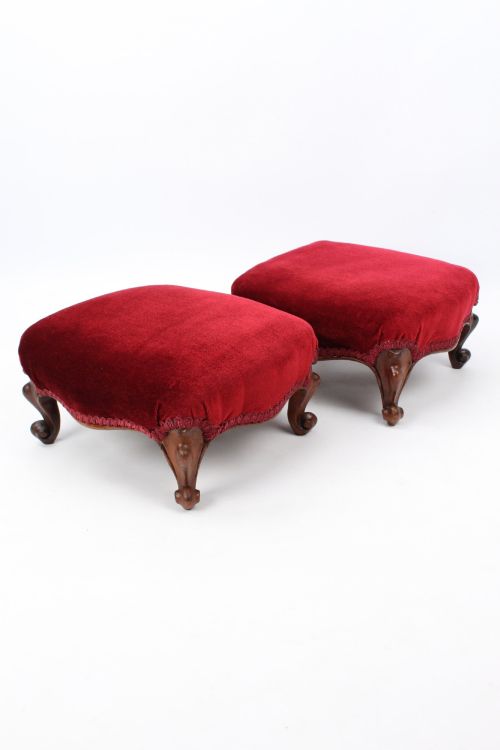
A carved walnut footrest brings together sturdy timber and decorative upholstery, appearing in forms such as fireside stools, fender stools, and dressing stools. You will regularly encounter Victorian pieces alongside revival interpretations referencing Queen Anne and French styles.
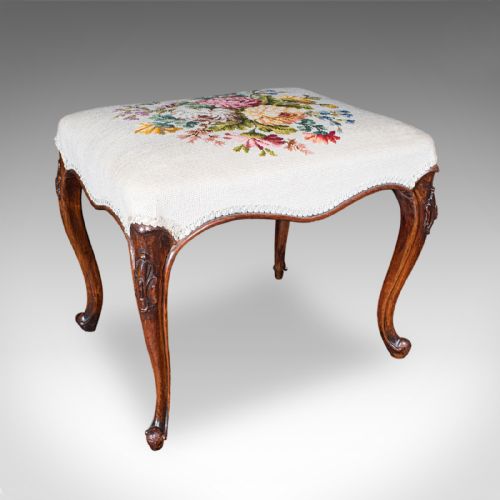
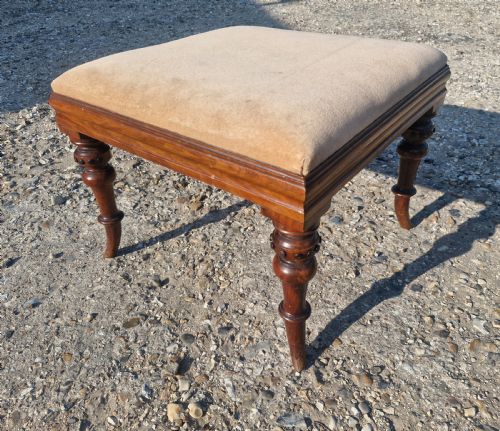
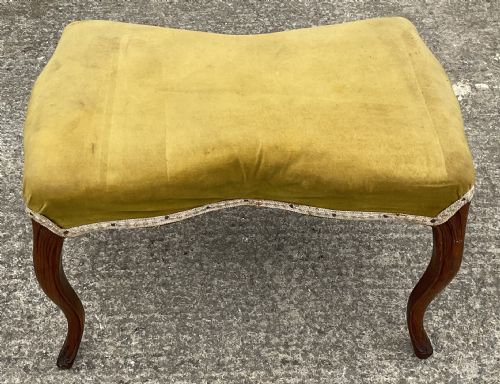
The timber framework typically displays shaped legs and carved details, supporting upholstered tops finished in needlepoint, tapestry, velvet, or fabric. These domestic pieces served practical purposes beside the hearth or chair, combining utility with decorative cabinet work.
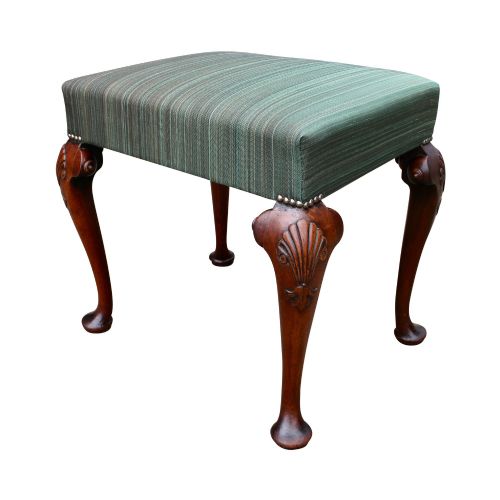
Most examples originate from the nineteenth and early twentieth centuries, showing variations from simple frames to elaborate cabriole leg structures secured with brass tacks.
How they were made
Cabinet makers utilised solid walnut to construct the structural frames, shaping timber into cabriole legs and supporting rails through traditional joinery. This dense wood allowed carvers to execute intricate decorative motifs and curvilinear profiles.
Upholstery layers applied over webbing and stuffing provided the padded surface, subsequently secured using textile covers like needlepoint or velvet held firmly by brass tacks.
Carved Walnut Footrest Retail Price Guide 2026
Typical asking prices for carved walnut footrest among the pieces listed under this phrase on Sellingantiques today, from the lower quarter to the upper quarter. They describe what is for sale here now, not the wider market.
What varies in quality
The refinement of the timber carving dictates much of the distinction, where crisp detailing on cabriole legs separates standard production from superior work. Crisp execution of revival styles reflects the skill invested by the maker.
The choice of upholstery materials, from simple woven fabrics to intricate needlepoint covers, influences the character and tactile appeal of each piece.
The Carved Walnut Footrest Glossary
- Walnut
- A dense, dark timber utilised for furniture framing due to its strength and capacity for detailed carving.
- Cabriole leg
- A styled furniture support curving outward at the knee and tapering inward toward the foot, typical of revival designs.
- Needlepoint
- A form of counted thread embroidery traditionally employed for durable upholstery covers on stools.
- Fender stool
- A long, narrow seating form designed to sit neatly along the hearth beside a fireplace fender.
- Brass tacks
- Small decorative fasteners used to secure fabric edges tightly to the wooden frame of a stool.
Carved Walnut Footrest: Frequently Asked Questions
How do I use a carved walnut footrest today?
These pieces function practically before armchairs or sofas to support feet, or serve as low occasional seating in dressing areas.
Their compact proportions also allow them to sit quietly beneath console tables or beside fireplaces when not in active use.
What periods do these footstools come from?
The selection spans the nineteenth century, with strong representation from the Victorian era and subsequent revival periods.
Later interpretations draw directly upon earlier Queen Anne and French cabinet-making styles.
What materials make up the upholstery?
Upholstery frequently incorporates wool needlepoint, tapestry, woven fabric, or velvet fastened securely with brass tacks.
Some examples also survive stripped to the frame, awaiting new fabric.
How do I distinguish revival styles from older pieces?
Revival items often date from the late nineteenth or early twentieth centuries while faithfully copying eighteenth-century forms like Queen Anne cabriole legs.
Examining the internal timber construction and wear patterns helps clarify the actual period of manufacture.