


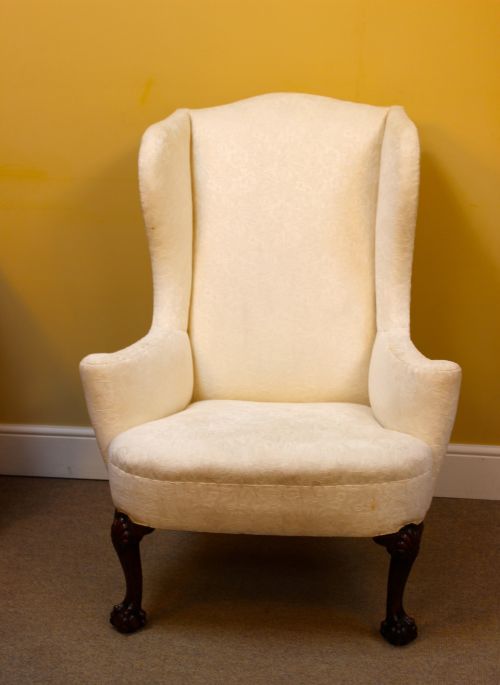
Upholstered Fireside Seat
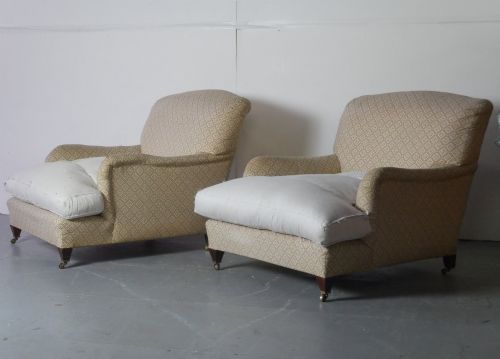
An upholstered fireside seat provides a low, supportive perch beside the hearth, combining wooden frames with generous padding for comfort.
Upholstered Fireside Seat
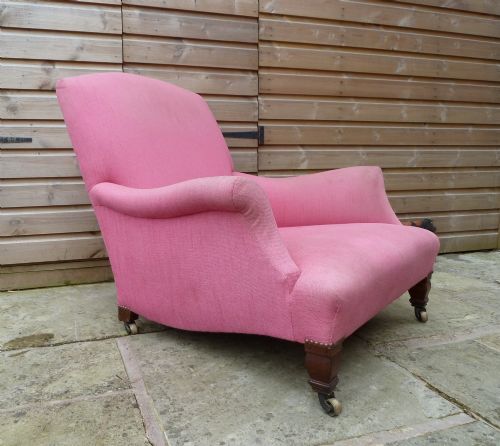
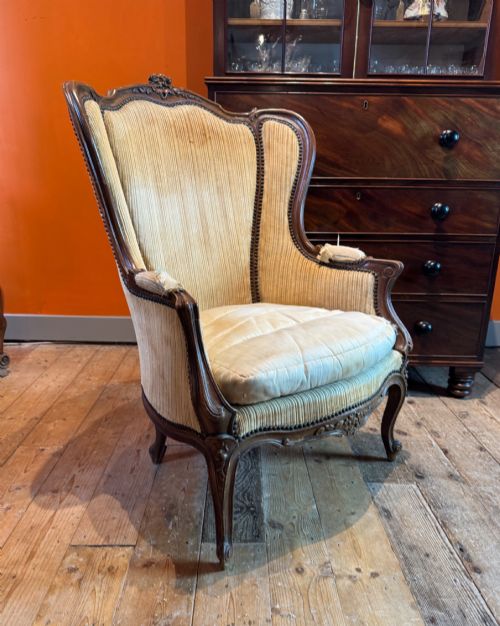
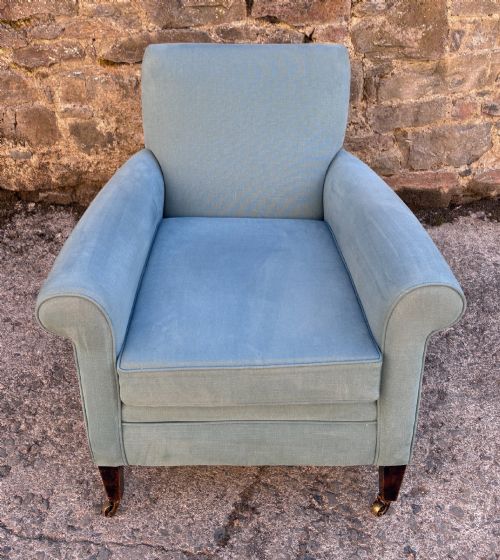
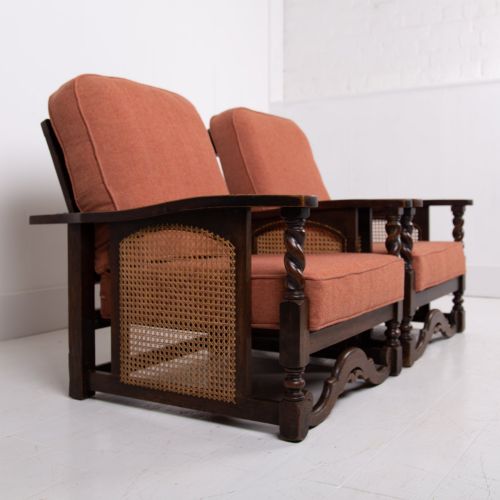
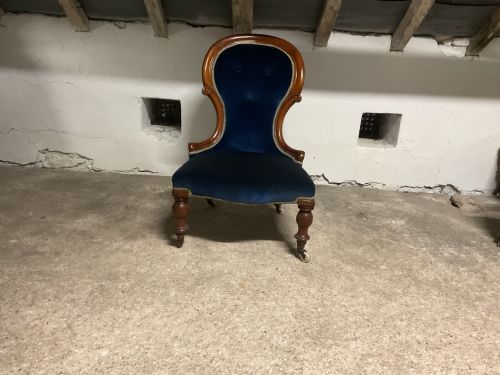
An upholstered fireside seat encompasses low armchairs, wingback chairs, nursing chairs, and occasional seating designed for warmth and comfort near a fireplace. The examples found here span the Victorian, Edwardian, and early twentieth-century periods, showing the evolution of domestic seating from formal parlours to relaxed country houses.
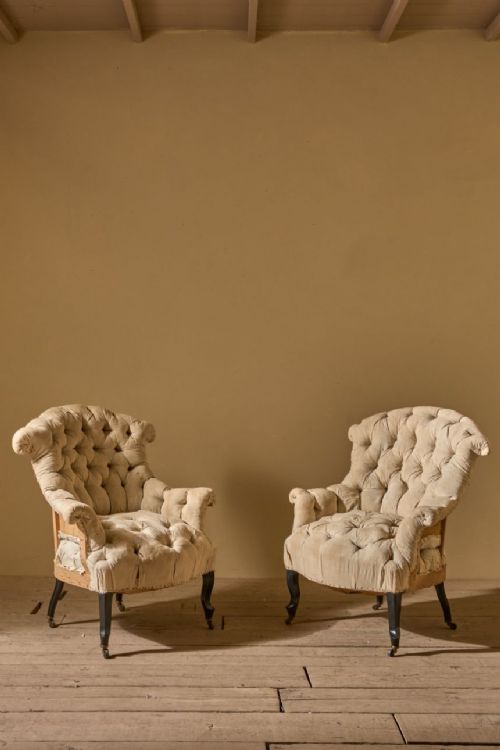
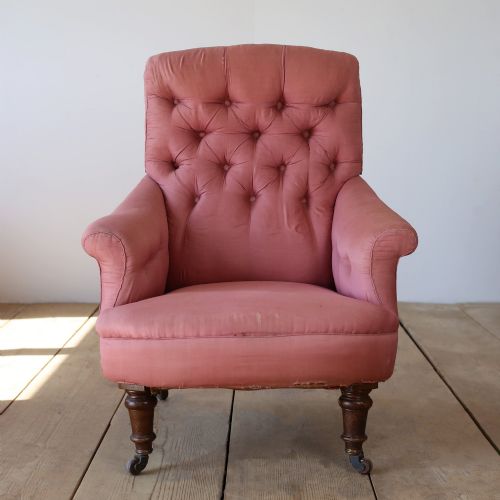
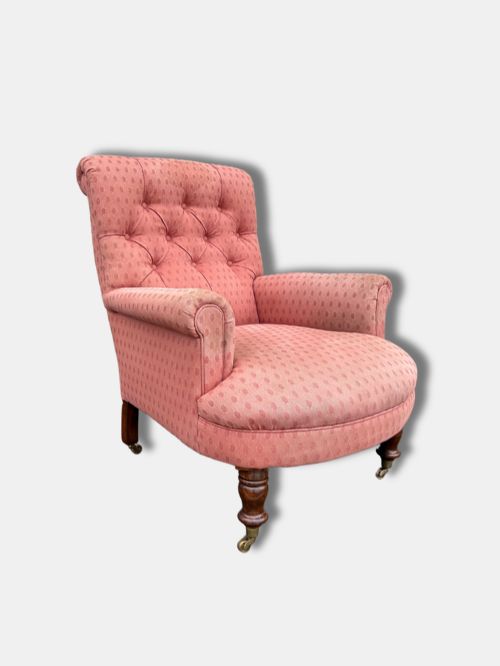
Armchairs and deep-seated armchairs dominate the selection, often featuring button backs or low profiles tailored for hearthside use. Alongside these, buyers will encounter nursing chairs, slipper chairs, and wingback chairs framed in walnut, mahogany, oak, or fruitwood.
Origins stretch from English workshops to French studios, incorporating regional interpretations such as Scottish School designs, Queen Anne revival forms, and Louis XV styles. The pieces range from straightforward nineteenth-century seating to elaborate club fenders and library chairs.
How they were made
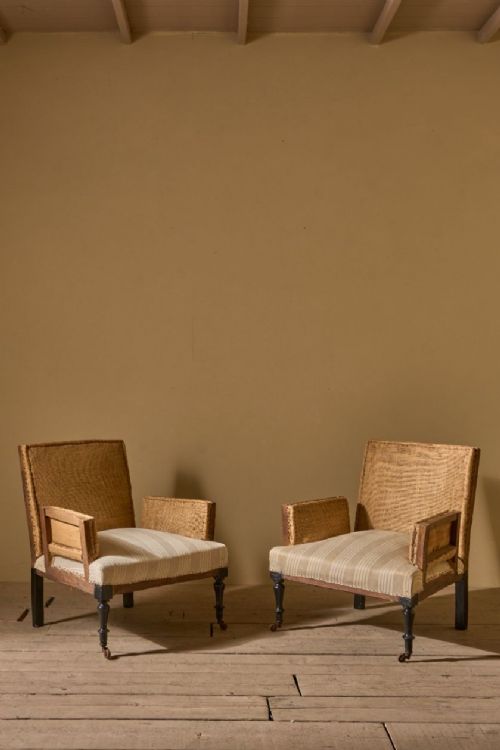
Frames rely on sturdy timbers including mahogany, walnut, and oak, shaped through traditional cabinet-making joints and turnings. Some pieces incorporate exposed carved woodwork or brass accents, while others conceal the structural frame entirely beneath upholstery.
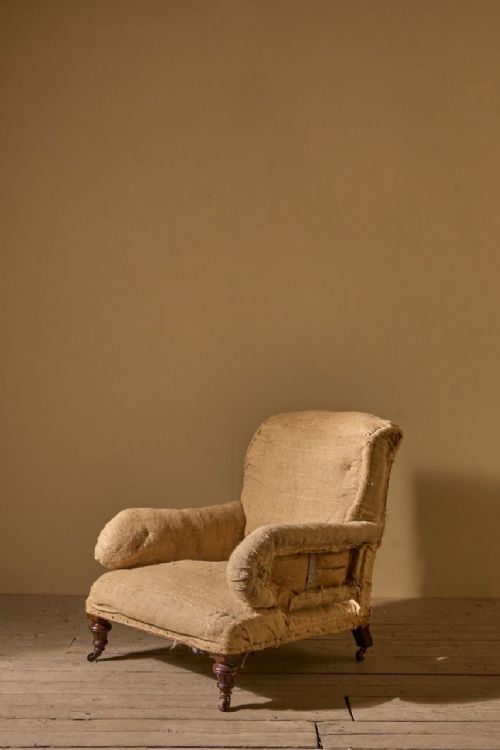
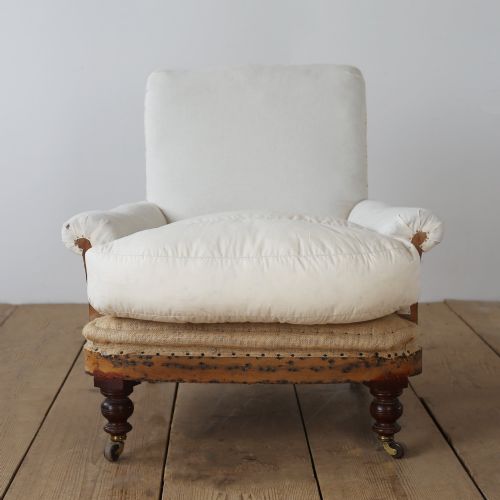
Padding and covering utilise traditional materials such as hessian and calico beneath top layers of velvet, leather, wool, and patterned fabric. Feathers and horsehair provide internal support in many period examples, secured with traditional buttoning techniques.
Listings feature periods spanning the Victorian era, Edwardian period, and early twentieth century, utilising walnut, mahogany, brass, leather, and velvet.
What varies in quality
The integrity of the underlying timber frame and the precision of the joinery set the baseline for longevity. Chairs with solid walnut or mahogany construction and robust internal webbing hold their shape better over generations.
Upholstery execution and stuffing materials distinguish standard workshop output from finer productions. Hand-stitched buttoning, proper feather or hair filling, and quality outer fabrics such as leather or heavy velvet reflect higher workshop standards.
Howard and Sons·SF Cullen·Hampton and Sons
The Upholstered Fireside Seat Glossary
- Wingback
- An armchair with side panels designed to shield the occupant from drafts near a fireplace. These wings trap heat around the head and shoulders.
- Button back
- An upholstery technique where buttons are pulled deep into the padding to create a textured, diamond-patterned surface. This secures the internal stuffing and provides firm support.
- Nursing chair
- A low-seated chair traditionally used in nurseries or bedrooms, designed with a low seat height for close tending. They often feature an upholstered back without arms.
- Bergere
- An enclosed upholstered armchair with wooden framing, originating in France. The sides are typically upholstered or filled with cane work.
- Hessian
- A coarse woven fabric, traditionally made from jute fibres, utilised as a strong foundation layer beneath top upholstery. It supports the internal stuffing of period seating.
Upholstered Fireside Seat: Frequently Asked Questions
How do I date a Victorian fireside chair?
Dating a Victorian chair involves examining the secondary timbers, the style of the carved woodwork, and the upholstery techniques used underneath. Victorian pieces often employ walnut or mahogany frames with button-backed padding.
Consulting the specific details of the turned legs and stylistic revivals, such as Queen Anne or Louis XV influences, helps narrow down the decade of production.
Are these chairs suitable for daily use?
Many period fireside seats remain sturdy enough for everyday seating, provided the frame and internal webbing are secure. Checking the stability of the joints ensures the chair can handle daily weight.
Chairs with newly reinforced stuffing or calico lining offer a reliable foundation for modern living spaces while retaining their antique character.
What wood types are common?
Walnut and mahogany appear most frequently in these listings, valued for their rich grain and structural strength. Oak and general hardwoods are also utilised in specific regional styles.
Exposed wooden frames often display polished finishes that highlight the natural grain and age of the material.