
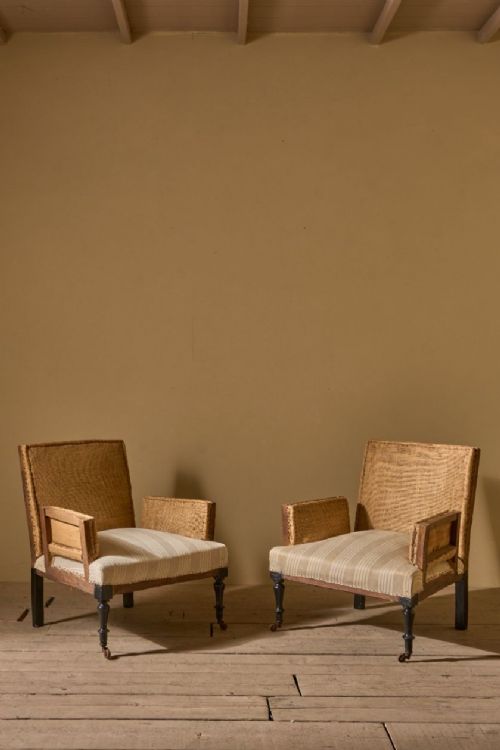
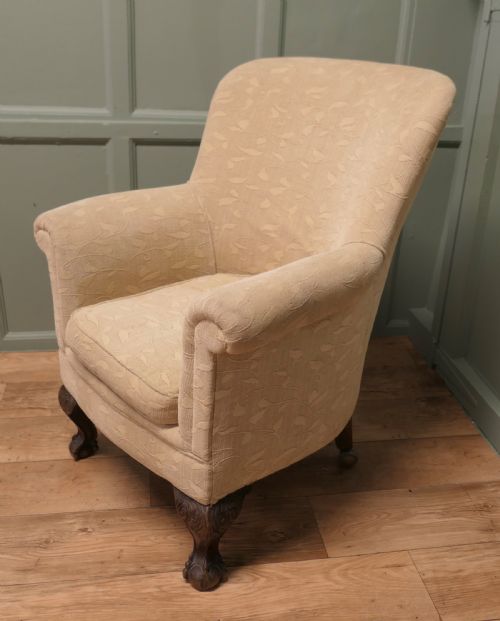
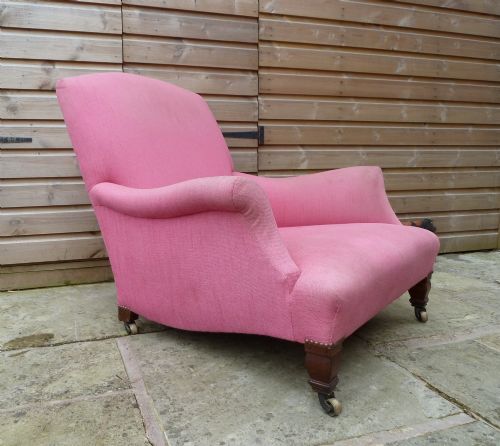


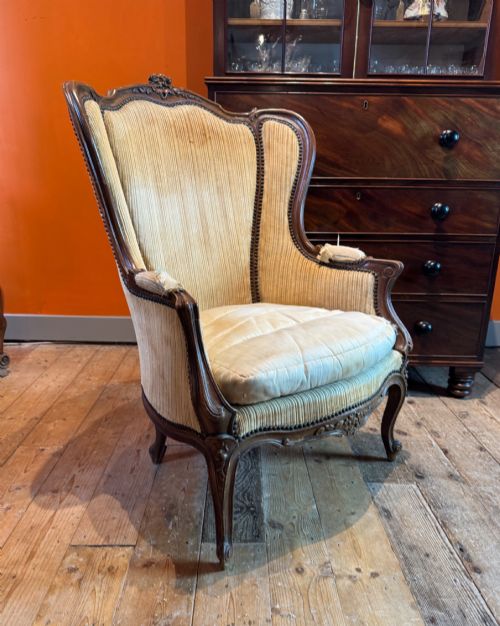
Upholstered Fireside Armchair
An upholstered fireside armchair provides comfortable seating by the hearth, combining supportive cushioning with substantial wooden frames from past centuries.
Upholstered Fireside Armchair
The upholstered fireside armchair encompasses diverse seating options designed for domestic comfort, spanning the eighteenth, nineteenth, and early twentieth centuries. Buyers searching this phrase encounter numerous variations including wingback designs, deep-seated lounge chairs, and parlour seating.
Victorian and Edwardian iterations dominate the selection, often featuring button backs, mahogany frames, and sprung upholstery. Georgian and eighteenth-century examples appear alongside later revival styles such as Queen Anne and Howard and Sons interpretations.
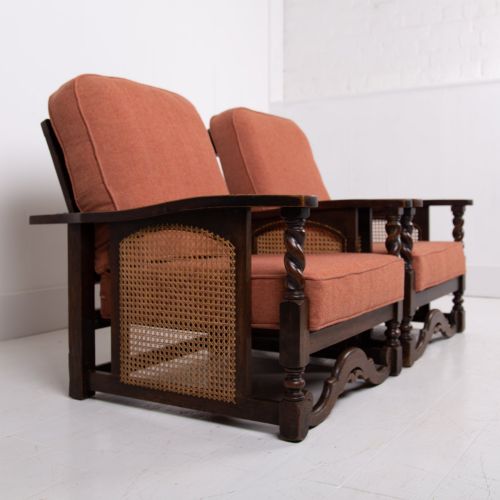
English country house aesthetics influence many of the available pieces, utilising traditional textiles like velvet, calico, and leather over robust wooden frames. Regional variations include Scottish school leather armchairs and Welsh oak seating.
Materials and Construction
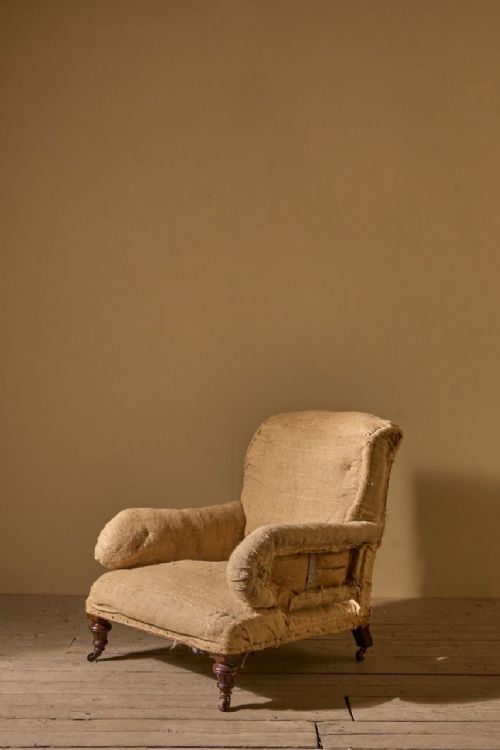
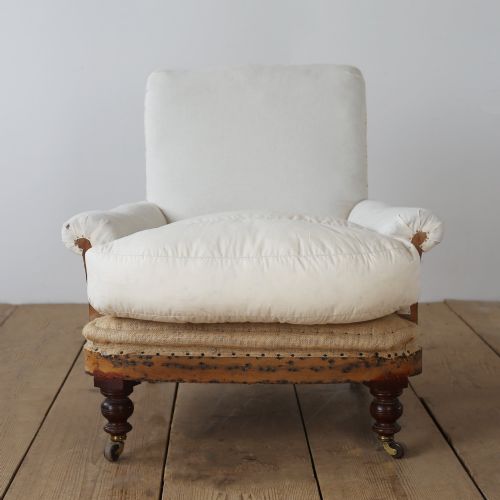
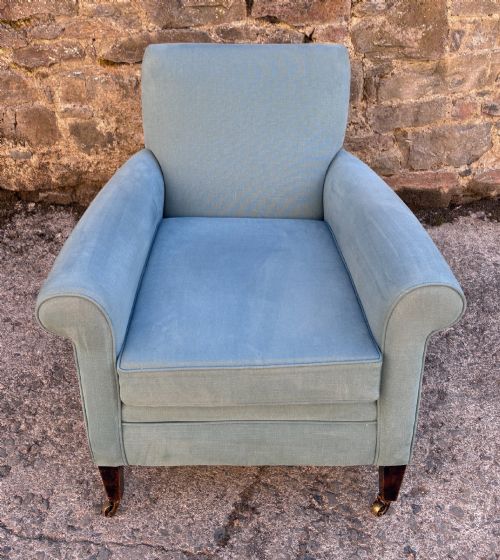
Framemasters utilised hardwoods such as mahogany, walnut, oak, and rosewood to construct the structural supports of each upholstered fireside armchair. Brass castors frequently appeared on nineteenth-century legs to facilitate movement across floor coverings.
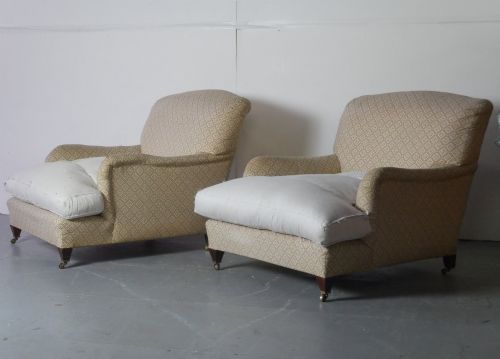
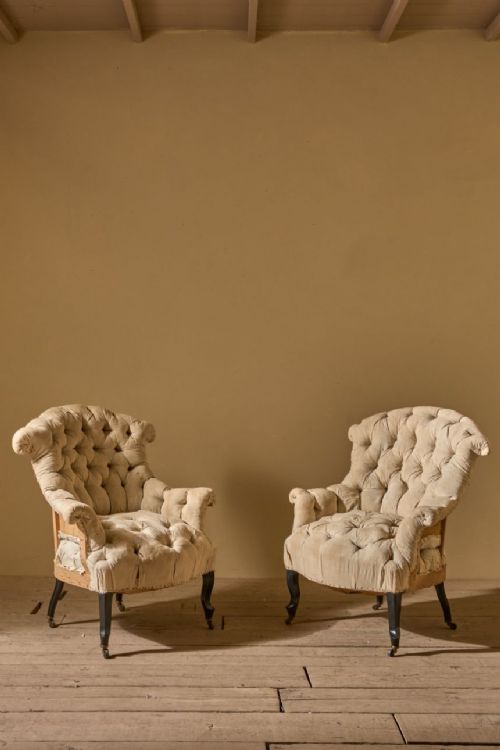
Upholstery techniques involved stuffing internal compartments with traditional fillings like feathers, secured beneath outer layers of fabric, velvet, leather, or calico. Button backing and show-wood frames highlighted the craftsmanship of Victorian and Edwardian makers.
Listings feature mahogany, walnut, oak, and rosewood frames paired with velvet, leather, calico, and fabric upholstery.
Distinctions in Quality
The distinction between standard production and superior examples rests upon the architectural integrity of the wooden frame and the precision of the joinery. Mahogany or walnut frames exhibiting crisp carving display a higher grade of manufacture than simpler utility pieces.
Upholstery execution significantly influences overall standard, particularly in the symmetry of buttoning, the tautness of the fabric application, and the quality of interior stuffing such as feather filling. Makers adhering to established workshops like Howard and Sons demonstrate refined proportion and comfort.
Howard and Sons·Gillows·SF Cullen·Shoolbred
The Upholstered Fireside Armchair Glossary
- Wingback
- An armchair style featuring side panels designed to shield the occupant from draughts while seated near a fireplace. These projections extend upward from the arms to the backrest.
- Button Back
- An upholstery method where depressions are formed in the padding by stitching deep buttons through to the frame in a geometric grid. This technique secures the internal filling and creates a tufted appearance.
- Show-Wood
- Exposed polished wooden framing on an armchair where the timber structure remains visible around the upholstered sections. This decorative approach highlights the grain of mahogany or walnut.
- Castor
- A small wheel attached to the base of furniture legs to allow smooth rolling across floors. Brass fittings frequently appear on nineteenth-century examples.
- Calico
- A plain-woven unbleached cotton fabric often utilised as an inner lining or base cover beneath decorative top upholstery. It provides a durable foundation for armchairs.
Upholstered Fireside Armchair: Frequently Asked Questions
How do I identify a Victorian armchair?
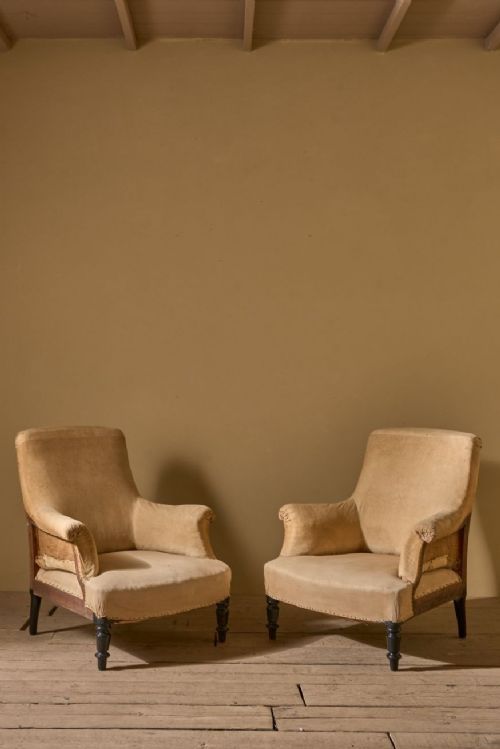
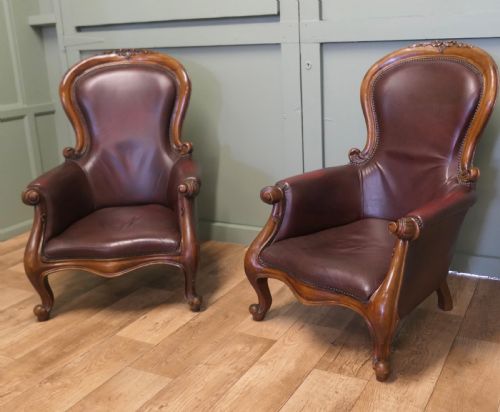
Victorian examples typically display dark timbers such as mahogany or walnut, frequently incorporating button back upholstery and turned legs fitted with brass castors. Balloon backs and spoon backs also characterise this period.
Proportions tend to be generous to accommodate nineteenth-century comfort standards, often pairing with velvet or leather coverings.
What defines a wingback fireside chair?
Wingback chairs feature characteristic side panels attached to the arms, originally intended to trap heat from the fire and block room draughts. These pieces often date from the Georgian era or later revival periods.
They provide high back support and deep seating dimensions suitable for a library or hearth setting.
Are Howard and Sons armchairs different?
Howard and Sons armchairs are distinguished by superior upholstery construction, deep sprung seats, and specific maker stamps or branded castors. They represent the pinnacle of late nineteenth-century English seating comfort.
Collectors prize these pieces for their exceptional ergonomic design and quality materials.
How should I care for antique leather upholstery?
Antique leather requires gentle cleaning with appropriate conditioning balms to maintain flexibility and prevent the natural material from drying out over time. Avoid placing leather seating in direct sunlight or beside intense heat sources.
Regular dusting preserves the surface finish without damaging the original patina.