


Classic Wingback Chair
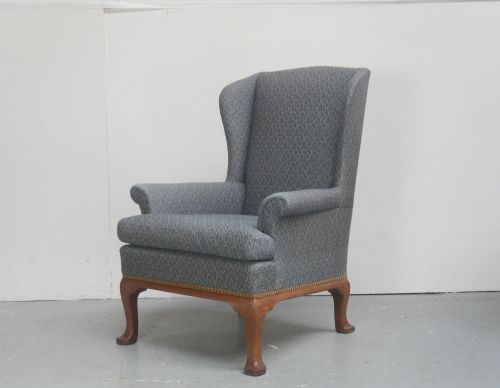
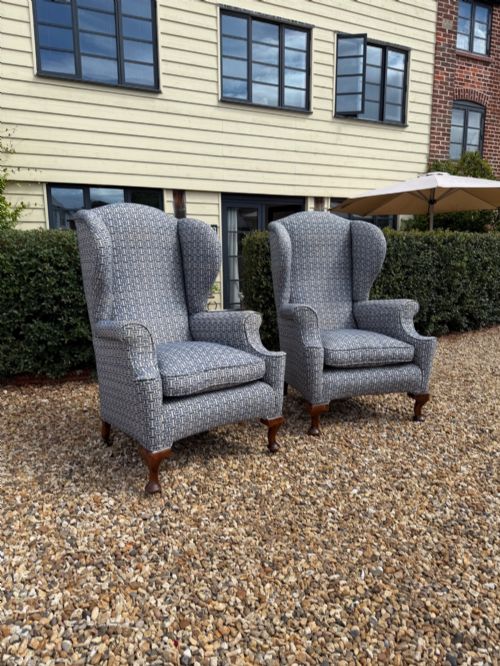
These classic wingback chair examples offer enduring comfort and formal presence, built around deep seats and protective side panels.
Classic Wingback Chair
A classic wingback chair provides deep seating enclosed by characteristic side panels designed to deflect draughts near a fireplace. These armchairs appear in forms ranging from neat Scottish iterations to large George III variants and 19th Century French carved walnut bergere models.
Buyers encounter diverse stylistic interpretations on this page, including Queen Anne Revival, Georgian style, and Edwardian pieces. Materials span mahogany, walnut, and hardwood frames upholstered in leather, velvet, and standard fabric.
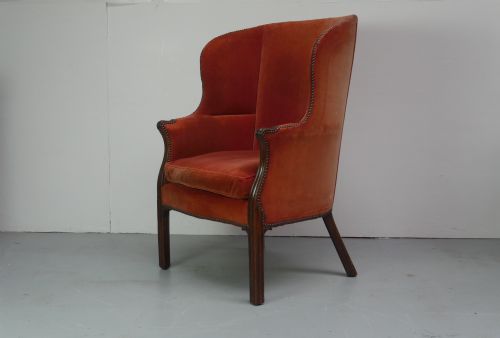
The selection includes specialised forms such as barrel back armchairs and Regency Chesterfield brown leather porters armchairs. Many examples reflect traditional British and 19th Century English design principles.
Materials and construction
Construction relies upon solid timbers including mahogany, walnut, and hardwood to form durable structural frames. Wood frames support padded upholstery finished in leather, velvet, or woven fabric.
Brass elements and detailed woodwork frequently appear on traditional British pieces. Skilled carvers shaped hardwood frames into distinct profiles, notably seen in carved walnut models.
Listings feature periods spanning from the 18th Century through the Edwardian era, utilising mahogany, walnut, brass, and leather.
Assessing quality
Quality rests upon the integrity of the hardwood frame and the depth of the carving. Superior execution shows in the balanced proportions of the wings and the clean lines of the armrests.
The choice of covering material elevates a piece, distinguishing standard fabric upholstery from deep-buttoned leather or rich velvet. Original structural soundness dictates whether a chair requires complete re-upholstery.
HOWARD AND SONS·GILLOWS
The Classic Wingback Chair Glossary
- Wingback
- An armchair featuring protective side panels attached to the arms and back. These panels traditionally shielded occupants from cold draughts.
- Barrel back
- A seating form where the back and arms form a continuous semicircular curve. This enclosed shape offers additional thermal protection.
- Bergere
- An enclosed upholstered armchair with wooden framing exposed around the sides and back. This French form utilises cane or fabric panels.
- Porters armchair
- A tall, fully enclosed hooded chair designed to keep porters warm at mansion entrances. Regency iterations utilise leather upholstery.
- George III
- A British stylistic period spanning the mid to late 18th Century. Pieces from this era display classical proportions and refined woodwork.
Classic Wingback Chair: Frequently Asked Questions
What is a classic wingback chair used for?
These armchairs serve primarily as fireside seating, where the extended side panels trap heat and block cold air.
They also function as reading chairs, providing a private and supportive enclosure for prolonged sitting.
How do I identify a Georgian style wingback chair?
Georgian style pieces typically feature disciplined proportions, elegant wooden legs, and traditional upholstery methods.
They reflect the formal design standards popular during the 18th Century and later revival periods.
What materials cover these armchairs?
Upholstery options range from durable leather and velvet to traditional woven fabric.
Frames are constructed from sturdy timbers including mahogany, walnut, and general hardwood.
How do I care for leather wingback chairs?
Leather upholstery requires regular dusting and occasional conditioning to maintain suppleness and prevent cracking.
Keep these chairs away from direct heat sources and strong sunlight to preserve the finish.