
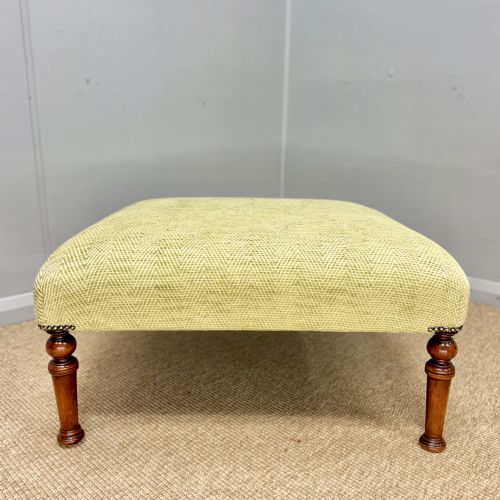

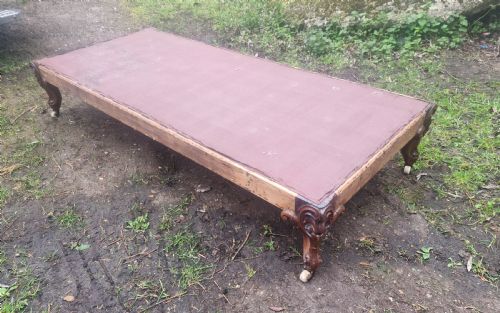


Upholstered Coffee Table Stool
An upholstered coffee table stool offers a low, generous surface for resting feet or serving trays, bridging the gap between seating and a table.
Upholstered Coffee Table Stool
When you search for an upholstered coffee table stool, you encounter large footstools, centre stools, and ottomans that double as low tables. These pieces span the nineteenth century, including Georgian and Victorian periods, alongside later twentieth-century examples.
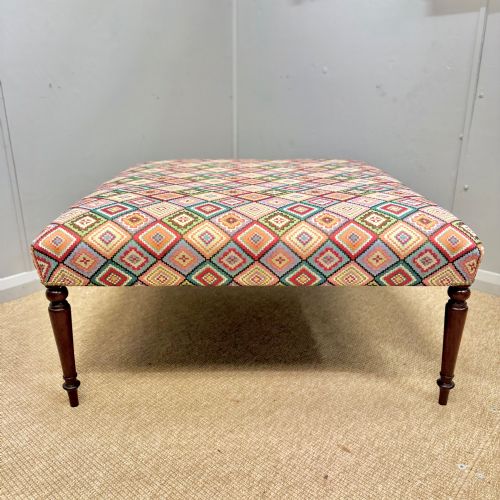
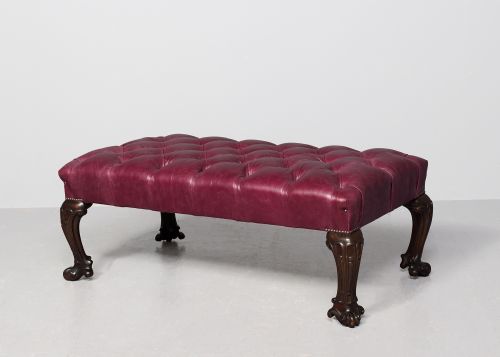
The versions most common on this page are substantial nineteenth-century centre stools and footstools framed in mahogany, walnut, or rosewood. They arrive covered in various hides, fabrics, and geometric textiles, ready to function in a living space.
Makers designed these low forms to sit centrally in a room or before a fireplace, offering a stable surface for trays or books alongside traditional foot-resting purposes. Their proportions range from square formats to grand scale rectangles.
How they were made
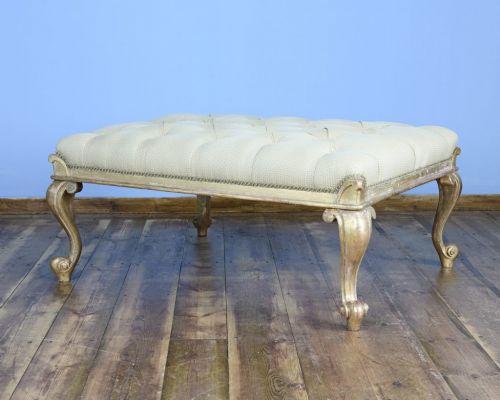
Timbers such as mahogany, walnut, rosewood, and oak form the structural frames, often shaped with carving or parcel gilding. Joinery secures these heavy woods to support frequent use as tables and seats.
Upholstery techniques involve buttoning and tensioning hides, leather, fabric, and zebra hide over the frames. Brass details occasionally accent the wood and leather work on these pieces.
The listings here feature nineteenth-century furniture built from mahogany, walnut, rosewood, oak, and brass.
What varies in quality
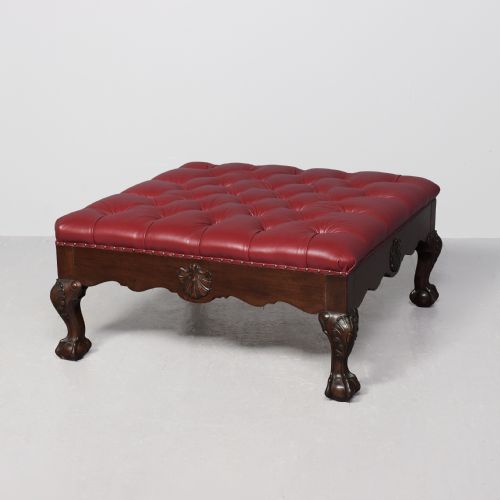
The substance of the timber frame dictates the baseline quality, with dense hardwoods like rosewood and mahogany marking the upper tiers. Finer pieces display careful carving, parcel gilding, or well-executed revival styles like Chippendale.
The choice and execution of the covering material also separate standard examples from exceptional ones. Deep buttoning in high-grade red or burgundy hide requires precise craftsmanship that elevates the piece beyond basic fabric upholstery.
The Upholstered Coffee Table Stool Glossary
- Centre stool
- A large freestanding stool designed to sit in the middle of a room rather than against a wall. These pieces often serve double duty as low tables.
- Buttoned
- An upholstery technique where stitches pull the surface fabric or hide tight against deep stuffing to create a pattern of indentations. This method secures the padding and adds texture.
- Parcel gilt
- A decorative finish where selected portions of a wooden frame receive a thin application of gold leaf. This highlights specific carved details against the dark timber ground.
- Chippendale style
- A classic eighteenth-century design revival characterised by rich mahogany and intricate carved ornament. It reflects the aesthetic popularized by Thomas Chippendale.
- Ottoman
- A low, upholstered seat or stool without a back or arms. In larger formats, it functions identically to a centre stool or coffee table.
Upholstered Coffee Table Stool: Frequently Asked Questions
How do I use an upholstered stool as a coffee table?
Place a rigid tray on top of the upholstered surface to hold cups, glasses, and books securely. This creates a stable tabletop while keeping the soft, low profile of the stool.
Ensure the tray spans enough of the surface to distribute weight evenly across the padding. The surrounding upholstery remains accessible for resting feet when the tray is removed.
Are these stools sturdy enough to sit on?
Solid hardwood frames built from mahogany, walnut, and oak provide robust structural support for seating. Nineteenth-century construction methods prioritize durability for daily use.
Heavier frames easily accommodate multiple people sitting down. The firm padding underneath the leather or fabric top acts as a proper seat.
How do I identify a Victorian piece?
Victorian pieces often utilise dense rosewood or walnut timbers paired with deep buttoned leather or heavy fabric upholstery. Proportions tend to be grand and heavy, reflecting mid-nineteenth-century taste.
Carved details on the wooden frames follow the revival styles popular during the reign of Queen Victoria. Construction marks and timber ageing further confirm this period.
What is the difference between an ottoman and a centre stool?
Ottomans typically offer large, fully upholstered surfaces designed for resting legs or sitting from any angle. Centre stools often display more visible wooden frames with carved legs beneath the upholstery.
Both terms frequently overlap in antique descriptions when referring to low, multi-use furniture. The primary distinction lies in how much of the wooden frame remains exposed.