

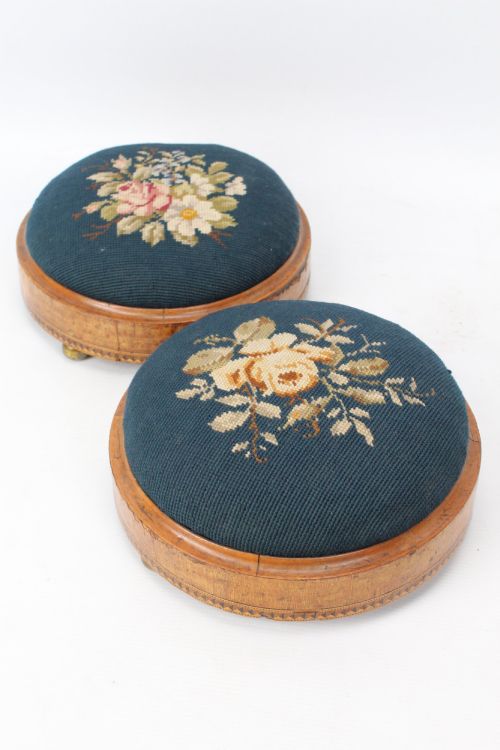


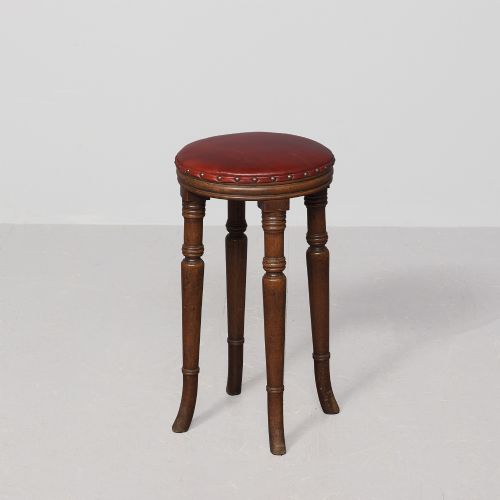


Upholstered Circular Stool
An upholstered circular stool is a versatile seat that brings period charm and compact seating to any room.
Upholstered Circular Stool
An upholstered circular stool provides compact seating and decorative presence across periods from George III to Art Deco. You will encounter various forms here, including adjustable piano stools, boudoir seats, and low footstools.
The materials span timber frames in mahogany, walnut, and painted finishes paired with top coverings in fabric, textile, calico, and leather. These pieces originate from English and French workshops, showing styles from Louis XV and Empire to Victorian and Art Deco.
How they were made
Timber frames are constructed from walnut, mahogany, and timber with carved details, gilt paint, or Tunbridge inlay. Joinery and turning support the round seat bases.
Upholstery relies on textiles, fabric, calico, and tan leather, sometimes combined with brass screw mechanisms for height adjustment on piano stools.
Upholstered Circular Stool Retail Price Guide 2026
Typical asking prices for upholstered circular stool among the pieces listed under this phrase on Sellingantiques today, from the lower quarter to the upper quarter. They describe what is for sale here now, not the wider market.
Some nineteenth-century pianists enjoyed spinning their seats so enthusiastically that the wooden screw threads still wear a shiny patina today.
What varies in quality
The refinement of the wooden frame separates standard examples from exceptional ones, particularly where hand-carved ornamentation, painted gilt, or inlaid details appear. Tunbridge inlay and elaborate walnut or mahogany turnings show greater workshop investment.
The sophistication of the upholstery finish and the complexity of mechanical elements, such as adjustable screw tops on piano stools, also divide simpler utility pieces from finer salon furnishings.
James Shoolbred
The Upholstered Circular Stool Glossary
- Piano stool
- A seat designed for use at a keyboard, often featuring an adjustable screw top to alter the height.
- Tunbridge inlay
- A form of decorative woodworking using tiny mosaic wood blocks to create geometric or pictorial patterns, seen on Victorian pieces.
- Calico
- A plain-woven textile typically used as a foundational under-upholstery layer before the final top cover.
- Empire style
- A neoclassical design movement originating in early nineteenth-century France, characterised by classical motifs and rich surfaces.
Upholstered Circular Stool: Frequently Asked Questions
What is an upholstered circular stool used for?
These round seats serve as footstools, piano benches, or dressing table seats depending on their height and mechanical adjustments. Their compact footprint allows them to fit easily beside chairs or under tables.
Taller versions work well at bars or desks, while low footstools pair with armchairs for resting feet during long evenings.
How do I date a circular stool?
Dating relies on the combination of timber choice, carved motifs, and upholstery styles visible across the frame. Victorian examples often show dark mahogany with elaborate carving, while Art Deco pieces use walnut and streamlined lines.
Checking for mechanical screw systems and stylistic markers like Empire or Louis XVI influence helps narrow the decade of origin.
Are piano stools adjustable?
Many piano stools from the nineteenth century feature a central wooden screw mechanism that raises or lowers the circular top. This allowed musicians to find a comfortable height relative to the keyboard.
Turning the seat top clockwise or counter-clockwise operates the internal thread within the walnut or mahogany column.
What fabrics cover these stools?
Upholstery materials range from simple calico foundations to patterned textiles, petit point tapestry, and smooth tan leather. Wool-work and decorative weaves often reflect the aesthetic tastes of the Victorian period.
Later Art Deco examples favour cleaner leather or smooth textile finishes that complement walnut frames.