
Upholstered Balloon Back
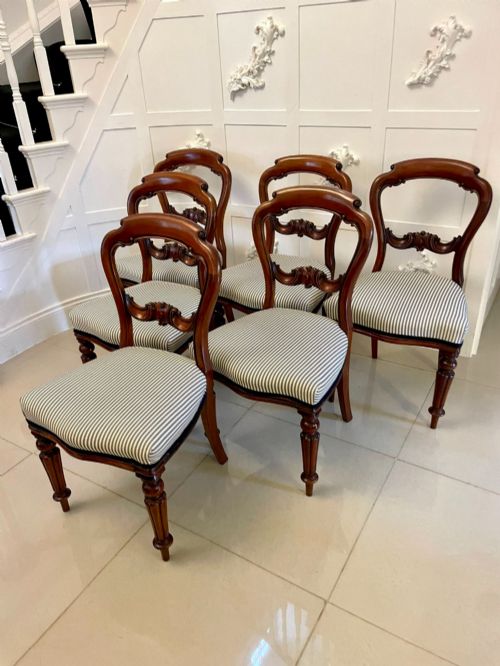
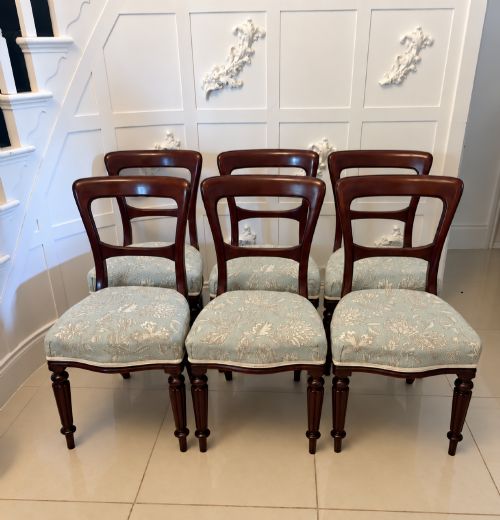
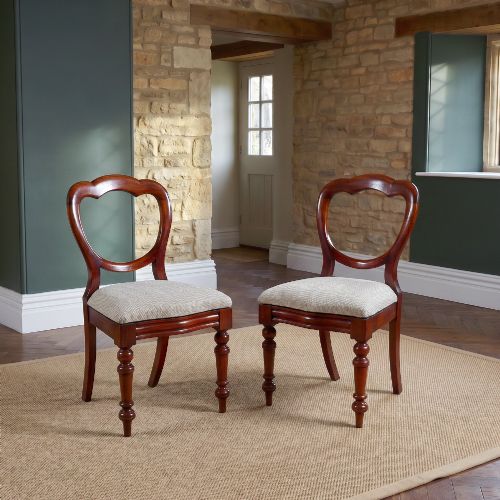
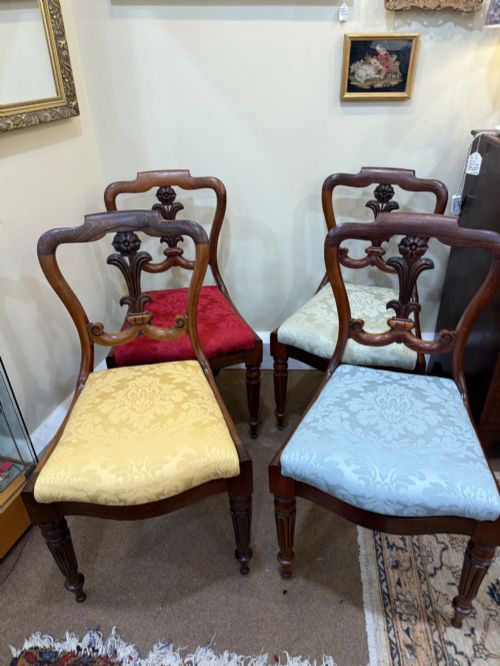
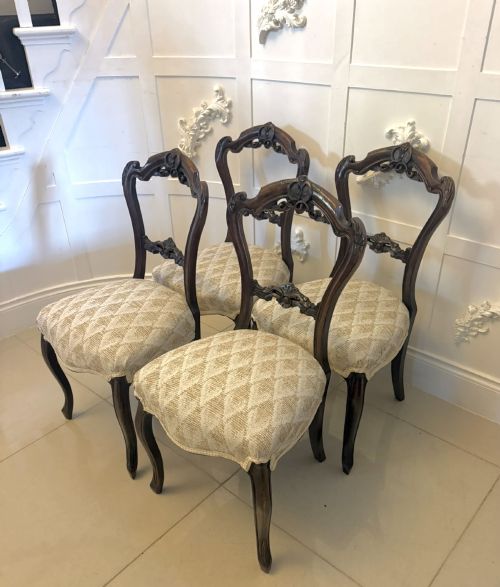
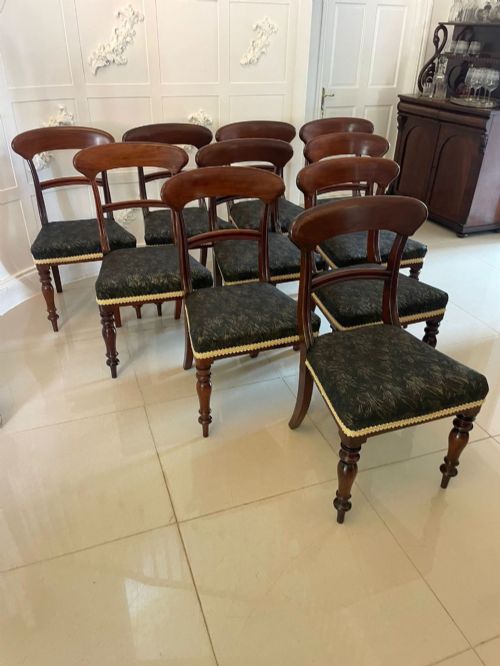
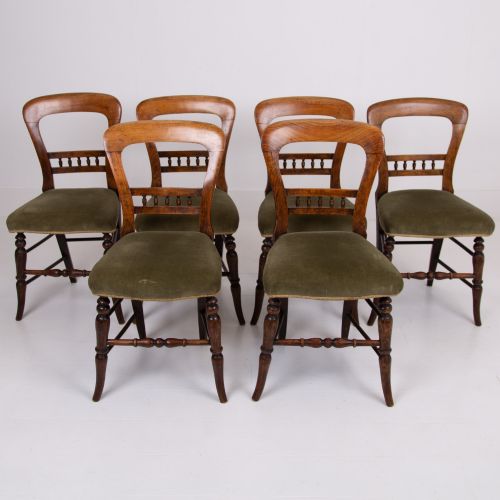
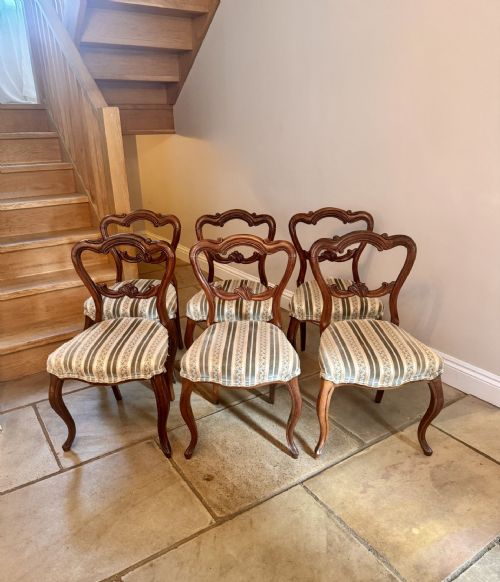
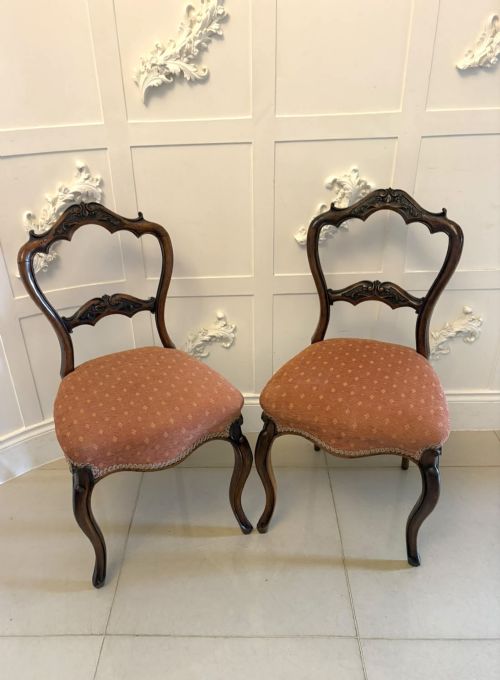
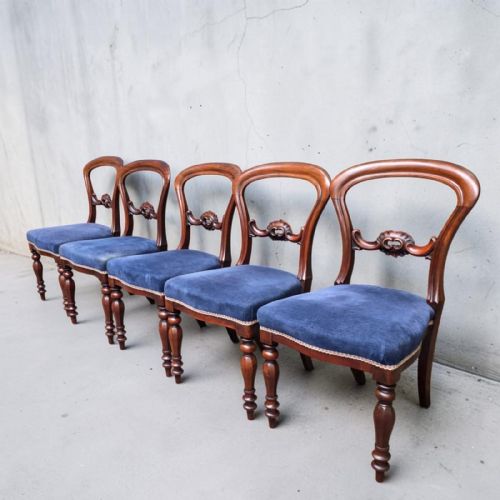
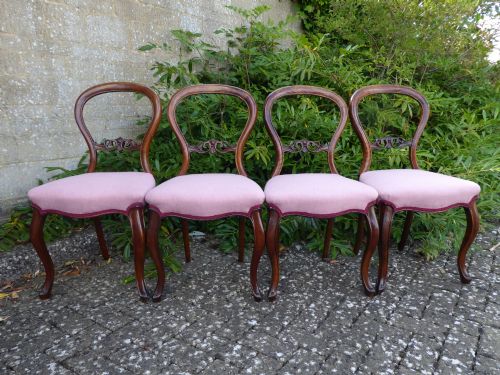
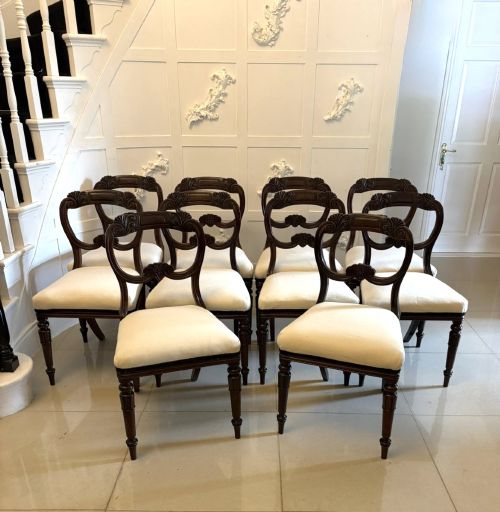
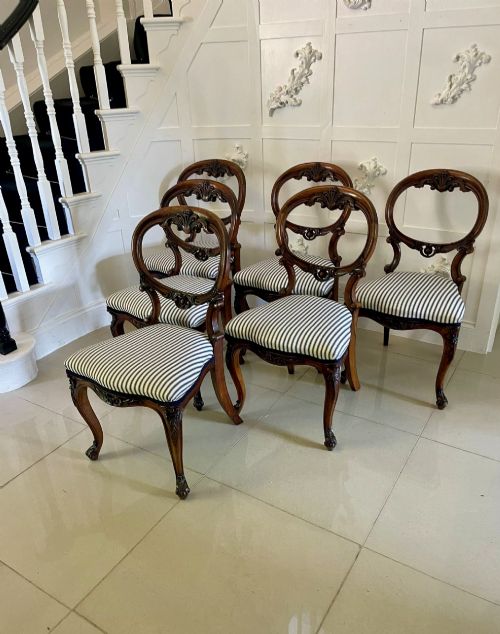
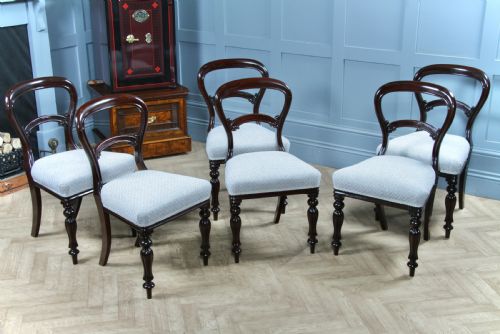
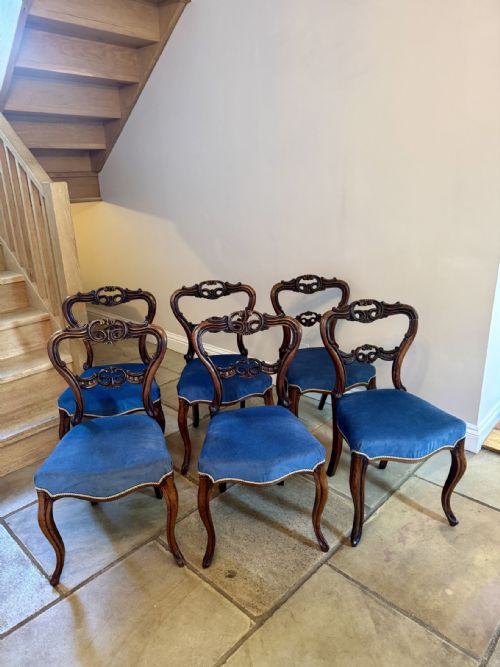
These upholstered balloon back pieces are curved wooden seating designs from the nineteenth century that bring traditional elegance to a dining room or parlour.
Upholstered Balloon Back
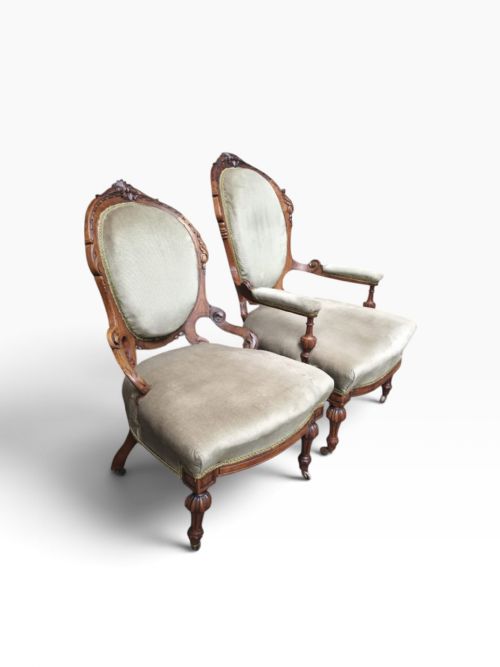
When you search for upholstered balloon back, you are looking at nineteenth-century seating defined by an oval or rounded open backrest resembling the shape of a balloon. The version you are most likely to meet on this page is the Victorian dining chair, though armchairs, occasional chairs, and larger salon suites also appear.
The form developed through the Regency and William IV periods before reaching its height in Victorian times, spanning walnut, mahogany, and rosewood timbers. Sets ranging from pairs up to twelve chairs are common, alongside double-ended sofas and gentleman's armchairs sharing the characteristic curved back profile.
Materials and construction
Cabinetmakers shaped the distinctive backrest from solid hardwoods like mahogany, walnut, and rosewood, often steaming or laminating timber to achieve the continuous curved loop. Carved ornamentation such as floral motifs, scrolls, and rococo revival details were worked directly into the wooden frame by hand.
Upholstery was applied over sprung bases or webbed foundations using traditional textiles including velvet, damask, brocade, and general upholstery fabric, frequently finished with buttoning or brass tacks.
The site records pieces spanning the Regency period through to late Victorian production around 1900.
Assessing quality in seating
The distinction between standard examples and the finest pieces lies in the crispness of the timber carving and the selection of figured veneers or solid woods. Sets that remain unified in timber grain and colour command greater attention than assembled groups.
Structural integrity of the curved back joint and the proportion of the cabriole or reeded legs further separate everyday utility pieces from workshop productions attributed to notable makers like Gillows.
Gillows
The Upholstered Balloon Back Glossary
- Balloon back
- A chair backrest formed in a continuous oval or rounded loop resembling a balloon. This defining silhouette emerged during the nineteenth century across various dining and parlour chair types.
- Cabriole leg
- A furniture leg that curves out in a convex arc and tapers inward in a concave arc, ending in a pad or scroll foot. This shape draws inspiration from classical animal forms and is common on Victorian revival seating.
- Rococo Revival
- A mid-nineteenth-century style drawing on eighteenth-century French Louis XV design. It is characterised by asymmetrical scrolling, naturalistic floral carvings, and flowing serpentine lines.
- Button upholstery
- A technique where depressions are formed in padded upholstery by pulling stitches tight through to the base and securing them with covered buttons. This creates a tufted surface texture seen on many Victorian backs and seats.
- Reeded leg
- A straight column decorated with parallel convex mouldings carved into the wood. This detail appears frequently on the forelegs of Regency and early Victorian chairs.
Upholstered Balloon Back: Frequently Asked Questions
What period are these chairs from?
The pieces span the nineteenth century, with the majority originating from the Victorian era between 1850 and 1880. Earlier examples emerge from the Regency and William IV periods.
Craftsmen continued producing variations through the later decades of the century, utilising walnut, mahogany, and rosewood timbers.
How were these chairs used historically?
They served primarily as formal dining chairs around large tables in nineteenth-century homes. Armchairs and sofas were also placed in drawing rooms and parlours for entertaining guests.
Occasional and bedroom chairs fulfilled lighter auxiliary seating duties in private chambers.
Are large sets difficult to find?
Sets of four or six are regularly encountered, while larger matching sets of ten or twelve pieces appear less frequently. Many surviving sets originate from dining rooms where uniform seating was essential.
Assembled sets compiled over time also exist alongside single pairs and individual armchairs.
How do I care for antique upholstery?
Maintenance involves gentle vacuuming using a brush attachment to remove dust from fabric folds and button tufts. Direct sunlight should be avoided to prevent fading of velvet, brocade, and damask textiles.
Wooden frames benefit from occasional treatment with appropriate furniture wax to preserve the finish.