



Rose Fabric Chairs
Rose fabric chairs bring warmth and tactile comfort to a room, offering upholstered seating finished in damask, velvet, and pink velvet.
Rose Fabric Chairs
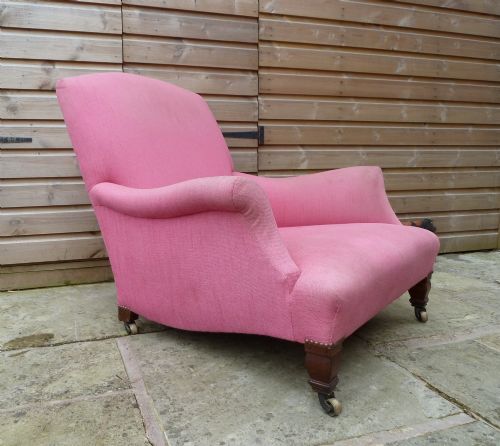
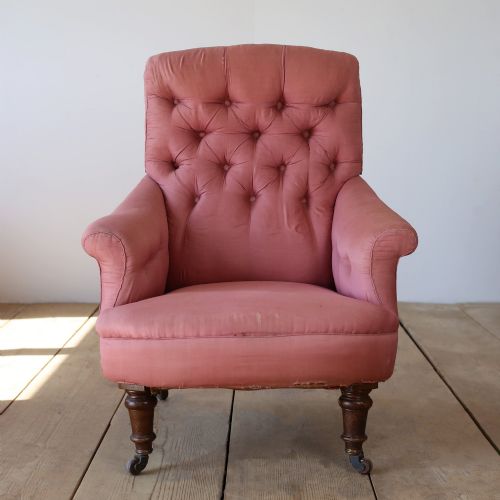
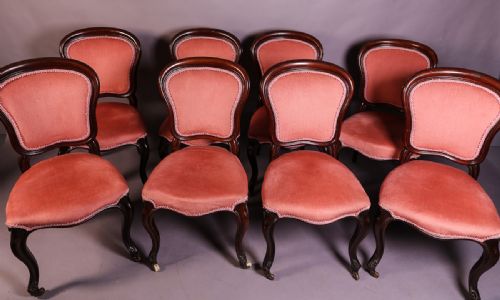
Rose fabric chairs encompass various forms of seating upholstered in pink, damask, or patterned textiles, spanning the nineteenth century through to the nineteen-thirties. Buyers searching for rose fabric chairs encounter an array of seating options, from drawing room armchairs and slipper chairs to settees and dining chairs.
The selection on this page leans heavily towards nineteenth-century and Victorian pieces, alongside specific twentieth-century revivals. Examples range from button-backed armchairs and open armchairs upholstered in Rose Cumming Sabu to walnut settees and matching footstool sets.
Framing materials vary across the pieces, featuring mahogany, walnut, hardwood, and brass accents. Styles stretch from formal Victorian and Queen Anne interpretations to relaxed Howard and Sons style armchairs.
What Varies in Quality
Quality reveals itself in the articulation of the wooden frame and the precision of the upholstery work. Finer examples display well-turned mahogany or walnut framing with careful attention to structural joinery.
The choice of covering material and the execution of button-backed detailing distinguish standard pieces from exceptional ones. Premium chairs utilise tactile textiles like velvet and damask that complement the underlying period style.
Object types span armchairs, slipper chairs, settees, dining chairs, and matching footstools across multiple nineteenth and twentieth-century periods.
The Rose Fabric Chairs Glossary
- Button back
- A traditional upholstery method where deep buttons are pulled tight through the padding to create a diamond pattern. This technique secures the internal stuffing while adding texture to the chair.
- Slipper chair
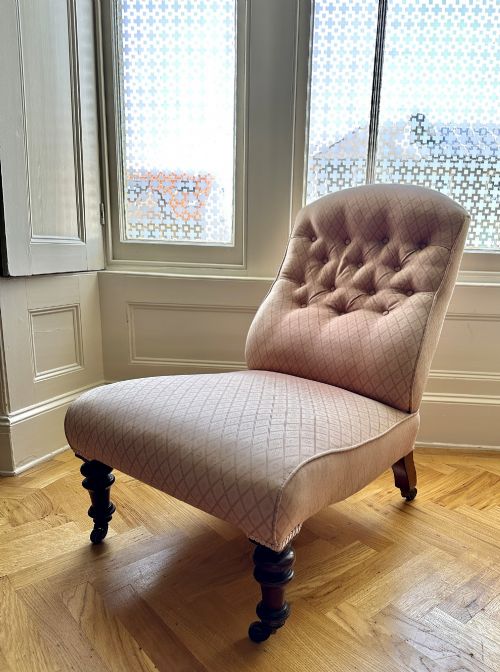
- A low-seated bedroom chair traditionally used by ladies for sitting while putting on shoes. These pieces typically feature short legs and an upright back.
- Damask
- A reversible figured fabric woven on a jacquard loom, featuring patterns formed by contrasting warp and weft threads. It offers a subtle sheen and substantial weight suited to formal seating.
- Settee
- A medium-length upholstered seat with a back and arms, designed to accommodate multiple people. These items often mirror the stylistic details of contemporaneous armchairs.
Rose Fabric Chairs: Frequently Asked Questions
What periods do these chairs cover?
The selection spans from the mid-nineteenth century through the Victorian era and into the early decades of the twentieth century, including pieces from nineteen-hundred, nineteen-twenty, and nineteen-thirty.
This broad chronological range brings together diverse aesthetic movements, from heavy Victorian mahogany framing to lighter twentieth-century revival designs.
How do I identify a slipper chair?
Slipper chairs stand out through their notably low seats and compact proportions, designed originally for bedroom dressing rooms.
They generally omit high arms to allow ease of movement and often feature button-backed upholstery for added support.
What timbers were used for the frames?
Framing materials primarily consist of mahogany and walnut, alongside general hardwood constructions supported by brass elements.
These dense timbers provide the structural integrity required to sustain heavy upholstery and daily use over generations.
What styles are represented here?
Pieces reflect Victorian, Queen Anne, and Howard and Sons style influences, incorporating open armchairs and button-upholstered drawing room seating.
These design traditions dictate the shaping of the wooden frames and the overall silhouette of each chair.