


Underglaze Blue Earthenware
Underglaze blue earthenware brings together cobalt decoration and clay bodies, offering collectors durable tableware with intricate transfer-printed scenes from the Georgian and Victorian eras.
Underglaze Blue Earthenware
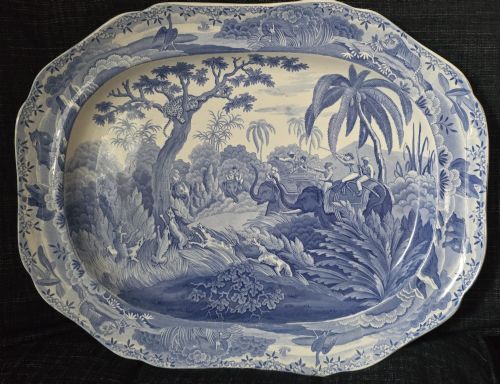
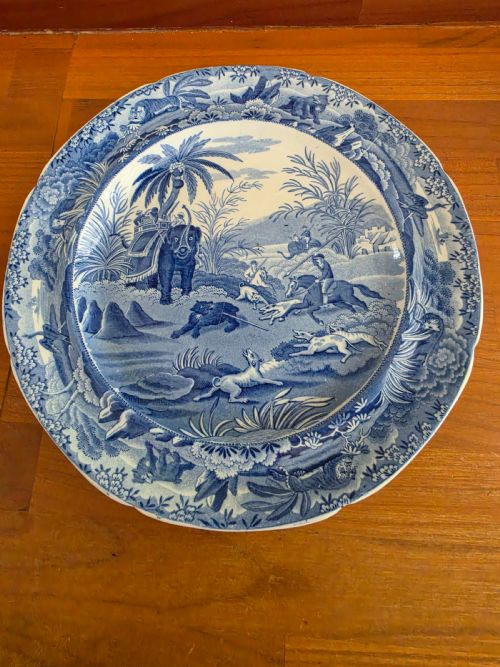
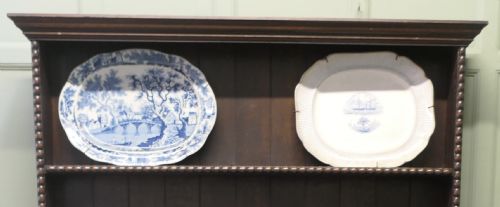
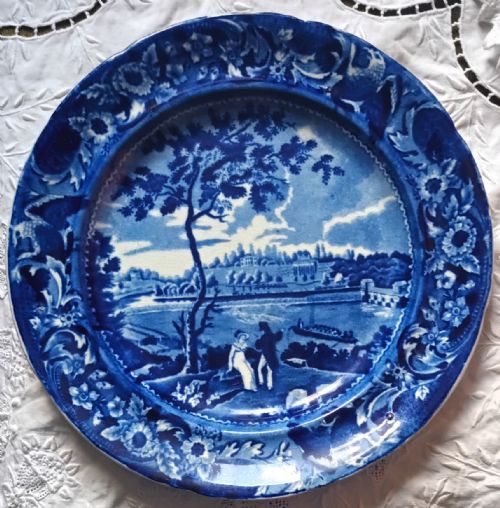
When searching for underglaze blue earthenware, buyers encounter plates, chargers, meat platters, serving dishes, spoon trays, and tureens spanning the Georgian and Victorian periods. These items feature transfer-printed or hand-painted cobalt designs depicting landscapes, historical views, architectural subjects, and narrative scenes.
The pieces on this page are predominantly British, with Staffordshire potteries heavily represented alongside manufacturers such as Spode, Mason, and Copeland & Garrett. Forms range from small dessert plates to large serving platters with integrated gravy wells and bread stands.
Dated examples often anchor specific decades from around eighteen hundred through the mid-nineteenth century. Alongside British output, related ceramic traditions appear, including pearlware bodies and Asian-influenced designs.
What varies in quality
Quality rests upon the crispness of the transfer print and the stability of the glaze, where top-tier examples display sharp detail without blurring or running of the cobalt ink. The refinement of the underlying earthenware or pearlware body also dictates value, with smoother surfaces and well-balanced forms preferred by collectors.
The artistic merit and clarity of the pictorial subject matter - whether botanical, topographical, or narrative - separate standard utility wares from exceptional decorative plates, chargers, and platters.
Listings feature pearlware and earthenware bodies decorated with cobalt ink, spanning the Georgian and Victorian periods.
Spode·Stubbs·Copeland and Garrett·Mason·John Rogers and Son·Elkin Knight and Bridgwood
The Underglaze Blue Earthenware Glossary
- Pearlware
- A refined earthenware body developed in the late eighteenth century, featuring a subtle bluish glaze that pooled in crevices to mimic Chinese porcelain.
- Transferware
- Ceramic pottery decorated by applying a printed paper design from a copper plate onto the unglazed or bisque surface.
- Underglaze
- A decoration method where metallic pigments are applied to the ceramic body before the glaze is added and fired.
- Charger
- A large decorative or serving plate, typically exceeding standard dinner plate dimensions.
- Tazza
- An ornamental pedestal plate or shallow bowl used for serving food or displaying items.
- Tureen
- A deep covered bowl designed for serving soups, sauces, or stews at the table.
Underglaze Blue Earthenware: Frequently Asked Questions
How do I date underglaze blue earthenware?
Dating relies on maker marks, ceramic bodies such as pearlware versus later earthenware, and stylistic cues from the Georgian and Victorian periods. Certain transfer patterns correspond to specific active years of the pottery.
Examining the depth of the glaze and the style of the printed border also helps narrow the production era.
Can I use these plates for serving food?
Many of these pieces were originally created as functional tableware, including meat platters, asparagus dishes, and dinner plates. However, age, glaze wear, and historical repairs often dictate whether modern use is advisable.
Most collectors prefer to display antique earthenware or use them gently for dry foods to preserve the ceramic glaze.
Why is the blue sometimes blurry?
Blurry transfer printing occurs when the cobalt ink bleeds into the glaze during the high-temperature firing process. This technical variation can happen due to kiln temperature fluctuations or excess moisture during application.
While crisp lines are generally sought after, slight blurring is common in early nineteenth-century transferware.