

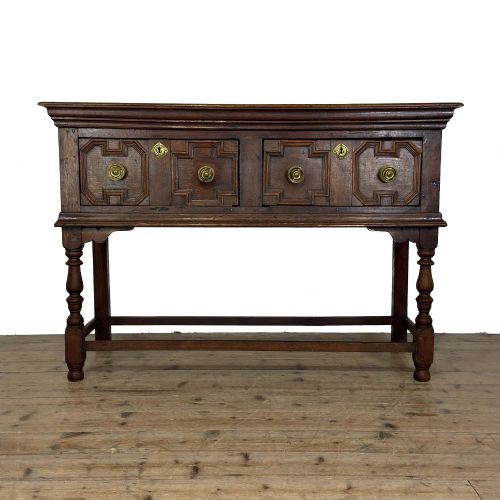
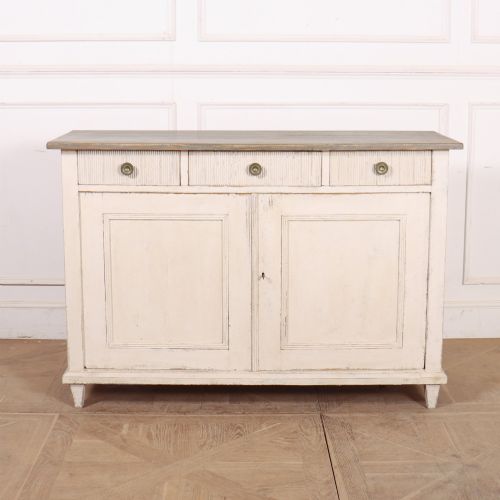
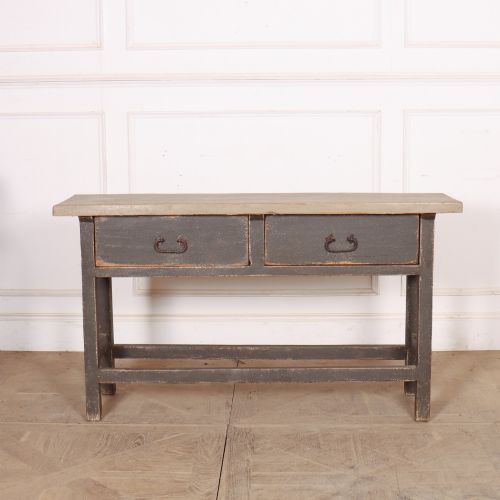
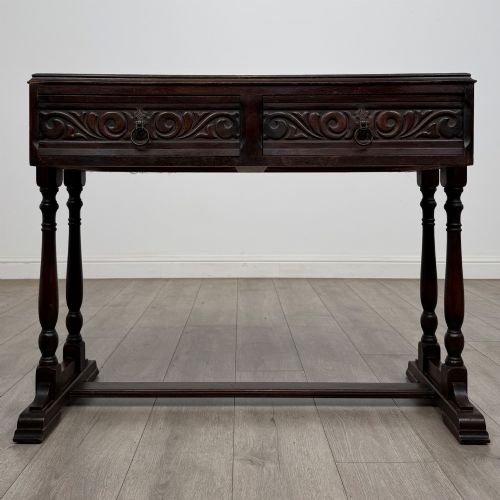
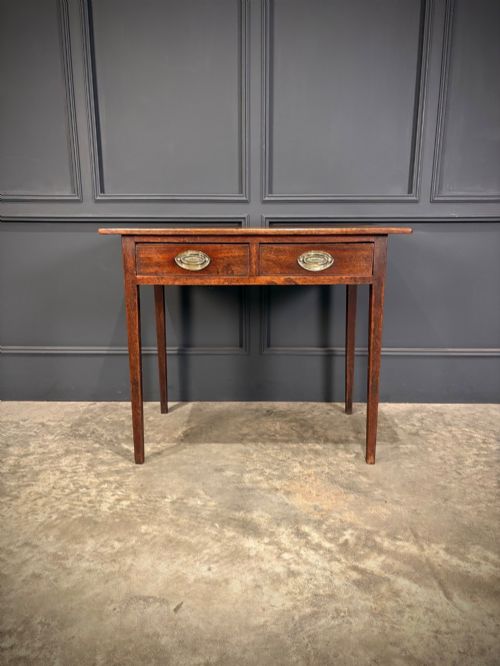
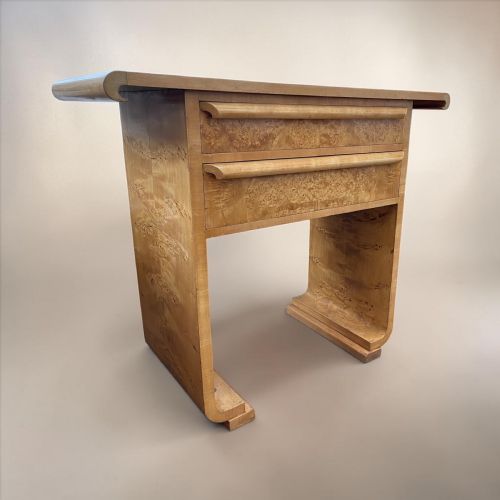
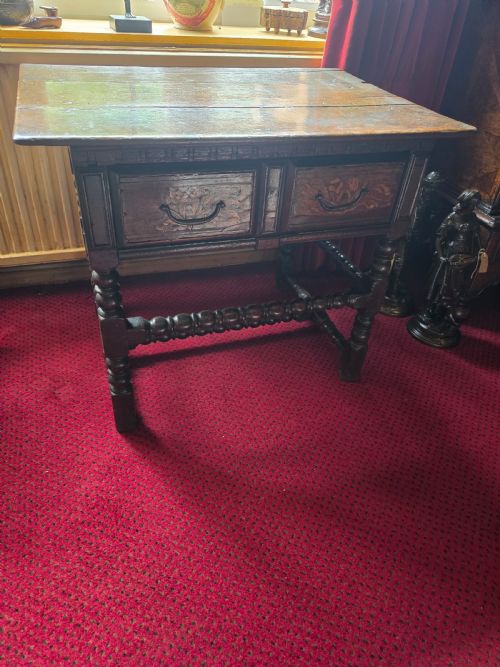
Two Drawer Server
A two drawer server provides practical surface space and concealed storage, anchoring a dining room or hallway with traditional utility.
Two Drawer Server
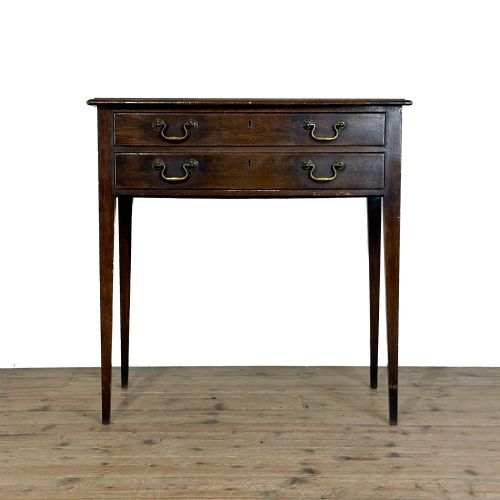
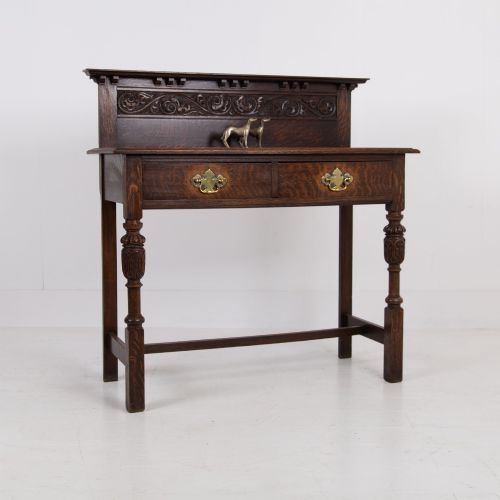
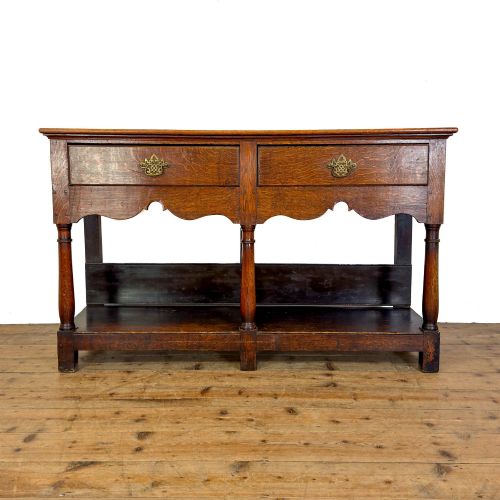
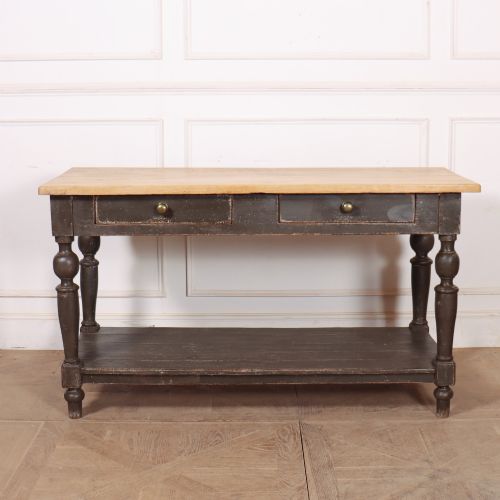
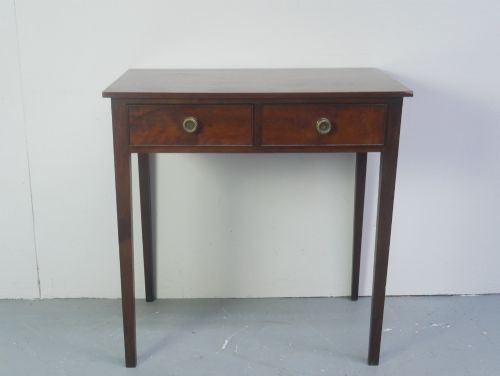
A two drawer server combines a low surface with a pair of shallow drawers beneath, functioning as a sideboard, lowboy, or compact dresser base. These pieces appear in periods from the eighteenth century through the early twentieth century, spanning Georgian, Victorian, and Edwardian eras.
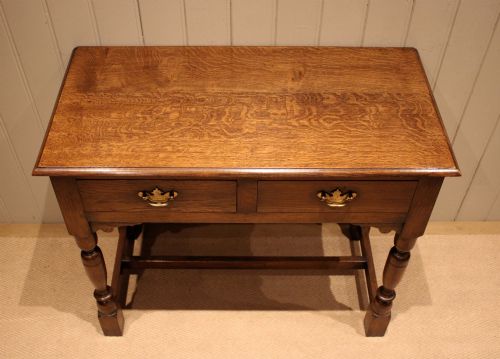
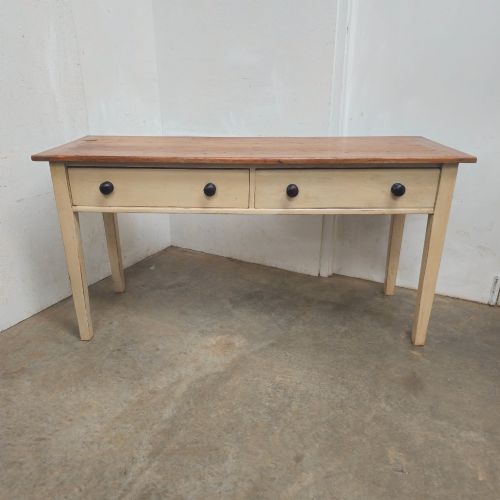
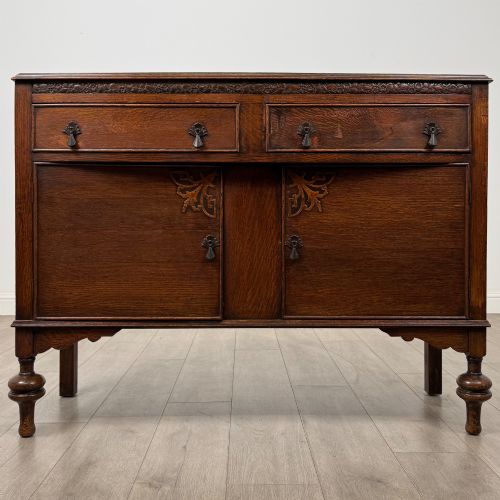
Most examples found here utilise sturdy timbers such as oak, mahogany, and pine, reflecting regional country workshops and formal urban cabinet makers alike. Forms range from narrow console and hall tables to substantial potboard dresser bases and painted side tables.
Makers constructed these tables for utilitarian tasks in kitchens, hallways, and dining rooms, resulting in sturdy proportions and accessible storage. The survivor rate favours oak and pine country pieces alongside finer mahogany specimens from the Georgian period.
How they were made
Cabinet makers built these servers using solid hardwoods and softwoods, frequently pairing oak or mahogany frames with dovetailed drawer construction. Regional pieces often rely on local pine and cherrywood, finished with wax or traditional paint.
Construction details include pegged joints, hand-carved decorative elements, and turned legs, while brass hardware or wooden knobs secure the drawer fronts. Workshops utilised local timber stocks, meaning English, Welsh, French, and Spanish examples carry distinct regional woods.
Listings span periods from the 17th century through the 1920s, showing woods like oak, mahogany, pine, and walnut in both formal and country styles.
What varies in quality
Quality rests upon the selection of timber, such as figured mahogany or dense old-growth oak, paired with the precision of the joinery. Finer tables exhibit clean dovetailing in the drawers and well-proportioned turned or tapered legs without excessive structural alteration.
The integrity of the surface finish and original hardware also separate standard utility pieces from finer workshop productions. Subtle hand-carving and balanced proportions elevate certain country servers into exceptional examples of period cabinet work.
Fortnum and Mason·W Williamson and Sons of Guildford·Maple and Co
The Two Drawer Server Glossary
- Dresser base
- The lower section of a traditional kitchen dresser, typically featuring cupboards or drawers beneath a wide serving surface.
- Lowboy
- A small seventeenth or eighteenth-century dressing or side table featuring one or more rows of drawers raised on four tall legs.
- Potboard
- An open slatted lower shelf incorporated into the base of a dresser or serving table, originally designed to hold pots and pans.
- Dovetail
- A traditional interlocking joint used at the corners of drawers to provide high tensile strength and durability.
- Console table
- A table designed to stand against a wall, frequently secured with brackets or supported by front legs.
Two Drawer Server: Frequently Asked Questions
What is a two drawer server used for?
These tables serve as sideboards, serving stations, or console tables in dining rooms and hallways. The pair of drawers offers convenient storage for cutlery, linens, or household items while the top surface holds dishes or decorative objects.
Historically, similar pieces functioned in kitchens and service areas for food preparation and storage. Today, their compact footprint makes them versatile additions to modern living spaces.
How do I tell a Georgian server from a Victorian one?
Georgian servers, dating from the eighteenth and early nineteenth centuries, often feature refined mahogany timbers, delicate proportions, and tapered or bracket feet. They reflect classical restraint and formal design traditions.
Victorian pieces from the later nineteenth century tend to be sturdier, utilising heavier oak or pine with bolder turnings, applied carvings, or gallery backs. Regional country pieces from both periods retain local characteristics and simpler finishes.
Are these servers made of solid wood?
The listings here consist primarily of solid timbers including oak, mahogany, pine, walnut, and cherrywood. Period pieces from country and urban workshops relied on solid construction rather than modern sheet materials.
Secondary woods such as pine or elm frequently appear in drawer linings and internal framing, which remains standard for antique furniture construction.
How do I care for a waxed pine server?
Maintain a waxed pine or oak surface by dusting regularly with a dry, soft cloth and applying a traditional beeswax polish sparingly when the wood appears dry. Avoid placing antique furniture near direct heat sources or damp areas to prevent timber splitting.
Protect the surface from standing liquids by using coasters and placemats during daily use.