

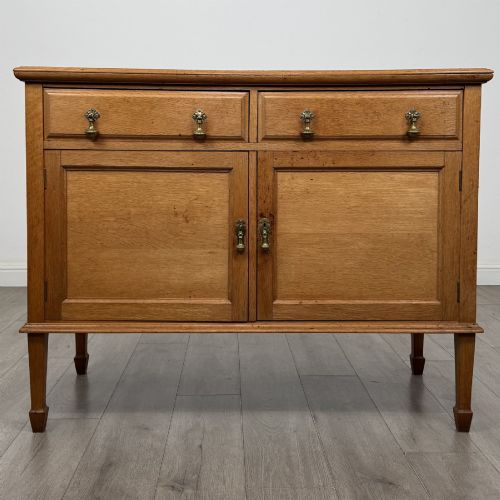
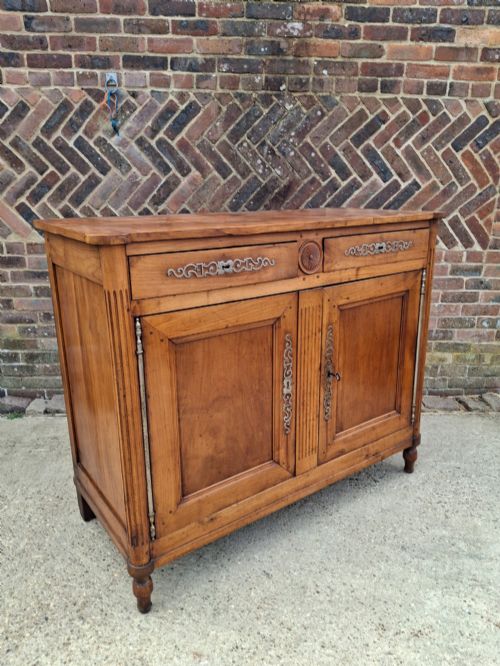
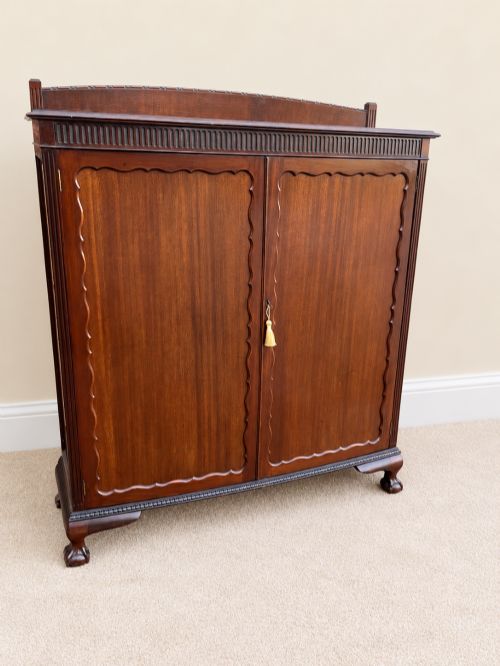
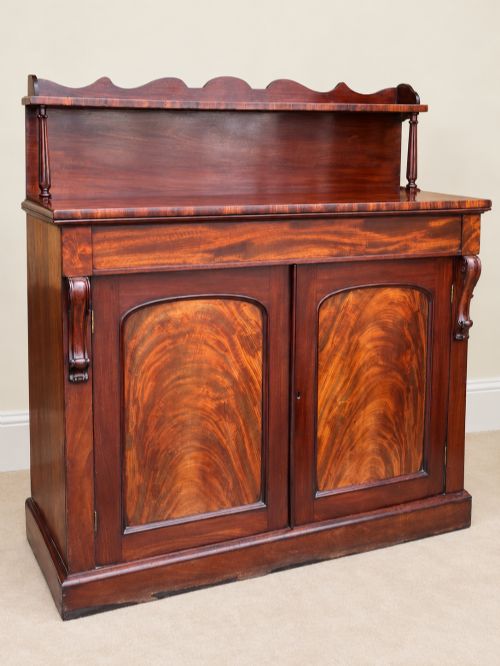
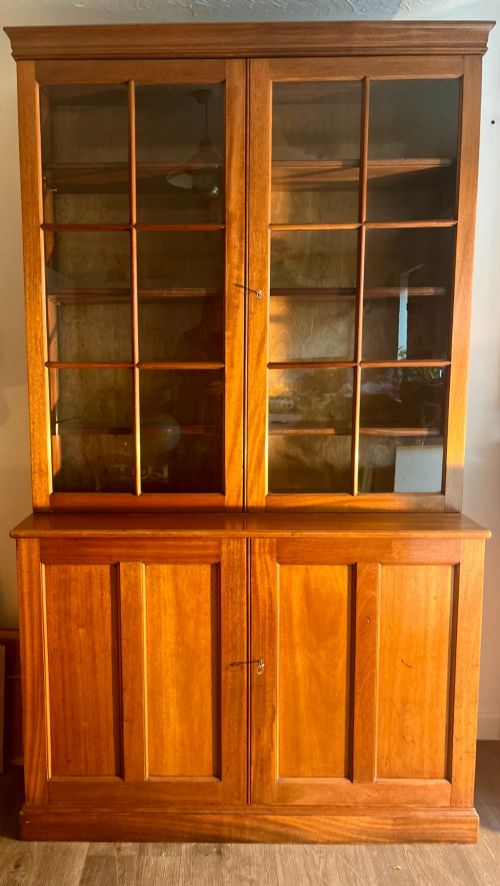
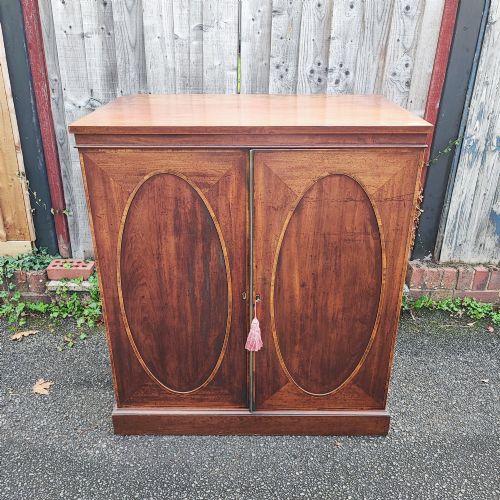
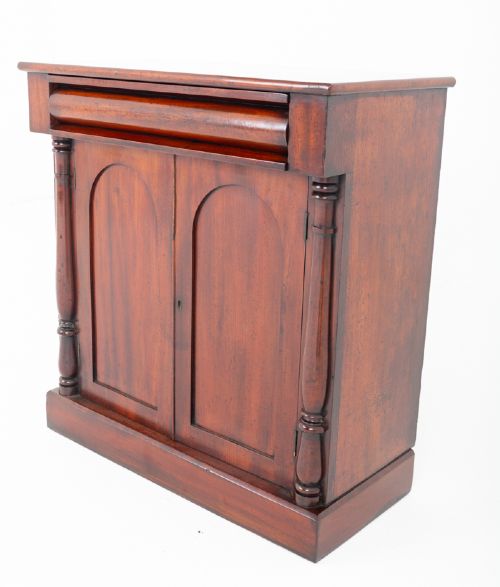
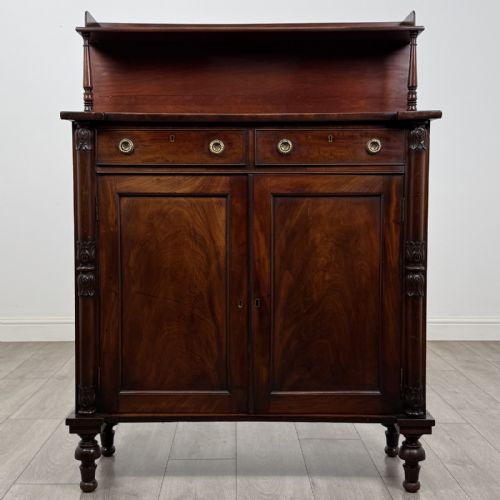
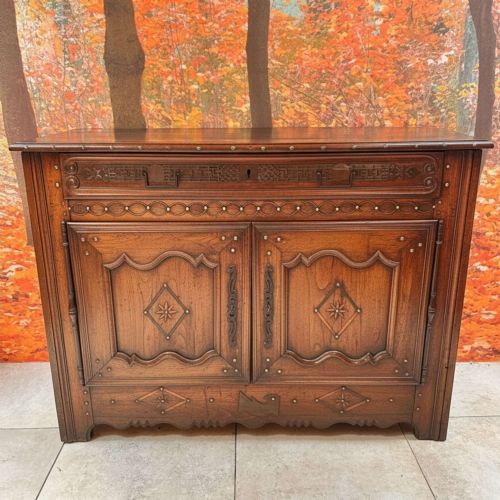
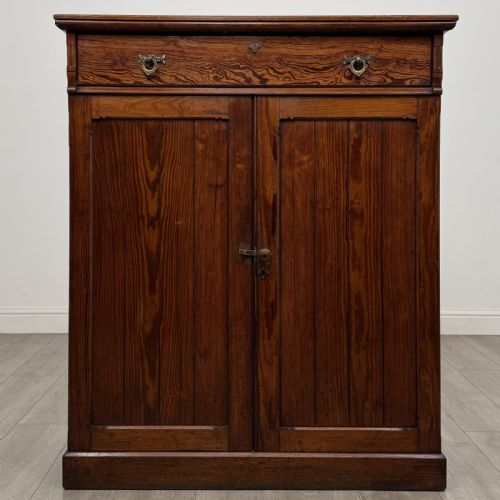
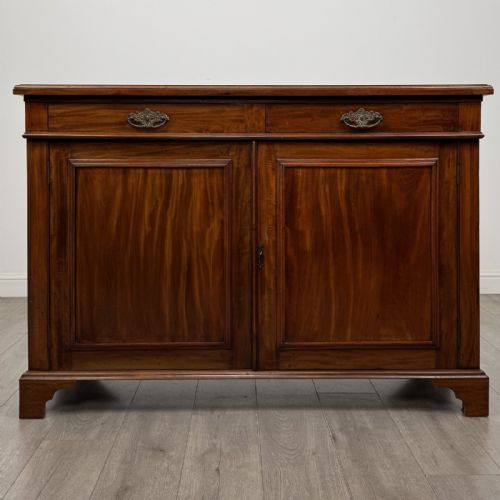
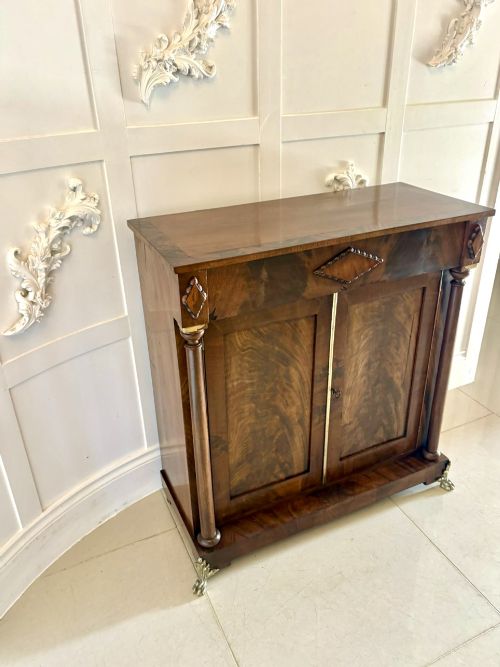
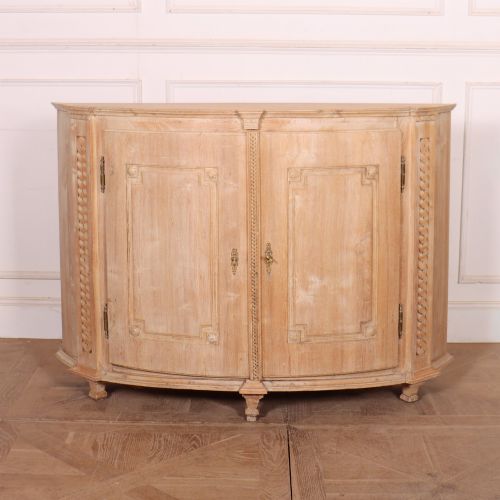
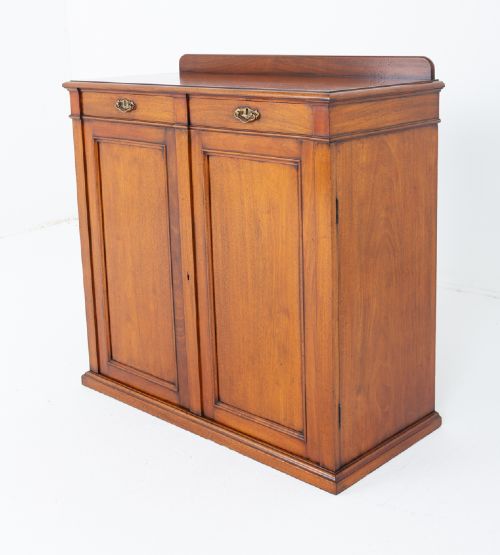
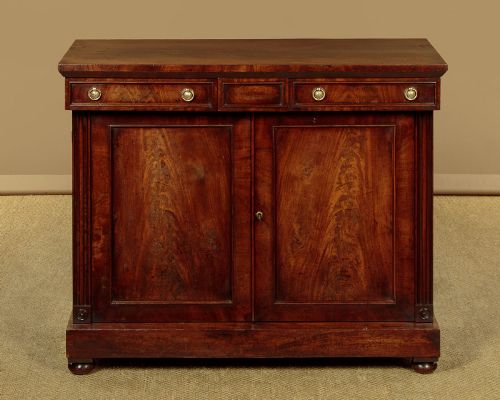
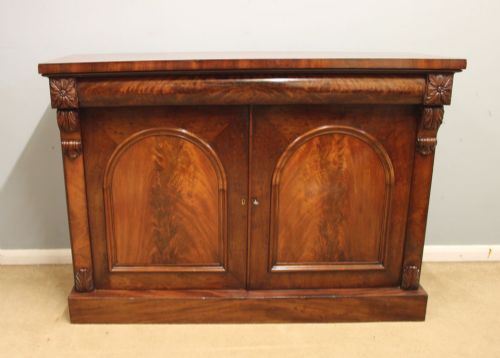
Two Door Wooden Sideboard
A two door wooden sideboard brings substantial storage and timber grain into a room, spanning periods from the eighteenth century to the twentieth.
Two Door Wooden Sideboard
A two door wooden sideboard covers practical storage pieces built across the eighteenth, nineteenth, and early twentieth centuries. These designs emerge from various regional traditions, including English Georgian and Victorian workshops, French provincial kitchens, and Scandinavian country houses.
The pieces on this page appear as side cabinets, chiffoniers, buffets, and cupboards with dual doors. Mahogany and oak dominate the English examples, while walnut, cherrywood, and pine shape the continental variants.
Victorian and Regency formats frequently feature figured timber and raised galleries, whereas provincial buffets rely on solid walnut or chestnut construction. Buyers encounter everything from compact hall cupboards to wide dresser bases.
Materials and construction
Cabinetmakers constructed these sideboards using solid timbers and veneers applied to secondary woods. Mahogany, oak, walnut, and pine form the primary structural bodies, shaped with pegged joints, panelled doors, and bracket or plinth feet.
Hardware consists of brass ring handles, drop handles, and wooden knobs, paired with iron hinges and locks. Surface finishes range from waxed pine and polished flame mahogany to painted treatments on continental pieces.
Two Door Wooden Sideboard Retail Price Guide 2026
Typical asking prices for two door wooden sideboard among the pieces listed under this phrase on Sellingantiques today, from the lower quarter to the upper quarter. They describe what is for sale here now, not the wider market.
Listings feature mahogany, oak, pine, walnut, and cherrywood across nineteenth and eighteenth century periods.
Distinctions in craftsmanship
Quality rests upon the selection of timber figures, such as curl or flame mahogany, and the precision of the joinery in the door frames and drawer linings. Superior examples display thoughtful proportions, original hardware, and intact internal shelving.
Lesser pieces show crude secondary timbers, replacement fittings, or heavy alterations to the original carcase. The integrity of the timber movement and the crispness of any carved or turned details separate standard utility cupboards from finer reception room pieces.
Heals
The Two Door Wooden Sideboard Glossary
- Chiffonier
- A compact sideboard or low cabinet popular in the Regency and Victorian periods, typically featuring a shelf on the back gallery and two doors below.
- Buffet
- A dining room side table or cabinet used for serving food and storing tableware, frequently encountered in French provincial walnut or cherrywood.
- Dresser Base
- The lower section of a kitchen or dining dresser containing cupboards and drawers without the upper plate rack.
- Figured Mahogany
- Timber cut to highlight distinctive grain patterns like flame or curl, valued for decorative cabinet fronts.
- Bracket Feet
- Architectural supports shaped like brackets beneath the corners of a cabinet base, common in Georgian and Victorian case pieces.
Two Door Wooden Sideboard: Frequently Asked Questions
What is a two door wooden sideboard used for?
These cabinets provide enclosed shelving space for dining linen, tableware, and household items. Their flat tops serve surfaces for lamps, serving dishes, or decorative objects.
In hallways and living rooms, they function as credenzas and media storage while concealing clutter behind panelled wooden doors.
How do I tell a Regency sideboard from a Victorian one?
Regency pieces, dating around the early nineteenth century, tend to show cleaner neoclassical lines, brass inlay, and rosewood or straight-grain mahogany timbers. Victorian examples from decades later often display heavier proportions, raised galleries, and elaborate scrollwork or turned feet.
Hardware also helps distinguish the eras, with Regency mounts leaning towards classical brass drop rings and Victorian designs using heavier stamped brass backplates.
Are painted sideboards original?
Many continental pieces from Sweden, France, and Hungary received painted finishes during their original manufacture or subsequent rural use. English pieces were more commonly polished to show the natural grain of mahogany or oak.
Examining the wear beneath layers helps determine whether a painted surface belongs to the period of the wood underneath.
How do I care for antique wood furniture?
Keep wooden sideboards away from direct heat sources and strong sunlight to prevent the timber and veneer from splitting or fading. Regular dusting with a dry, soft cloth maintains the finish without moisture damage.
Applying a traditional beeswax periodically nourishes waxed or polished surfaces and preserves the depth of the grain.