





Louis XVI Buffet
A louis xvi buffet brings architectural symmetry and refined Neoclassical restraint to an interior through crisp linear carving and restrained mounts.
Louis XVI Buffet
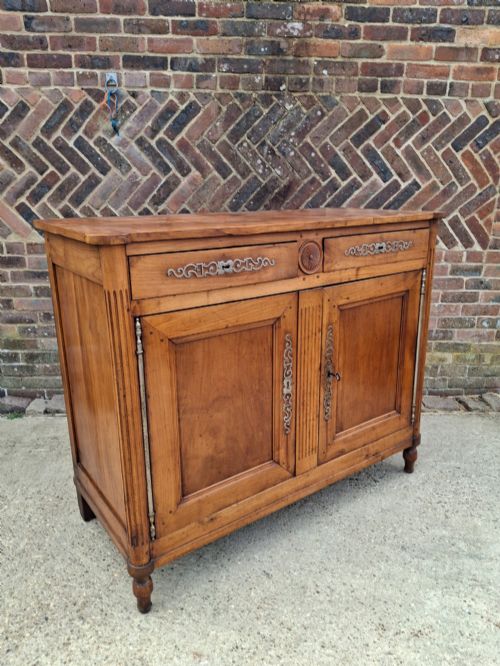
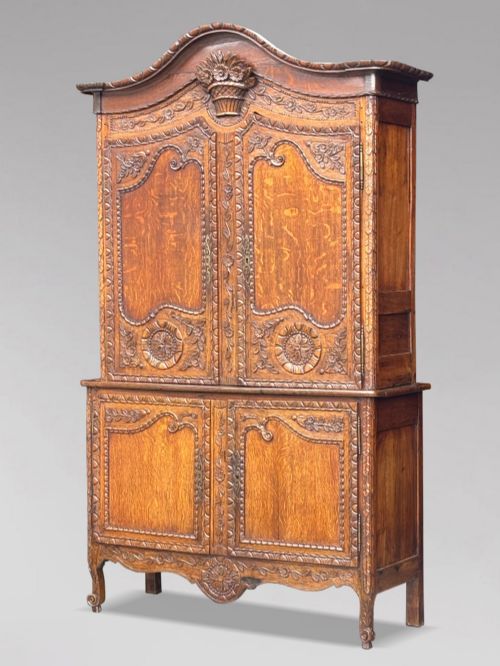
A louis xvi buffet represents the structured geometry and classical ornamentation of late eighteenth-century French design, moving away from extravagant curves toward straight lines and right angles. Buyers searching for a louis xvi buffet will find substantial storage pieces alongside taller buffet deux corps configurations originating from regions like Normandy, often featuring panelled doors and carved floral motifs.
The versions most frequently met on this page span the nineteenth century and the early twentieth century, reflecting enduring revivals of French provincial and neoclassical tastes. These later interpretations adopt the signature fluted pilasters, tapered legs, and symmetrical door arrangements of the original period.
Alongside traditional lower sideboards, the selection encompasses related case pieces such as commodes and side cabinets that share the same architectural vocabulary. Walnut, oak, cherrywood, and kingwood provide the primary timber foundations for these substantial storage items.
How they were made
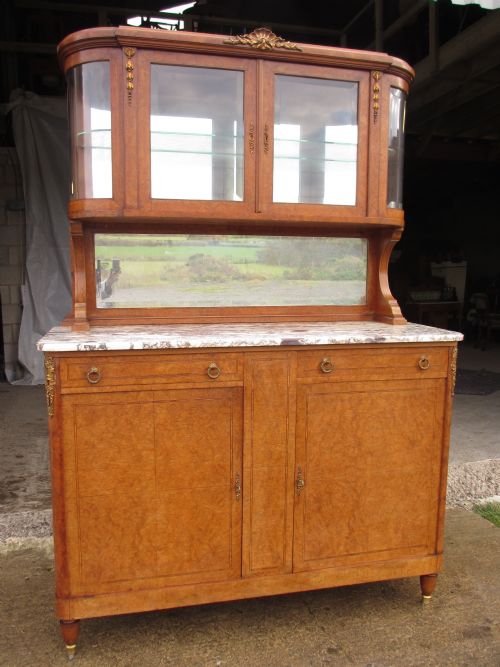
Cabinetmakers constructed these pieces using dense hardwoods including walnut, oak, and cherrywood, frequently applying intricate kingwood marquetry and parquetry veneers to create geometric surface patterns. Tops were typically finished with thick slabs of shaped marble, providing a durable and decorative counter surface.
Gilt bronze and ormolu mounts were cast and chased to accentuate key structural points, framing drawer edges and protecting corners with neoclassical motifs like acanthus leaves and ribbon twists. Brass hardware, including detailed key escutcheons, secured the functional doors and drawers while adding metallic contrast to the timber.
Louis XVI Buffet Retail Price Guide 2026
Typical asking prices for louis xvi buffet among the pieces listed under this phrase on Sellingantiques today, from the lower quarter to the upper quarter. They describe what is for sale here now, not the wider market.
Many surviving buffet keys feature intricate brass bows shaped like tiny royal crowns, turning a simple lock into a miniature sculptural detail.
What varies in quality
The distinction between ordinary and exceptional examples rests upon the crispness of the hand-carved fluting and the precision of the marquetry inlays. Superior pieces employ finely figured timbers and feature heavier, more deeply chased ormolu mounts rather than light, stamped metal fittings.
Structural integrity reveals itself in the thickness of the marble top and the trueness of the timber joints in the main carcase. Master cabinetmakers ensured that doors hung evenly within their frames and that internal shelving was constructed from matching solid woods rather than secondary veneers.
Jean-Démosthène Dugourc
The Louis XVI Buffet Glossary
- Ormolu
- Gilt bronze applied to furniture mounts and decorative hardware. The technique involves creating a mercury-gilded bronze surface that yields a warm, enduring metallic lustre.
- Marquetry
- The art of applying decorative veneer pieces to a structural carcase to form geometric or pictorial designs. Cabinetmakers select contrasting wood grains to achieve tonal depth.
- Buffet deux corps
- A tall two-part storage cabinet featuring a smaller upper cupboard resting upon a deeper lower buffet base. This imposing form provides extensive display and storage capacity.
- Parquetry
- Geometric wood inlay work arranged in repeating patterns such as squares or cubes. It differs from marquetry by focusing on regular geometric grids rather than pictorial scenes.
- Commode
- A low freestanding chest of drawers with legs, functioning as both a decorative sideboard and a practical storage unit. The top is frequently fitted with shaped marble.
Louis XVI Buffet: Frequently Asked Questions
What is a buffet deux corps?
A buffet deux corps is a substantial two-stage storage piece consisting of an upper cabinet section set upon a deeper lower buffet base. These towering items originated in French provinces like Normandy during the eighteenth century.
They offer generous storage space behind panelled doors while maintaining the strict symmetry and architectural proportions characteristic of neoclassical furniture design.
How do I style a marble top?
A marble top provides a durable and cooling surface that contrasts effectively with warm walnut, oak, or kingwood timbers. Keep heavy decorative objects balanced near the edges to protect the stone.
Pairing the buffet with complementary lamps or small gilt-bronze accessories enhances the neoclassical aesthetic without cluttering the surface grain of the marble.
Are nineteenth-century pieces authentic?
Nineteenth-century interpretations of neoclassical designs are authentic antiques in their own right, reflecting the Victorian and Edwardian enthusiasm for French revival styles. They were constructed by skilled cabinetmakers utilising traditional joinery methods.
While they differ from eighteenth-century originals, these later pieces faithfully replicate the form, materials, and decorative vocabulary of the earlier period.
How do I care for wood veneers?
Wood veneers require stable indoor humidity levels and protection from direct sunlight to prevent the timber from drying out and lifting. Regular dusting with a soft cloth preserves the natural sheen of the polished surface.
Avoid using silicone-based polishes or harsh chemical cleaners, as these substances can penetrate hairline fractures and damage antique finishes over time.