


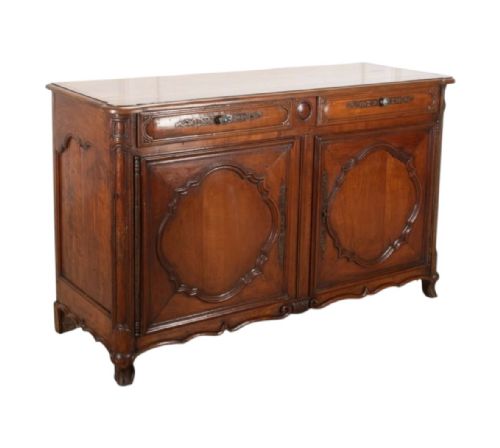


French Cherrywood Cupboard
A french cherrywood cupboard brings honest provincial warmth to a room, offering practical storage through rich fruitwood grain.
French Cherrywood Cupboard
A french cherrywood cupboard encompasses robust storage furniture originating from French provincial regions, spanning the eighteenth and nineteenth centuries. Buyers searching this phrase encounter substantial wardrobes, enfilades, sideboards, and bedside tables built for everyday utility.
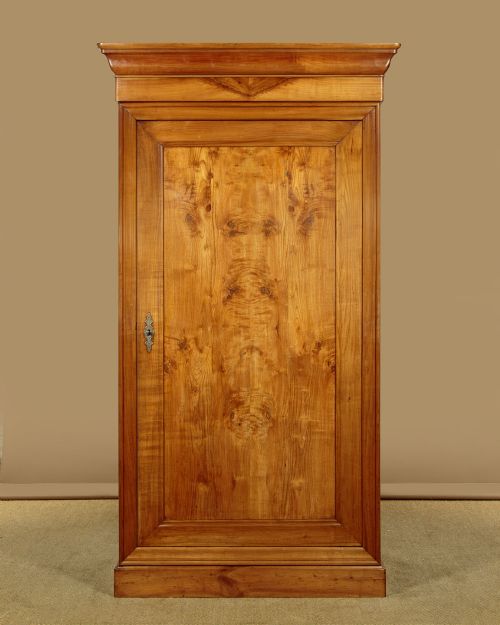
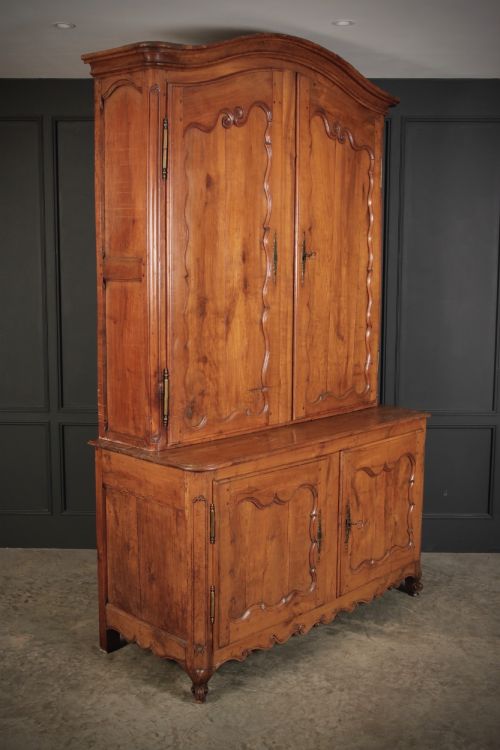
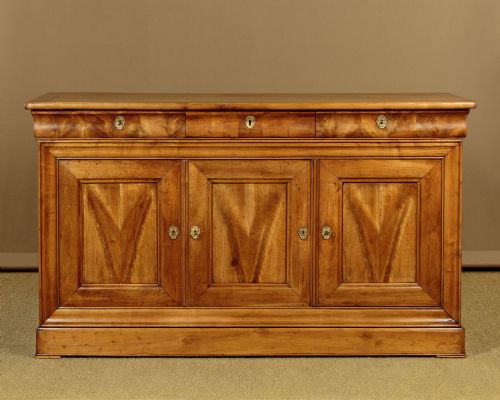
The pieces on this page lean heavily towards nineteenth-century Louis Philippe designs and eighteenth-century country pieces. Solid timber construction dominates, often displaying the warm, reddish-brown tones characteristic of aged fruitwood.
Forms range from tall armoires and linen presses down to low buffets and bedside cupboards. Regional workshops built these items to serve rural households, resulting in sturdy proportions and straightforward lines.
How they were made
Cabinetmakers utilised solid cherrywood and timber framing, sometimes pairing the primary fruitwood with burr ash for textural contrast on key surfaces. Iron and brass hardware, including traditional hinges and keyplates, secured the heavy doors and drawers.
Construction methods relied on traditional joinery designed to accommodate the natural movement of solid timber over decades of use. Certain examples incorporate painted finishes over the cherrywood substrate, while others exhibit the bare polished grain.
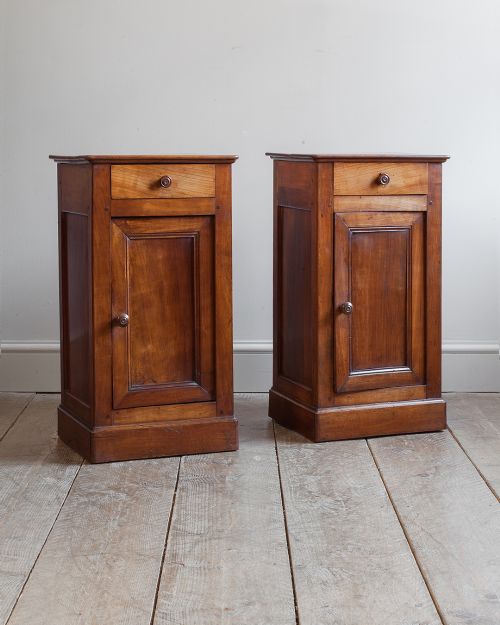
Pairs of bedside cupboards occasionally turn up together, proving that even eighteenth-century French provincials appreciated symmetry.
What varies in quality
Quality rests in the selection of the timber and the depth of the natural patina built up across centuries of handling. Pieces featuring well-figured solid cherrywood or burr ash accents display a richer visual weight than plain utility variants.
Proportion and the handling of regional stylistic details, such as the restrained mouldings of the Louis Philippe period or Directoire lines, distinguish standard provincial work from finer cabinetmaking. The integrity of the original timber and hardware dictates the standing of each piece.
The French Cherrywood Cupboard Glossary
- Enfilade
- A long sideboard or buffet featuring multiple doors and drawers in a continuous line. This form originated in grand dining spaces for serving food.
- Louis Philippe
- A mid-nineteenth-century French style characterised by understated curves, plain surfaces, and minimal ornamentation. It prioritises practical comfort over lavish carving.
- Directoire
- A transitional style bridging the eighteenth and nineteenth centuries, marked by neoclassical restraint and clean architectural lines. Pieces from this period favour proportion over excessive decoration.
- Burr ash
- A growth on the ash tree producing intricate, swirling grain patterns. Cabinetmakers utilised this timber for decorative veneer or panels to create contrast.
- Armoire
- A large upright cupboard or wardrobe used originally for storing armour or garments. French examples often feature double panelled doors and substantial cornices.
French Cherrywood Cupboard: Frequently Asked Questions
What rooms suit a cherrywood cupboard?
These cupboards suit dining rooms, hallways, and bedrooms where substantial storage is required. Their warm fruitwood tones anchor large spaces.
Smaller bedside variants fit comfortably beside low beds in guest rooms. Taller wardrobes provide deep linen storage.
How do I identify a Louis Philippe piece?
Louis Philippe items display smooth, rounded surfaces without heavy carving. The design relies on clean timber grain and gentle ogee curves.
Cornices are typically simple and overhang the body of the cupboard. Feet often take a subtle scroll or bracket form.
Are these cupboards made of solid wood?
Most pieces listed are built from solid cherrywood and timber. Regional cabinetmakers selected native fruitwood for its strength and workability.
Some examples incorporate secondary timbers for internal shelving and backs. Burr ash occasionally appears on feature panels.
How do eighteenth and nineteenth-century pieces differ?
Eighteenth-century examples often show deeper patination and hand-wrought iron hardware shaped by local blacksmiths. Their proportions reflect earlier rural domestic requirements.
Nineteenth-century pieces, particularly from the Louis Philippe era, present more standardised joinery and restrained neoclassical influence. The wood tones tend towards a brighter reddish-brown.