
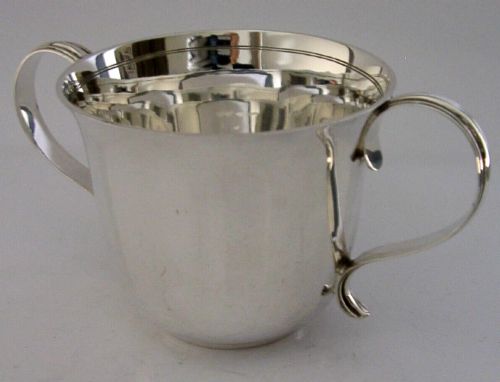
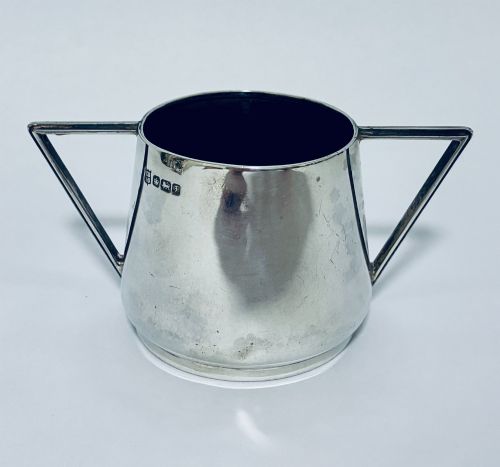
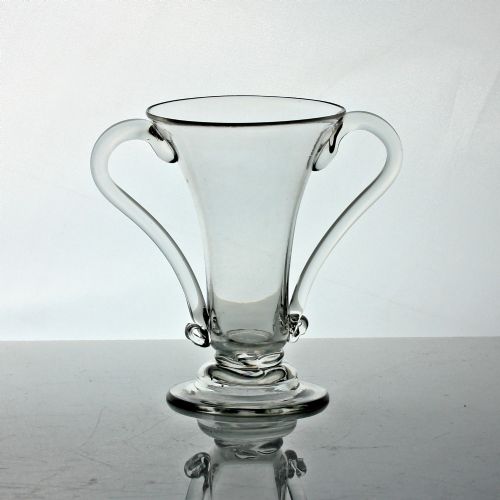
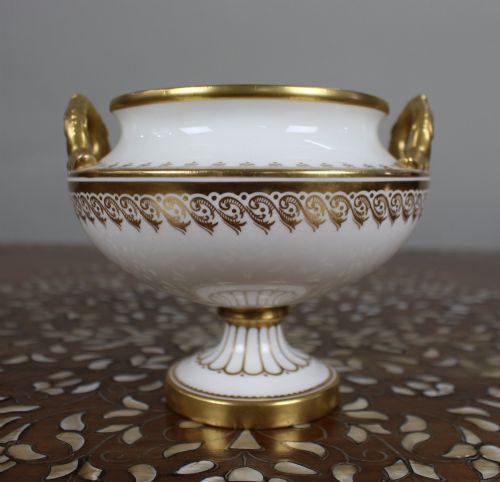


Twin Handled Bowl
A twin handled bowl brings both symmetry and balance to a room, offering functional utility in sterling silver, porcelain, or ironstone.
Twin Handled Bowl
When you search for a twin handled bowl, you encounter vessels created for domestic service, dining, and display across multiple centuries. The selection ranges from sugar basins and porringers to table rose bowls and trophy vessels.
Silver sugar bowls and ceramic vessels dominate the examples, originating from Georgian, Victorian, and early twentieth-century periods. Arts and Crafts and Art Deco designs sit alongside traditional eighteenth-century porcelain and ironstone pieces.
The form appears in diverse materials including sterling silver, Chinese porcelain, brass, and bronze, reflecting the varied social uses of dual-handled vessels over time.
Materials and Technique
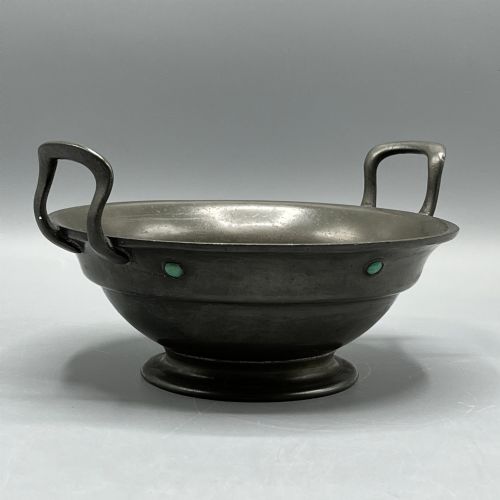
Silversmiths constructed solid silver and plated pieces using hammering, casting, and piercing techniques, often applying gilding to the interior surfaces. Pewter items utilise similar metalworking methods, frequently incorporating cabochons or decorative handles.
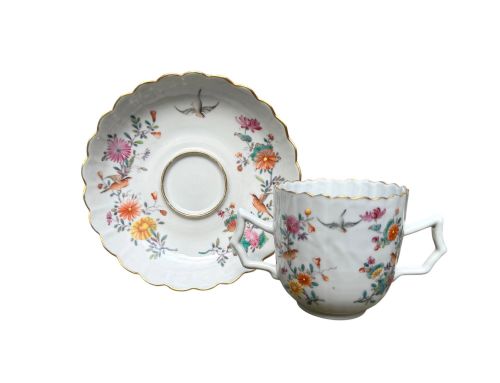
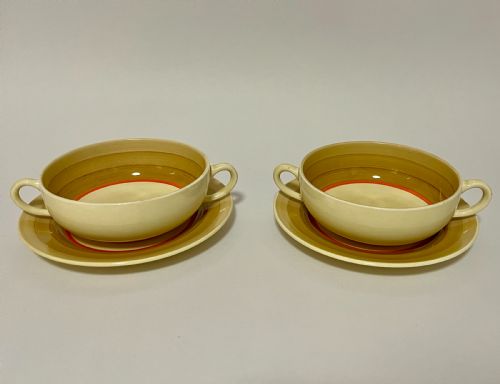
Ceramic examples combine clay bodies such as ironstone, porcelain, and earthenware with hand-painted glazes, transfer printing, or enamel decoration. Bronze and brass vessels rely on casting methods to achieve structural rigidity and classical ornamentation.
Early twentieth-century makers applied cabochons to pewter, proving that even sugar basins enjoy wearing jewellery.
Craftsmanship and Weight
Quality rests in the balance of the handles and the crispness of the casting or metalwork. Substantial gauge silver and carefully potted ceramics retain structural integrity and clear maker marks.
Hand-painted ceramic decoration and finely pierced silver patterns separate standard domestic items from superior decorative examples. The definition in applied handles and cast motifs indicates the level of workshop skill involved.
Liberty & Co·Roberts and Belk·William Moorcroft·Henry Matthews·James Wood And Sons·Nathan And Hayes·Goldsmiths
The Twin Handled Bowl Glossary
- Porringer
- A small, shallow vessel with one or two horizontal flat handles, used historically for porridge, broth, or soft foods.
- Sugar basin
- A container designed to hold loose sugar for tea service, frequently produced with twin handles for easy passing.
- Tazza
- A shallow saucer-like dish mounted on a stem and foot, often used for display or serving sweetmeats.
- Ironstone
- A heavy, durable type of earthenware patented in the nineteenth century to imitate porcelain.
- Cabochon
- A polished gemstone or coloured glass insert set undecorated into metalwork, common in Arts and Crafts pieces.
Twin Handled Bowl: Frequently Asked Questions
What were twin handled bowls used for?
These vessels served diverse domestic functions, ranging from sugar storage during tea service to holding soups, porridges, or sweetmeats at the table.
Larger specimens functioned as rose bowls or trophy presentations, designed for display on sideboards and tables.
How do I date a silver twin handled bowl?
British silver pieces carry hallmark stamps indicating the assay office, date letter, and maker's mark, allowing precise chronological identification.
Stylistic indicators such as Art Deco geometric lines or Georgian neoclassical shapes provide additional dating evidence.
Are ceramic and metal bowls cleaned differently?
Silver and brass require appropriate metal polishes or gentle cleaning cloths to maintain the surface finish without removing the underlying material or hallmarks.
Ceramics and ironstone need mild soapy water and soft cloths, avoiding abrasive pads that can damage hand-painted glazes or gilding.
How do I distinguish Arts and Crafts pieces?
Arts and Crafts vessels display hand-hammered surfaces, visible tool marks, and organic motifs that emphasise manual craftsmanship over industrial production.
Makers like Liberty & Co incorporated specific details such as applied cabochons and Tudric pewter compositions.