
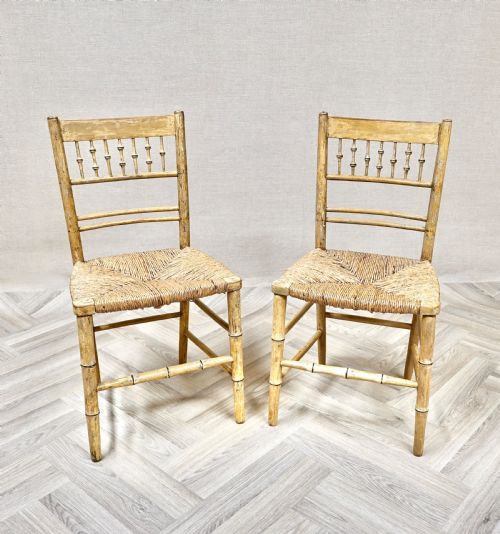
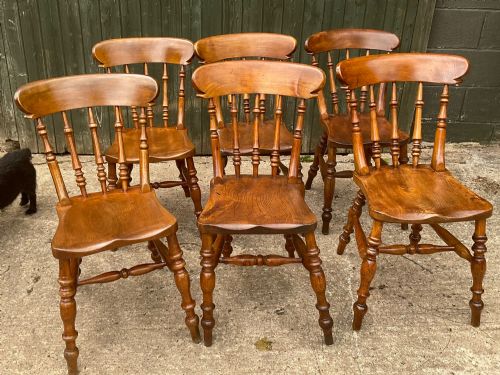

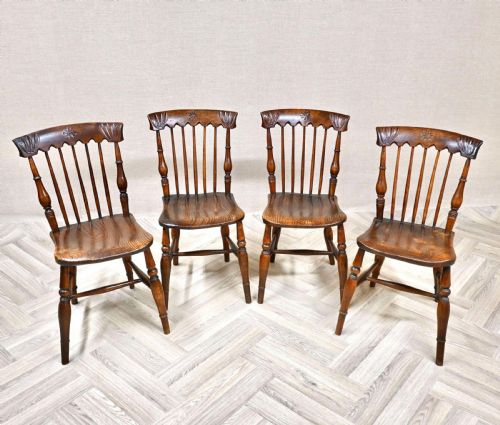

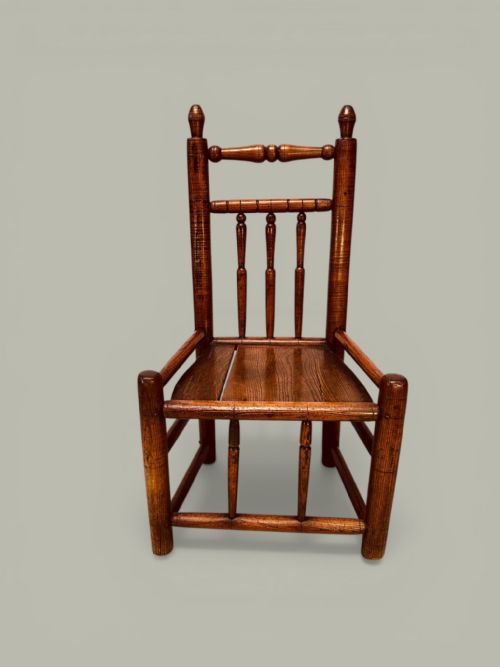


Turned Spindle Side Chair
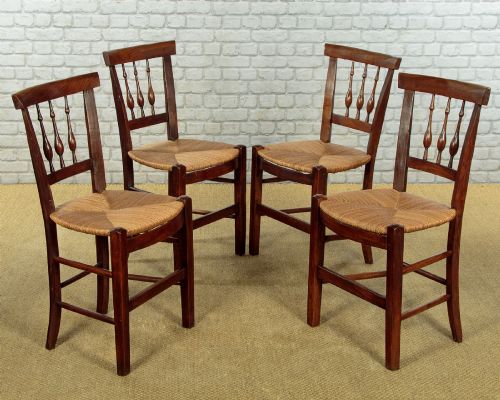
A turned spindle side chair brings vernacular craft into a room, offering simple timber frames and slender uprights designed for everyday seating.
Turned Spindle Side Chair
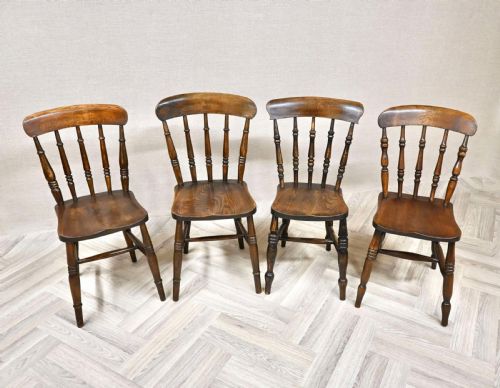
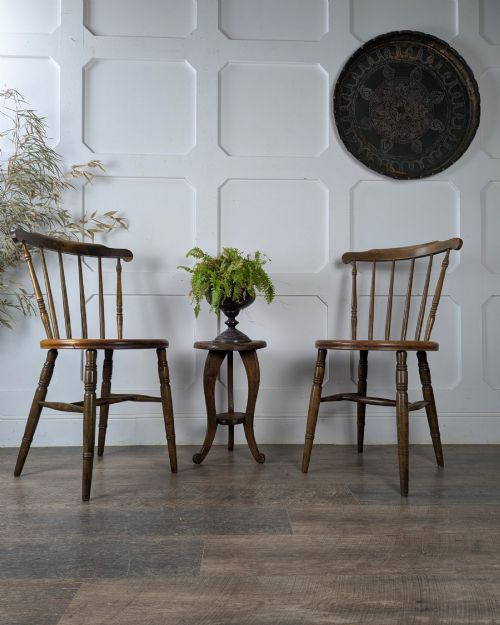
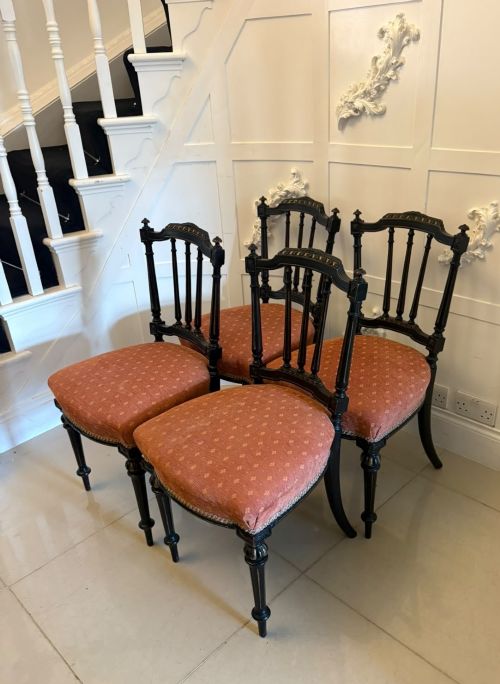
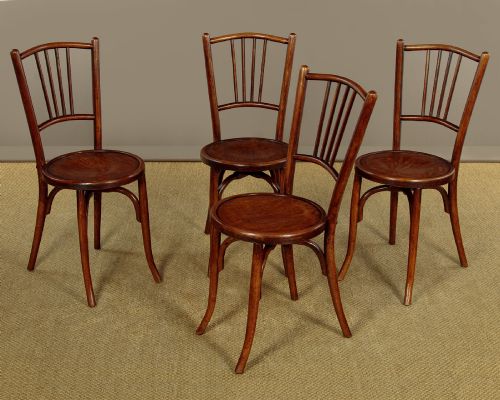
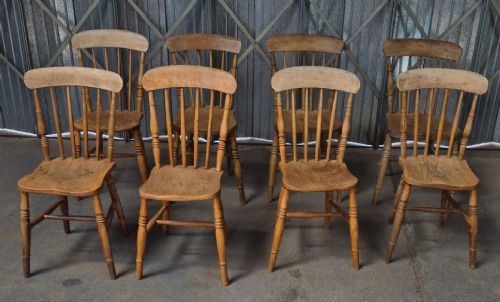
A turned spindle side chair is a functional form shaped by regional traditions and domestic needs across the nineteenth and early twentieth centuries. These pieces appear in configurations ranging from single rustic kitchen seats to matched sets intended for dining spaces.
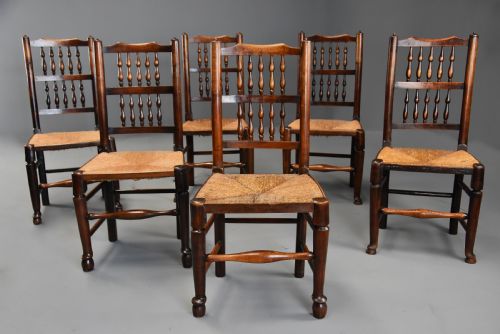
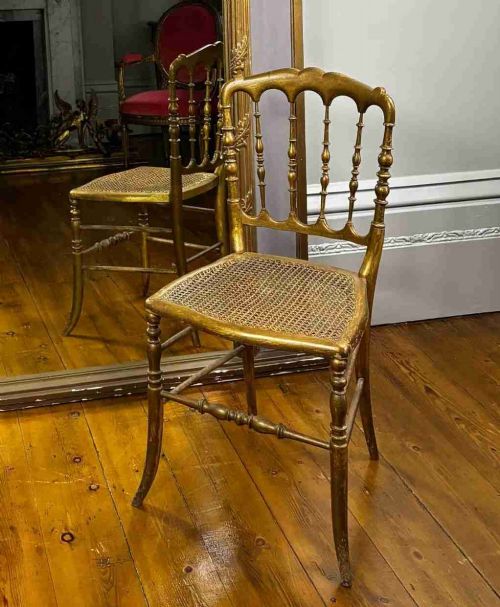
Most examples emerge from Victorian and Edwardian workshops, drawing on English country vernacular styles and Arts and Crafts principles. Buyers encounter variations with rush, cane, penny, or solid wood seats supported by straightforward post-and-rung construction.
Materials and construction methods
Local timbers such as ash, elm, beech, and oak form the structural framework, selected for their strength and flexibility during turning. Craftsmen shaped these woods on lathes to create slender spindles and sturdy legs before joining components with traditional pegs and wedges.
Seating areas rely on natural materials including woven rush, split cane, or contoured solid wood planks like elm and alder. These surfaces attach directly to the wooden underframes, balancing lightness with structural durability.
Listings feature woods such as ash, elm, beech, and oak across nineteenth-century and early twentieth-century examples.
Distinctions in craftsmanship
Quality rests in the integrity of the joinery and the selection of timber, where tightly fitted spindles and straight-grained woods indicate superior execution. Uniformity across a matched set requires considerable skill from the turner.
The preservation of original surface finishes and patination separates untouched examples from heavily restored pieces. Well-maintained rush or cane work also elevates the standing of an individual seat.
Codina·Liberty & Co·Morris & Co
The Turned Spindle Side Chair Glossary
- Spindle back
- A chair back composed of multiple slender turned wooden uprights fitted between a top rail and seat. This design lightens the visual weight of the frame while maintaining support.
- Rush seat
- A seating surface woven from dried marsh grass twisted into cords. It provides a resilient and traditional texture found on many country chairs.
- Vernacular furniture
- Domestic objects made by regional craftsmen using local materials and traditional methods rather than following high-style academic designs.
- Turned wood
- Timber shaped on a lathe by rotating it against cutting tools to create cylindrical, spherical, or tapered profiles such as rungs and legs.
- Penny seat
- A wooden chair seat featuring a circular depression carved into the timber for comfort. The name derives from the shape resembling a large coin.
Turned Spindle Side Chair: Frequently Asked Questions
What rooms suit a turned spindle side chair?
These pieces fit naturally around dining tables, in hallways, or as accent seating in living areas where their modest proportions do not crowd the floor plan.
Their straightforward aesthetic also complements modern interiors by introducing organic texture and historical warmth without visual clutter.
How do I care for rush and cane seats?
Keep woven natural materials away from direct heat sources and excessive moisture to prevent the fibres from becoming brittle and snapping.
Regular dusting with a soft brush helps maintain the material, while occasional light dampening can help preserve the flexibility of older rush.
Are these chairs comfortable for long sitting?
Most vernacular designs prioritize sturdy utility and upright posture over deep upholstery, making them better suited for dining or brief tasks.
Adding a simple loose cushion can increase comfort for prolonged use while preserving the visible timber frame.
How can I date an antique spindle chair?
Examine the tool marks, timber selection, and construction methods, as nineteenth-century examples often display subtle hand-lathe variations and local wood types.
Uniform machine turning, specific styling cues like Edwardian inlay, or maker stamps help narrow down the production period.