
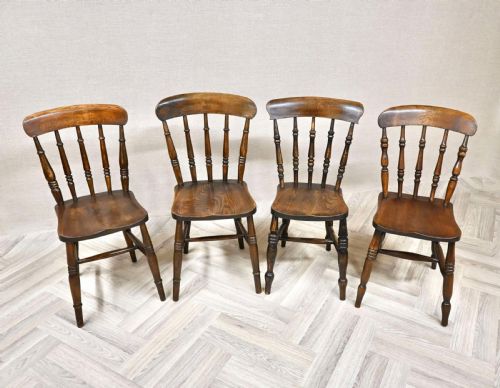
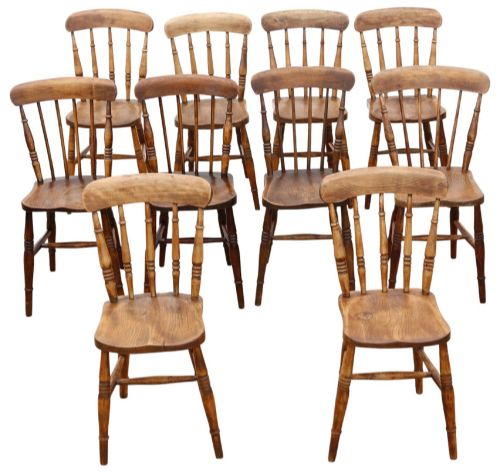
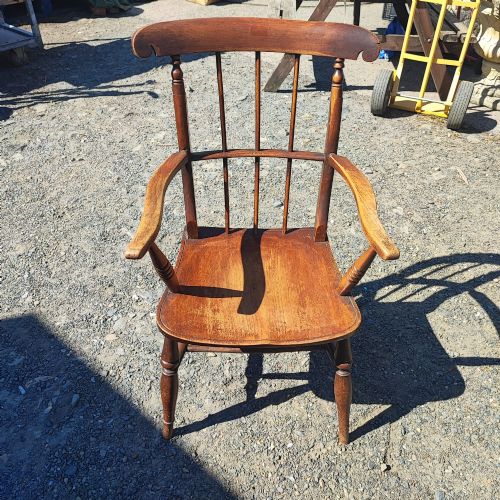
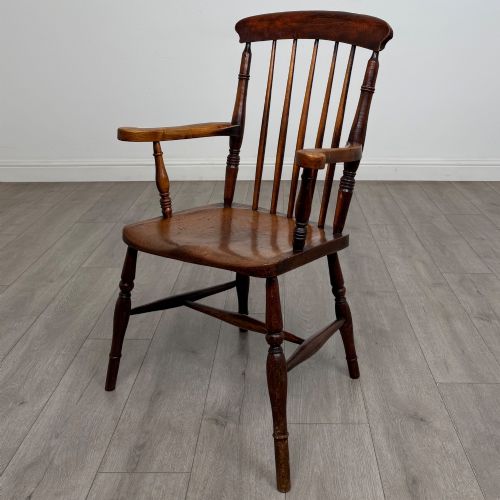

Country Spindle Back Chairs
Country spindle back chairs bring vernacular warmth to an interior through honest timber construction and regional seating forms.
Country Spindle Back Chairs
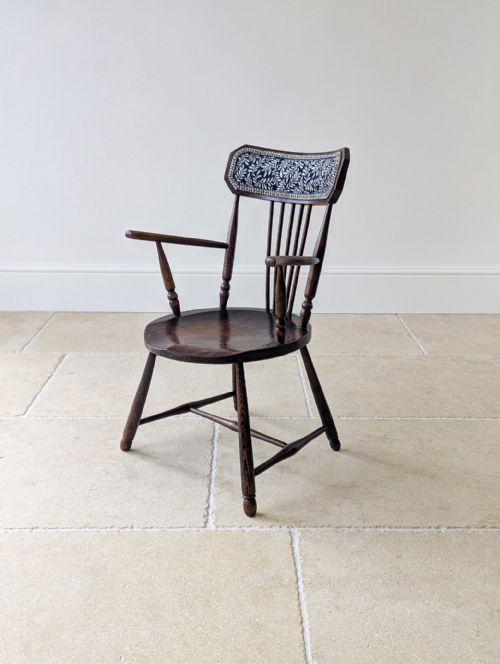
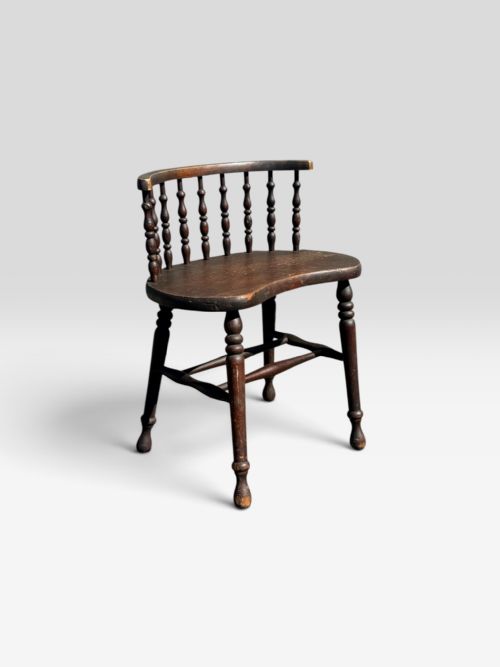
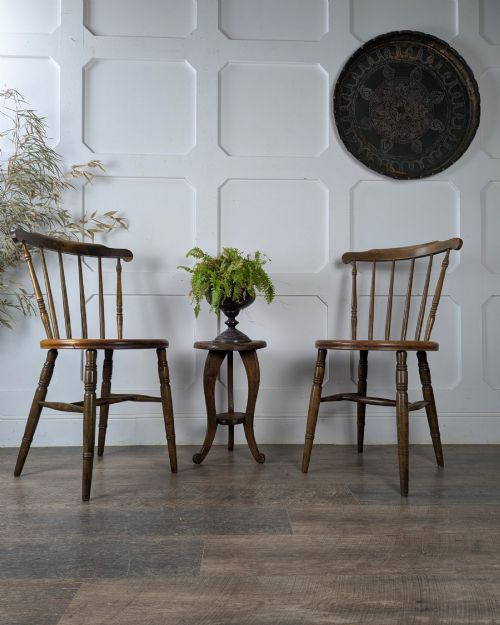
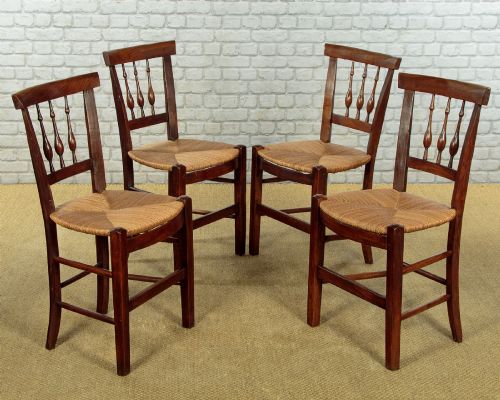
When searching for country spindle back chairs, a buyer examines functional seating built by regional makers across the eighteenth, nineteenth, and early twentieth centuries. These pieces encompass dining chairs, armchairs, rocking chairs, and benches originating from rural traditions.
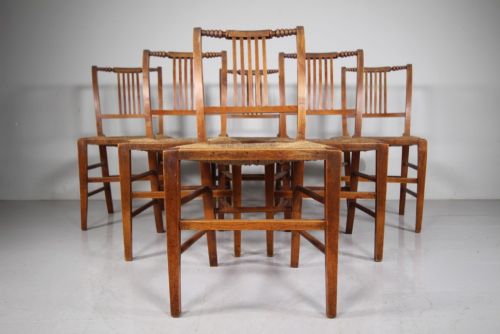
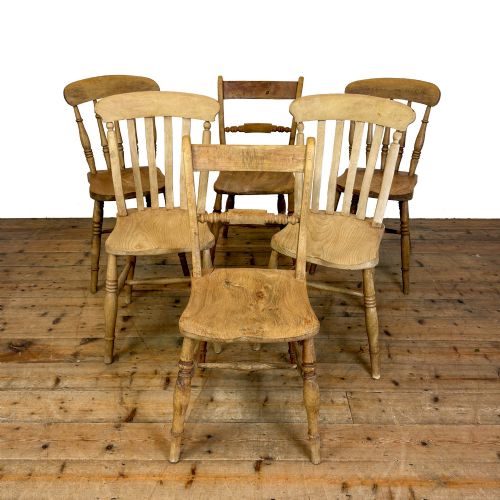
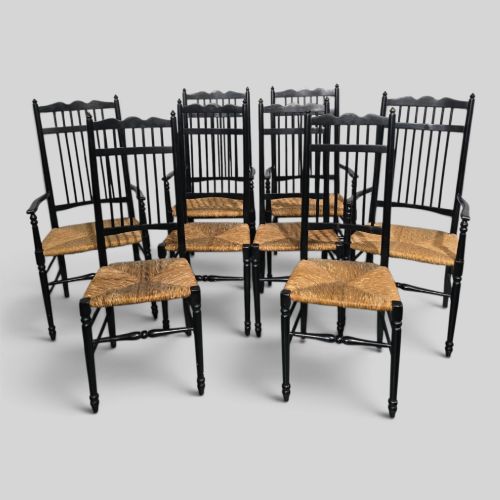
The versions most frequently encountered on this page date from the nineteenth century, often reflecting Victorian farmhouse or Georgian vernacular styles. They appear individually, in pairs, or in harlequin sets gathered over time.
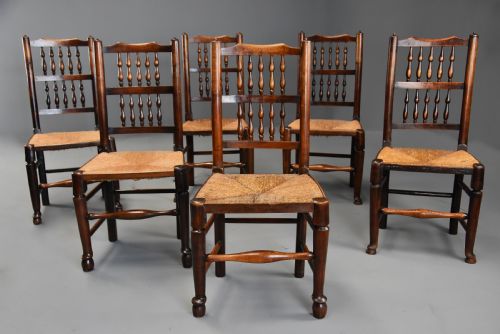
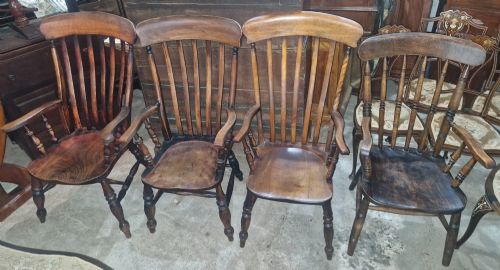
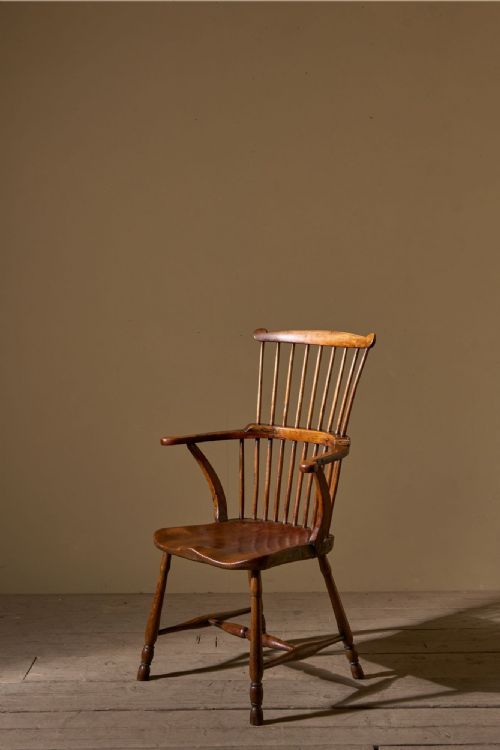
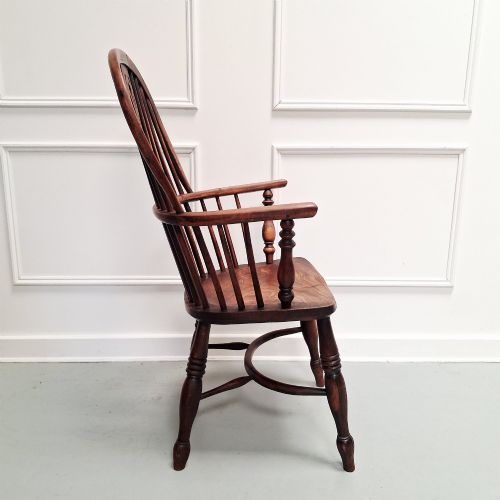
Makers utilised local woods to construct chairs intended for everyday domestic utility, resulting in forms that range from simple rush-seated ladder backs to high-hoop Windsor variations.
How they were made
Constructed primarily from native hardwoods such as elm for solid seats, ash for bent members and spindles, and beech for turned legs, these chairs rely on traditional joinery techniques. Makers shaped green timber using drawknives and shaves, fitting spindles into drilled mortises while the wood dried to secure a tight joint.
Seats often consist of carved solid timber or woven rush supported by stretchers, including crinoline forms that provide structural rigidity to the undercarriage. Surface finishes typically develop through decades of waxing and handling, revealing the grain of the wood without heavy modern varnishes.
Several rocking chairs trace their lineage to nurseries where nineteenth-century makers curved the runners just enough to soothe generations of restless infants.
What varies in quality
Quality in these chairs lies in the integrity of the timber selection and the retention of original surface patination. Superior examples display thoughtful pairing of woods, such as figured elm seats matched with clean-grained ash spindles, whereas lesser pieces show mismatched repairs or replaced components.
The execution of turnings on legs and arm supports dictates the refinement of the piece, moving from utilitarian heft to more slender regional styling. The preservation of the original seat base, whether timber or rush, also separates untouched survivors from heavily restored examples.
J Spencer
The Country Spindle Back Chairs Glossary
- Spindle back
- A chair design featuring a series of turned vertical wooden rods connecting the seat to the top rail. This construction provides structural support while keeping the chair relatively light.
- Vernacular
- Everyday objects built by regional makers following local traditions rather than formal architectural styles. These pieces prioritise practical function and available materials over academic design rules.
- Harlequin set
- A collection of dining chairs that share similar stylistic traits, materials, or periods but were not originally manufactured as a single unified set. Such groups are assembled gradually by collectors to match around a table.
- Crinoline stretcher
- A curved underframe stretcher found on certain Windsor and country chairs that links the legs and provides lateral stability. The shape resembles the hoop structures worn beneath historical skirts.
- Patina
- The surface sheen and colour acquired by wood and organic materials through age, wear, and regular handling. It serves as an indicator of longevity and untouched condition.
Country Spindle Back Chairs: Frequently Asked Questions
What is a harlequin set?
A harlequin set consists of individual chairs gathered together because they share similar proportions, materials, and regional styles. They offer a cohesive dining arrangement without the uniformity of a factory-produced suite.
Collectors often build these groups over many years to match the character of older farmhouse tables.
How do I care for rush seats?
Rush seats require a stable indoor environment away from excessive moisture and direct heat sources. Regular gentle dusting prevents dirt from settling into the natural fibres.
Applying a light, infrequent coat of traditional beeswax helps maintain the flexibility of the rush over time.
Where were these chairs made?
Country chairs were produced by local vernacular makers and regional workshops across rural Britain. Specific areas like Lancashire, Cheshire, and the Thames Valley developed distinct regional characteristics in their turning and construction.
Local timber availability heavily influenced which woods a workshop employed.
How do I distinguish regional styles?
Regional variations appear in the turning of the legs, the shaping of the arms, and the profile of the top rail. Northern variations often feature multiple rows of spindles, while Thames Valley pieces tend towards smooth-bowed Windsor forms.
Examining the combination of woods, such as ash and elm, provides further clues to geographic origin.