
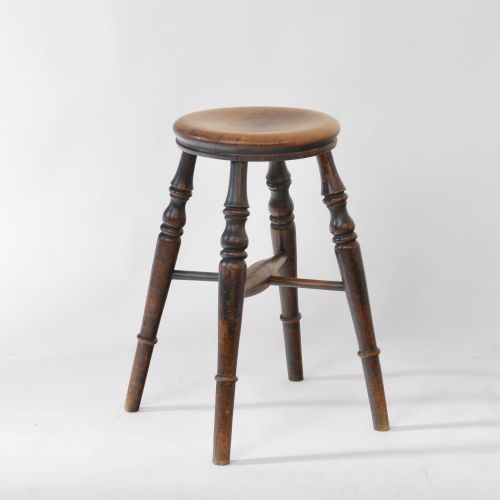
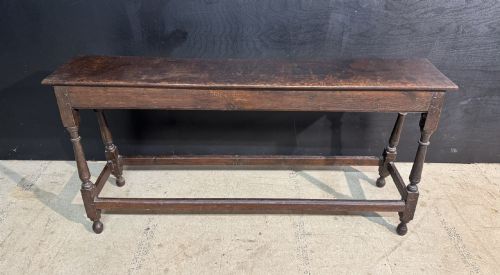
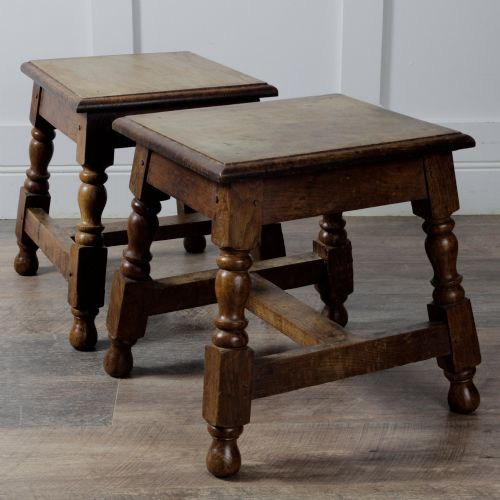
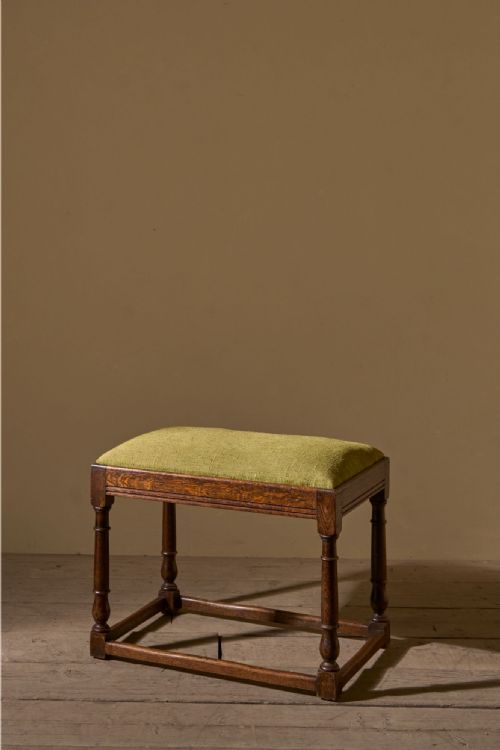
Turned Oak Stool
A turned oak stool brings robust vernacular character to a room, spanning periods from the seventeenth century to the twentieth.
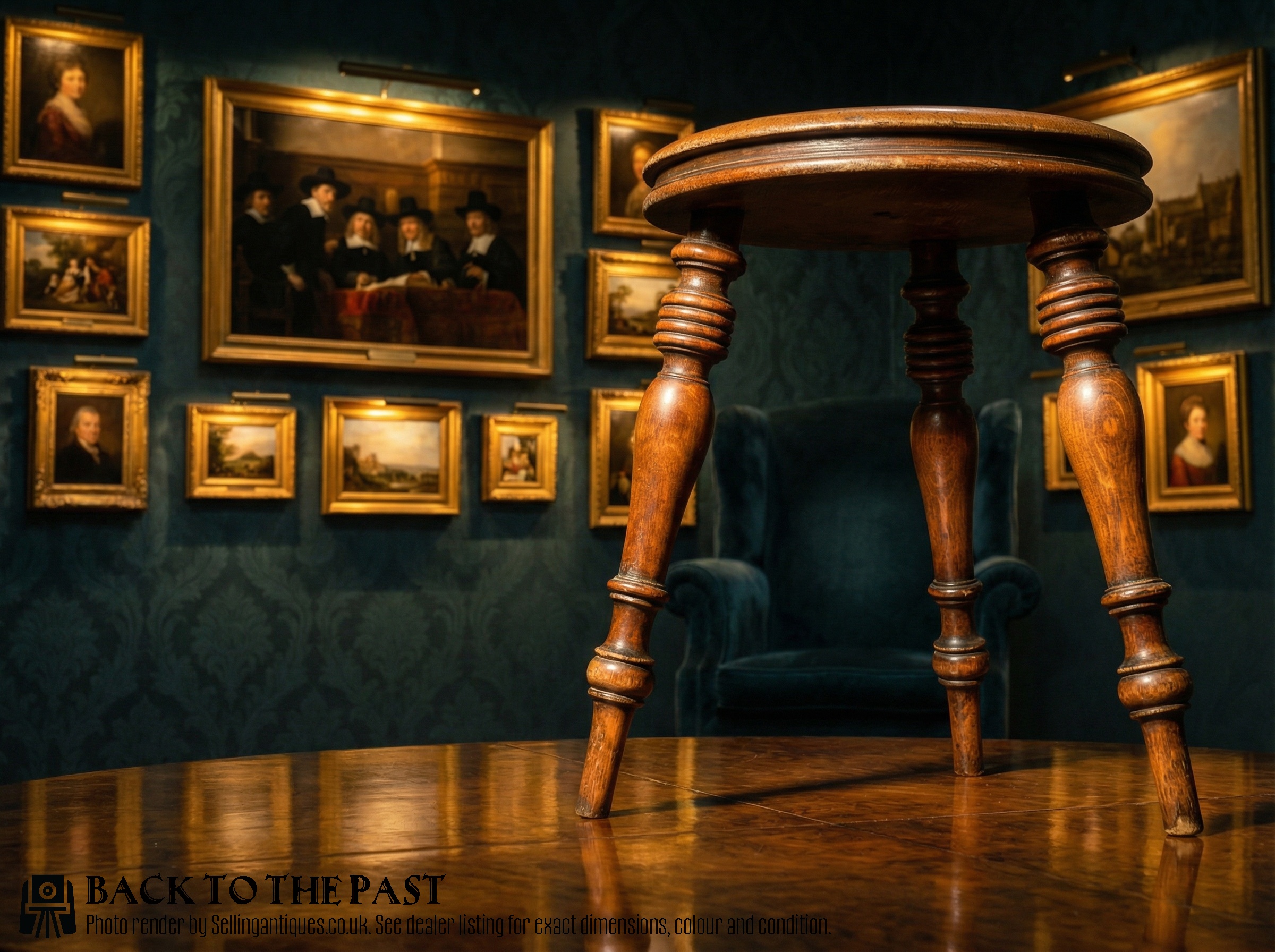
Turned Oak Stool
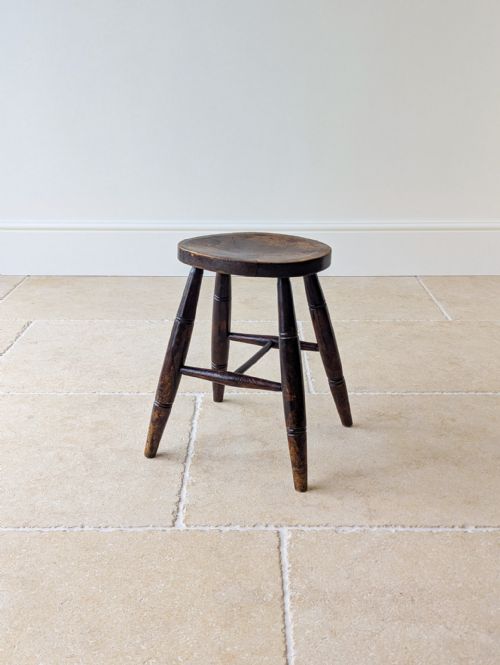
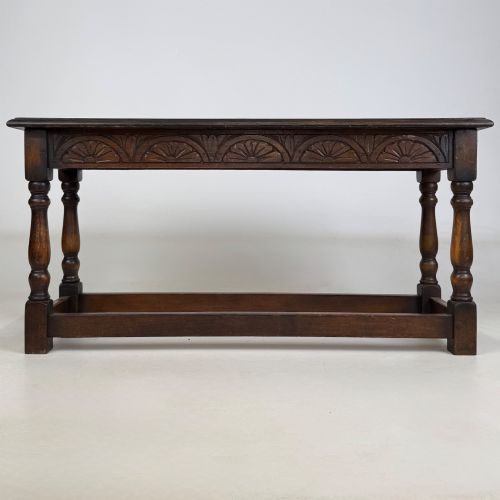
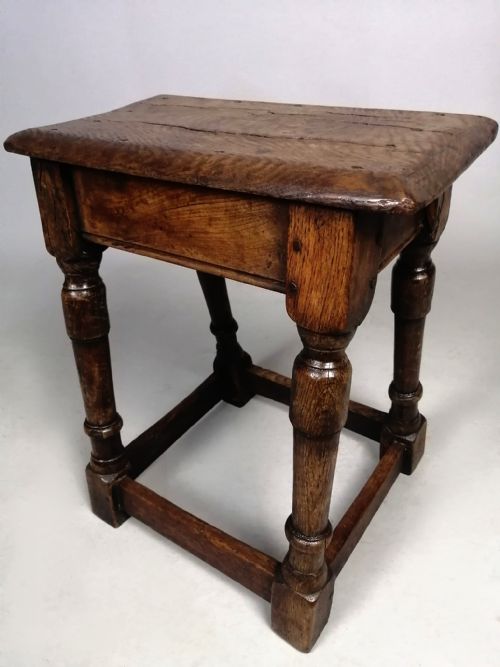
A turned oak stool encompasses various functional domestic seating and resting forms, including joint stools, footstools, box stools, and tavern stools. The search phrase often leads to sturdy joint stools and Windsor variants originating from seventeenth-century through to Edwardian workshops.
The material palette recorded across these listings centres primarily on oak, frequently paired with elm, ash, and beech, alongside rush or linen for seating elements. Pieces range from provincial seventeenth-century examples to later Jacobean Revival interpretations and twentieth-century rustic designs.
Buyers frequently encounter compact footstools, low occasional stands, and dining stools bearing characteristic turned legs. These items reflect enduring utilitarian designs shaped by English country, provincial, and Victorian farmhouse traditions.
Materials and Construction
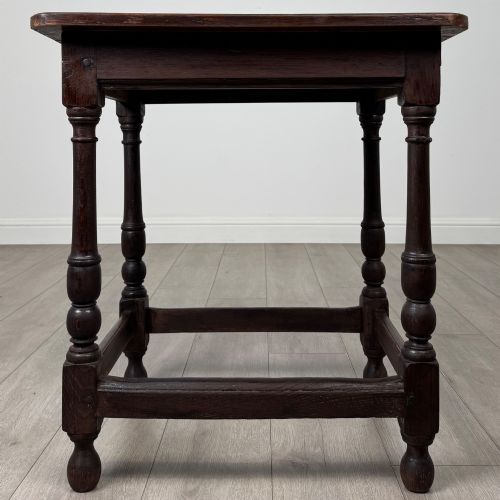
Joinery relies heavily on mortise and tenon framing, pegging, and lathe-turning to shape legs and stretchers from solid timbers like oak, elm, and sycamore. Turning techniques produce bobbin, spool, or columnar profiles that provide structural rigidity to the underframe.
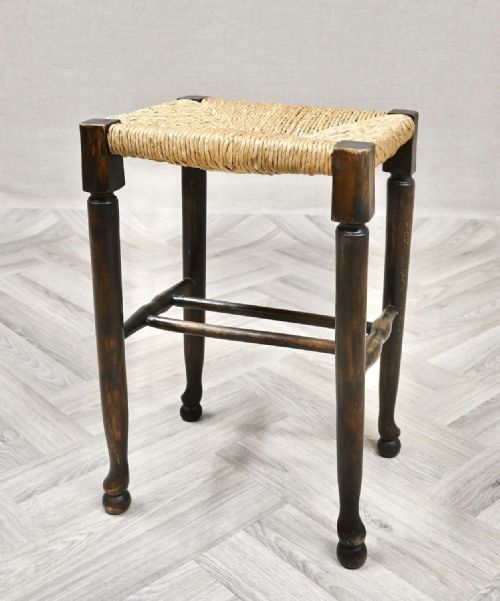
Secondary materials such as rush, cane, heavy linen, and upholstery provide seating surfaces on specific stool types, while brass hardware occasionally appears on box or close stools.
Listings feature oak predominantly, supported by secondary hardwoods like elm and beech, across seventeenth-century origins and later Victorian revivals.
Gradations in Quality
Quality rests upon the integrity of the original framing, the crispness of the lathe work on the turned legs, and the degree of timber survival. Pieces retaining their early pegging and untouched surfaces stand apart from later reconstructions or heavily restored examples.
The proportion and balance of the turned components, alongside the depth of patina accumulated on the timber over centuries, dictate the desirability of an individual piece.
The Turned Oak Stool Glossary
- Joint stool
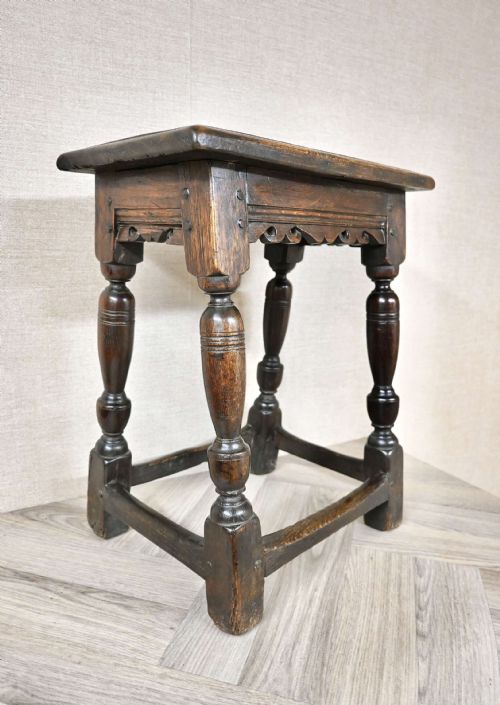
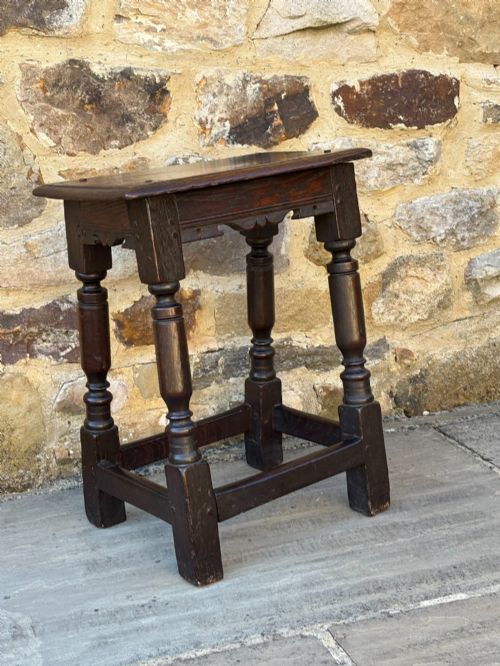
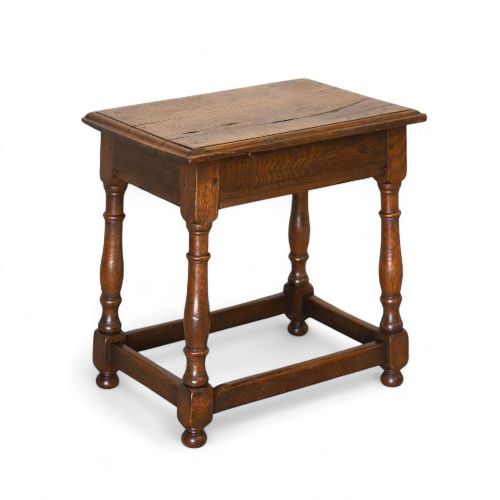
- A sturdy wooden stool constructed with pegged mortise and tenon joints rather than turned or glued spindles alone. They served various household functions in early domestic interiors.
- Bobbin turning
- A form of lathe turning that produces a series of rounded, spool-like shapes along the length of a furniture leg or stretcher. This technique appears frequently on seventeenth-century and Victorian revival pieces.
- Box stool
- A seating item featuring a hollow compartment beneath the seat, historically utilised for storage or as a close stool. They combine utility with compact joinery.
- Rush seat
- A seating surface woven from dried marsh rushes around a wooden frame. This traditional method provides a resilient and pliable top for country chairs and stools.
- Stretcher
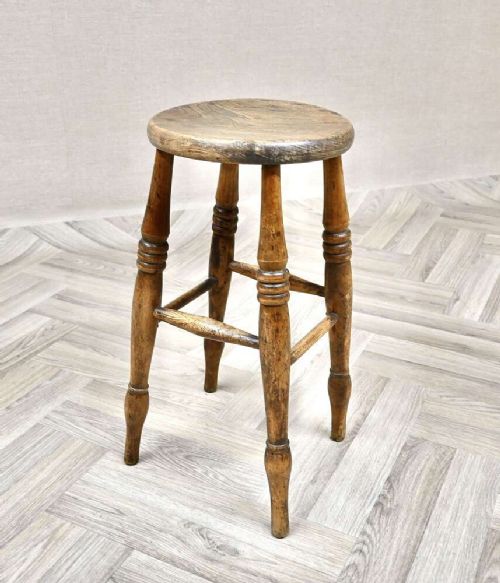
- A horizontal wooden brace connecting the legs of a stool or table to improve structural stability. Turned stretchers often double as footrests on tall tavern stools.
Turned Oak Stool: Frequently Asked Questions
How do I date a turned oak stool?
Dating relies on examining the construction methods, tool marks, and timber shrinkage visible on the underside and joints. Early pieces display hand-riven wood and pegged joinery, whereas later revival items utilise machine-cut elements.
Style indicators such as bobbin turning or specific regional forms also align pieces with seventeenth-century origins or nineteenth-century revival periods.
Were these stools used for sitting or other tasks?
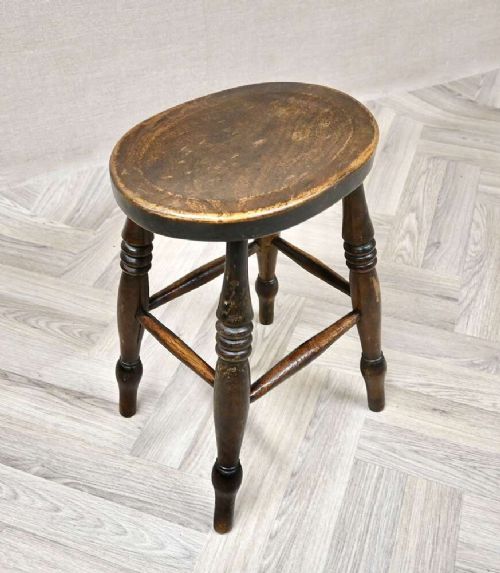
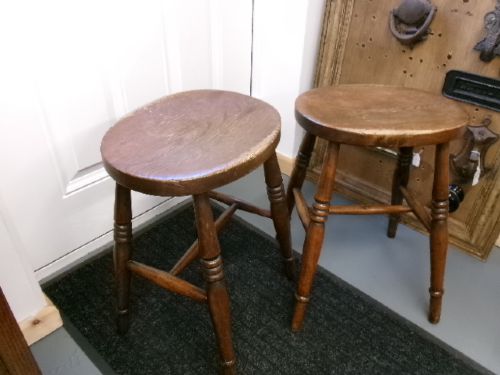
While primary usage involved seating at dining tables or by hearths, many variants served secondary purposes. Taller tavern stools accommodated patrons in public houses, and box variants provided discrete storage.
Footstools and prayer stools supported specific postures during domestic activities or devotional practices within the home.
How should I care for an antique oak stool?
Maintain the timber by avoiding direct heat sources and sudden humidity shifts that cause wood to split or warp. Occasional application of a suitable wax preserves the finish without sealing the grain.
Protect rush or upholstered seating areas from moisture and heavy abrasive wear to ensure the longevity of the materials.
What is the difference between a joint stool and a regular stool?
A joint stool is built by specialist joiners using rigid post-and-rail construction secured with wooden pegs. This method creates an exceptionally strong frame capable of supporting heavy loads or standing upon.
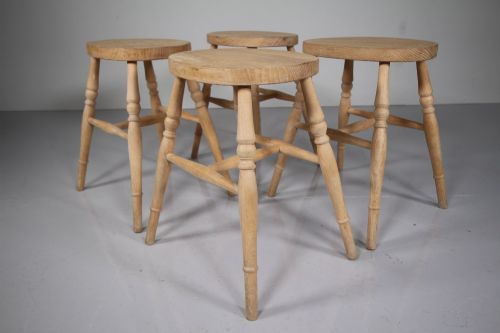
Regular vernacular stools often employ simpler turned or splayed leg insertions directly into a solid seat slab.