
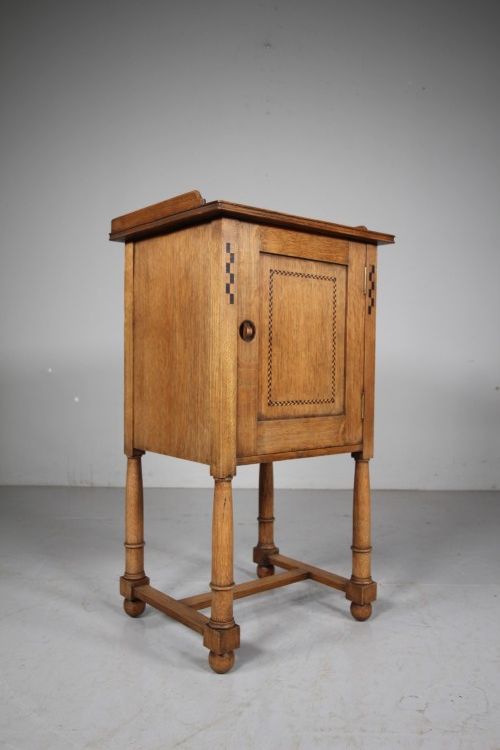
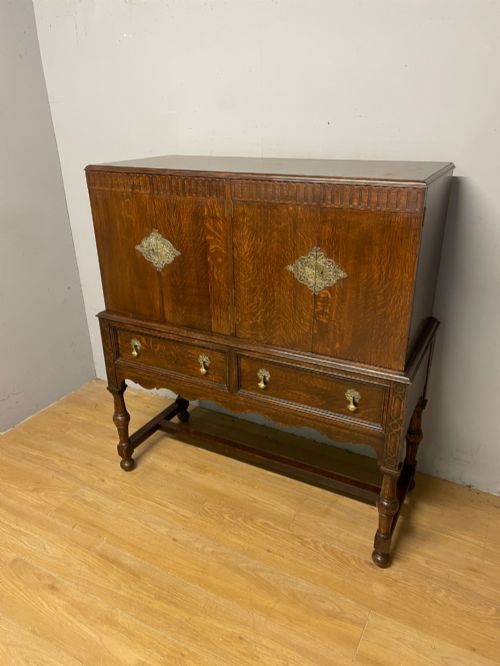
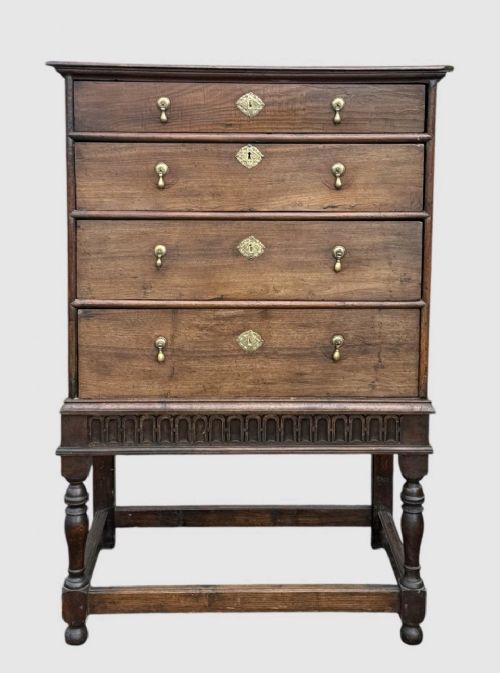


Turned Leg Oak Cupboard
These turned leg oak cupboard pieces combine sturdy timber with robust supports, offering practical storage anchored in traditional craftsmanship.
Turned Leg Oak Cupboard
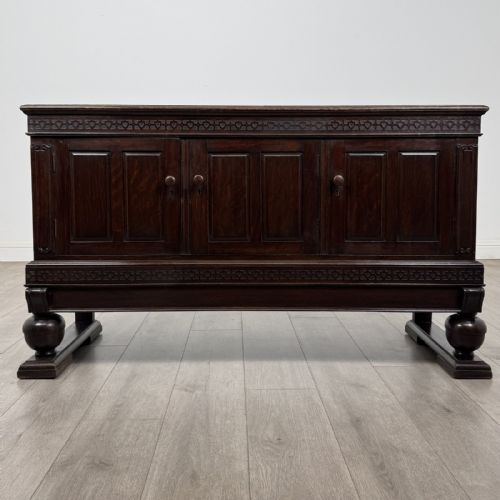
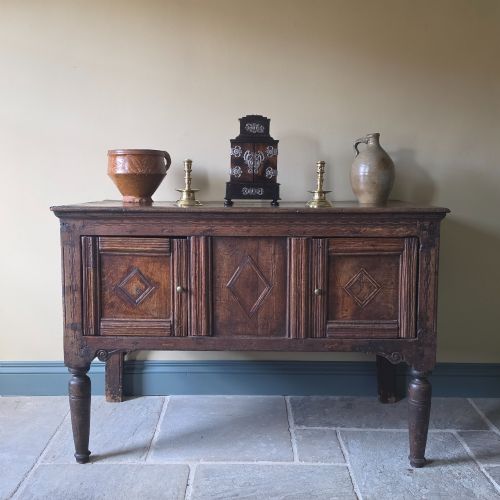
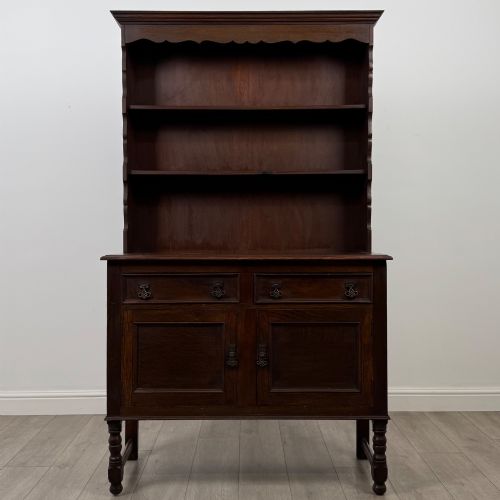
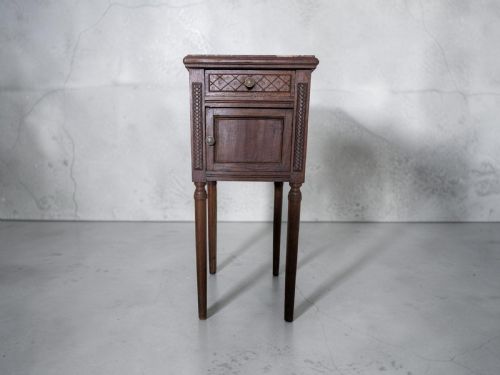
A turned leg oak cupboard provides essential domestic storage through forms ranging from compact bedside cabinets to tall Welsh dressers and display cabinets. Buyers seeking this phrase encounter pieces shaped by centuries of woodworking traditions, from seventeenth-century food hutches to Edwardian and nineteen-twenties revivals.
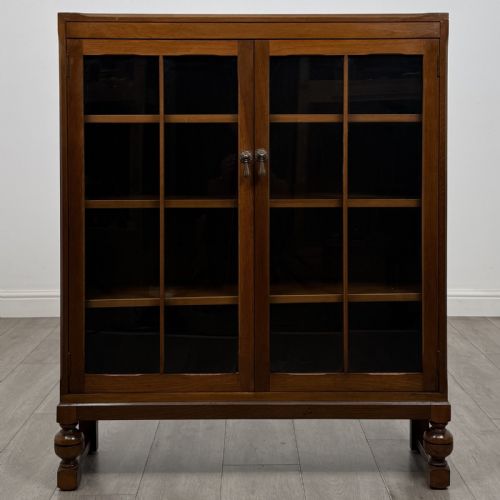
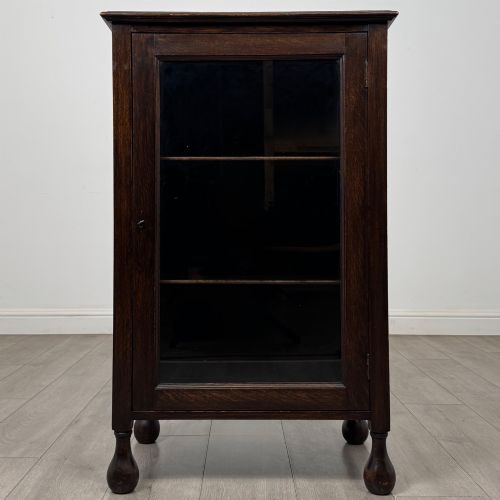
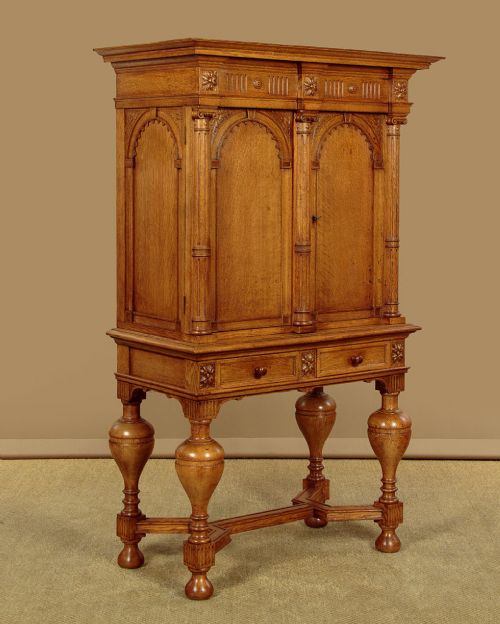
The dominant aesthetic draws heavily on Jacobean and Dutch Renaissance revivals, where substantial oak frames meet distinctive turned supports. Alongside traditional cupboards, the selection embraces sideboards, chests on stand, and glazed china cabinets resting upon sturdy legs.
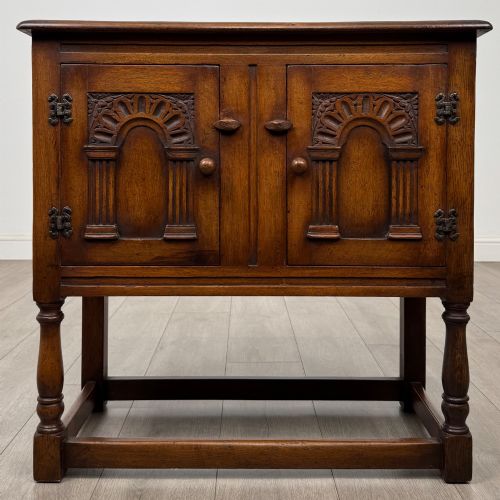
Origins span English, Dutch, and French provincial workshops, demonstrating how regional furniture makers adapted the core combination of oak and turned timber. Whether acquiring a small carved cupboard or a large dresser, the buyer secures a functional storage unit defined by visible grain and robust structural form.
Materials and construction methods
Construction relies primarily on solid oak, selected for its durability and prominent grain pattern, sometimes enhanced by subtle boxwood and ebony inlay work. Metal and brass elements appear frequently as original handles, hinges, and decorative mountings, while glass panels feature in the doors of display cabinets.
Turned legs are shaped on a lathe to create symmetrical bolster or bobbin profiles that support the heavy timber bodies above. Carpenters utilised traditional joinery techniques, combining pegged mortise and tenon frames with carved ornamentation and panelled doors.
Early food hutches utilised turned wooden spindles to let the breeze through, proving that medieval meal prep involved serious airflow management.
Assessing quality in construction and finish
Quality rests upon the integrity of the timber selection and the precision of the joinery rather than surface ornamentation alone. Superior examples display dense, well-figured oak with tightly fitted joints that maintain structural stability over decades of domestic use.
The finesse of the turned legs and the retention of original hardware, such as brass handles and iron hinges, distinguish finer pieces from later adaptations. Carved details executed with crisp, deep relief indicate higher workshop standards compared to softer, more mechanical incisions.
Heals
The Turned Leg Oak Cupboard Glossary
- Welsh Dresser
- A traditional kitchen and dining room storage form comprising a lower set of cupboards or drawers surmounted by open plate racks. In oak, these pieces serve as both display furniture and functional storage.
- Cabinet on Stand
- A raised storage container elevated on a distinct open wooden frame or stand. This form lifts the main body off the floor, often utilising prominent turned legs connected by stretchers.
- Food Hutch
- An early form of ventilated storage cabinet enclosed by turned spindles or pierced wooden panels. These pieces allowed air circulation around perishable foodstuffs before modern refrigeration.
- Boxwood Inlay
- Decorative contrasting wood veneer inserted into shallow recesses carved into the oak surface. This technique creates delicate geometric borders and linear patterns.
Turned Leg Oak Cupboard: Frequently Asked Questions
How do I date a turned leg oak cupboard?
Dating relies on examining construction marks, timber thickness, and hardware fixings alongside the prevailing style of the turned legs. Earlier pieces from the seventeenth and eighteenth centuries show hand- cleft timber and pegged joints, whereas Edwardian and nineteen-twenties revivals incorporate machine-tooled elements and standard screws.
Context is provided by secondary materials such as brass handles, glass panes, and inlay work. Comparing the structural proportions against documented period forms helps confirm whether a piece is an original period example or a later revival.
Are these cupboards suitable for modern homes?
These robust oak pieces provide substantial storage capacity while fitting easily into contemporary living rooms, hallways, and dining spaces. Their neutral timber tones and classic silhouettes complement both traditional interiors and modern minimalist settings.
Smaller variants like bedside tables and compact cupboards offer practical bedside or corner storage without dominating a room. Larger dressers and display cabinets serve as focal points for exhibiting china, books, and glassware.
How should I care for antique oak furniture?
Maintenance requires keeping the timber away from direct heat sources and sudden humidity changes to prevent the solid oak from warping or splitting. Regular dusting with a soft, dry cloth preserves the natural lustre of the wax or polish finish.
Avoiding silicone-based sprays ensures the wood pores remain unsealed and breathable over time. Occasional application of a traditional beeswax feed helps nourish dry oak surfaces and protects against minor scuffs.
What is the difference between Jacobean and revival styles?
Authentic Jacobean furniture dates from the seventeenth century and exhibits the tool marks, hand- turned profiles, and structural wear characteristic of that era. Revival pieces are later interpretations, often manufactured during the Edwardian period or the nineteen-twenties, built using machine-assisted joinery.
While revival pieces emulate the heavy oak construction and turned supports of seventeenth-century originals, their internal framing and hardware reflect nineteenth or twentieth-century workshop practices.