
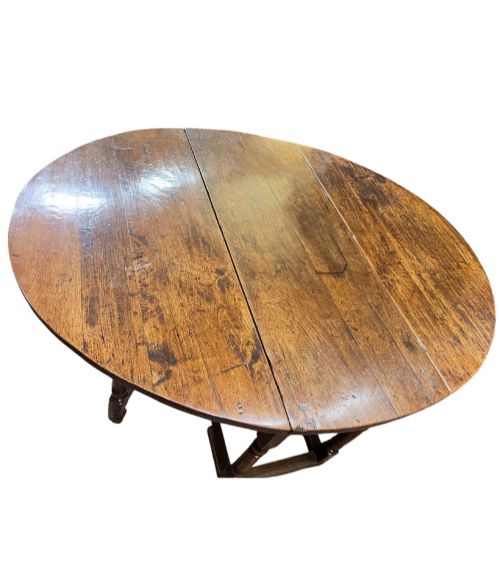
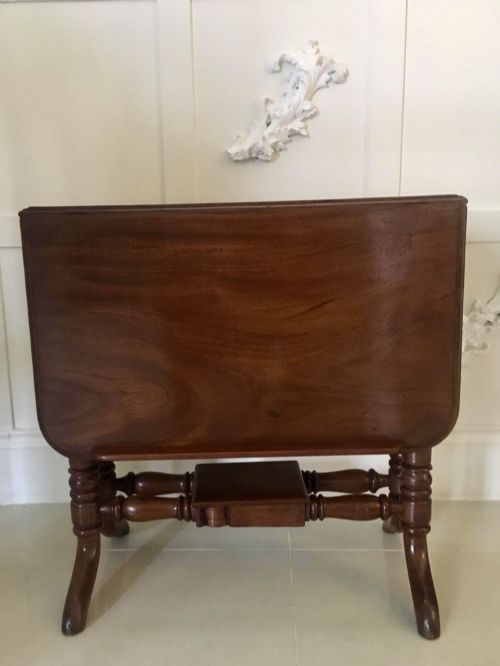
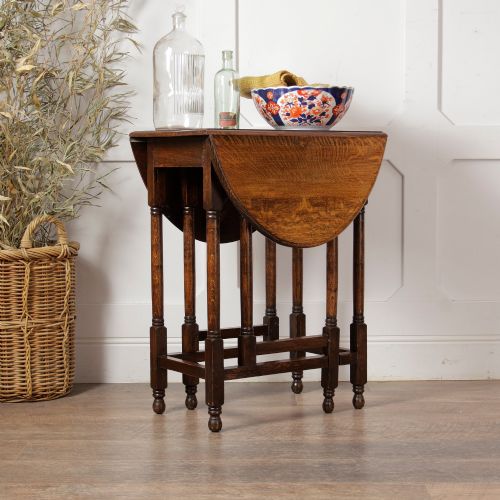
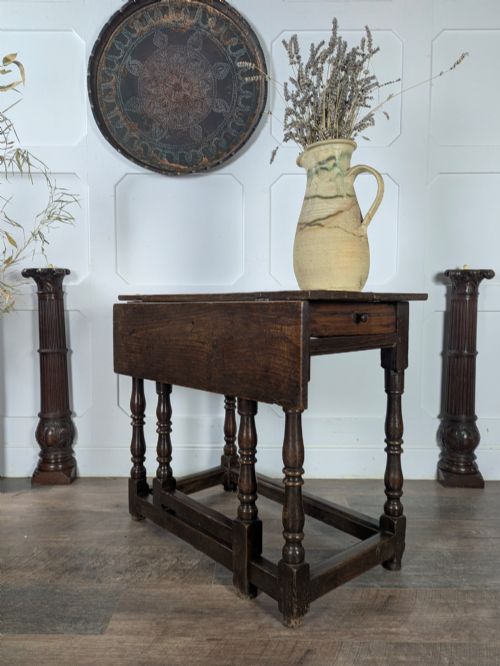
Turned Leg Folding Table
A turned leg folding table offers practical surface space that tucks away cleanly when not in use, spanning centuries of domestic utility.
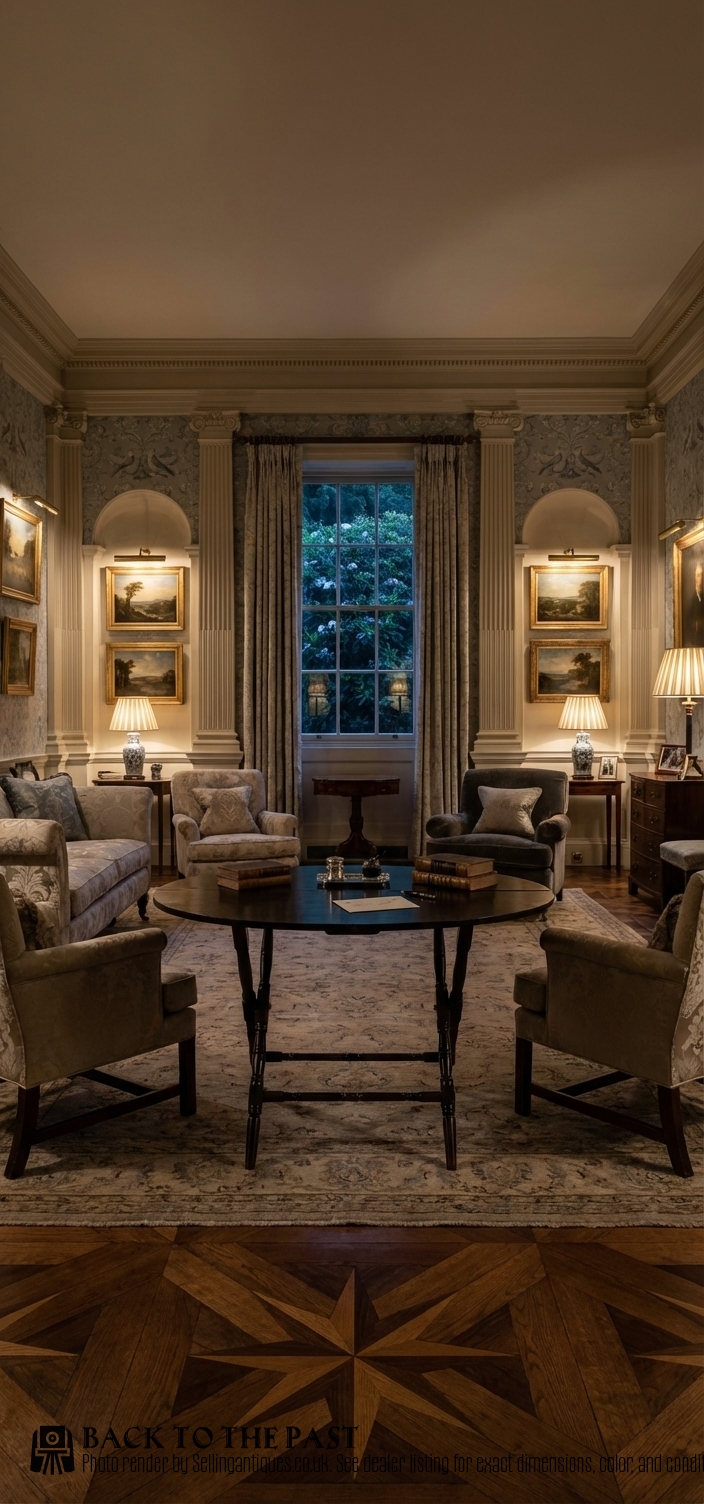
Turned Leg Folding Table
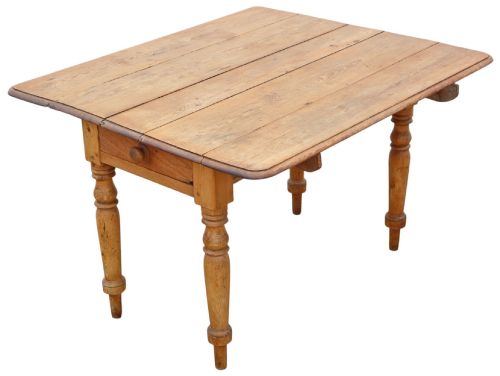
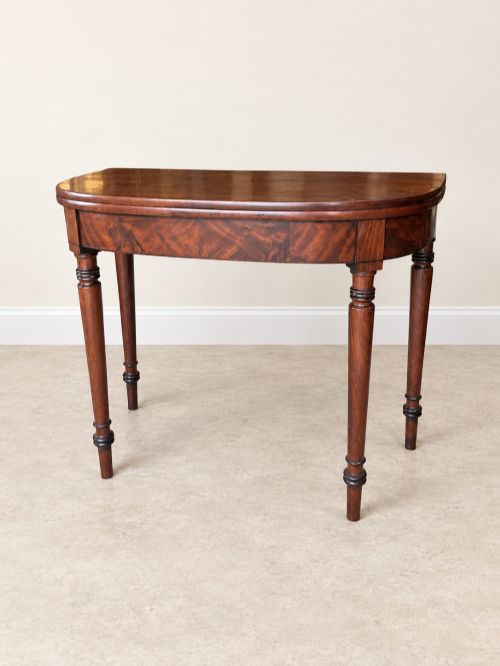
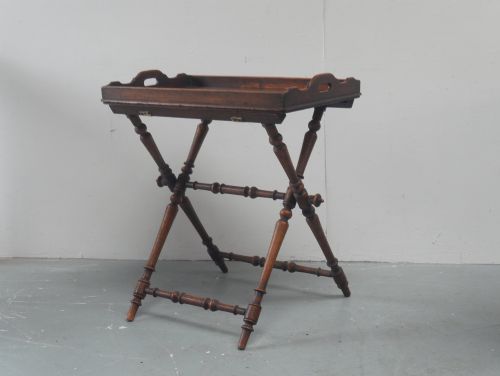
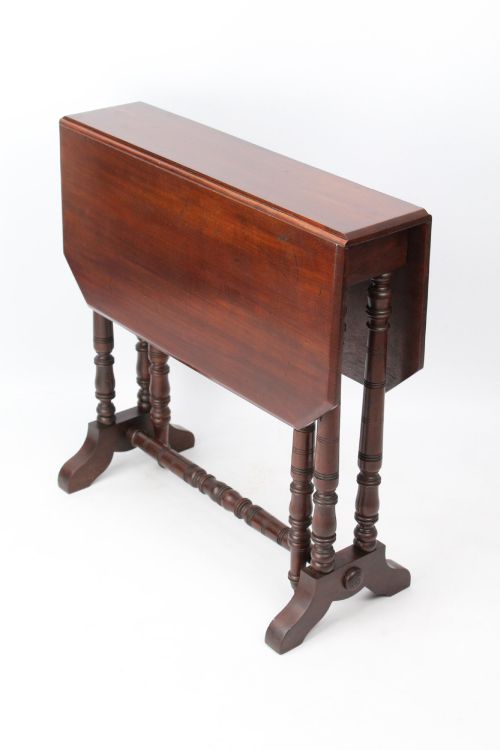
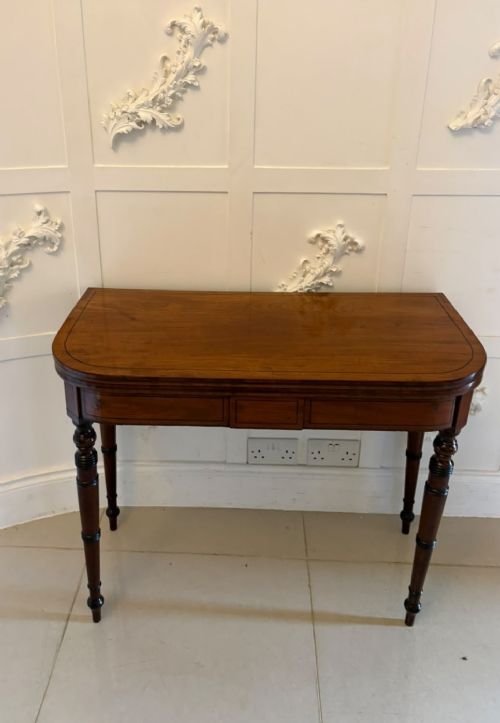
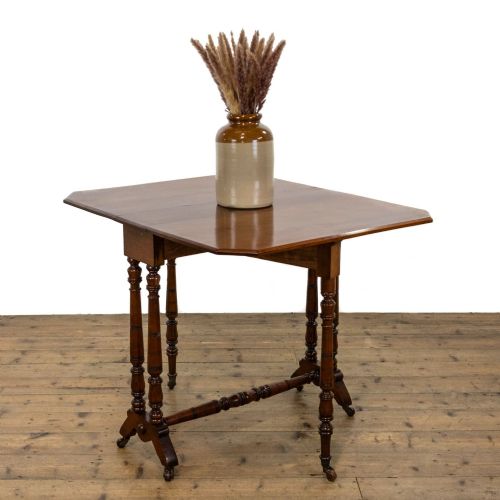
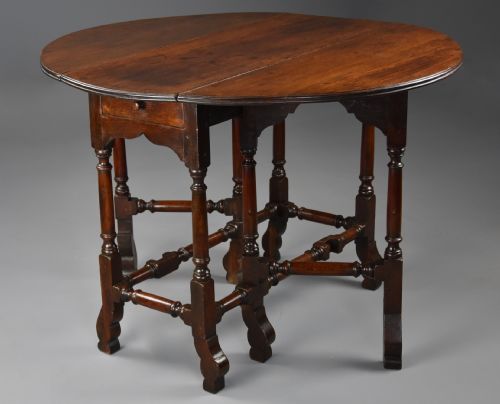
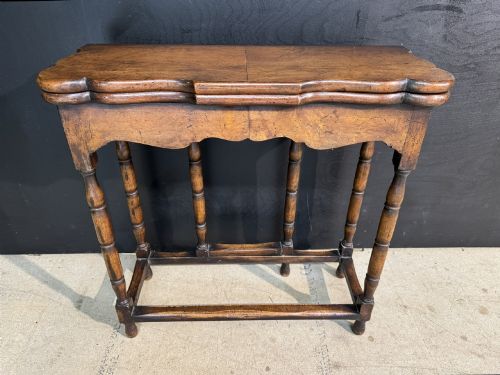
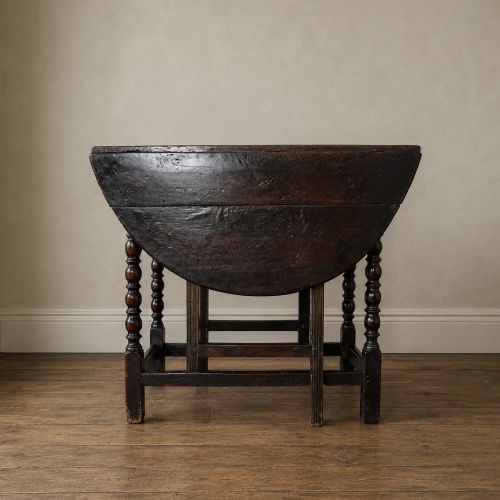
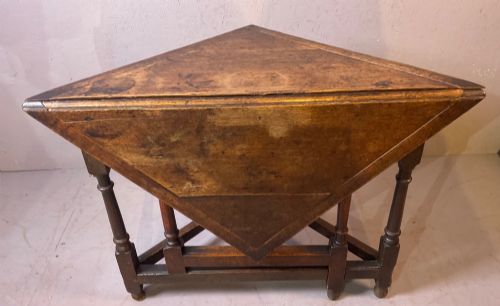
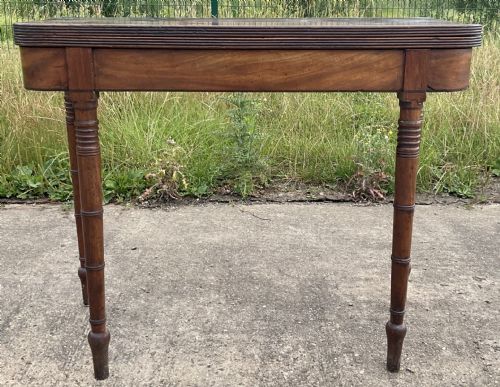
A turned leg folding table bridges the gap between everyday utility and compact living, encompassing forms such as gateleg tables, drop leaf tables, and Sutherland tables. When searching this phrase, a buyer encounters practical folding furniture originating from the seventeenth century through to the twentieth century.
The selection on this page relies heavily on sturdy oak and rich mahogany pieces, alongside walnut, pine, and rosewood variants. These surfaces often take the form of dining tables, side tables, and card tables designed to expand for company and contract for storage.
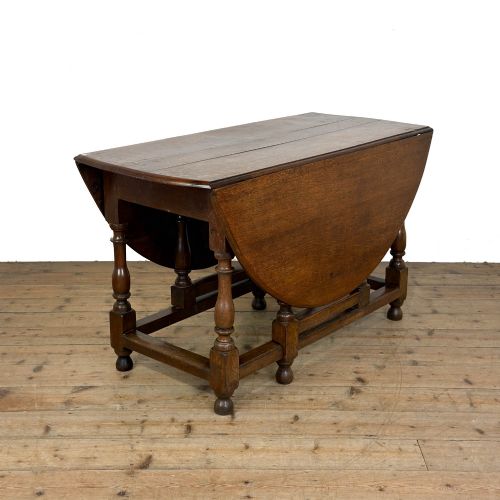
Earlier examples frequently showcase solid oak construction with robust turned baluster legs, while later nineteenth-century pieces lean toward mahogany and walnut Sutherland or Pembroke designs. This mix provides buyers with options ranging from rustic country kitchen tables to formal Georgian tea and games tables.
How They Were Made
Cabinet makers utilised dense hardwoods like oak, mahogany, and walnut, selecting timber for strength and grain pattern. Legs were shaped on a lathe to create turned profiles, ranging from simple balusters to slender spider legs, supporting hinged leaves and pivoting gates.
Joinery relied on traditional methods including tenons and pegged joints in early pieces, evolving into sophisticated hinge mechanisms and delicate inlays in later Georgian and Victorian examples.
Several tables retain generations of ink spots from long-forgotten letters written by candlelight.
What Varies in Quality
The distinction between ordinary and superior pieces rests on the integrity of the timber selection and the precision of the turning. Finer examples display a deep, natural patina built up over generations, with tightly fitted hinges and stable drop leaves that align evenly when opened.
Proportion and execution drive the standing of a piece, where smaller dimensions or unusual wood species like red walnut and yew wood elevate the craftsmanship. Structural honesty, such as original plank tops and solid framing without excessive modern intervention, sets the better items apart.
The Turned Leg Folding Table Glossary
- Gateleg table
- A table with hinged leaves supported by one or more legs that swing out like a gate. This design provides a large surface area that collapses into a narrow footprint.
- Sutherland table
- A narrow drop leaf table with particularly slender legs and leaves that fold down almost vertically. It was developed during the Victorian period for compact drawing rooms.
- Pembroke table
- A small rectangular table with two hinged flaps on opposite sides and usually a single drawer. It gained popularity in the eighteenth century for breakfast or occasional writing use.
- Baluster leg
- A vertical architectural support shaped on a lathe with a swelling profile. This turned form appears frequently on seventeenth and eighteenth-century oak furniture.
- Patina
- The surface sheen and mellowing developed by wood over years of use and polishing. Collectors value this indicator of age and careful maintenance.
Turned Leg Folding Table: Frequently Asked Questions
How do I use a gateleg table daily?
A gateleg table adapts to daily needs by operating with one or both leaves dropped against the central base. Drop the leaves to tuck the piece against a wall as a side console, then swing out the wooden gates to create a full dining surface when guests arrive.
Keep the hinges clean and avoid placing hot items directly on the polished wood surface. Regular waxing helps protect the timber from moisture and maintains the natural lustre of the finish.
What is the difference between an 18th and 19th-century table?
Eighteenth-century folding tables commonly feature solid oak or walnut construction with thick plank tops and heavy turned baluster legs designed for robust farmhouse or parlour use. The joinery often includes visible wooden pegs and hand-finished surfaces.
Nineteenth-century examples frequently utilise mahogany or walnut, introducing slimmer profiles, finer inlays, and sophisticated mechanical hinges. These later pieces often serve as Sutherland or pembroke tables tailored for refined drawing room interiors.
Will a folding table support daily dining?
Solid wood folding tables constructed from oak or mahogany provide sturdy support for everyday family meals. The stability depends on the strength of the pivoting gate legs and the condition of the original hinges underneath.
Check that the swing legs lock firmly into position to bear the weight placed on the drop leaves. Distributing heavy dishes evenly across the centre and leaves prevents undue strain on the folding mechanisms.
How do I care for antique wood surfaces?
Maintain antique wood surfaces by applying a traditional beeswax polish sparingly and buffing it with a soft cloth. Avoid harsh chemical cleaners and keep the furniture away from direct heat sources and strong sunlight to prevent the timber from drying out.
Using felt pads under objects placed on the table helps protect the finish from scratches. Promptly wiping away moisture preserves the historical patina accumulated over generations.