

Turn of Century Lighting
Turn of century lighting brings together period brass and wood fixtures that illuminate rooms with the character of past decades.
Turn of Century Lighting
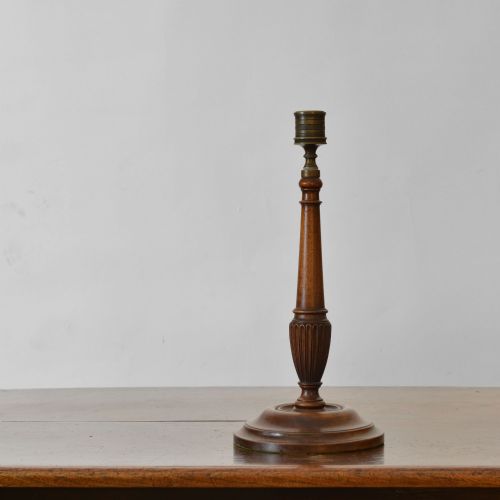
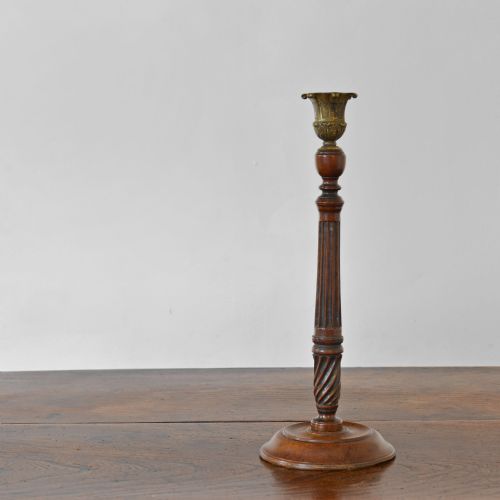
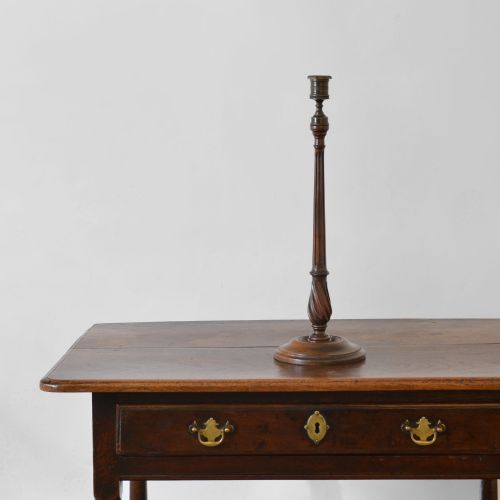
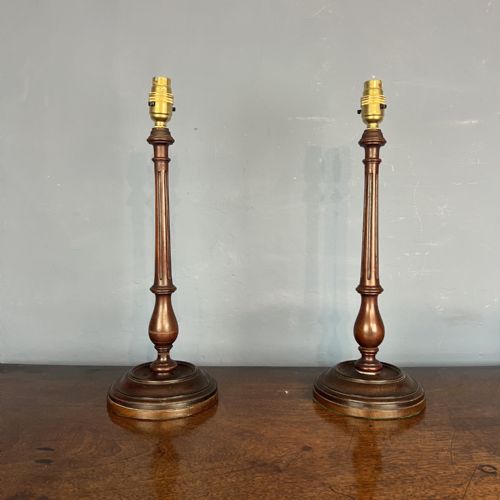
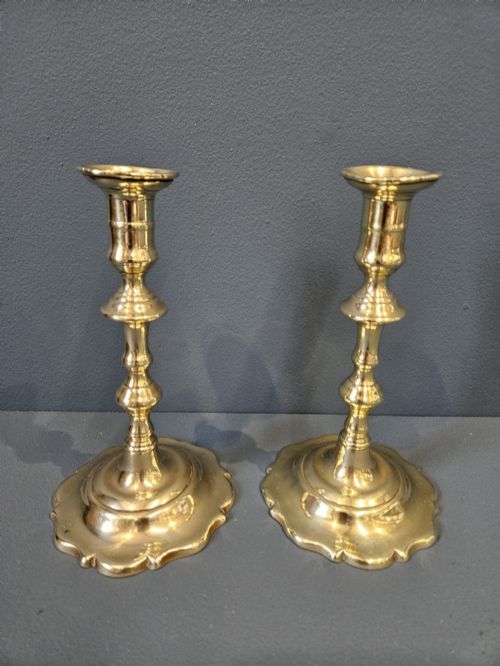
Turn of century lighting spans functional illumination pieces from the late nineteenth and early twentieth centuries, capturing the transition from candlelight and oil to electric fittings. Buyers seeking turn of century lighting will find a strong representation of period brass candlesticks alongside wooden lamp bases and floor lamps.
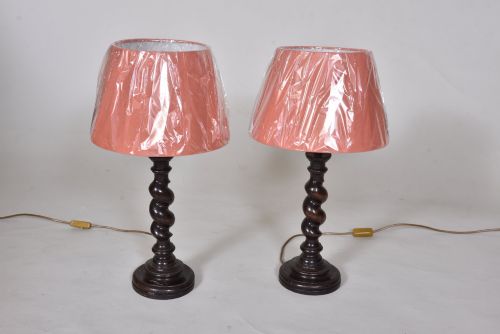
The selection ranges from Georgian and Victorian brass examples to Edwardian mahogany pieces and early twentieth century Italian alabaster designs. Pairs dominate the offerings, providing symmetry for mantelpieces, sideboards and tables.
Materials and construction
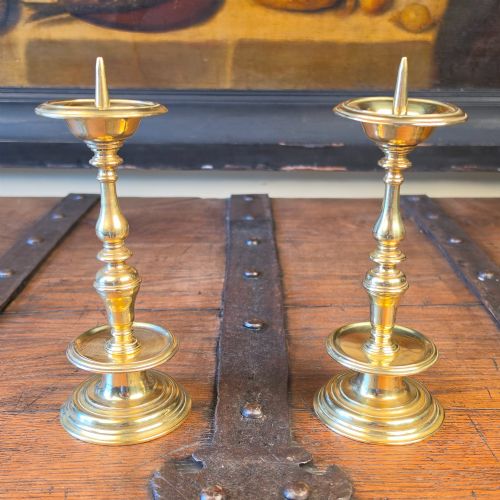
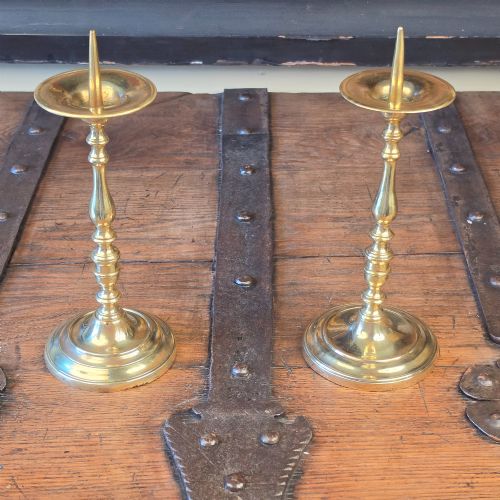
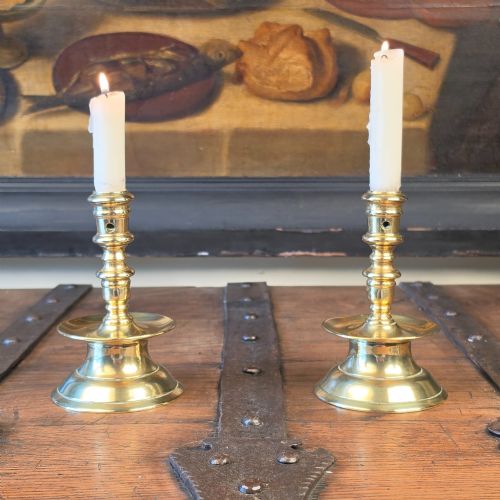
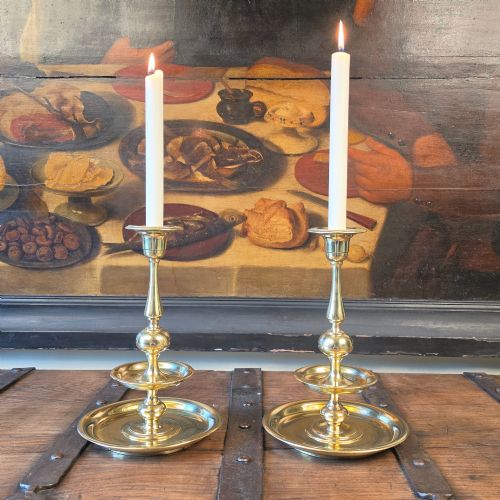
Brass serves as the primary metal material, shaped into petal bases, ejector mechanisms and twisted stems during the nineteenth and early twentieth centuries. Wood variants utilise oak, mahogany, satin birch and lignum vitae, fashioned into turned table lamps and floor standards.
Makers employed traditional carpentry and metalcasting techniques, creating solid forms with hand-finished details. Alabaster and bronze also appear in continental European lighting pieces from the period.
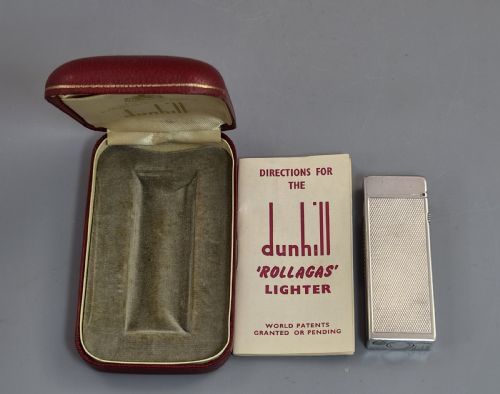
Among the illumination pieces sits a pocket-sized presentation lighter bearing an Alfa Romeo connection, proving that early twentieth century smokers enjoyed serious engineering too.
Gradations in quality
Quality rests upon the crispness of casting in brass items and the selection of figured timber in wooden bases. Superior pieces display substantial weight, clean turning and balanced proportions rather than mass-produced uniformity.
Maker attribution and original surface patination elevate certain examples above standard domestic wares of the era.
Abel Landry·Dunhill
The Turn of Century Lighting Glossary
- Candlestick
- A portable holder designed to support a single candle upright. These objects formed the backbone of domestic lighting before widespread electricity.
- Ejector
- A mechanical device incorporated into brass candlesticks to push out the remaining candle stub. This mechanism made clearing and resetting the holder simpler.
- Alabaster
- A fine-grained mineral stone used for carved sculptural lamp bodies. It diffuses light with a soft translucency.
- Torchere
- A tall ornamental stand or candlestick designed to hold a light source high. They often feature carved wooden columns.
- Pricket
- A sharp metal spike on a candlestick designed to impale and secure a candle. This form relates closely to ecclesiastical or traditional lighting.
Turn of Century Lighting: Frequently Asked Questions
How do I wire a vintage lamp base?
Vintage lamp bases require professional rewiring with modern cable and certified lampholders to meet current safety standards.
An electrician can thread modern flex through existing channels without altering the exterior appearance of the wood or brass.
Are brass candlesticks marked with dates?
Most period brass candlesticks carry no maker marks or dates, requiring stylistic attribution.
Details such as base shape, stem turning and construction methods help determine the approximate decade of manufacture.
Can I use standard bulbs in these lamps?
Standard modern bulbs fit contemporary lamp holders installed during restoration.
Low-heat LED bulbs work best to protect fragile historical materials from excessive thermal stress.
How should I clean antique brass?
Antique brass benefits from gentle dusting and occasional cleaning with a non-abrasive cloth to preserve the aged patina.
Avoid harsh chemical polishes that strip away the historical surface character accumulated over generations.