

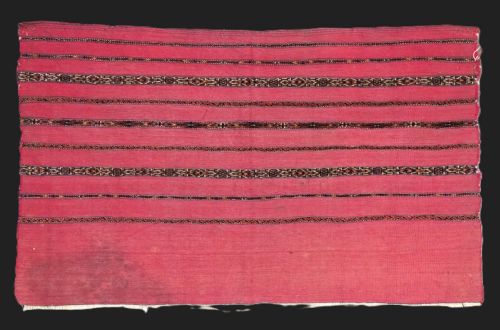


Turkmen Bag Face
These turkmen bag face pieces are tribal wool weavings offering rich colour and historic nomadic artistry for modern interiors.
Turkmen Bag Face
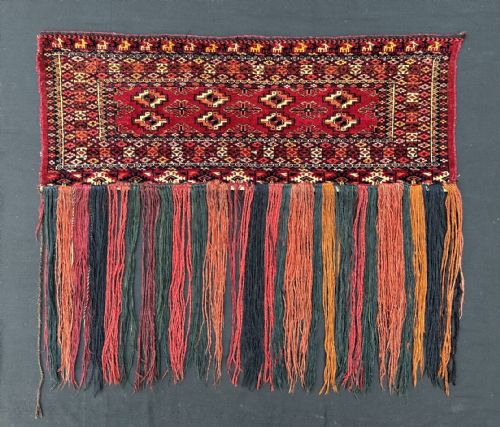
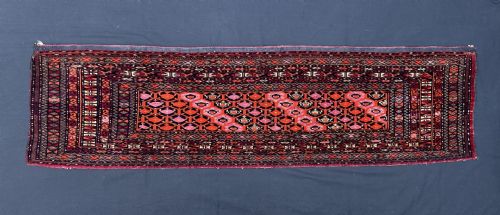
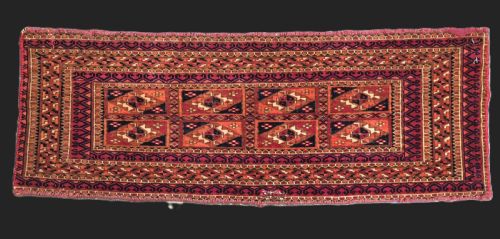
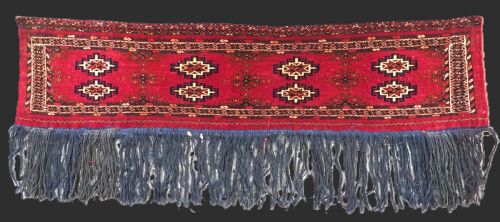
A turkmen bag face represents the front panel of a nomadic storage or bedding sack, woven in wool by Central Asian tribes. When you search for a turkmen bag face, you encounter authentic fragments of tribal heritage that function wonderfully as wall art or small rugs.
The pieces appearing on this page span the nineteenth century and the year nineteen hundred, taking the specific form of chuvals, torbas, and kaps. Examples originate from various tribal groups including the Tekke, Yomut, Ersari, and Sariq.
Materials and construction
Every turkmen bag face is constructed entirely from wool, utilising traditional tribal knotting and weaving techniques passed down through generations. These textiles were produced on portable ground looms by nomadic weavers using local materials.
The physical structure relies on durable wool foundations and dense pile knots designed to withstand the rigours of nomadic daily life and frequent transport.
Turkmen Bag Face Retail Price Guide 2026
Typical asking prices for turkmen bag face among the pieces listed under this phrase on Sellingantiques today, from the lower quarter to the upper quarter. They describe what is for sale here now, not the wider market.
The listings span the nineteenth century up to nineteen hundred, entirely constructed from wool across various tribal styles.
Assessing quality and merit
Quality in a turkmen bag face rests upon knot density, handle flexibility, and the crisp execution of tribal guls. A very fine weave elevates an example significantly, showing greater precision in the repeat patterns.
The visual hierarchy depends heavily on design variety, such as the presence of scarce gul motifs or distinctive Salor turreted designs. Pieces displaying balanced proportions and well-preserved natural wool pile command greater attention from collectors.
The Turkmen Bag Face Glossary
- Chuval
- A large Turkmen storage bag used primarily for bedding and household possessions within the yurt. Surviving examples usually consist solely of the decorative face.
- Torba
- A smaller Turkmen tent bag utilised for storing smaller household items. These pieces often feature horizontal or vertical format designs.
- Gul
- The primary medallion motif characteristic of Turkmen carpets and bag faces. Different tribes employed distinct gul variations to signal lineage and identity.
- Kap
- A general Turkmen term for a bag or sack. Collectors use this interchangeably with specific names like torba or chuval.
- Tekke
- A major Turkmen tribe known for producing finely knotted bag faces with intricate gul designs. Their weaving is distinguished by disciplined symmetry and deep red palettes.
Turkmen Bag Face: Frequently Asked Questions
What is a turkmen bag face?
A turkmen bag face is the decorative front panel of a nomadic storage sack made by Central Asian tribes. These wool textiles were originally utilised inside tents for holding bedding and household goods.
Today, collectors and interior designers value them as compact textile art. They work exceptionally well mounted on walls or displayed on tabletops.
How do I hang a bag face?
Hanging a textile safely requires distributing the weight evenly across the top edge. Many owners use a fabric sleeve stitched to the reverse or specialised non-damaging textile clamps.
Ensure the piece hangs away from direct sunlight to protect the wool and natural dyes. Periodic rotation also helps maintain even exposure in a room.
Are these pieces fragile?
Nomadic wool weavings are structurally robust because they were designed for practical storage use. However, age introduces varying degrees of pile wear and edge loss across individual examples.
Gentle vacuuming without a rotating brush maintains the wool safely. Keeping them out of high-traffic floor areas preserves the surviving pile integrity.