


Turkish Konya Carpet
A turkish konya carpet brings centuries of central Anatolian weaving tradition into a room through rich wool and tribal design.
Turkish Konya Carpet
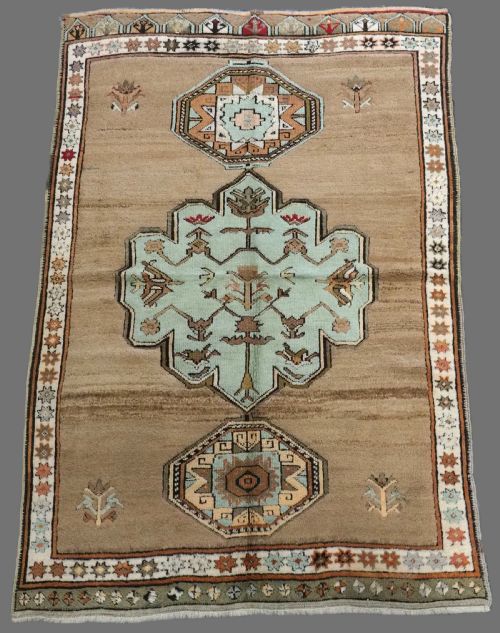
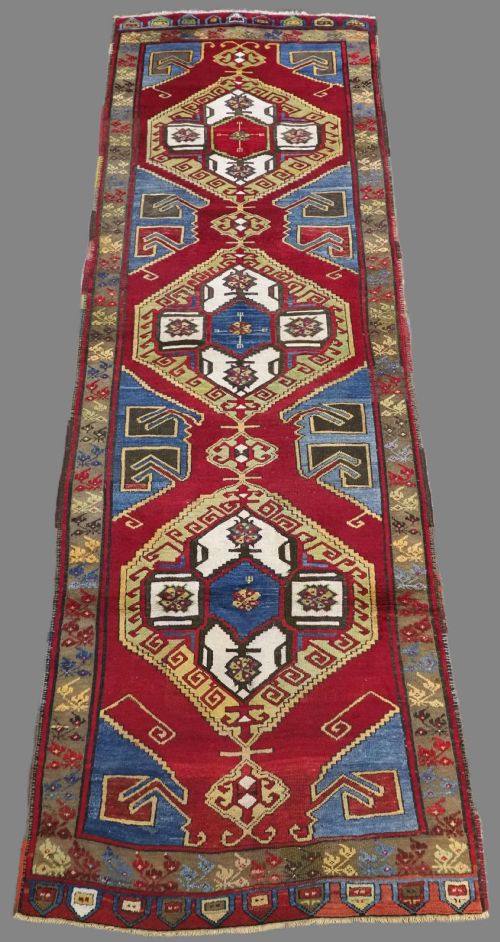
A turkish konya carpet represents the village and tribal weaving traditions originating from central Anatolia across the nineteenth and early twentieth centuries. These textile works appear in formats ranging from area rugs and long runners to specialised prayer rugs and flatwoven kilims.
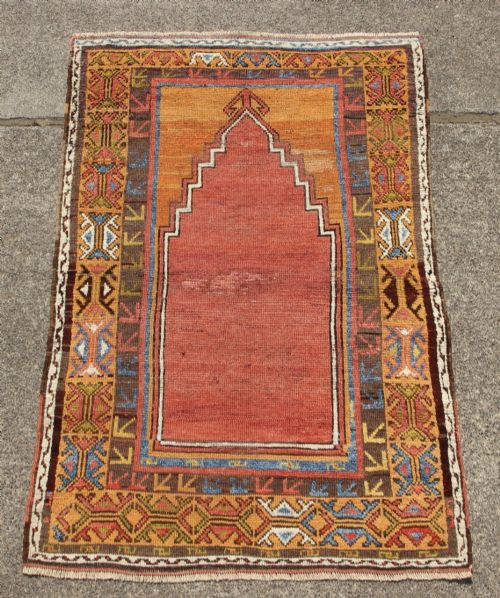
The pieces on this page span from the early nineteenth century through to the 1920s, capturing regional village output from places like Karapinar, Reyhanli, and Sivrihisar. Buyers frequently encounter format variations such as small yastic cushion covers, long runners, and classic prayer designs featuring distinct mihrab arches.
Materials and Construction
Makers utilised natural materials, predominantly hand-spun wool and cotton foundations, occasionally incorporating camel wool for its distinct un-dyed warmth. Vegetable dyes provide the rich palette, creating soft colour variations across the pile and flatwoven surfaces as the materials age.
The construction encompasses knotted pile weaving alongside flatwoven kilim and half-kilim techniques characteristic of Anatolian tribal workshops. These methods produce durable floor coverings and wall textiles that hold their structure through generations of domestic use.
Listings feature pieces spanning the period from 1800 through the 1920s, utilising hand-spun wool, cotton, and camel wool.
Craftsmanship and Design Distinction
The distinction between standard village pieces and finer examples rests upon the precision of the tribal design and the depth of the vegetable dye palette. Finer pieces demonstrate careful knotting density and harmonious colour interactions that enhance the central motifs.
Conservation state and material integrity also separate individual examples, as handling over a century of use leaves certain rugs distressed while others retain robust piles. The clarity of regional patterns, such as the prayer niche or geometric border, defines the visual strength of each carpet.
The Turkish Konya Carpet Glossary
- Konya
- A central Anatolian city and surrounding region renowned for historic carpet and kilim production. It serves as a major hub for traditional village weaving.
- Kilim
- A flatwoven textile made without a pile by tightly interweaving warp and weft strands. These pieces rely on geometric patterns formed by colour changes.
- Prayer Rug
- A devotional rug featuring a distinctive pointed arch or mihrab motif indicating the direction of prayer. These formats often display traditional central Anatolian designs.
- Yastic
- A small Turkish cushion cover or short rug traditionally used for seating or leaning against walls. They share the same pile and dye characteristics as larger carpets.
- Mihrab
- The architectural arch motif depicted on prayer rugs to symbolise the direction towards Mecca. It forms the focal point of the upper field.
Turkish Konya Carpet: Frequently Asked Questions
What defines a konya carpet?
A turkish konya carpet is defined by its central Anatolian origins, featuring traditional tribal patterns woven during the nineteenth and early twentieth centuries.
These textiles utilise hand-spun wool and vegetable dyes to create lasting geometric and prayer designs.
How were these rugs used originally?
Village weavers produced these carpets for domestic flooring, wall hanging, and specific devotional practices such as daily prayer.
Smaller formats like yastics served as cushions or bolster covers within traditional Anatolian homes.
How do I care for an antique rug?
Care requires gentle vacuuming without rotating brush heads to protect the hand-spun wool pile and vegetable-dyed fibres.
Professional specialist cleaning ensures the cotton and wool foundations remain stable over time.
How can I tell the age of a piece?
Age is indicated by the construction materials, including the use of hand-spun wool and natural vegetable dye variations characteristic of the nineteenth century.
Structural details and regional village attributions help narrow the production period between the early eighteen-hundreds and the nineteen-twenties.