

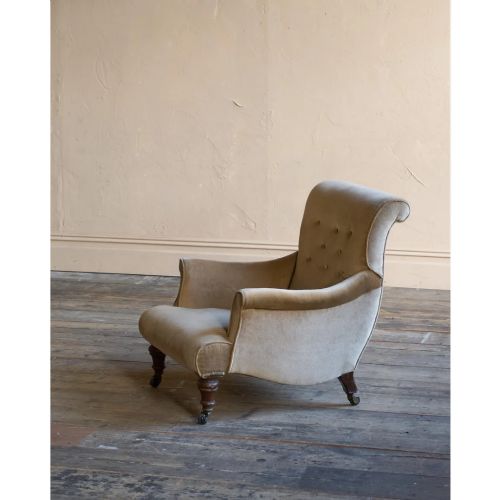
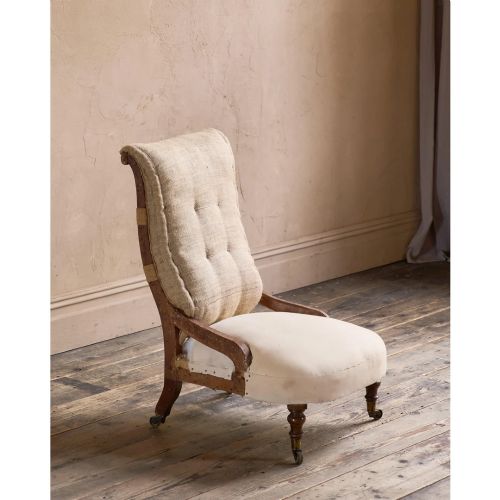
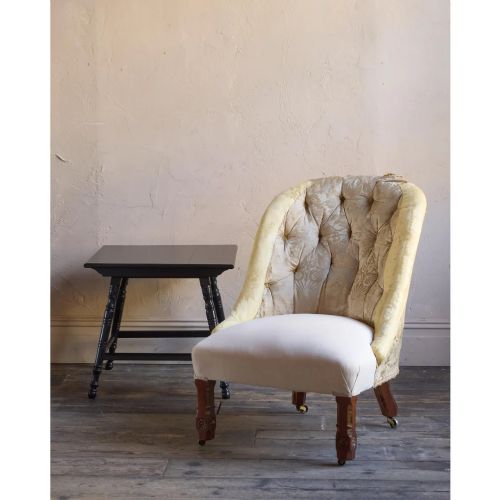
Tufted Upholstered Armchair
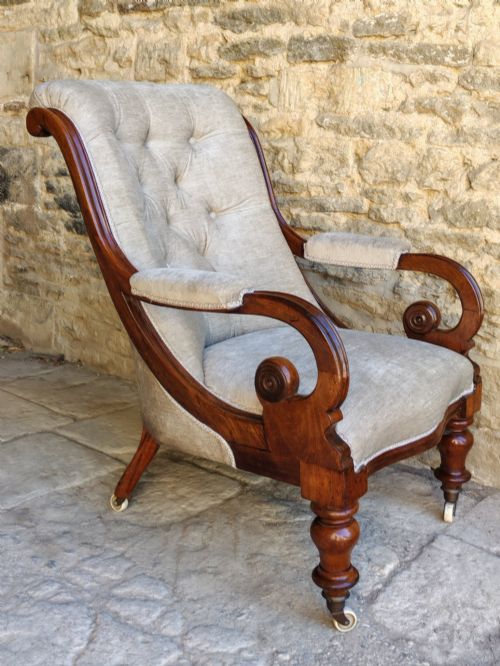
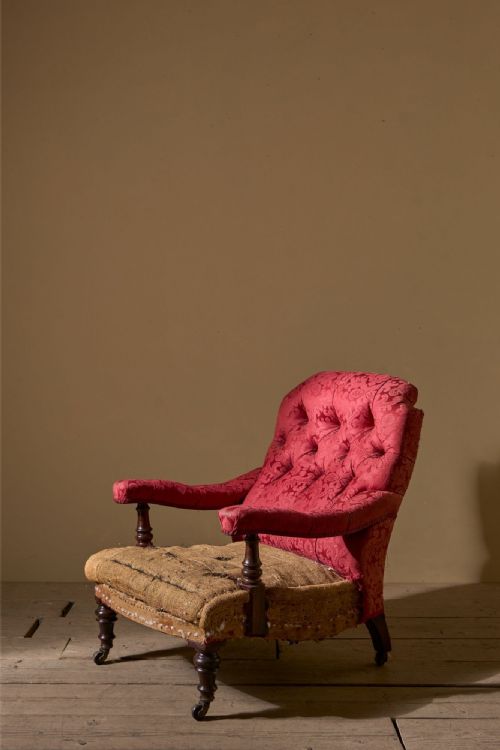
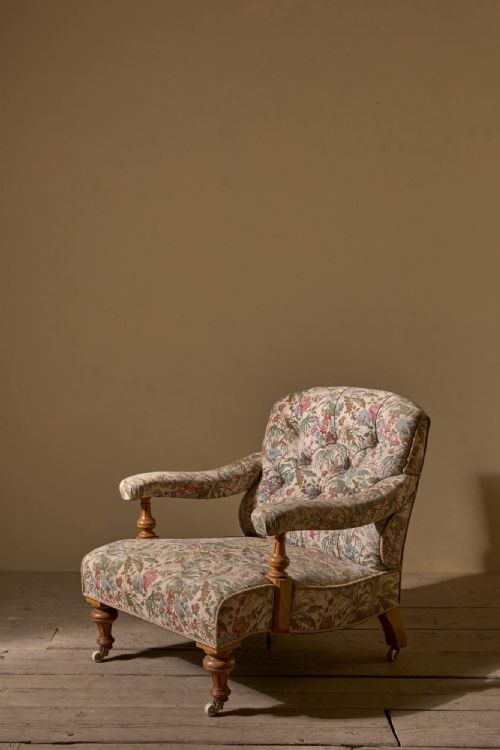
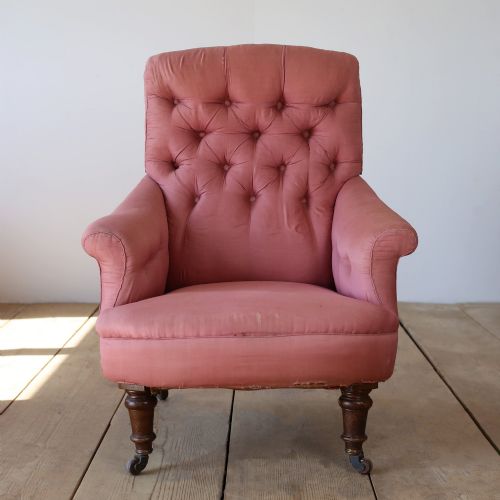
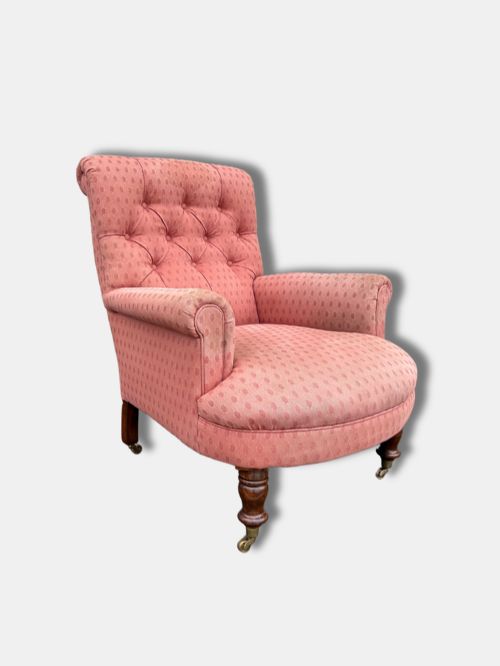
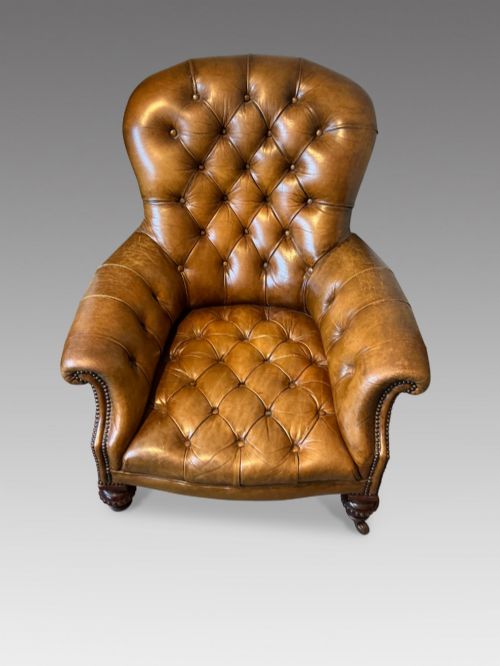
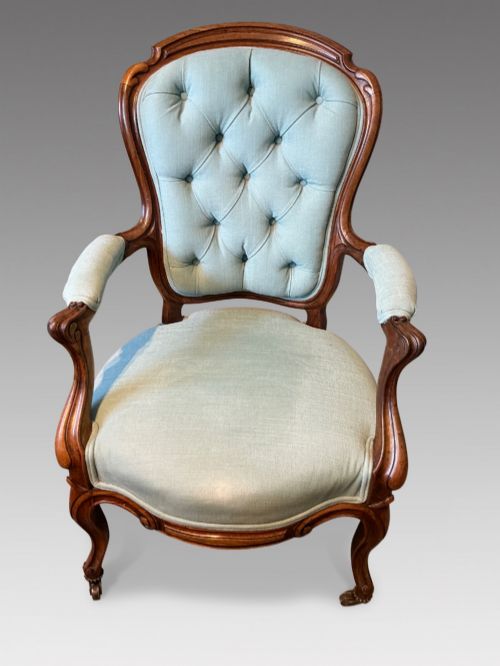
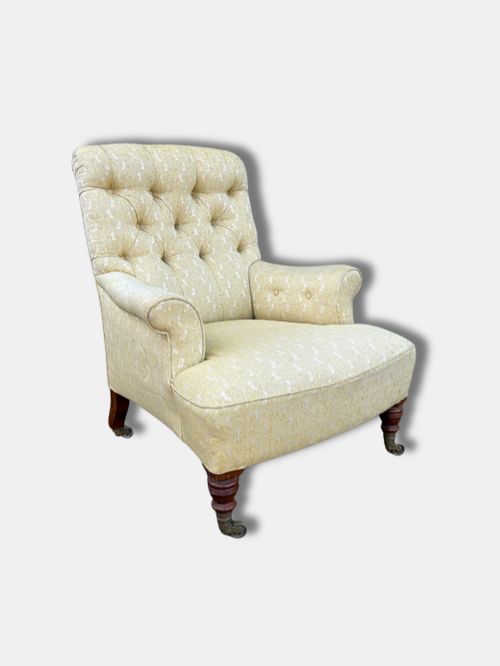
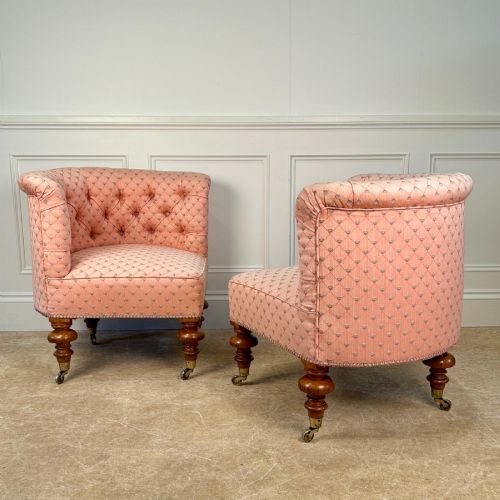
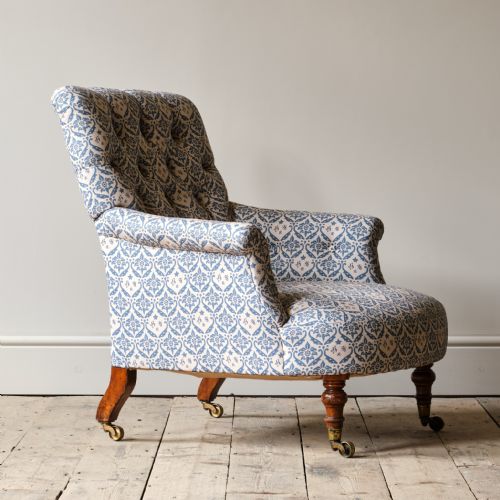
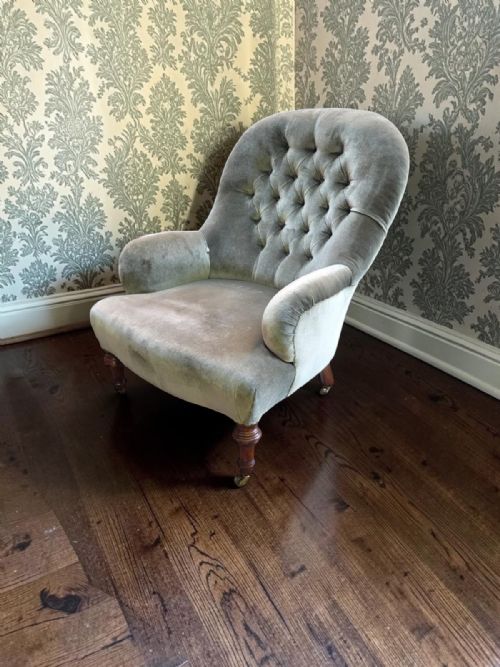
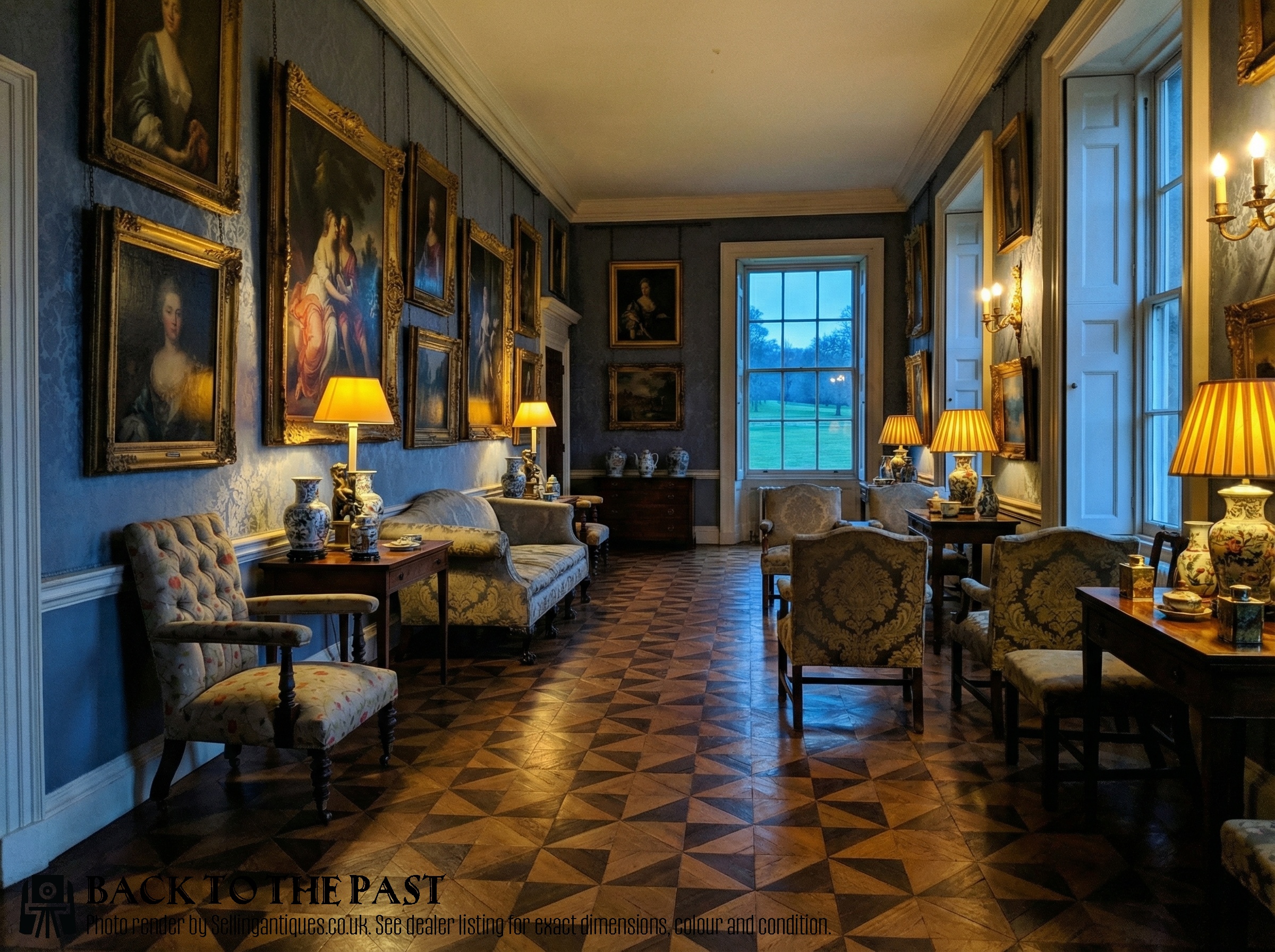
These tufted upholstered armchair examples are deep-sprung nineteenth century seats designed for sustained comfort, offering substantial timber frames and heavy buttoning.
What these armchairs are
A tufted upholstered armchair represents a nineteenth century seating form, encompassing Victorian and William IV periods. These pieces include open armchairs, fireside chairs, library chairs, and reclining reading chairs.
The versions most commonly met on this page date from the mid to late nineteenth century, built with mahogany or walnut frames and covered in fabric, calico, linen, or upholstery.
Makers and workshops of the era such as Howard and Sons, Holland and Sons, and Minter produced these robust forms, alongside numerous unmarked Victorian equivalents.
How they were made
Makers constructed the foundational frames using dense timbers like mahogany and walnut, often exposing polished wood on the arms and legs while concealing internal pine or beech structures.
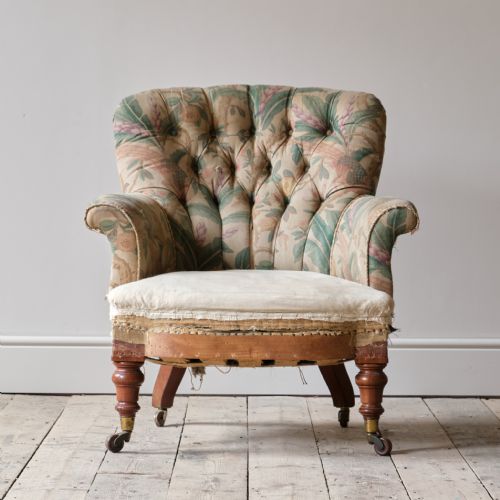
Brass castors frequently fitted to the feet enabled movement for heavy library and reading chairs, whilst complex internal spring systems supported deep padding.
Upholstery techniques involved securing heavy linen or calico over stuffing before finishing the exterior with decorative fabric and tight button tufting.
Retail Price Guide 2026
Typical UK retail prices for tufted upholstered armchair, calculated from the Sellingantiques database of over a million retail prices indexed since 2003. This retail price guide relies exclusively on Sellingantiques data; no external sources or auction records are used, so the figures do not describe the wider market.
Reading chairs often hide complex mechanical adjustments beneath their upholstery, designed to tilt weary Victorian heads toward the book.
What varies in quality
Quality rests upon the structural integrity of the timber frame and the sophistication of the original springing system, distinguishing ordinary workshop production from premier London cabinet makers.
The precision of the button tufting and the calibre of the secondary timbers used out of sight indicate the overall standard of construction.
Howard and Sons·Holland and Sons·Minter
The Tufted Upholstered Armchair Glossary
- Tufting
- The technique of securing deep upholstery padding with cord or thread through the stuffing, creating a pattern of recessed buttons. This method maintains even distribution of the internal filling.
- Open armchair
- A chair design featuring un-upholstered wooden armrests, often revealing carved mahogany or walnut beneath. These frames give a lighter visual presence in a room compared to fully padded versions.
- Library chair
- A heavy, stable seating form designed for prolonged reading, occasionally incorporating mechanical reclining mechanisms. These pieces prioritize ergonomic support through deep upholstery.
- Brass castor
- A small swivelling wheel attached to the base of each leg, typically cast in brass. These fittings allowed heavy nineteenth century armchairs to move easily across thick carpets.
Frequently Asked Questions
How do I identify a Victorian armchair?
Victorian examples rely on distinct timber choices like mahogany and walnut, coupled with specific nineteenth century upholstery methods.
Look for the structural proportions and the style of the wooden legs, which often show period turning or brass castors.
What is a reading chair?
A reading chair is a nineteenth century form designed specifically for comfort during extended periods of sitting with a book.
These pieces frequently incorporate adjustable mechanisms or specialised arm supports suited to libraries and studies.
Are these chairs comfortable for daily use?
Nineteenth century armchairs are built with deep coil springs and substantial padding intended for sustained sitting.
Their ergonomic design makes them practical for modern living rooms and studies alike.
How should I care for antique upholstery?
Protect the fabric through gentle vacuuming using a low suction attachment and professional cleaning when necessary.
Keep the timber frames nourished with appropriate furniture wax to maintain the finish.