
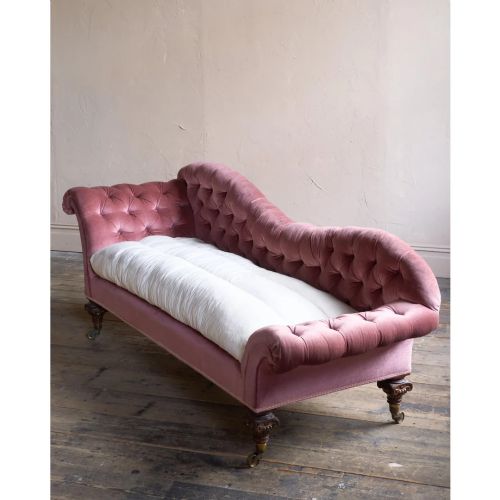
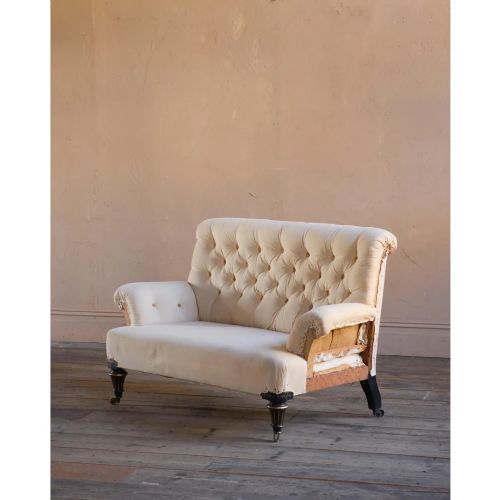
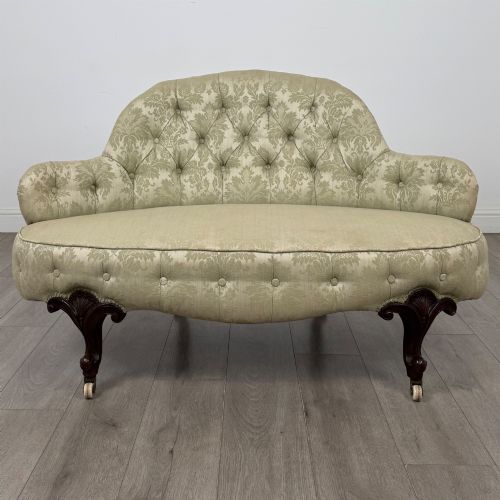
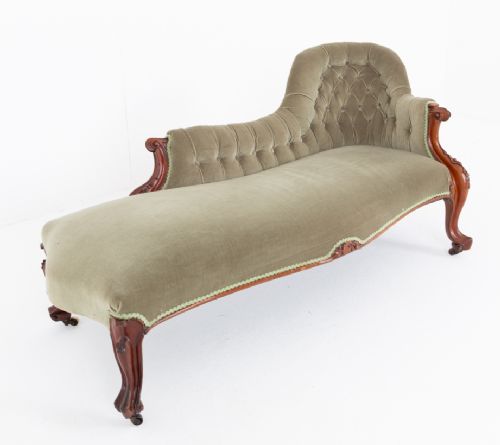
Tufted Button Back Sofa
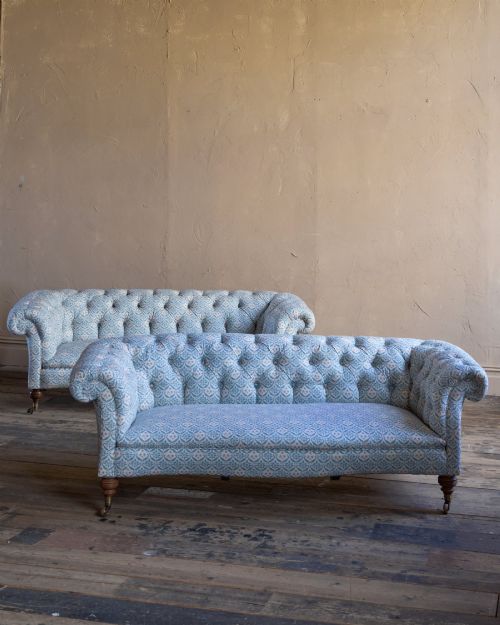
A tufted button back sofa brings deep upholstery and structured charm to a room, offering both generous comfort and traditional character.
Tufted Button Back Sofa
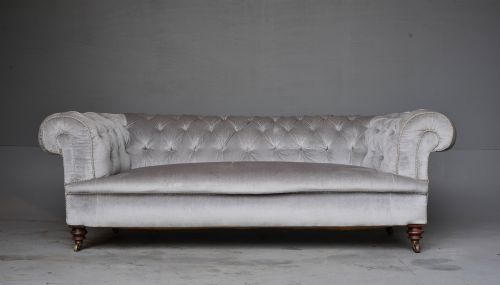
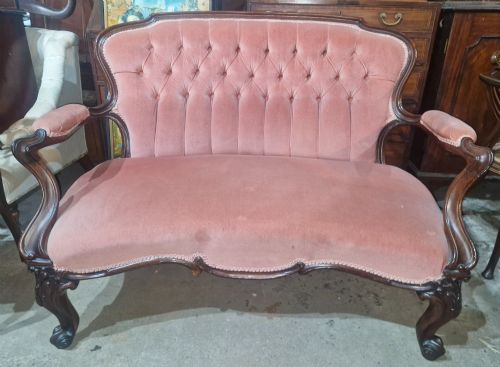
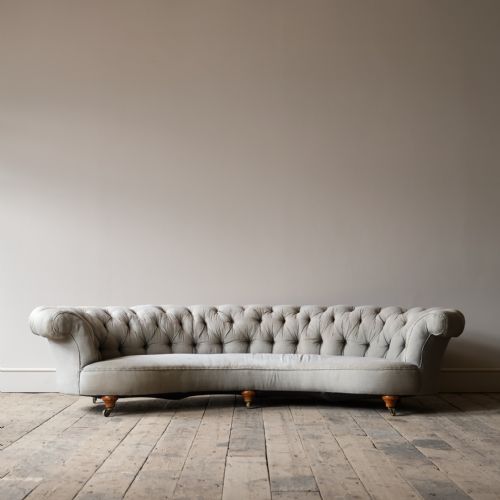
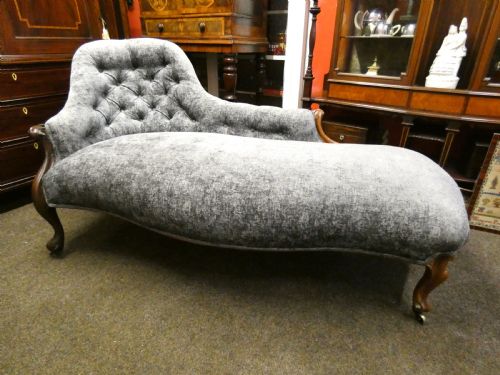
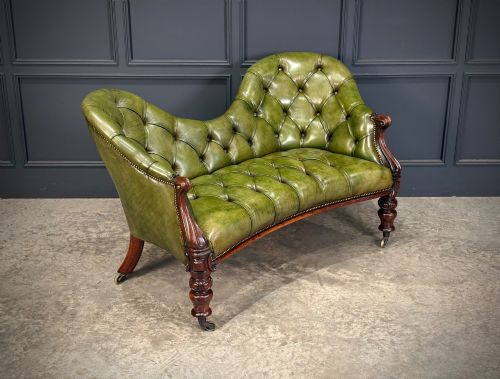
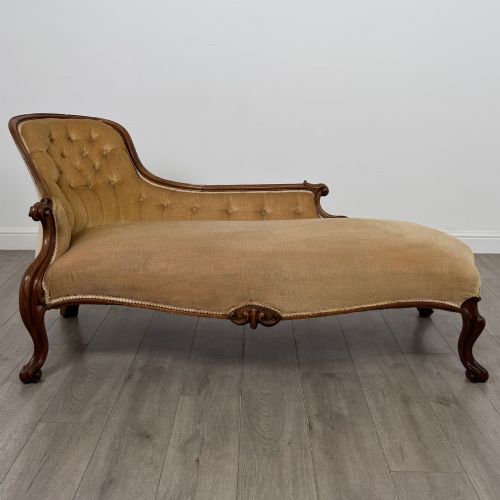
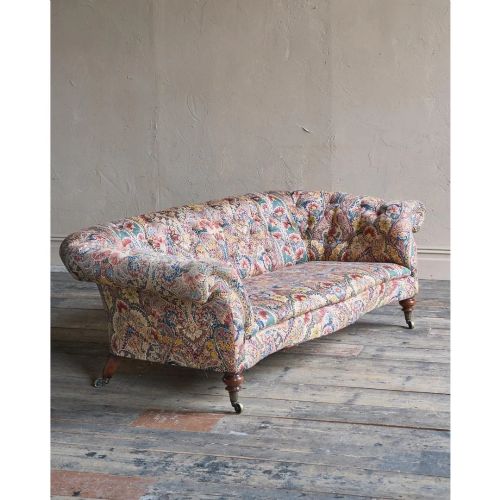
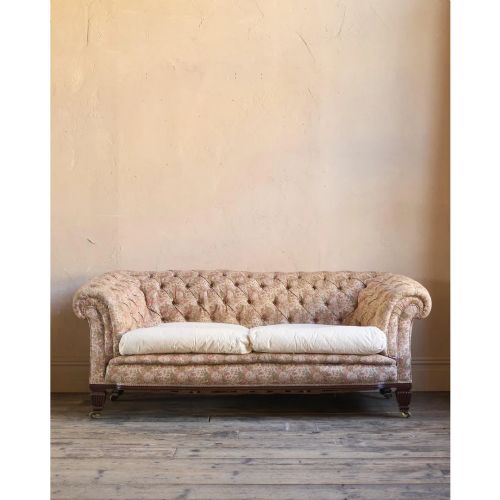
When you search for a tufted button back sofa, you encounter a variety of forms including traditional chesterfields, chaise longues, and conversation seats. The Victorian period dominates the selections, bringing substantial timber frames and deep buttoning together in living rooms and reception spaces.
Makers and workshops from the nineteenth century onwards produced these seating options in multiple configurations, from corner arrangements to standard two and three seater lengths. Mahogany, walnut, and rosewood frequently form the visible wooden elements beneath plush coverings.
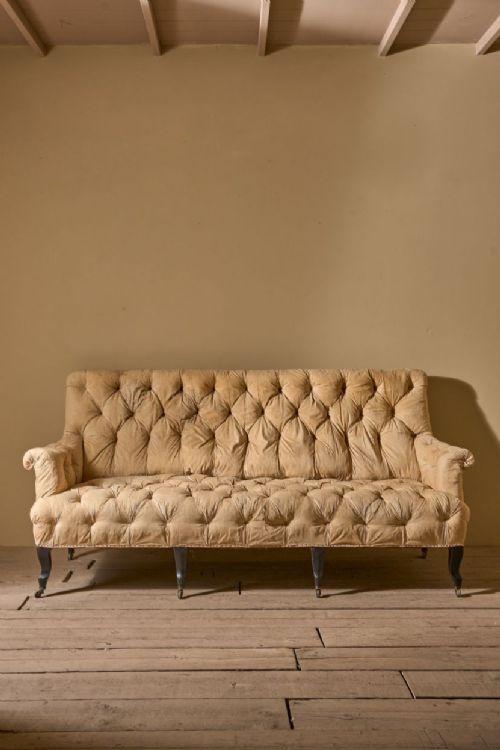
French styles such as Napoleon III designs also appear alongside British pieces, offering high backs and distinct upholstery profiles. These pieces serve as primary seating focal points in period interiors.
Materials and construction methods
Makers constructed the primary internal frames using sturdy timbers like mahogany and walnut, often carving visible components with floral or linear details. Brass hardware and castors frequently support the legs of these substantial seats.
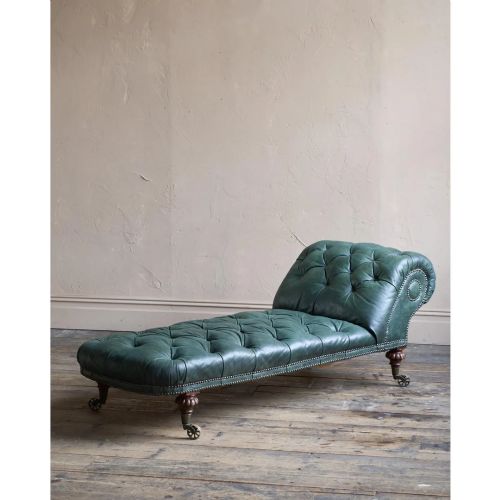
Upholstery relies on traditional textiles, predominantly featuring deep leather or rich velvet pulled tight with fabric buttons to create the characteristic tufted surface. Raw leather versions also appear, ready for hand dyeing to specific colour requirements.
Listings span the Victorian era, the Edwardian period, and into the 1920s and 1930s, utilising brass, velvet, mahogany, walnut, and leather.
Assessing craftsmanship and finish
The precision of the button tufting and the symmetry of the folds determine the refinement of the upholstery work. Superior pieces demonstrate uniform tension across every button, maintaining firmness without sagging.
Carved wooden frames show varying depths of hand-finishing, where crisp mouldings on rosewood or mahogany distinguish finer workshop output from simpler production. Original un-restored leather surfaces retain a distinct patina that marks out untouched examples.
Howard and Sons·A Jackson and Graham·Holland and Sons·Hampton and Sons of Pall Mall
The Tufted Button Back Sofa Glossary
- Chesterfield
- A large upholstered sofa with arms and back of the same height, featuring deep button tufting. This form remains a staple of nineteenth century seating design.
- Chaise longue
- An upholstered sofa shaped like a chair with a long seat large enough to support the legs. These pieces often feature a single raised end for reclining.
- Buttoning
- A method of upholstery where buttons are pulled deep into the padding at regular intervals. This technique creates a secure, padded diamond pattern across the back or seat.
- Salon suite
- A matching set of upholstered seating furniture for a formal room, typically comprising a small sofa and accompanying chairs in French walnut or similar woods.
- Settee
- A medium-sized upholstered seat with a back and arms, designed for more than one person. It bridges the scale between an armchair and a large sofa.
Tufted Button Back Sofa: Frequently Asked Questions
Where did people place these sofas historically?
These pieces sat in principal reception rooms, libraries, and formal drawing rooms where guests gathered for conversation. Their substantial frames made them permanent fixtures rather than movable chairs.
Smaller variations like chaise longues often found placement in private chambers or dressing rooms for daytime resting.
How do I distinguish a Victorian piece from later styles?
Victorian examples rely heavily on dark timbers like rosewood and mahogany, often featuring hand-carved frames and dense horsehair stuffing. Buttoning on these older pieces tends to be tightly secured into heavy webbing.
Later Edwardian and twentieth century versions shift slightly in proportion and wood choice, sometimes utilising simpler walnut frames or alternative internal padding.
Can I use a piece listed for reupholstering in a modern home?
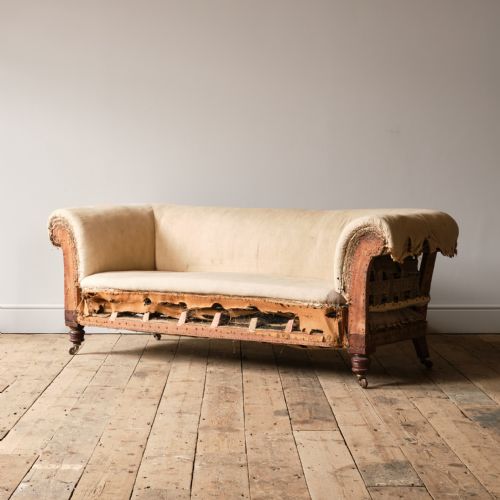
Pieces sold for reupholstering provide an opportunity to select bespoke fabrics or hand-dyed leathers that match contemporary colour schemes. The underlying hardwood frames remain sturdy foundations for modern restoration.
Working with an upholsterer ensures the internal springs and webbing meet current standards while preserving the traditional silhouette.