
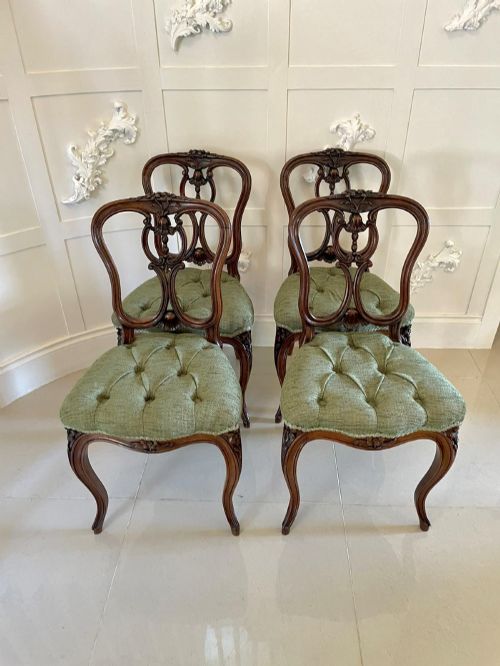
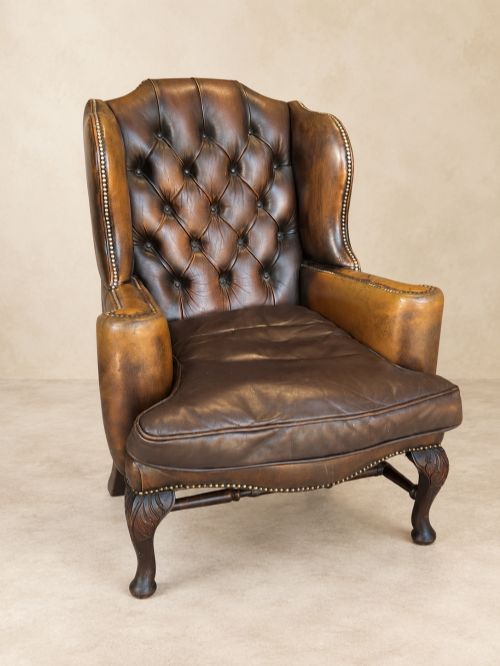

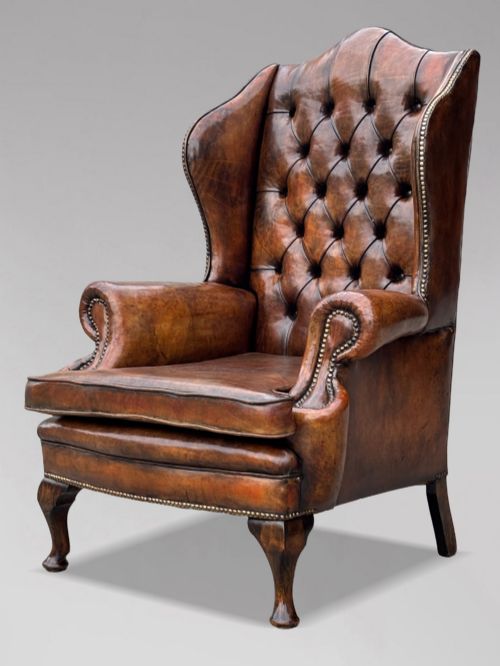
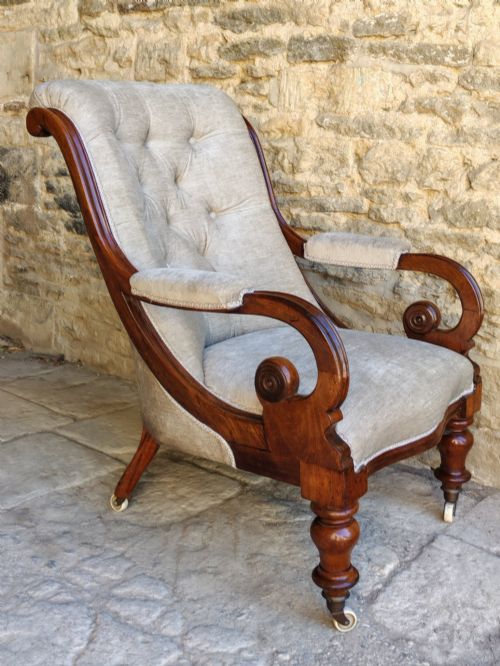
Tufted Button Back Chair
A tufted button back chair brings deep padding and tailored upholstery to a room, offering immediate comfort and a distinct Victorian silhouette.
Tufted Button Back Chair
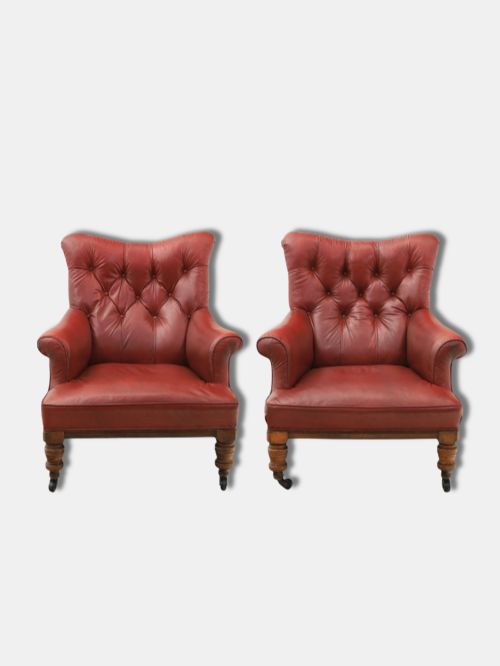
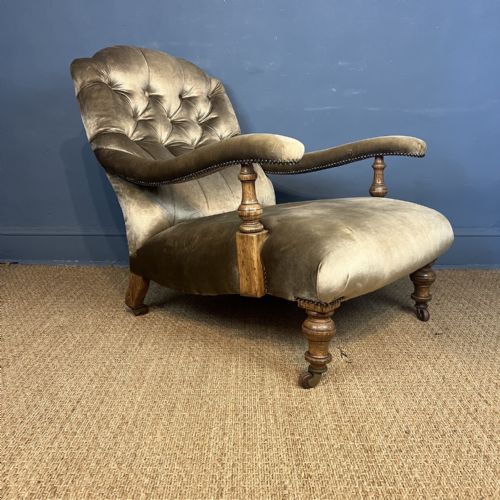
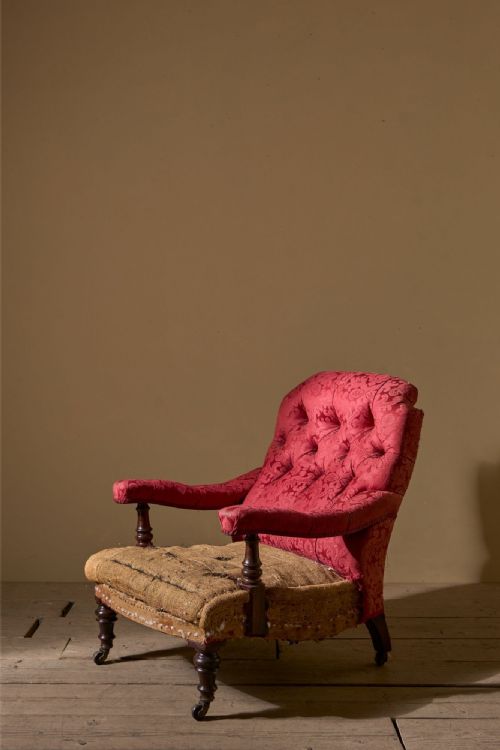
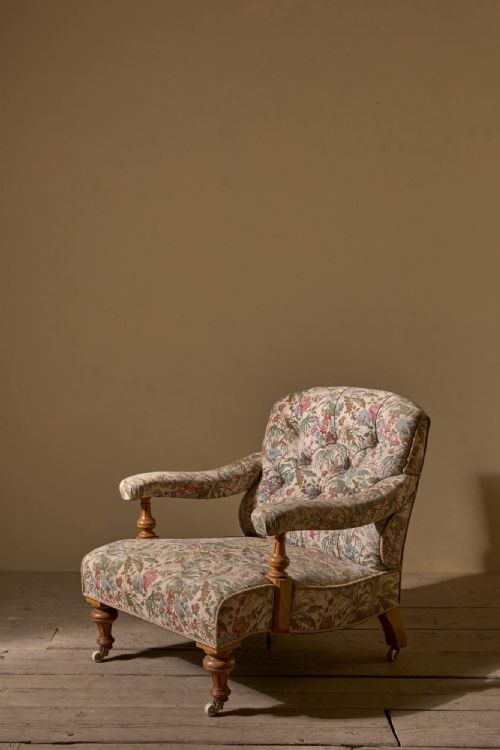
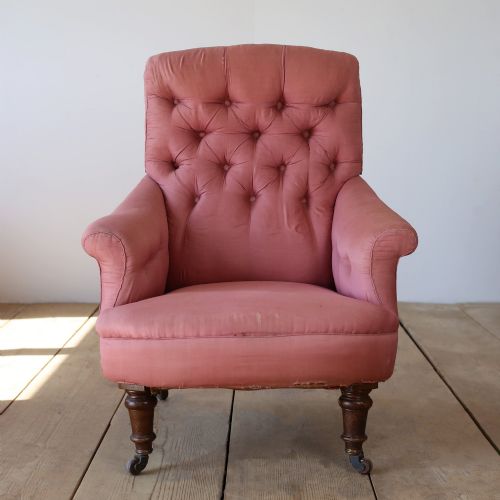
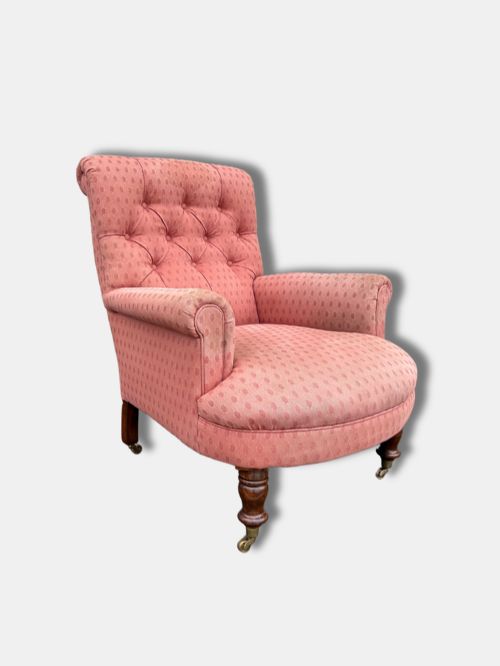
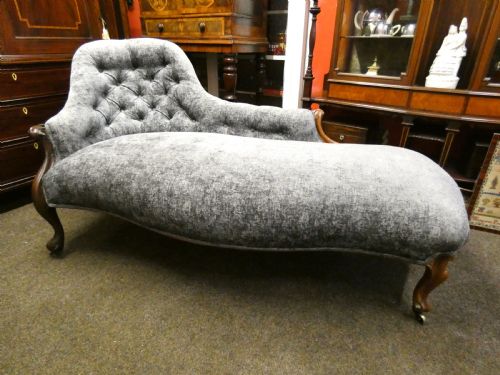
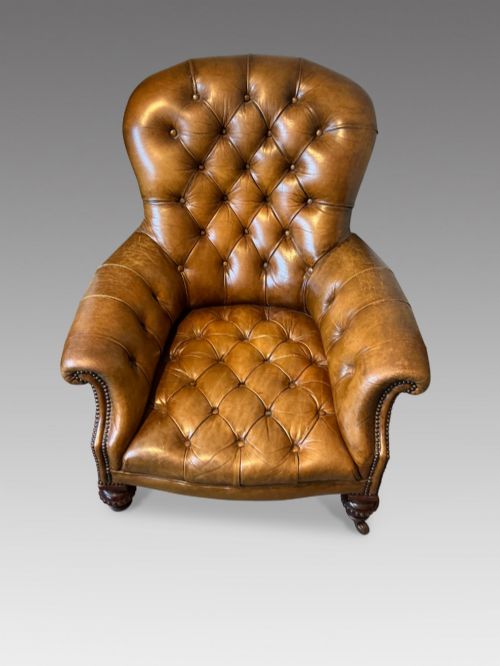
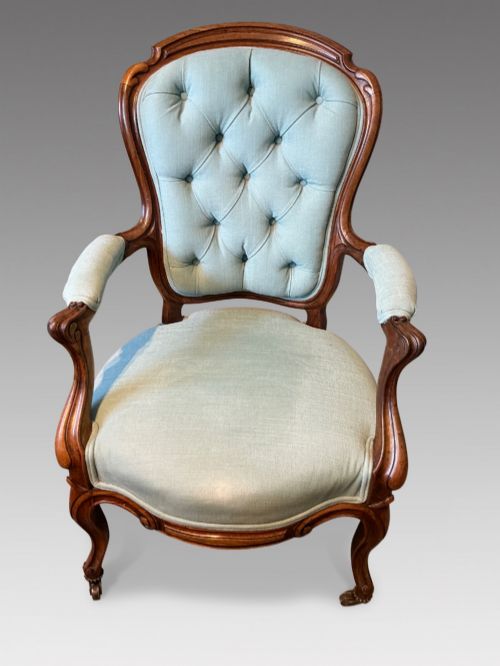
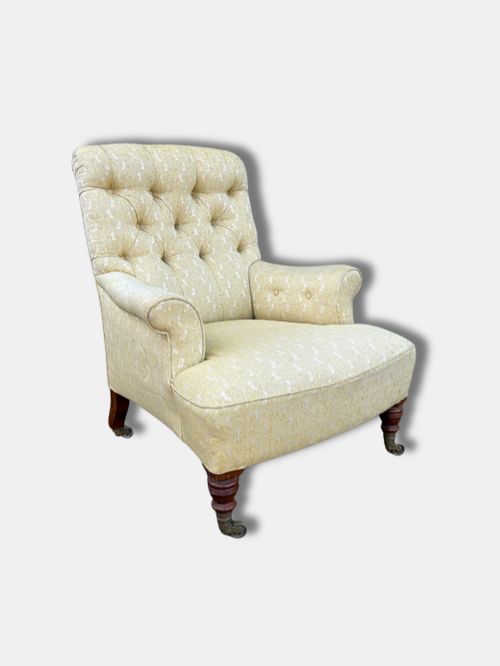
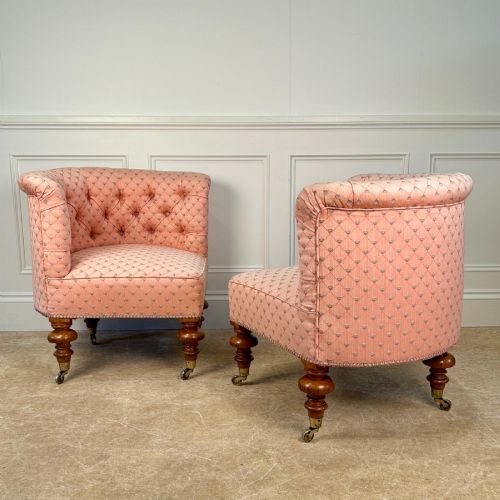
A tufted button back chair is an upholstered seat defined by deep depressions secured with buttons, creating a padded grid across the backrest. These pieces appear frequently in nineteenth century forms, ranging from library armchairs and wing chairs to slipper chairs and chaise longues.
The selections on this page span the Victorian era, the Regency period, and the early twentieth century. Buyers encounter robust oak and mahogany frames alongside walnut and rosewood structures reflecting French Napoleon III, Rococo Revival, and Georgian styles.
Armchairs and library chairs dominate the available forms, often paired with low profiles or reading stands. Upholstery choices vary from supple leather and velvet to damask and heavy fabric.
Materials and construction
Makers built the foundational frames of a tufted button back chair using durable hardwoods such as oak, mahogany, walnut, and rosewood. These timbers provided the structural integrity required to support heavy internal stuffing and deep buttoning without warping.
Upholstery layers involved traditional horsehair or wool stuffing held firmly in place by linen webbing and internal springs. Craftsmen then secured the outer covering of leather, velvet, damask, or fabric by pulling twine deep through the padding to anchor each individual button.
Secondary details incorporated brass castors on legs and carved wooden accents along the arms and crest rails. These construction methods ensured the dense upholstery retained its supportive shape over decades of daily use.
Tufted Button Back Chair Retail Price Guide 2026
Typical asking prices for tufted button back chair among the pieces listed under this phrase on Sellingantiques today, from the lower quarter to the upper quarter. They describe what is for sale here now, not the wider market.
Listings feature eighteenth century styles, nineteenth century Victorian periods, and twentieth century pieces framed in mahogany, oak, walnut, and rosewood.
Judging quality in a tufted button back chair
The excellence of a tufted button back chair rests upon the precision of its upholstery work and the integrity of its timber frame. Superior examples display symmetrical button placement, taut fabric or leather without slackness, and sturdy joinery that remains rigid under weight.
Finer pieces often feature secondary woods of high grade and thoughtful carving on the legs or arm supports, distinguishing workshop productions from simpler utilitarian seating. The depth and resilience of the interior padding further separate robust historical seating from lesser reconstructions.
Howard and Sons·Holland and Sons
The Tufted Button Back Chair Glossary
- Buttoning
- The technique of pulling twine through deep upholstery padding to secure buttons at regular intervals, creating a tufted surface. This method keeps internal stuffing firmly distributed.
- Wing armchair
- An upholstered seat with protective side panels designed to shield the sitter from drafts. Early examples frequently utilise leather or heavy fabric.
- Slipper chair
- A low-set bedroom chair traditionally utilised by women for dressing. These seats typically lack arms and sit close to the floor.
- Chaise longue
- An elongated upholstered seat combining an armchair and a footstool into a single piece. Makers often produced these in mahogany or rosewood during the nineteenth century.
- Rexine
- An artificial leather cloth utilised as an upholstery material on twentieth century seating. It offered a durable wipeable alternative to natural hide.
Tufted Button Back Chair: Frequently Asked Questions
What periods do these chairs come from?
The listings on this page primarily date from the nineteenth century, encompassing the Victorian era, the Regency period, and extending into the nineteen-twenties.
Maker styles range from mid-Victorian and Rococo Revival to early twentieth century English designs.
How were these chairs originally used?
These seats served various domestic functions depending on their specific form, from library armchairs used for reading to bedroom chairs and slipper chairs.
Larger variations like chaise longues and settees provided formal lounging spaces in nineteenth century parlours and drawing rooms.
How do I care for leather upholstery?
Historic leather requires gentle cleaning with appropriate conditioning balms to maintain flexibility and prevent the surface from drying or cracking over time.
Keep these pieces away from direct sunlight and heat sources to preserve the original hide.
Are these chairs suitable for daily use?
Many of these sturdy hardwood framed seats remain entirely practical for regular seating when the internal webbing and padding are sound.
Checking the structural rigidity of the frame ensures the piece handles everyday sitting comfortably.