


Tudor Oak Panels
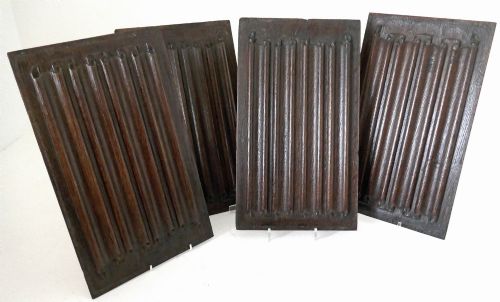
These tudor oak panels bring heavy 16th-century architectural timber and deep hand-carving into modern rooms.
Tudor Oak Panels
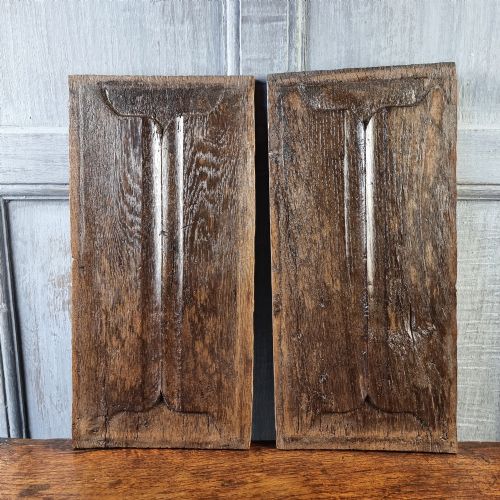
When you search for tudor oak panels, you encounter timber elements shaped for early domestic and ecclesiastical interiors. The pieces on this page span linenfold designs, carved reliefs, and ceiling fragments.
Most examples originate from the 16th and 17th centuries, though later revivals from the 19th and early 20th centuries also appear. They survive as wall panels, coffer fronts, friezes, and architectural salvage.
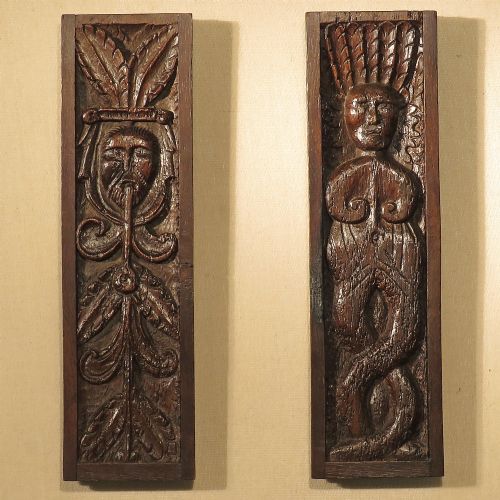
Makers shaped these sections from solid oak, walnut, and timber, frequently employing linenfold motifs, Green Man carvings, and Tudor roses. Collectors use them for wall lining, overmantles, and architectural integration.
How they were made
Craftsmen worked primarily with solid oak and timber, shaping planks with hand tools and adzes. Surfaces display deep relief carving, hand-planed textures, and pegged joinery.
Certain panels feature polychrome paint or wrought iron hardware, while others rely entirely on the natural grain and patination of the wood. Carvers utilised gouges and chisels to form linenfold folds, figural sculptures, and geometric friezes.
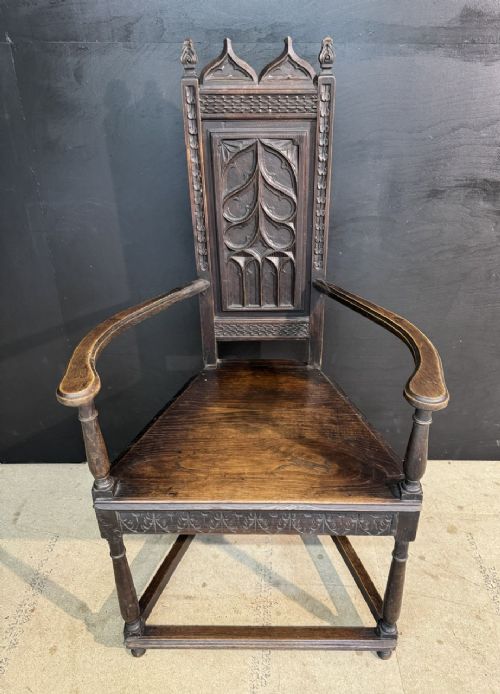
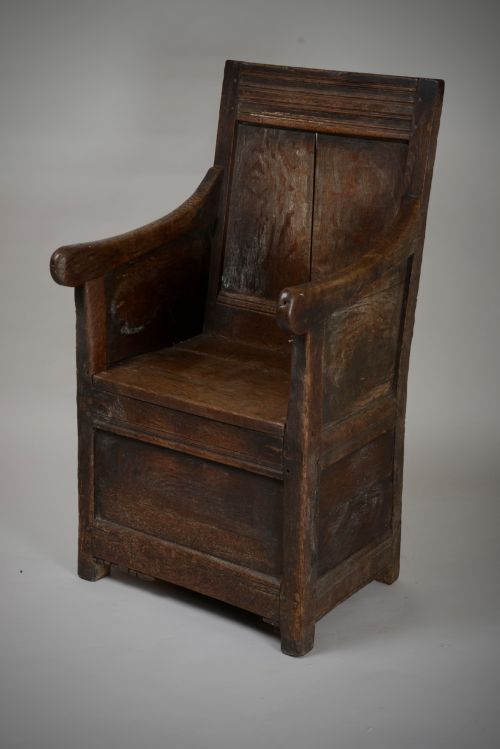
Object forms include wall panels, armchairs, coffers, bookcases, cupboards, and carved friezes incorporating wrought iron and polychrome paint.
What varies in quality
The standard of carving defines the distinction between pieces, ranging from crisp, highly detailed figural work to simpler, more primitive execution. Depth of relief and the proportion of the design dictate visual impact.
Original surface patination and the integrity of the timber influence desirability. Pieces retaining early tool marks and unblemished period construction hold greater presence than heavily restored or later revival iterations.
The Tudor Oak Panels Glossary
- Linenfold
- A style of wood carving that imitates folded fabric, typical of 16th-century panels. It gives flat timber surfaces a textured, textile-like appearance.
- Wainscot
- A type of fine oak panelling used on interior walls, or applied to the back and sides of early chairs. The construction relies on frame-and-panel methods.
- Coffer
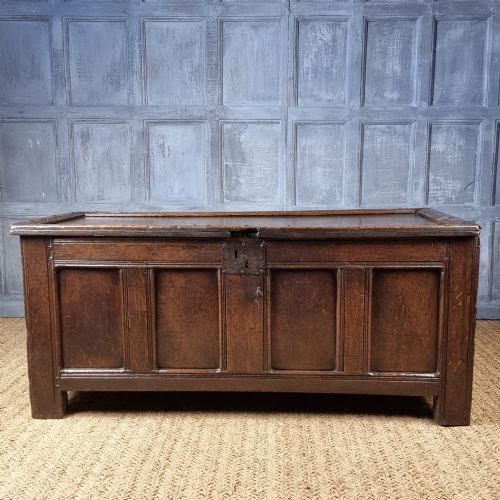
- A heavy wooden chest used for storage, often constructed with carved front panels and sturdy plank sides. These pieces frequently date from the 16th century.
- Frieze
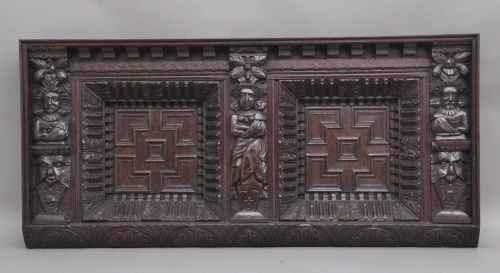
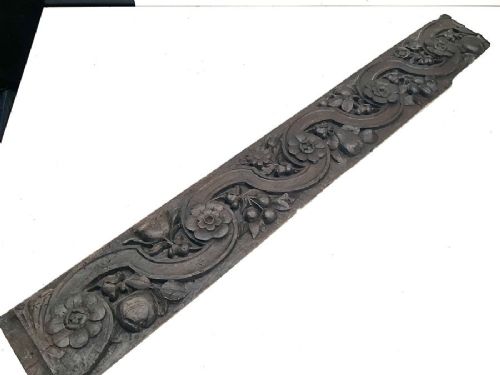
- A decorative horizontal band along the upper section of a wall, furniture piece, or overmantle. Carved wooden examples often display foliage or geometric patterns.
- Polychrome paint
- Pigment applied to wood sculpture or panels to add colour. Surviving traces provide evidence of original decorative schemes.
Tudor Oak Panels: Frequently Asked Questions
How are tudor oak panels mounted on walls?
These panels are typically fixed to battens secured directly to the wall structure. Installers use discreet screws through hidden rebates or margins to preserve the historic timber.
Heavier sections require secure wall anchors to support the weight of solid oak. Professional mounting ensures the wood remains stable against environmental changes.
What is the difference between original and revival panels?
Period 16th-century panels display authentic tool marks, natural timber shrinkage, and centuries of handling patination. Revival pieces made in the 19th or 20th century show different mechanical sawing methods and cleaner joinery.
Examining the backboards and nail types reveals the true age of the construction. Both types serve decorative interior functions, but period pieces carry historical provenance.
How should I clean and care for old oak?
Dust the timber gently with a dry, soft cloth to remove everyday particles. Avoid using modern polishes, silicone sprays, or damp cloths that can penetrate unsealed grain.
Maintain stable room humidity to prevent the oak from drying out or splitting. Natural beeswax can be applied sparingly if the surface appears dry.
Where were these panels originally placed in a room?
Original panels lined the walls of great halls, parlours, and chambers to provide insulation and display status. Smaller sections formed parts of cupboards, friezes, or coffer chests.
Ceiling panels occupied prominent positions within timber-framed houses and public buildings. Their placement reflected the wealth and architectural ambition of the owner.