
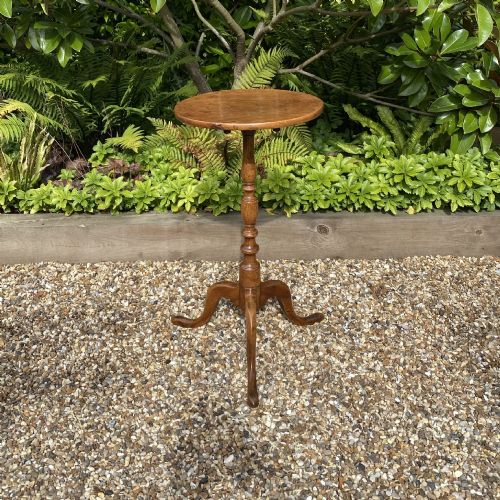
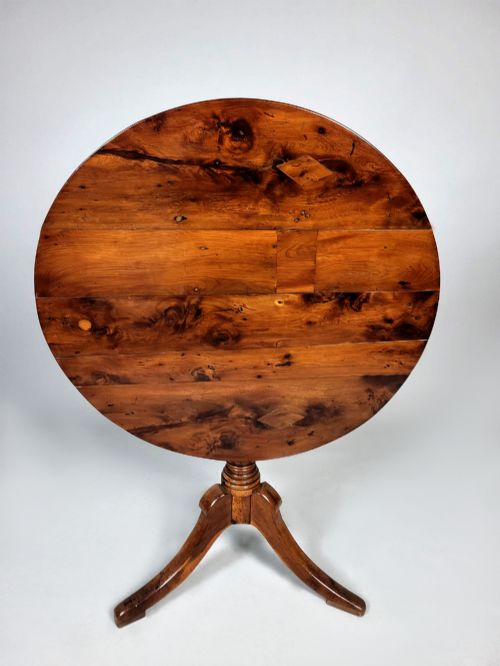
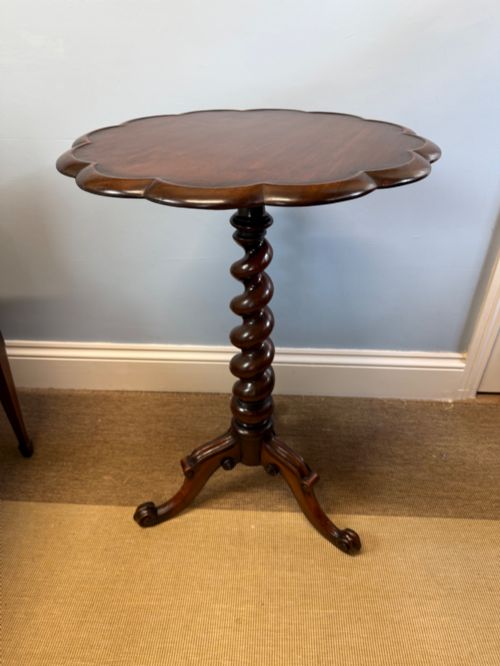
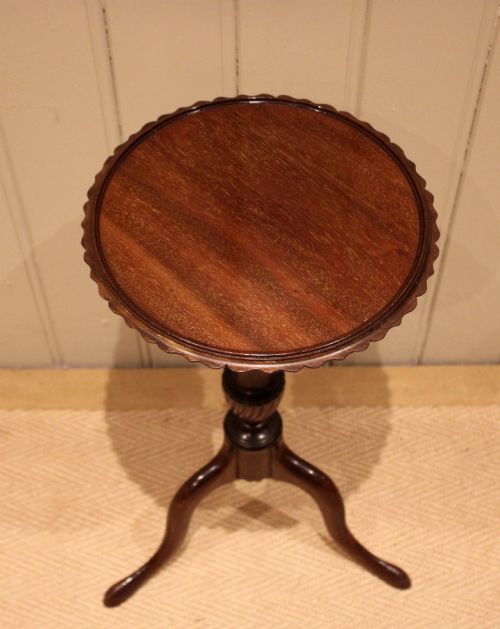

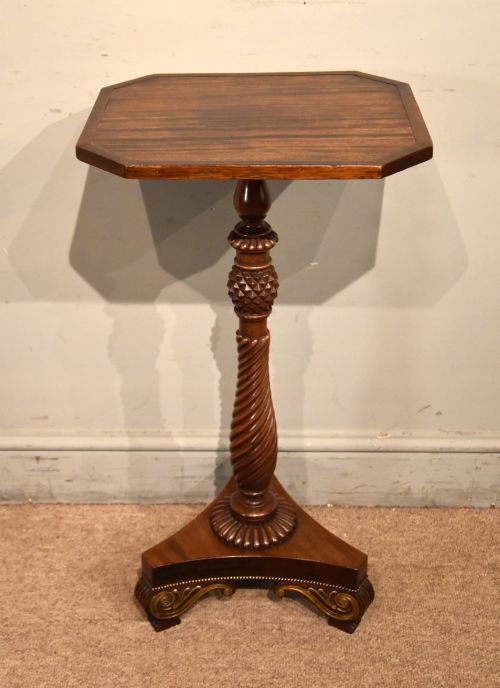
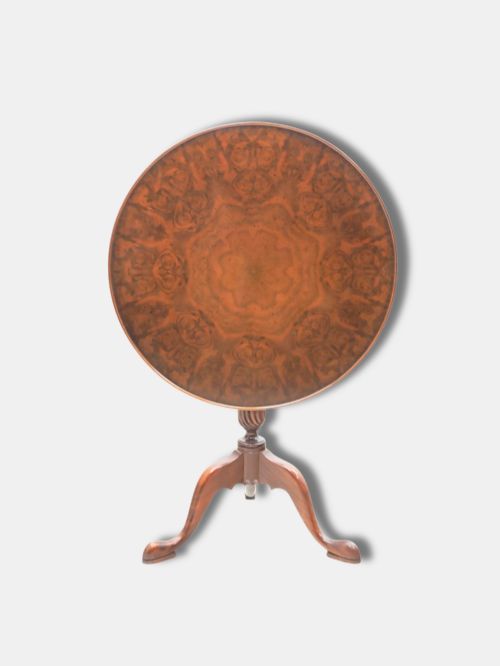
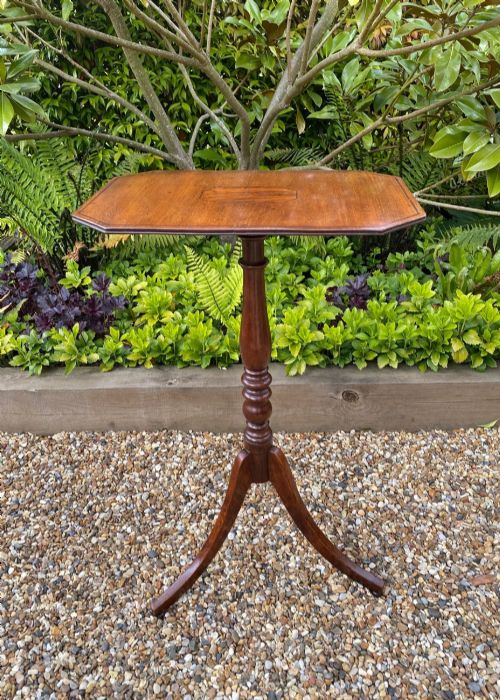
Tripod Wine Stand
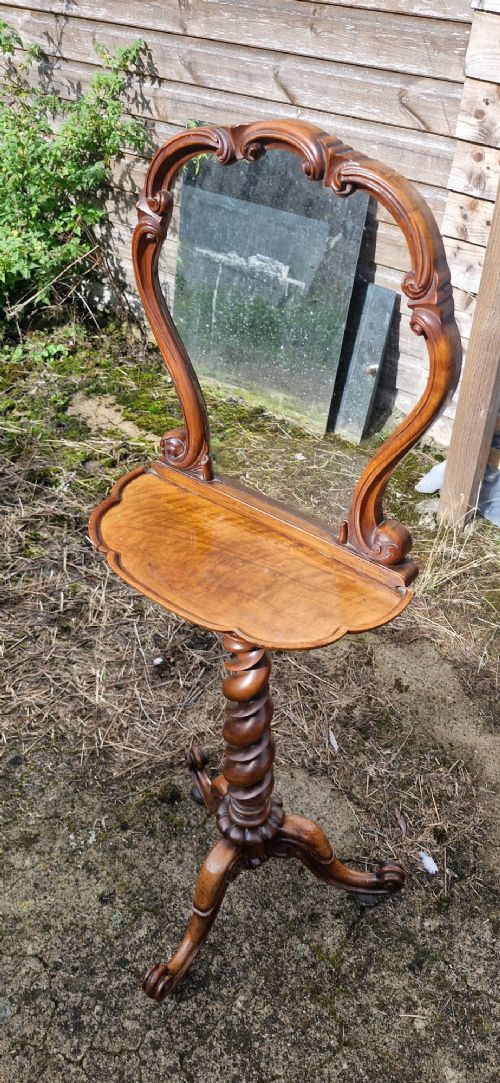
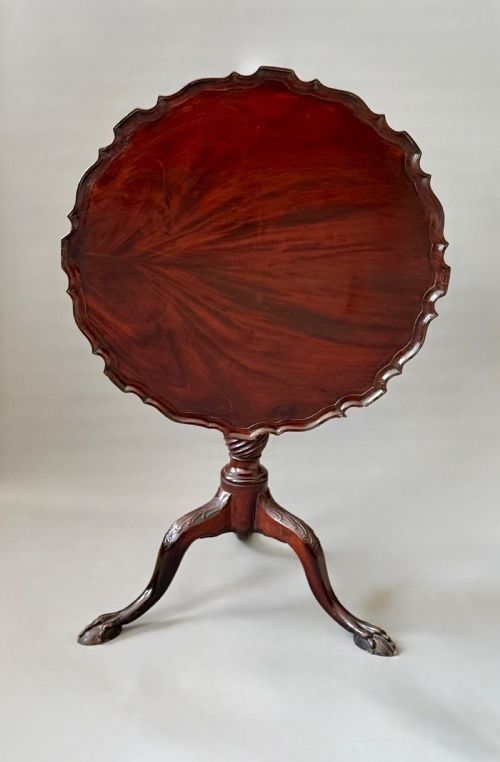
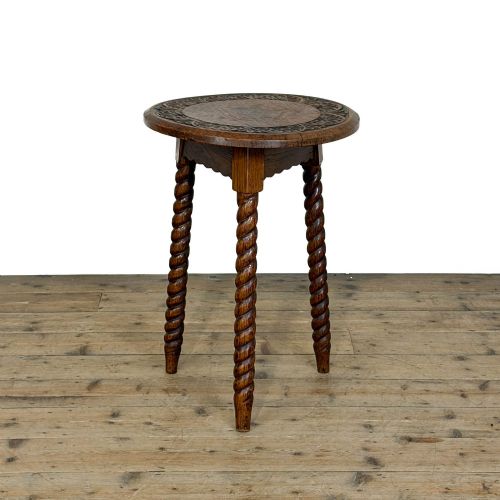
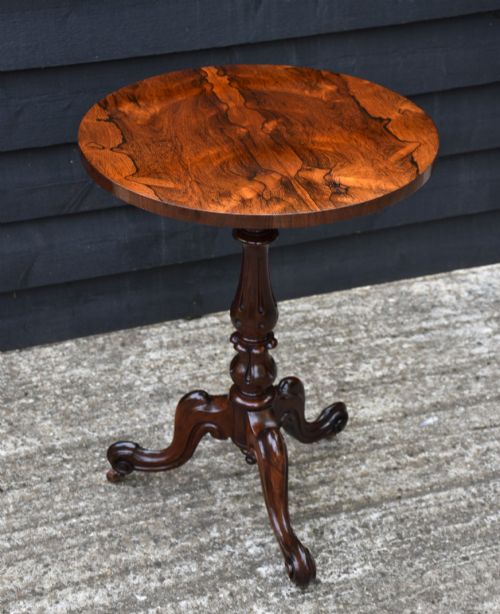
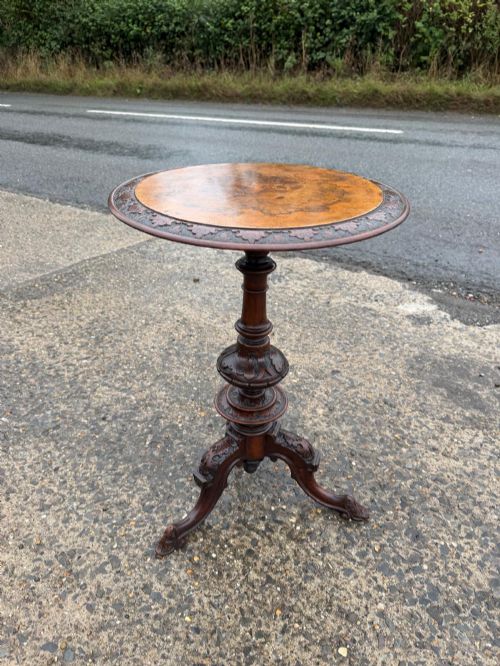
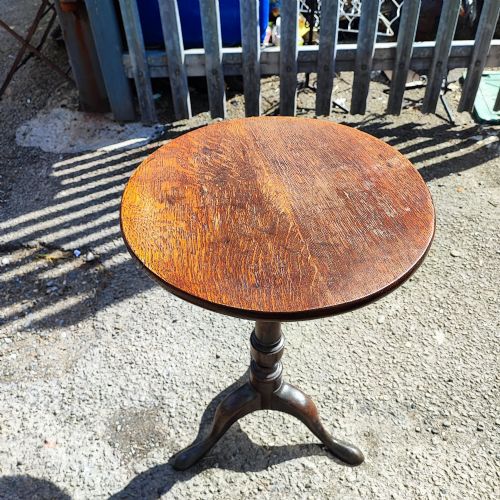
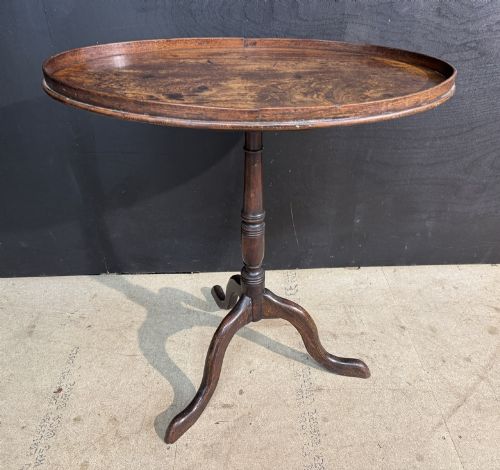
These tripod wine stand examples span the Georgian, Victorian and Edwardian eras, offering a compact surface raised on three slender legs.
Tripod Wine Stand
A tripod wine stand is a small occasional table designed with a central pillar supported by three legs, commonly found in mahogany, walnut and oak across this inventory. When exploring these pieces, a buyer encounters forms ranging from simple round tops to tilt-top mechanisms and shaped pie crust edges.
The selection encompasses pieces originating from the eighteenth, nineteenth and early twentieth centuries, spanning periods such as George III, Regency and Victorian. Tables from these eras often double in function as lamp stands, candle stands or occasional tables, showing the versatility required by domestic spaces of the past.
Materials and Construction
Cabinet makers utilised dense hardwoods such as mahogany, walnut, rosewood and oak for stability, occasionally employing fruitwood, elm, ebony or satinwood for variety. Tops were frequently turned from single boards or veneered with burr wood, supported by a central turned pedestal.
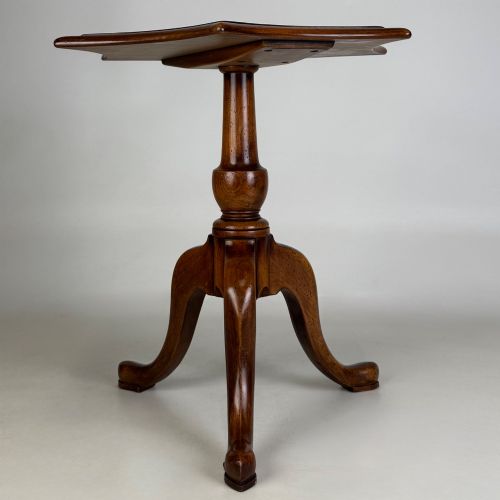
The connection between the top and the pillar often incorporates a birdcage or tilt-top mechanism, allowing the surface to fold away when not in use. Three legs sweep outwards in cabriole or straight profiles, terminating in pad, claw-and-ball or plain feet.
The listings here encompass pieces spanning from seventeen-fifty through the Edwardian era, constructed in mahogany, walnut, oak, rosewood and fruitwood.
Standards of Execution
Quality rests in the crispness of the carving upon the knees and feet, alongside the timber selection used for the top. A well-figured mahogany or burr walnut grain elevates the piece beyond utility.
Joinery integrity defines the better examples, where the pillar meets the tripod base with rigid alignment and the tilt mechanism operates smoothly without wobble.
Gillow
The Tripod Wine Stand Glossary
- Tilt top
- A table mechanism allowing the circular surface to pivot vertically on the pillar for storage. This clever hinge design saved valuable floor space in period drawing rooms.
- Pie crust
- A raised, carved edge moulded in undulating curves resembling pastry work. This decorative border is typically associated with finer eighteenth-century examples.
- Birdcage
- A revolving wooden framework beneath the table top that permits both rotation and tilting. It connects the central column to the surface through miniature spindles.
- Tripod base
- A three-legged support structure providing stability on uneven floors. The splayed legs distribute weight evenly outward from the central pedestal.
Tripod Wine Stand: Frequently Asked Questions
What was a tripod wine stand used for?
These tables served as mobile surfaces for holding glasses, decanters or candles beside seating areas. Their small footprint allowed servants to move them easily around a room as needed.
In modern homes, they function well as lamp tables or bedside stands where floor space is limited. Their compact size makes them adaptable to almost any room.
How do I identify a tilt top?
Look beneath the circular surface for a wooden catch or latch block secured to the central pillar. Releasing this mechanism allows the top to fold flat against the stem.
Many period examples feature this device to keep the table out of the way when entertaining finished. It remains a hallmark of traditional occasional table design.
What woods were used for these tables?
Makers relied heavily on native and imported timbers, with mahogany dominating the eighteenth and nineteenth centuries. Walnut, oak, rosewood and fruitwood appear frequently across various eras.
Finer pieces often incorporate decorative veneers like burr walnut or satinwood on the top surface. Secondary woods like pine or oak were occasionally used for internal framing.
How do I date a tripod table?
Dating relies on observing leg profiles, turning styles and timber characteristics. Georgian pieces often display slender cabriole legs with pad feet, while Victorian versions favour heavier pedestals.
Construction methods also provide clues, such as hand-cut dovetails or peg joints. Comparing the piece to documented examples helps narrow down the decade of manufacture.