


Square Top Wine Table
A square top wine table offers compact poise for a glass and candle, bringing refined Georgian and Victorian utility to any corner.
Square Top Wine Table
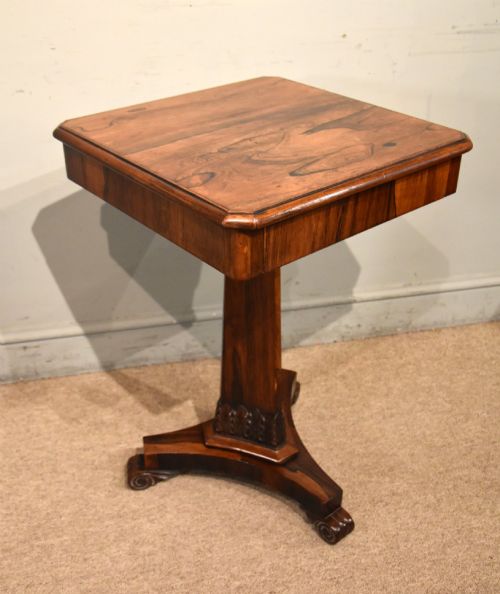
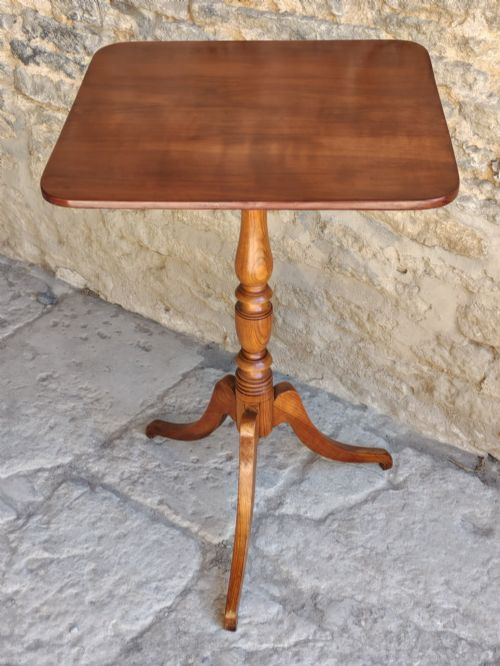
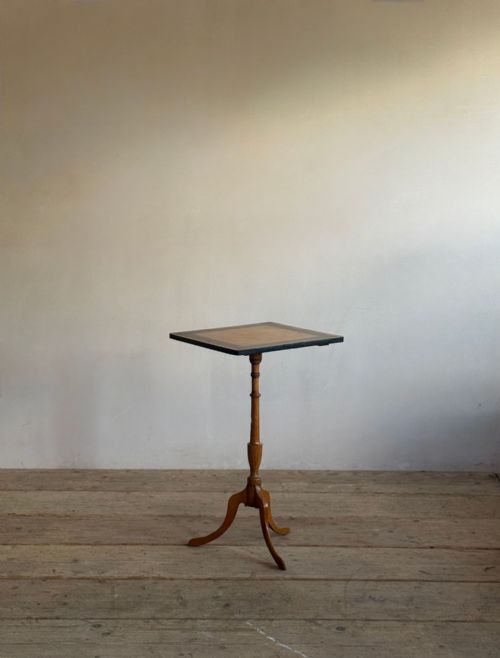
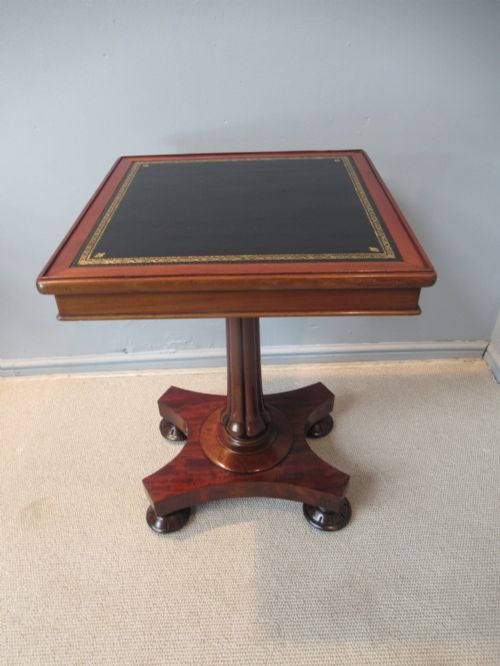
A square top wine table is a compact pedestal piece designed primarily to hold a single glass or small vessel near a seat. The examples seen here range from Georgian George III tripod designs to Victorian lamp tables and William IV rosewood variants.
Makers produced these tables in various woods including mahogany, fruitwood, rosewood, and oak, alongside occasional decorative treatments such as penwork or lacquer. They serve reliably today as lamp tables, side tables, or occasional stands.
Construction and Materials
Cabinet makers constructed these tables predominantly from hardwoods like mahogany, rosewood, and fruitwood, occasionally turning to alder root, oak, padouk, or palm wood. Surfaces range from plain polished timber to leather inserts, ink-decorated penwork, and marble tops.
Listings feature woods spanning mahogany, rosewood, fruitwood, oak, alder root, padouk, and palm wood across the eighteenth and nineteenth centuries.
Defining Quality
Quality rests in the choice of timber and the crispness of the turning on the central pillar and legs. Finely figured mahogany, dense rosewood, and well-matched fruitwood elevate a piece above standard utility items.
The engineering of the tilt mechanism and the stability of the tripod joint demonstrate superior workshop practice. Subtle details like brass fittings, gallery edges, and restrained decorative carving distinguish the finest examples.
The Square Top Wine Table Glossary
- Tripod table
- A small freestanding table supported by a central pillar on three legs. This construction prevents rocking on uneven historical flooring.
- Tilt-top
- A table top hinged to the pedestal so it can pivot vertically. This feature allowed compact storage against perimeter walls.
- Snap top
- A table top secured by a catch mechanism to the pedestal. It locks the surface horizontal during use.
- Kettle stand
- A small low table designed to hold a heated vessel. These share similar dimensions and pedestal forms with wine tables.
- Penwork
- Surface decoration created using ink applied with a pen to form geometric or pictorial motifs. It appears on lighter woods.
Square Top Wine Table: Frequently Asked Questions
What is a square top wine table used for?
These tables were originally intended to hold wine bottles and glasses near seating areas during social gatherings.
Today they function flexibly as lamp tables, bedside stands, or occasional surfaces in compact spaces.
How do I spot a tilt-top mechanism?
Look beneath the tabletop where a wooden block or catch joins the surface to the central pillar. This allows the top to pivot upright when released.
Many period examples retain this mechanism to save floor space when pushed against a wall.
What woods were commonly used?
Mahogany dominates the selection across Georgian and Victorian periods, accompanied by rosewood, fruitwood, and oak. Exotic woods like padouk and palm wood also appear in nineteenth-century pieces.
Each material dictates the natural tone and weight of the pedestal base.
How do I tell Georgian from Victorian tables?
Georgian tables often display restrained proportions with slender tripod legs and fine timber grain typical of the eighteenth century. Victorian examples frequently incorporate heavier turnings, rosewood veneer, or brass details.
Stylistic markers like William IV or Regency styling help narrow down the decade of manufacture.