




Tripod Marble Table
A tripod marble table brings solid stone and warm timber together on three steady legs for daily use.
Tripod Marble Table
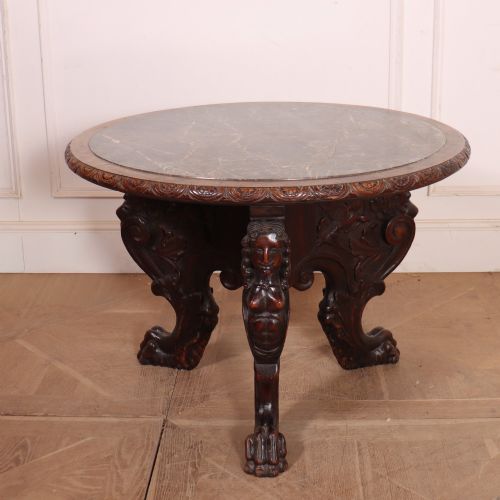
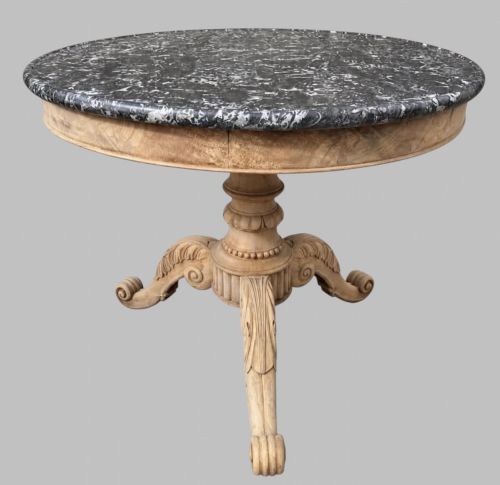
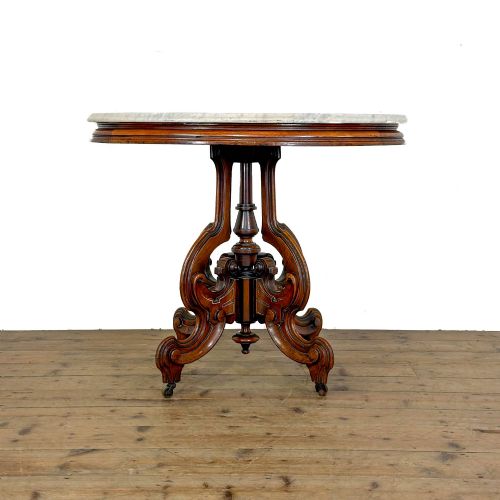
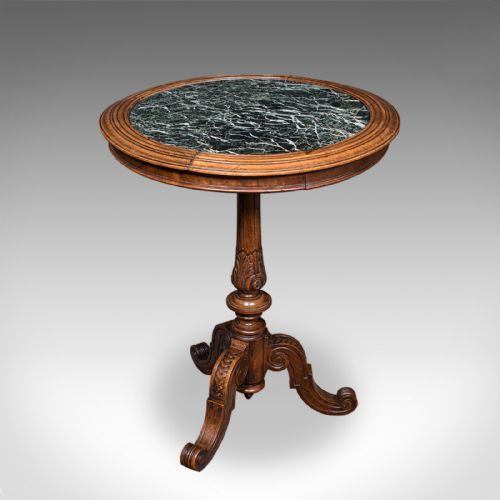
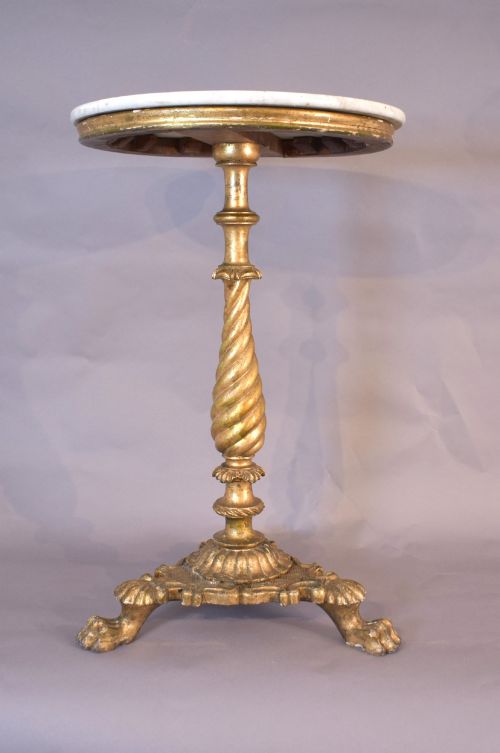
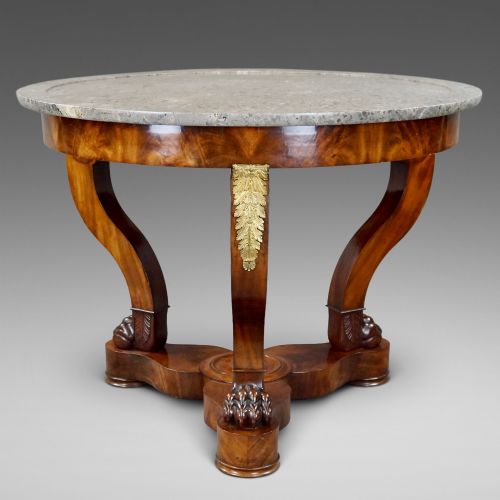
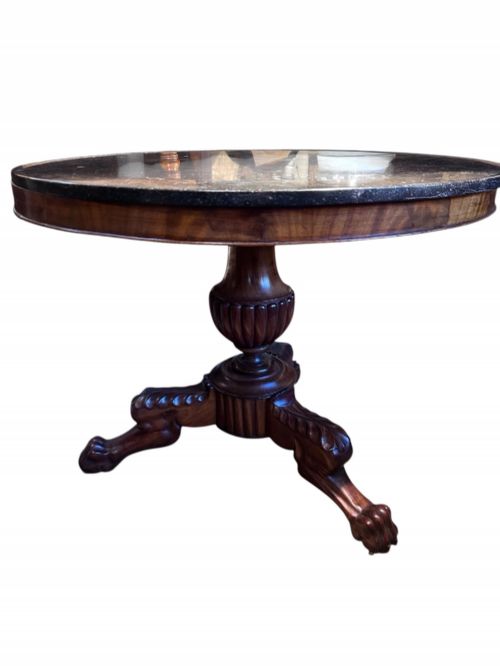
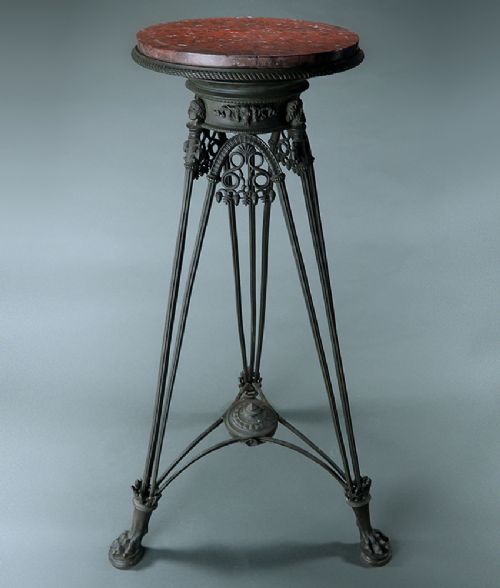
A tripod marble table unites a heavy stone slab with a central pillar and three supporting legs. When you search for a tripod marble table, you encounter diverse forms ranging from French gueridons and occasional tables to plant stands and wine tables. The pieces on this page span the Regency, Victorian and nineteenth-century periods, with French examples appearing frequently.
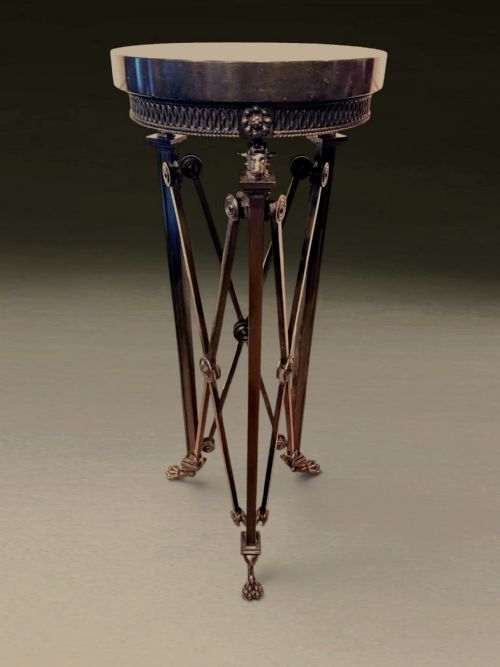
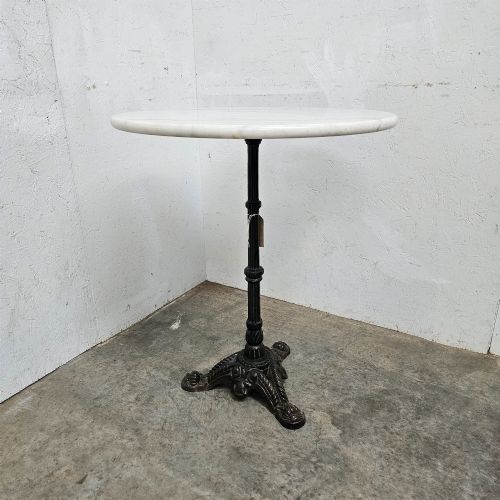
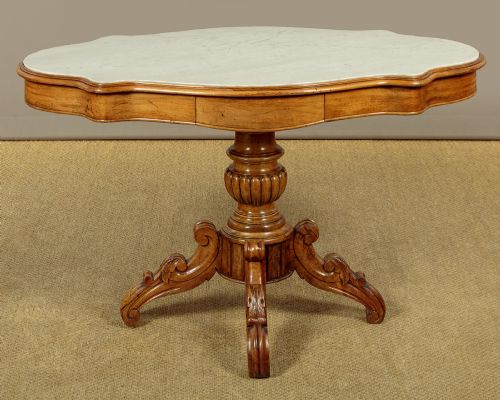
Makers utilised various timber supports, including mahogany, walnut, rosewood, giltwood and ebonised wood, alongside metal frames in cast iron and brass. The stone tops feature white marble, black marble, green marble and onyx, frequently configured as round or specimen slabs. These tables function as side pieces, centre tables, lamp tables and cafe tables within domestic spaces.
How they were made
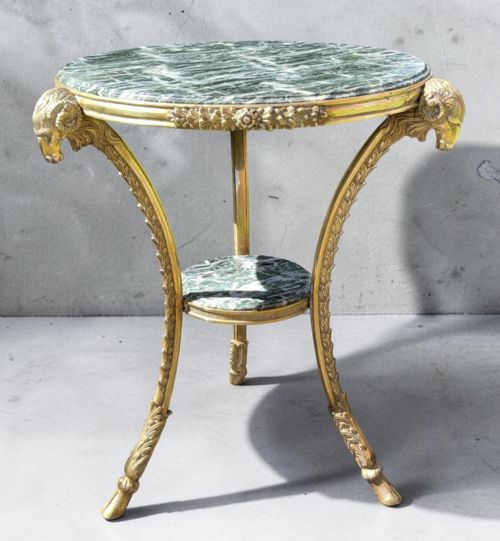
Carpenters turned solid timbers like mahogany and walnut for the central shafts and carved the supporting legs with foliage, scrolls or animal details such as swans and ram heads. Giltwood and parcel silvered surfaces received gold or silver leaf applied over gesso and wood. Tops were cut from solid marble or onyx and fitted directly into wooden frames or cast metal mounts.
Foundries cast iron and brass bases for industrial bistro tables and ornate French gueridons, incorporating decorative mounts and galleries. Stone slabs were ground and polished by hand to a smooth finish, resting securely upon timber pedestals or three-legged metal spider frames.
Several tables arrive equipped with fierce cast brass ram heads and carved swans ready to guard your afternoon tea.
What varies in quality
The refinement of the carving on the wooden legs and central pedestal distinguishes standard production from superior work. Crisp details on giltwood mounts, cast brass rams heads and swan motifs indicate skilled craftsmanship. Figure and grain selection in walnut and mahogany veneers also separates finer examples from plain utilitarian furniture.
The choice of stone creates a distinct tier in quality, where multi-coloured specimen marble tops or thick slabs of flawless white and green marble surpass simple painted surfaces. Construction methods such as pegged joints, heavy turned pillars and substantial cast iron bases determine the structural integrity of each table.
The Tripod Marble Table Glossary
- Guéridon
- A small French table supported by a central column or legs, frequently topped with marble. These pieces served diverse domestic roles as lamp stands, wine tables or decorative centre tables.
- Specimen marble
- A top assembled from multiple geometric pieces of different coloured marbles arranged in patterns. This technique demonstrates high stonemasonry skill.
- Giltwood
- Wood that has been coated with a thin layer of gold leaf. It appears on ornate French and Victorian frames.
- Ebonised wood
- Timber treated with a dark finish to imitate expensive ebony. It provides a stark contrast against light marble tops.
- Galleried
- A table top edged with a raised metal or wooden rim to prevent items from sliding off. This feature is common on French occasional and decanter tables.
Tripod Marble Table: Frequently Asked Questions
Where do I place a tripod marble table?
These tables fit easily beside armchairs, in small hallways, or as central accents in a room. Their compact three-legged footprint allows them to occupy tight corners without cluttering floor space.
Because the top is stone, they function well as lamp tables or drink stands where moisture resistance is helpful. Avoid placing heavy loads on the outer edges of antique three-legged bases to maintain stability.
How do I clean a marble top?
Wipe the stone surface with a soft, damp cloth and mild, neutral soap. Avoid acidic cleaners, vinegar, or citrus solutions, which etch and dull polished marble.
Dry the surface thoroughly after cleaning to prevent water spots. Spills should be blotted immediately rather than wiped to prevent staining.
How can I tell a French gueridon from an English table?
French gueridons frequently feature bolder mounts in cast brass, giltwood frames, or distinct Empire styling with swan and ram head details. Woods like bleached walnut and figured mahogany are typical of continental workshops.
English equivalents from the Victorian and Regency periods tend towards heavier mahogany or rosewood pedestals with simpler carved tripod legs. Specimen marble tops also appear more frequently in English nineteenth-century productions.