


Tripod Leg Tiered Table
A tripod leg tiered table brings vertical display and serving space to a room on a single central pedestal.
Tripod Leg Tiered Table
When you search for a tripod leg tiered table, you are looking at multi-level stands that balance on three spreading feet, most frequently appearing as dumb waiters or occasional tables from the Georgian and 19th-century periods.
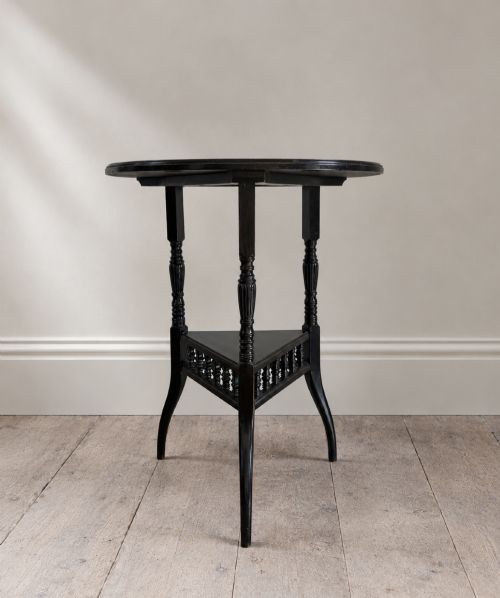
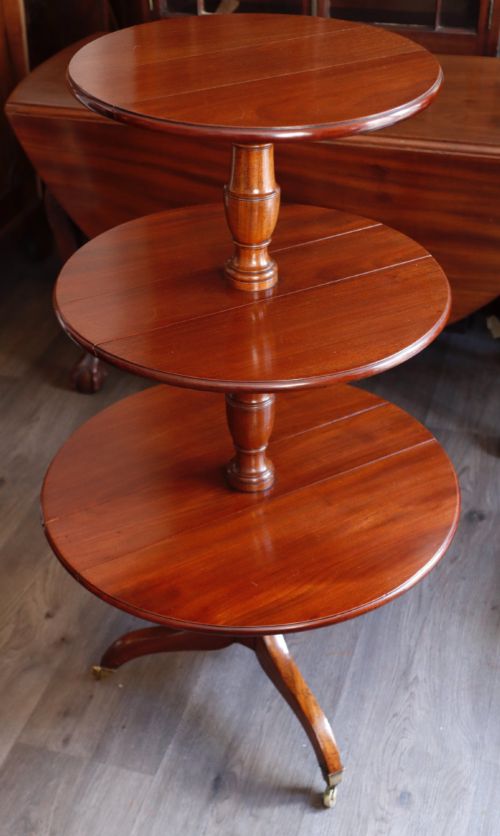
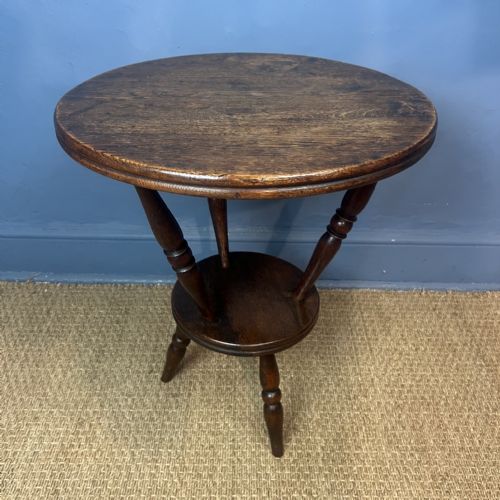
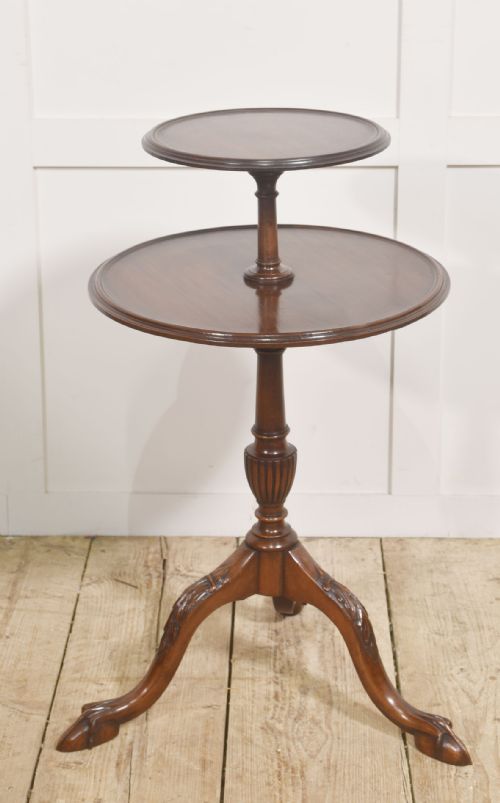
The versions you will most commonly meet on this page are mahogany dumb waiters with two or three graduating round tiers, alongside occasional tables, cricket tables, and side tables in oak, walnut, and ebonised wood.
These pieces originated as practical serving furniture for dining rooms and drawing rooms before transitioning into versatile display surfaces for everyday domestic use.
Materials and Construction
Cabinetmakers built these tables primarily in solid mahogany and oak, often turning central columns on a lathe and shaping three splayed legs to provide a stable base for the weighted tiers above.
Finer examples incorporate marquetry inlay in walnut or delicate hand-painted decoration on ebonised hardwood, whilst structural joints rely on traditional pegging and sturdy turning techniques.
Listings feature mahogany, oak, walnut, and ebonised hardwood across periods spanning the 18th century, the Georgian era, and the late 19th century.
Factors of Quality
Quality rests in the crispness of the turned column and the balanced proportions of the graduating tiers, where lesser pieces can feel heavy or lack harmony between the levels.
The choice of timber grain, the precision of the leg joints, and the presence of original brass castors separate standard utility pieces from finer cabinet work.
Gillow
The Tripod Leg Tiered Table Glossary
- Dumb waiter
- A multi-tiered freestanding table used originally for holding food and tableware without the need for a servant. These tables typically feature two or three circular revolving trays stacked vertically on a central pillar.
- Cricket table
- A small three-legged circular table dating back to vernacular traditions. They are usually made of oak and feature sturdy peg-joined construction.
- Tripod base
- A support structure comprising three legs radiating from a central column. This design ensures stability on uneven floors by keeping all three feet in contact with the ground.
- Marquetry
- The art of applying decorative pieces of veneer to a structure to form intricate patterns. Walnut and exotic timbers are frequently utilised in this technique.
- Ebonised
- Wood treated with a chemical stain or finish to imitate ebony. This dark, formal surface treatment became particularly popular during the 19th century.
Tripod Leg Tiered Table: Frequently Asked Questions
What is a tripod leg tiered table used for?
These tables were originally designed as serving stands in dining rooms to hold dishes and glasses near the table. Today, they function well as side tables or display stands in living spaces.
Their multi-level surface allows you to place books, lamps, or decorative objects across different heights without taking up extra floor space.
How do I tell an 18th-century table from a later copy?
Examine the construction methods visible underneath the tiers and around the central pillar. Period pieces show hand-turned tool marks and timber shrinkage consistent with age.
Later revival pieces often display more uniform machine working and different fastening methods inside the column joints.
What is the difference between a dumb waiter and an occasional table?
Dumb waiters traditionally feature multiple graduated tiers that often revolve around a central turning, built specifically for holding items during meals. Occasional tables usually offer simpler surfaces for general display.
While both share the tripod leg format, dumb waiters generally have a taller, more architectural profile with two or three distinct levels.