




Tiered Mahogany Dumbwaiter
A tiered mahogany dumbwaiter brings functional elegance to dining rooms through multi-level revolving trays designed to hold glassware and dishes.
Tiered Mahogany Dumbwaiter
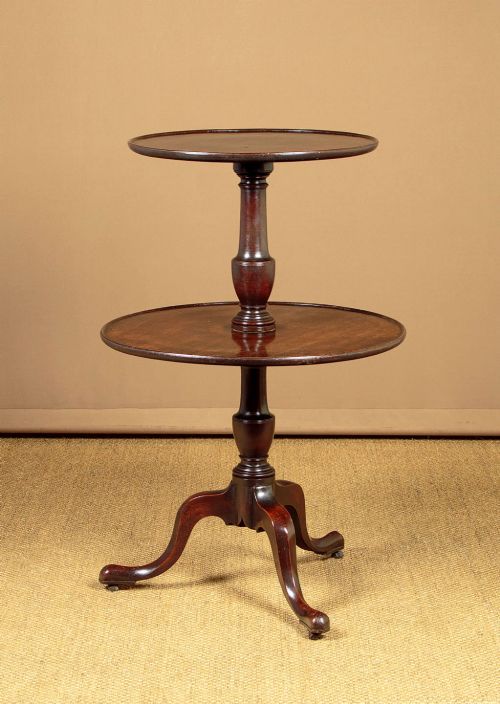
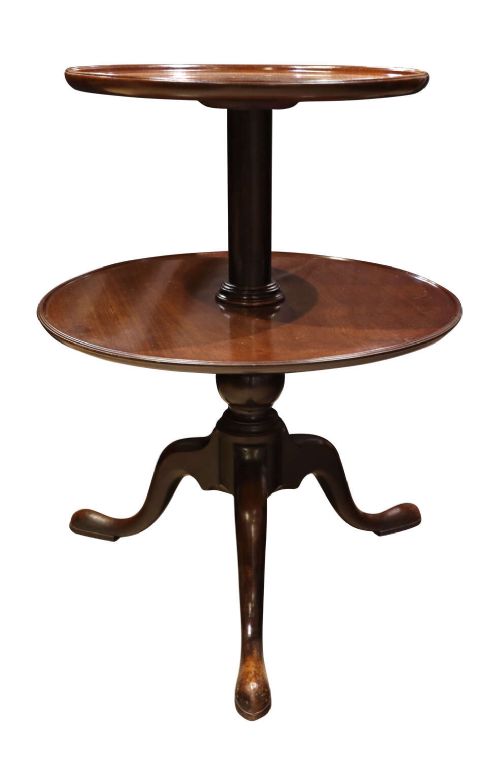
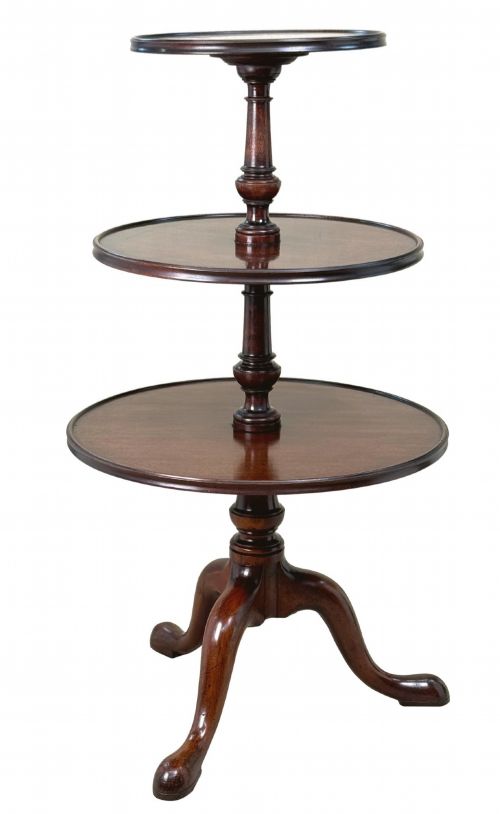
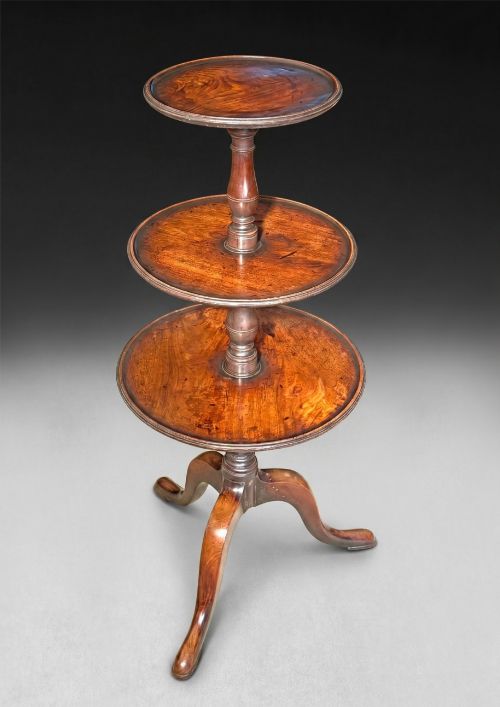
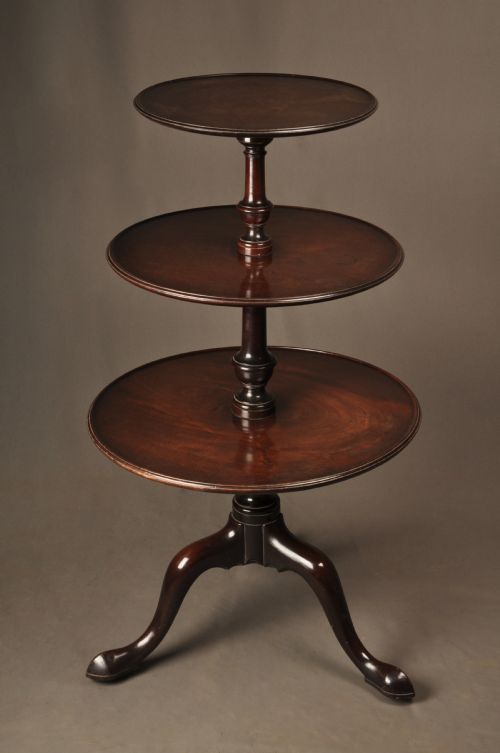
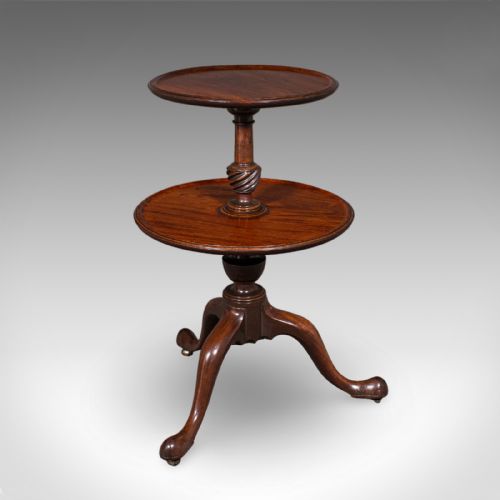
A tiered mahogany dumbwaiter is a multi-level serving stand designed to hold food, wine, and tableware during meals without requiring constant attendance from servants. The pieces found here span the eighteenth and nineteenth centuries, including Georgian, Regency, and Victorian periods.
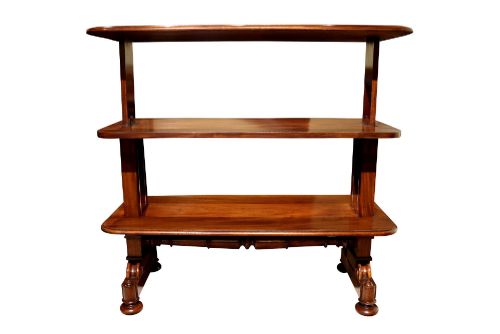
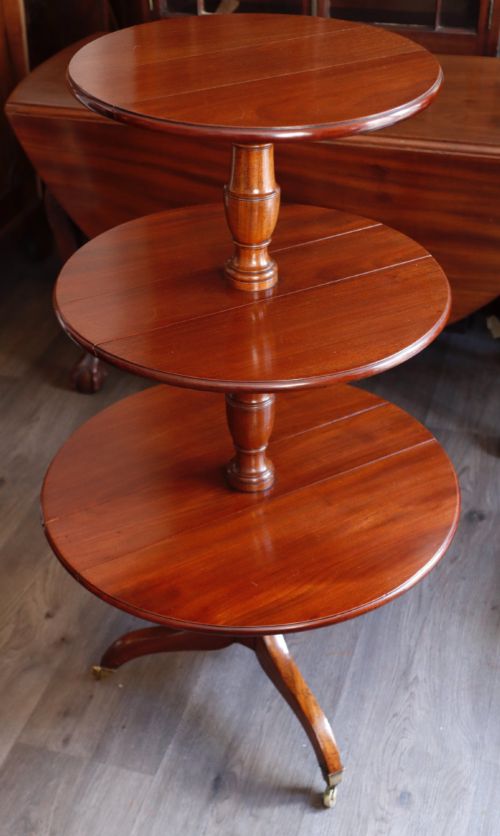
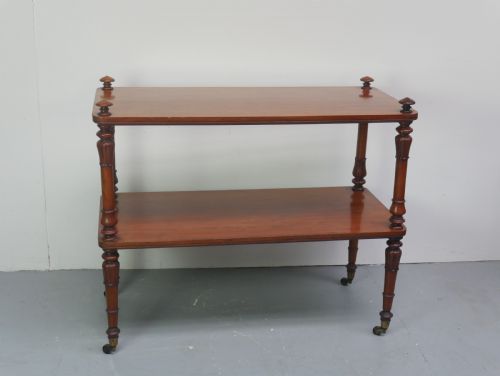
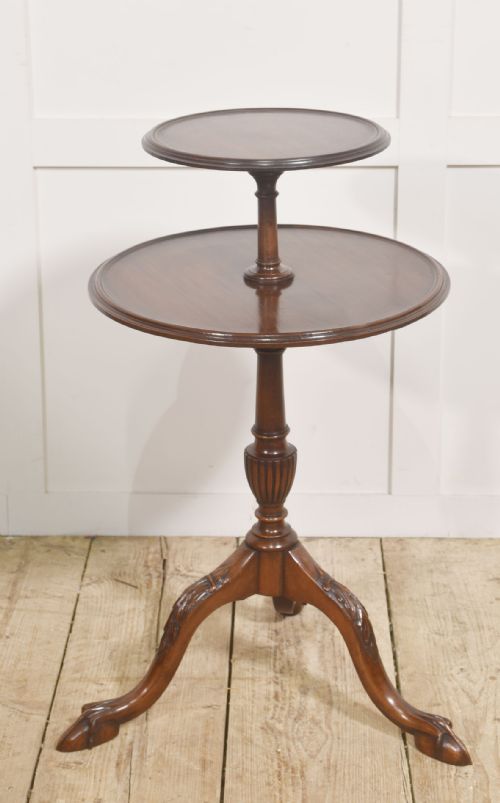
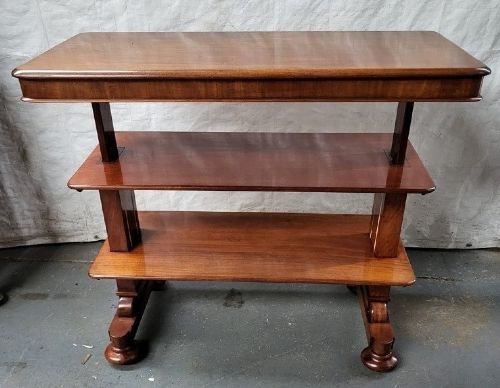
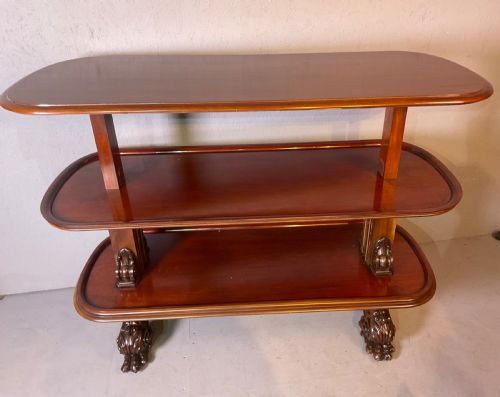
Most examples feature two or three circular graduating tiers supported by a central pillar and tripod legs, while some incorporate drop-leaves or folding mechanisms. Alternative forms on this page include side tables, buffets, and etageres built for similar serving purposes.
Materials and Construction
Cabinetmakers constructed these serving stands primarily from solid mahogany and fiddleback mahogany, sometimes embellishing surfaces with satinwood inlay or rosewood details. Support structures frequently rest upon brass castors to allow smooth movement across dining room floors.
Revolving mechanisms on circular tiers rely on precision timber joints and pivot pins concealed within the central column. Folding variants utilise metal hinges and drop-leaf supports that allow the tiers to lower compactly when not in use.
Several examples include clever folding mechanisms designed so the whole stand packs flat against the wall when the dining room needed to clear space for dancing.
Judging Quality
Quality rests upon the choice of timber grain, the crispness of turned details on the central column, and the stability of the tripod base. Finer examples display carefully selected mahogany timbers with rich figures that have aged gracefully over centuries.
The sophistication of the mechanical action, whether a revolving tier or a rise and fall mechanism, dictates the calibre of the piece. Original castors and well-preserved joints elevate an item above simpler utilitarian versions.
The Tiered Mahogany Dumbwaiter Glossary
- Dumbwaiter
- A freestanding multi-tiered serving table used to hold dishes and drinks in dining rooms. It permitted independent dining without servants present in the room.
- Tripod base
- A three-legged support system providing stability for central pillar furniture on uneven dining room floors. These legs often terminate in pad feet or brass castors.
- Drop-leaf
- A hinged table section that can be folded down to save space or raised to expand the surface area. Many folding dumbwaiter designs incorporate this feature.
- Etagere
- A set of open shelves or tiers used for displaying small objects or serving food. These pieces share a similar vertical format to traditional dumbwaiters.
- Metamorphic
- Furniture designed to transform into different shapes or functions through folding or mechanical action. Certain nineteenth-century buffets on this page utilise these clever shifting designs.
Tiered Mahogany Dumbwaiter: Frequently Asked Questions
What is a tiered mahogany dumbwaiter?
A tiered mahogany dumbwaiter is a freestanding wooden serving stand with multiple graduating levels supported by a central column. It was traditionally placed beside a dining table to hold food, wine, and tableware.
These pieces emerged strongly during the eighteenth century and continued through the Victorian era in various forms, including revolving models and folding stands.
How were dumbwaiters used historically?
Dining rooms utilised these stands to reduce the need for servants during private meals. Diners could reach for dishes, glasses, or bottles placed on the rotating tiers without summoning staff.
The lower tiers typically held heavier items while upper tiers held glassware or condiments, keeping the main dining table clear.
How do I identify a Georgian dumbwaiter?
Georgian examples usually feature solid mahogany construction with ring-turned central pillars and tripod bases terminating in pad or spade feet. The tiers are frequently fixed or revolve on simple wooden pivots.
Craftsmanship from this period emphasises proportion and timber grain rather than heavy ornamentation, distinguishing it from later Victorian interpretations.
Can I use a antique dumbwaiter today?
These pieces function well in modern homes as side tables, drinks stands, or display units for books and decorative objects. Their vertical format makes them suitable for corners or beside seating areas.
Care should be taken to protect polished mahogany surfaces from excessive moisture and direct heat when serving food or drinks.