


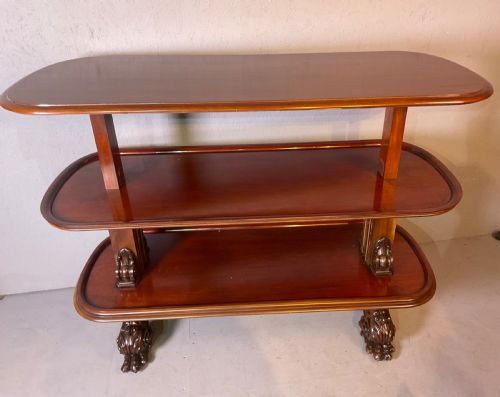


Three Tier Trolley
A three tier trolley brings tiered mobility and practical display to dining rooms and living spaces.
Three Tier Trolley
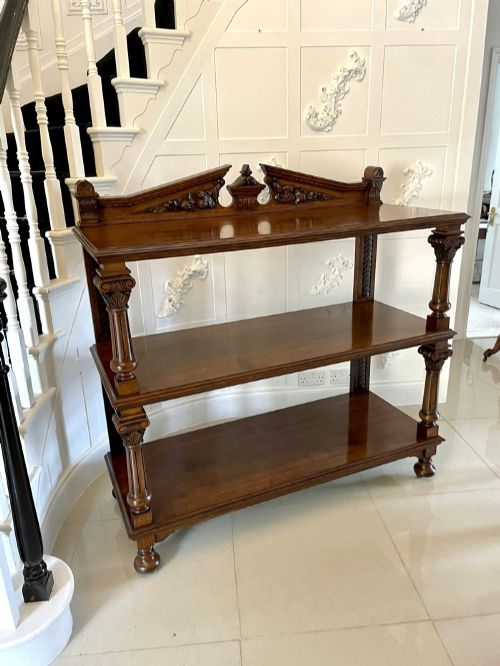
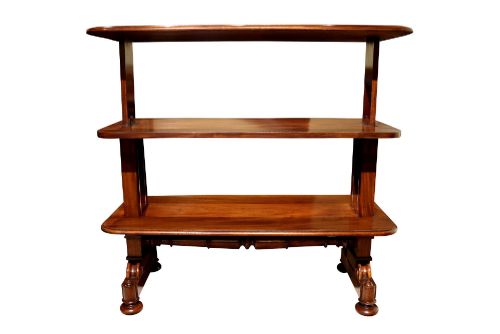
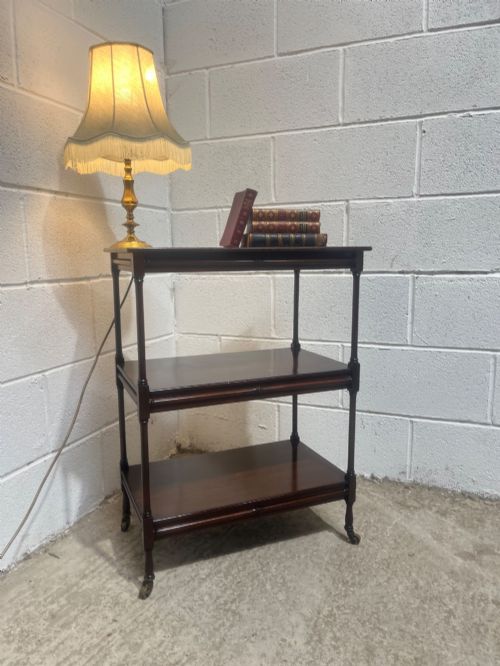
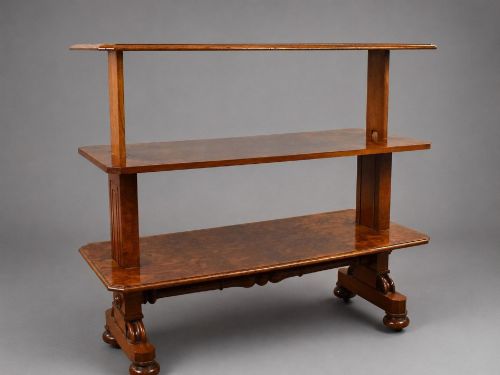
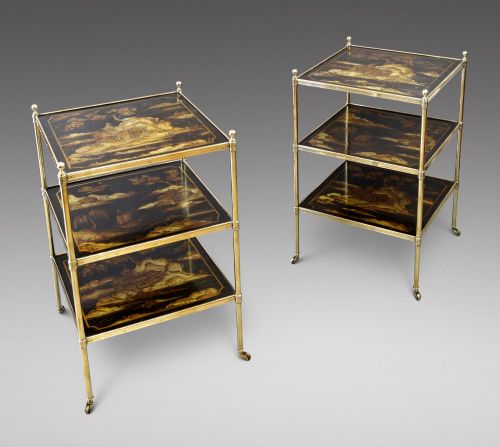
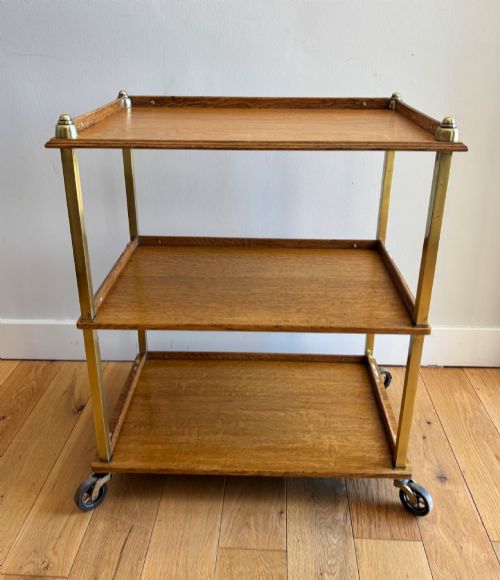
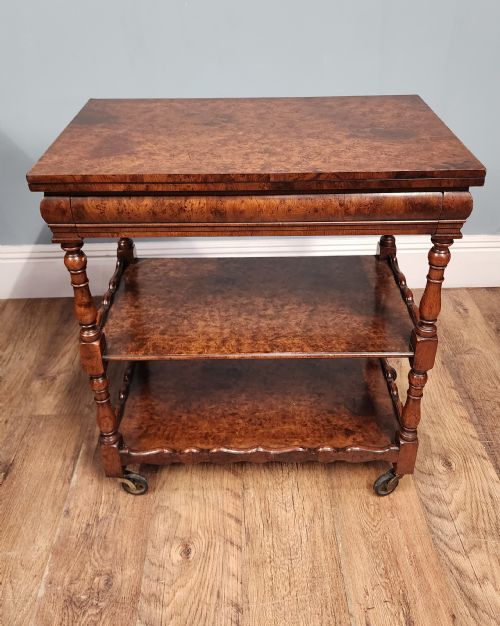
A three tier trolley provides multiple stacked surfaces for serving, storage and display across dining and living spaces. These pieces span robust Victorian oak and mahogany buffets to slender Edwardian tea trolleys and streamlined Art Deco walnut drinks bars.
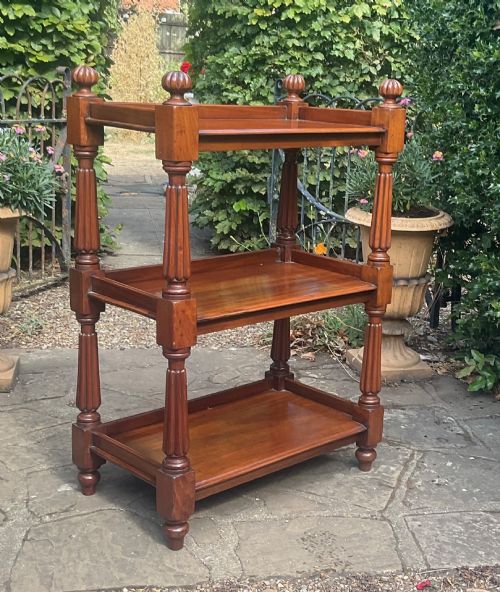
The version most commonly encountered on this page is the nineteenth-century mahogany dumb waiter or buffet, alongside later twentieth-century tea and drinks trolleys in walnut, oak, brass and glass. Their tiered format allows for efficient movement of dishes, drinks or books.
Makers such as Maple and Co are represented among these tiered designs, alongside numerous unmarked examples produced across the Victorian, Edwardian and Art Deco periods.
Materials and construction
Construction relies heavily on timbers such as mahogany, walnut, burr walnut, pollard oak and standard oak, selected for durability and figured grain patterns. Brass is frequently utilised for castors, galleries, handles and structural etagere frames supporting glass shelves.
Joinery methods range from heavy carved woodwork on nineteenth-century oak dumb waiters to lighter turned barley twist legs on Edwardian tea trolleys and sleek curved walnut on Art Deco bar carts.
Some nineteenth-century trolleys possess telescopic columns that rise like invisible party guests.
Judging quality in tiered serving furniture
Quality rests on the selection of timber, such as figured walnut or dense mahogany, and the crispness of carved details like barley twists or bracketed tiers. The integration of mechanical elements, including rise and fall telescopic mechanisms or original brass castors, separates standard serving tables from higher-grade pieces.
Proportion and stability dictate the overall merit of a trolley, ensuring the stacked tiers remain balanced and secure on their wheels or feet during movement.
Maple and Co
The Three Tier Trolley Glossary
- Dumb waiter
- A tiered serving piece or sideboard designed to hold dishes and bottles without requiring a human servant at the table.
- Etagere
- A piece of furniture consisting of a set of open shelves for displaying small objects or serving items.
- Rise and fall
- A telescopic mechanical mechanism that allows specific tiers of a buffet or dumb waiter to be adjusted in height.
- Barley twist
- A type of turned furniture leg carved in a spiral shape resembling a twisted barley sugar stick, common in Edwardian and Victorian pieces.
- Galleried
- Fitted with a raised metal or wooden rim around the edge of a shelf to prevent items from sliding off during transport.
Three Tier Trolley: Frequently Asked Questions
What is a three tier trolley used for?
These pieces function primarily as mobile serving tables, drinks bars, or display stands for books and decorative objects. Their stacked configuration provides maximum surface area while occupying a compact footprint in a room.
Historically, they served dining rooms as dumb waiters to hold extra plates and courses, but later twentieth-century iterations evolved specifically for tea service and cocktail hosting.
How do I date a three tier trolley?
Dating relies on identifying the prevailing timber choices, hardware, and decorative styles of specific eras. Victorian examples often feature heavy carved mahogany, walnut, or operable telescopic mechanisms.
Later Edwardian and Art Deco pieces introduce lighter oak frames, barley twists, or streamlined walnut curves with glass and brass elements characteristic of the twentieth century.
Are all three tier trolleys on castors?
Most variants incorporate wheels or castors to facilitate movement between rooms, though some heavier dining buffets and dumb waiters sit on stationary feet or pedestals. Original brass castors provide a key indicator of authenticity on nineteenth-century pieces.
Lighter tea trolleys and drinks carts almost universally feature small wheels to support their role as mobile serving units.
What is a rise and fall trolley?
A rise and fall trolley incorporates a telescopic central column that allows the upper shelves or tiers to be adjusted vertically. This clever mechanical adaptation provided flexible clearance for tall bottles or dishes during Victorian dining.
Such pieces represent a higher tier of craftsmanship compared to fixed-shelf models.