



Mahogany Tier Trolley
A mahogany tier trolley brings warmth and tiered utility to a room, serving drinks, food and books across multiple generations of design.
Mahogany Tier Trolley
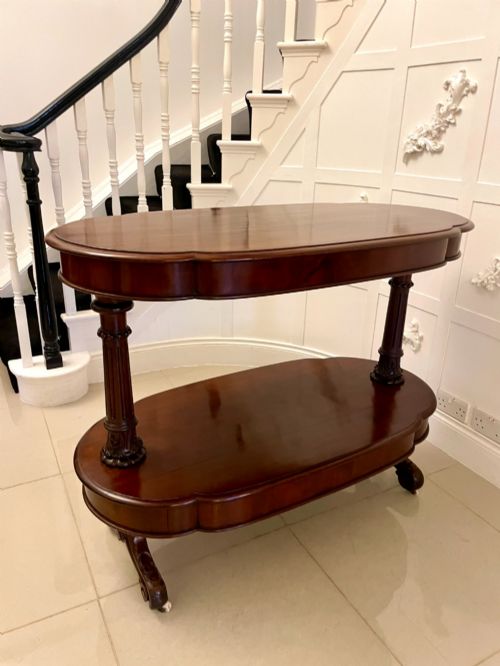
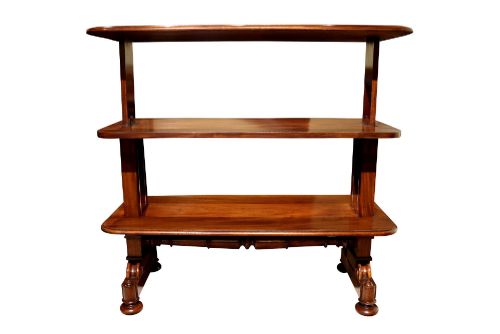
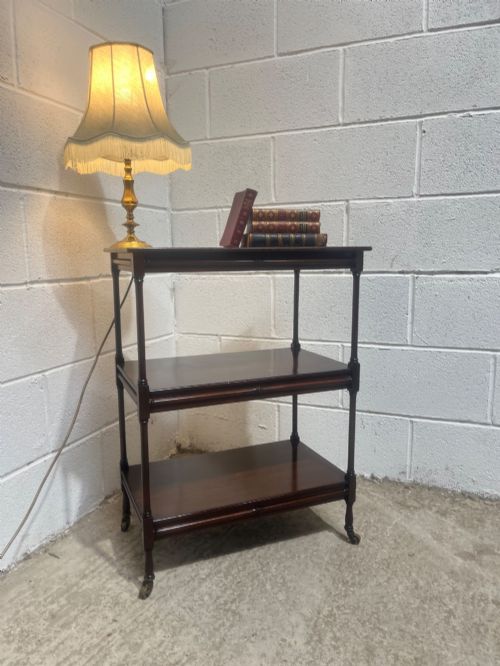
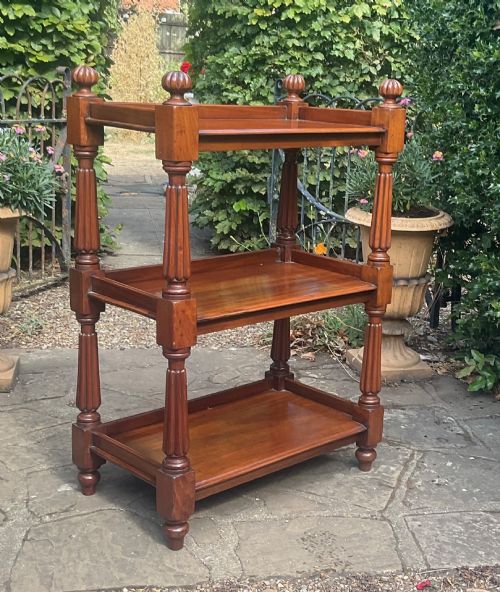
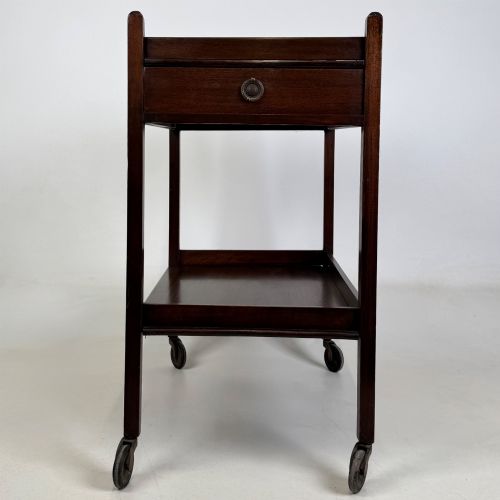
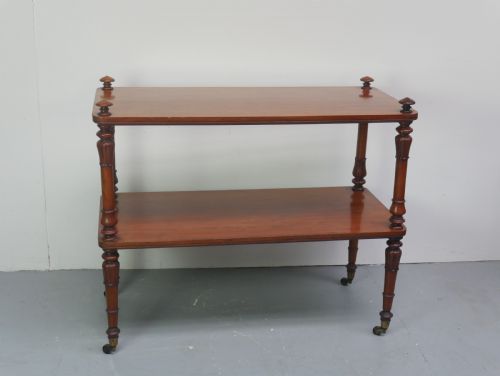
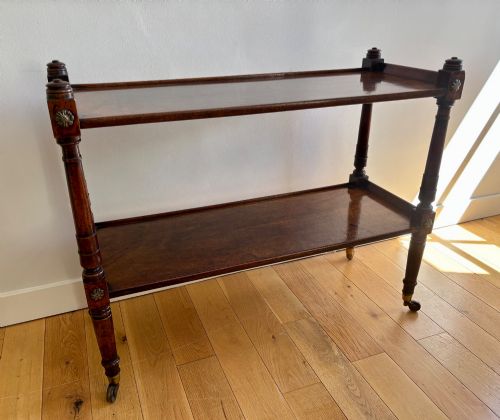
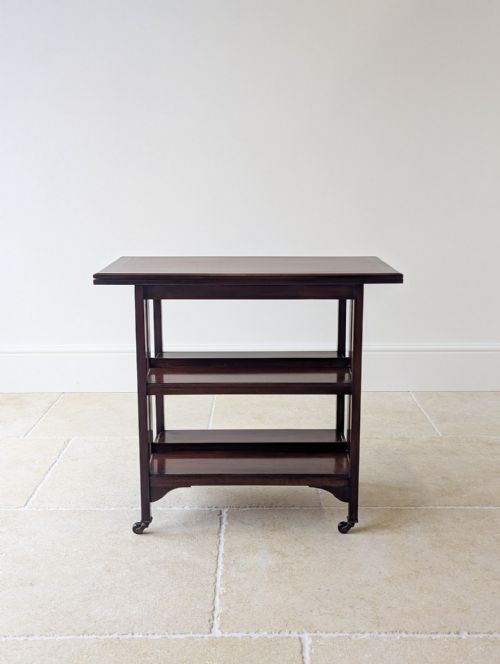
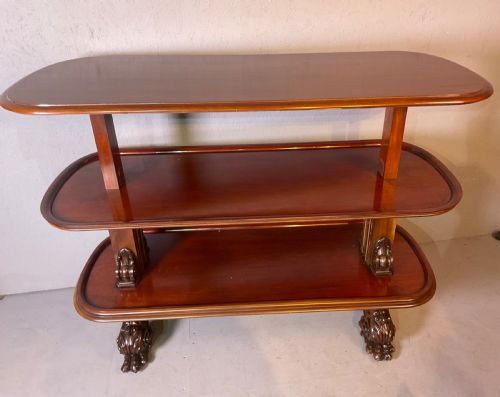
A mahogany tier trolley spans multiple forms, including serving tables, tea trolleys, dumb waiters, buffets and etageres. You will frequently encounter two-tier and three-tier examples designed for serving and display.
The pieces on this page emerge from periods ranging through the Georgian, Regency, William IV, Victorian and Edwardian eras. Makers and workshops built them for versatile hospitality, utilising tiered shelves and original castors.
These items function as mobile serving stations, bookshelves and drinks cabinets. Their layered timber construction allows efficient use of space while offering a distinct period aesthetic.
What Varies in Quality
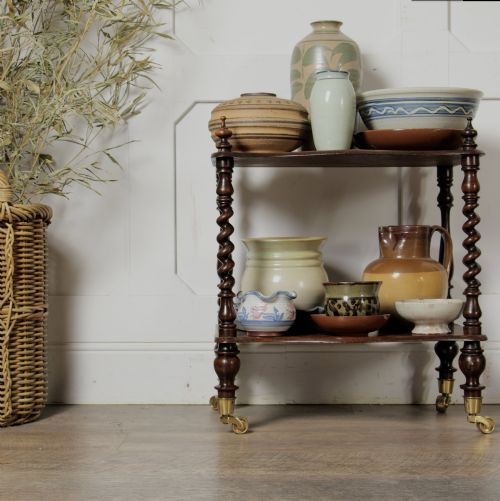
Quality rests in the selection of the mahogany timber and the crispness of turned supports, such as fine barley twists or robust columns. Superior pieces display thoughtful grain matching and careful integration of satinwood or boxwood inlay.
The integrity of the structural tiers and the presence of original brass castors distinguish finer examples from standard utility items. Maker stamps, where present, elevate the standing of the piece significantly.
Some dumb waiters are described as metamorphic, hiding folding action that transforms a static shelf into a moving feast.
Maple & Co·Gillows·Jas Shoolbred
The Mahogany Tier Trolley Glossary
- Etagere
- A piece of furniture consisting of a set of open shelves for displaying small objects. These tiered stands offer practical surface area without visual heaviness.
- Dumb waiter
- A tiered serving table used for holding food and drink without requiring a servant present. They appear in two-tier and three-tier formats.
- Barley twist
- A type of turned wooden column resembling a twisted rope. This decorative detail frequently supports the shelves of Victorian stands.
- Rise and fall
- A mechanical mechanism allowing specific tiers to adjust in height. It provides adaptable clearance for bottles and serving dishes.
Mahogany Tier Trolley: Frequently Asked Questions
How do I date a mahogany tier trolley?
Examine the timber grain, secondary woods, and hardware like castors to establish a manufacturing period. Early 19th-century pieces often feature solid Cuban mahogany and hand-turned supports, whereas Edwardian and later examples show different assembly techniques.
Style indicators such as Regency sabre legs or Victorian barley twists help narrow down the decade of production. Maker marks or stamps provide the most definitive dating evidence.
Were these trolleys used for tea or drinks?
These pieces served multiple domestic purposes depending on the era and format. Tea trolleys and folding dropleaf versions accommodated afternoon tea service in Edwardian drawing rooms.
Earlier dumb waiters and buffets functioned as dining room side tables for holding heavy dishes, wine bottles, and spare tableware during family meals.
Are original castors important?
Original brass and metal castors contribute significantly to the authenticity and mobility of these serving tables. They verify that the piece retains its intended height and proportion.
Replacements are common due to heavy wear on floor surfaces over the centuries, but matching period hardware maintains the integrity of the trolley.
How do I care for mahogany tiered furniture?
Maintain the timber by keeping the surface away from direct heat sources and strong sunlight that can fade the rich reddish-brown polish. Regular dusting with a soft, dry cloth preserves the finish.
Apply a quality wax sparingly to nourish the mahogany grain and protect against minor moisture marks from glasses and teacups.