
Three Tier Mahogany Stand
These multi-tiered wooden pieces deliver practical vertical display, and a three tier mahogany stand brings distinct period utility to any room.
Three Tier Mahogany Stand
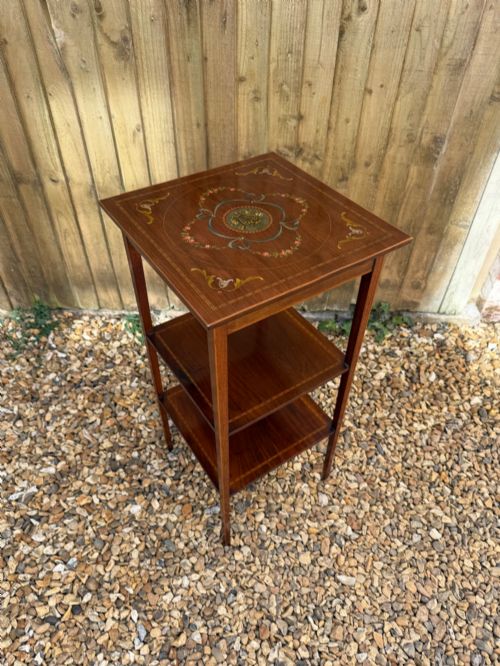
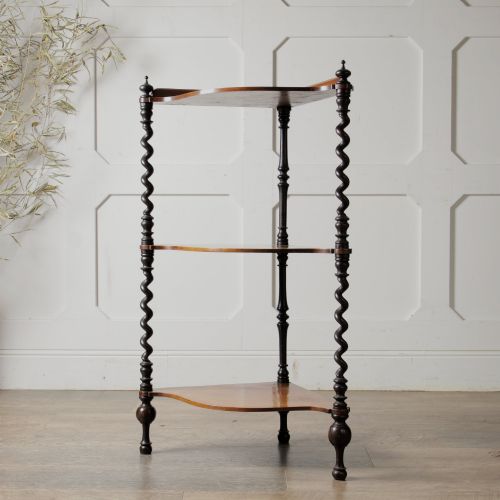
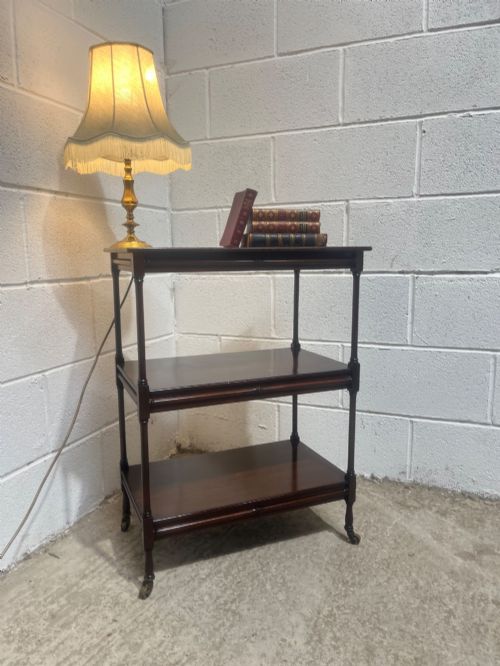
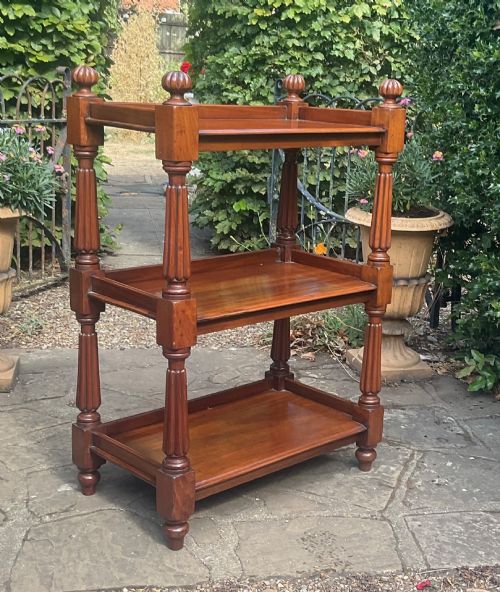
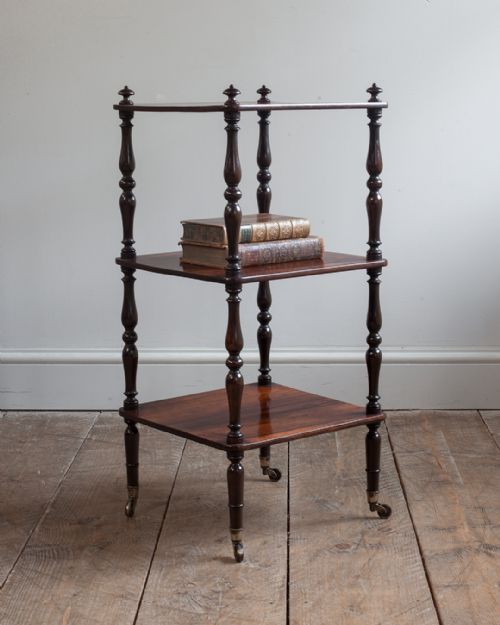
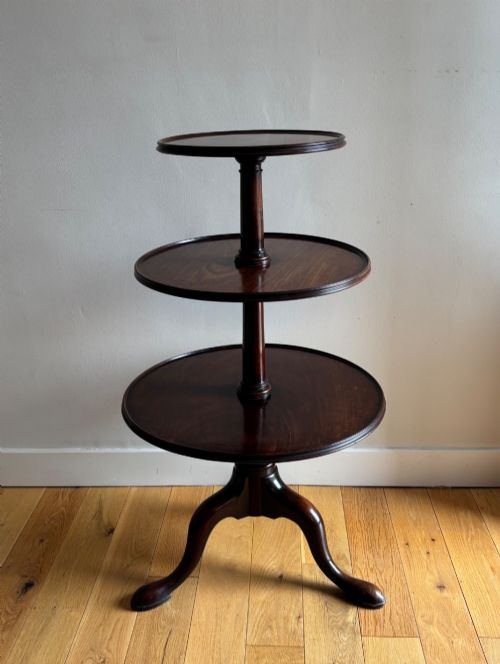
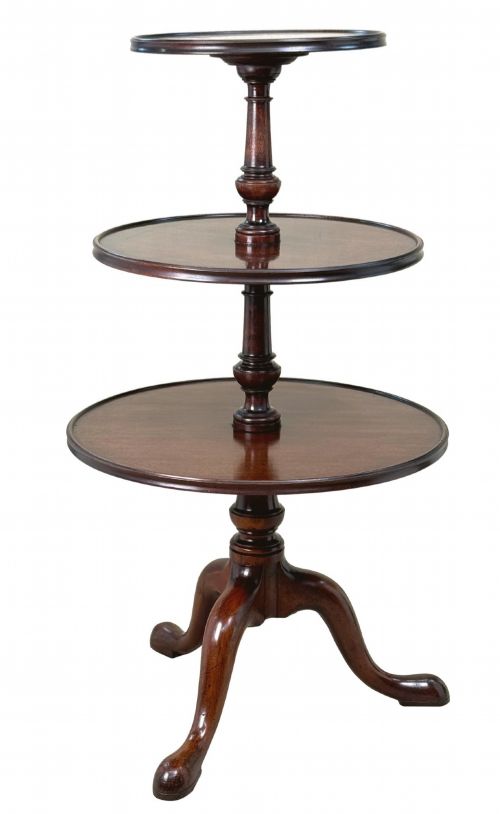
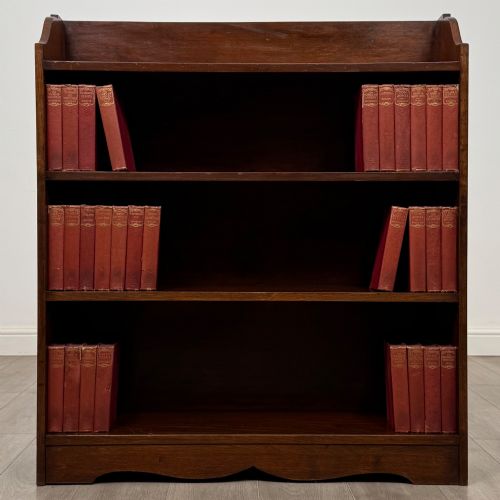
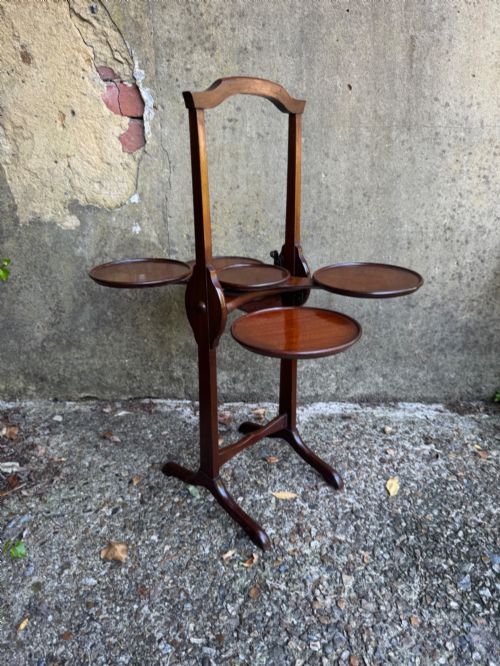
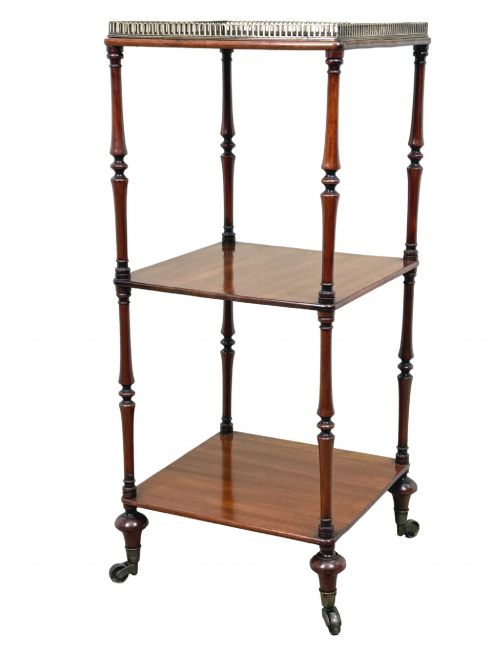
A three tier mahogany stand spans multiple centuries of British cabinet making, appearing in forms from Georgian dumb waiters to Edwardian cake stands. The search covers several distinct object types, including étagères, whatnots, bookshelves, and tiered tables designed for serving or display.
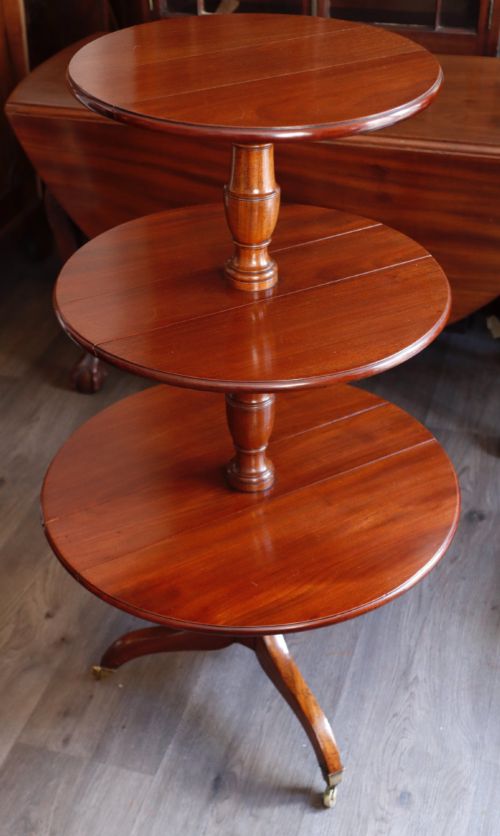
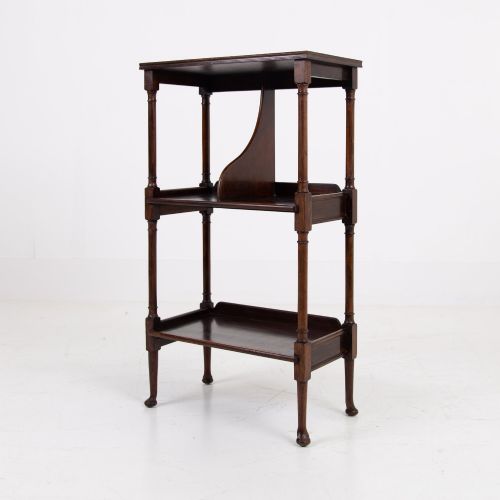
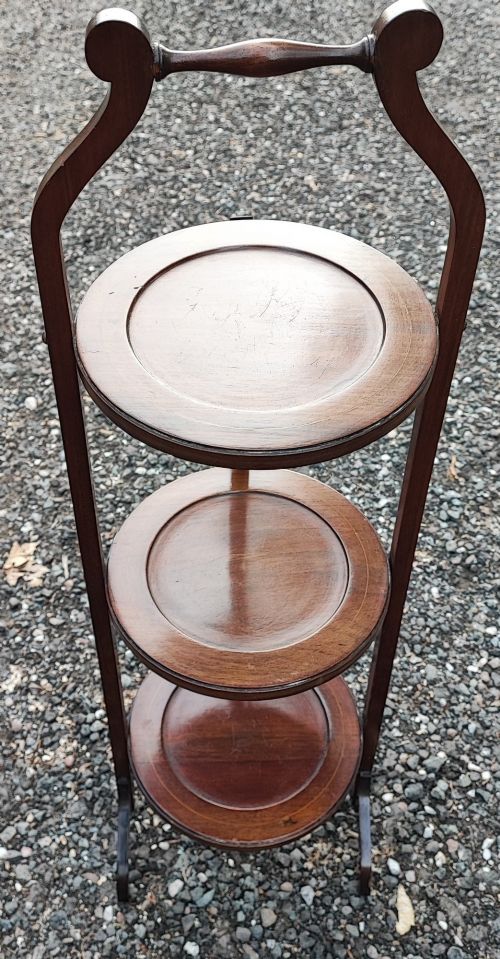
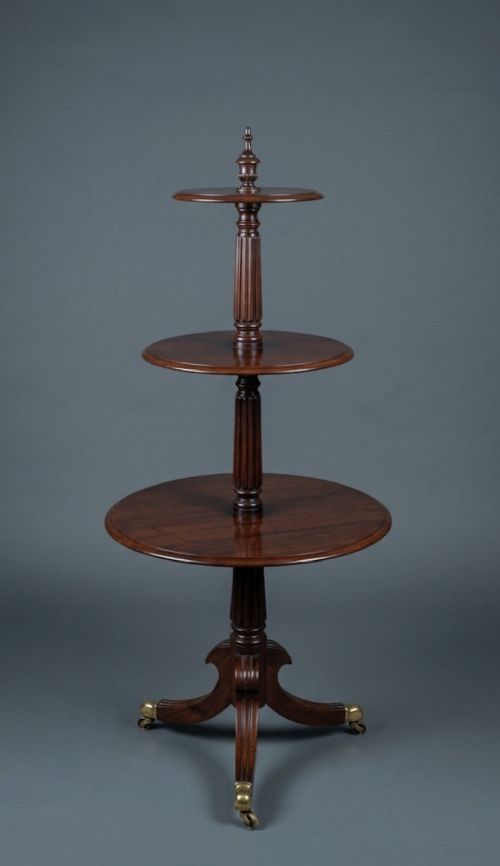
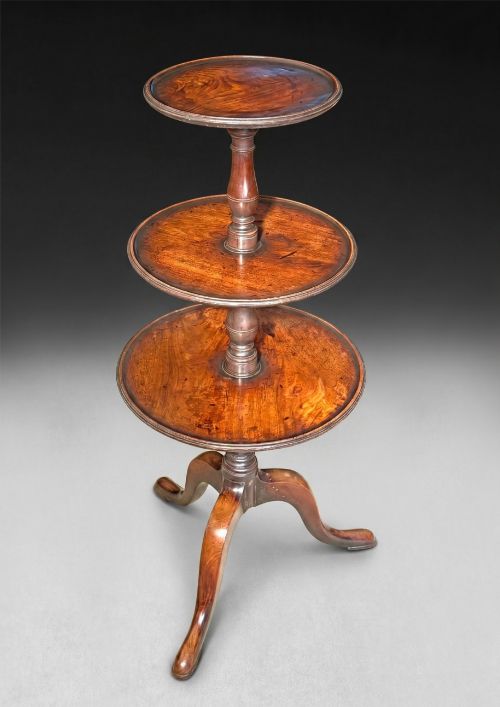
Georgian and George III examples frequently take the form of circular dumb waiters with graduating tiers on central pillars, while Victorian and Edwardian pieces shift towards rectangular étagères, corner whatnots, and folding cake stands. These multi-level pieces fulfilled specific domestic functions, from holding dining room courses to displaying books and plants.
The evidence shows production running continuously from the 18th century through the Victorian, Regency, and William IV eras into the early 20th century, with later revival styles following established forms. Buyers encounter solid and veneered timbers shaped into upright display furniture intended for flexible placement within the home.
Build Quality and Proportion
The distinction between standard domestic items and finer pieces rests on timber selection, such as figured Cuban mahogany, and the precision of the turning on pillars and legs. Superior examples maintain balanced proportions across all three tiers, ensuring stability when the upper shelves carry weight.
Joinery detail separates robust antique construction from later output, visible in the snug fit of inlaid stringing, the crispness of carved mouldings, and the smooth operation of drop-leaves or folding cake stand hinges.
Three Tier Mahogany Stand Retail Price Guide 2026
Typical asking prices for three tier mahogany stand among the pieces listed under this phrase on Sellingantiques today, from the lower quarter to the upper quarter. They describe what is for sale here now, not the wider market.
Materials recorded include solid mahogany, rosewood, brass hardware, paint, and boxwood inlay.
The Three Tier Mahogany Stand Glossary
- Dumb Waiter
- A tiered serving stand with multiple revolving or fixed circular trays mounted on a central pillar, designed to hold food or tableware without domestic servants present.
- Whatnot
- An open piece of tiered shelving used for displaying ornaments, books, or small objects, popular throughout the 19th century.
- Étagère
- A French term for a piece of furniture consisting of a set of open shelves for displaying small articles, appearing in various mahogany forms in the evidence.
- Boxwood Inlay
- Contrasting light boxwood inserted into mahogany surfaces to create geometric borders or delicate decorative lines.
- Barley Twist
- A cylindrical furniture leg or support carved into a helical screw pattern, seen on Victorian pieces in the records.
Three Tier Mahogany Stand: Frequently Asked Questions
What was a three tier mahogany stand used for?
These versatile pieces served numerous domestic roles depending on their specific form, from holding dining dishes in the 18th century to displaying books, plants, and tea cakes in the Edwardian era. Dumb waiters assisted with meals, while whatnots and étagères provided extra surface space in parlours and drawing rooms.
Later folding variants allowed households to store the stands easily when not in use. The tiered layout maximised vertical space across compact footprints.
How do I date a mahogany stand?
Dating relies on observing structural characteristics, timber types, and decorative styles linked to specific eras. Georgian and Regency pieces often feature heavy central pillars and graduated circular trays, whereas Victorian stands introduce barley twist turnings and darker finishes.
Edwardian examples frequently incorporate boxwood inlay, Sheraton revival motifs, or folding cake stand mechanisms. Cabinet making techniques and hardware, such as brass castors or campaign fittings, also indicate the period of manufacture.
Are all three tier stands made of solid mahogany?
Makers utilised a combination of solid timber and veneers, depending on the period and the specific part of the furniture. While many pieces are described as solid mahogany, others employ mahogany veneers over secondary woods to achieve stability on large flat surfaces.
Inlay work often incorporates contrasting woods like boxwood or rosewood details. Examining the grain and underside reveals the underlying construction methods used by the workshop.
How do I care for an antique mahogany stand?
Preservation involves placing the furniture away from direct heat sources and strong sunlight to prevent the mahogany timber from drying out or fading. Regular dusting with a soft, dry cloth maintains the polish without building up unnecessary wax layers.
Avoid overloading the upper tiers beyond their intended capacity, particularly on folding cake stands or slender étagères. Maintaining stable indoor humidity protects both the wood and any delicate boxwood inlay.