
Antique Dumb Waiter Table
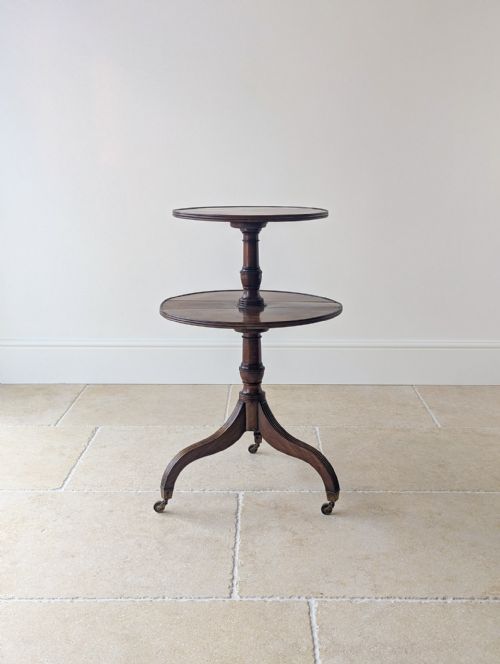
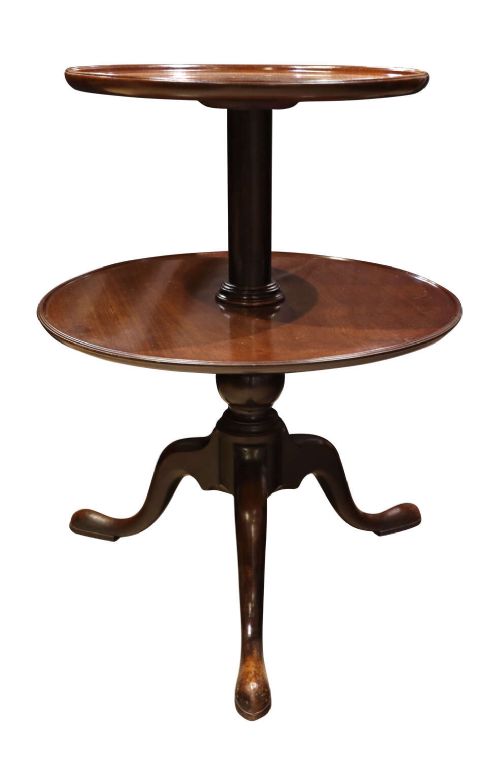
An antique dumb waiter table is a tiered serving stand designed to hold dishes and bottles near the dining table without the need for servants.
Antique Dumb Waiter Table
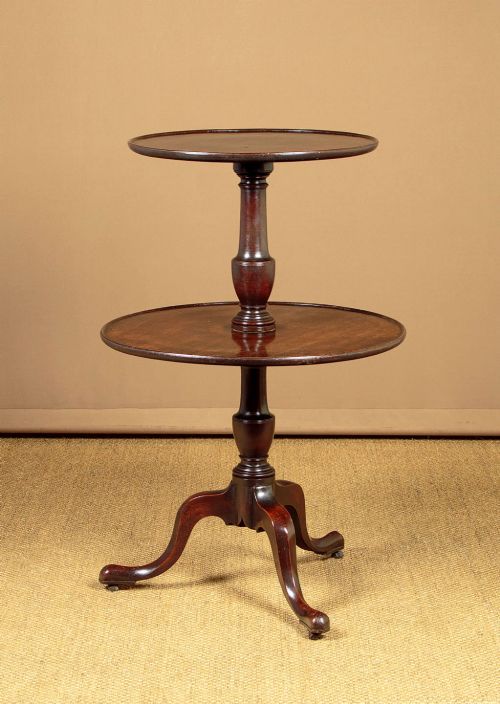
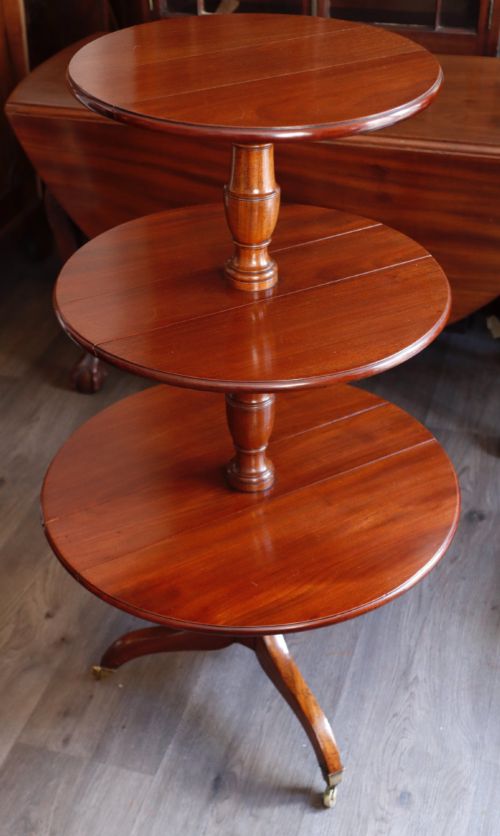
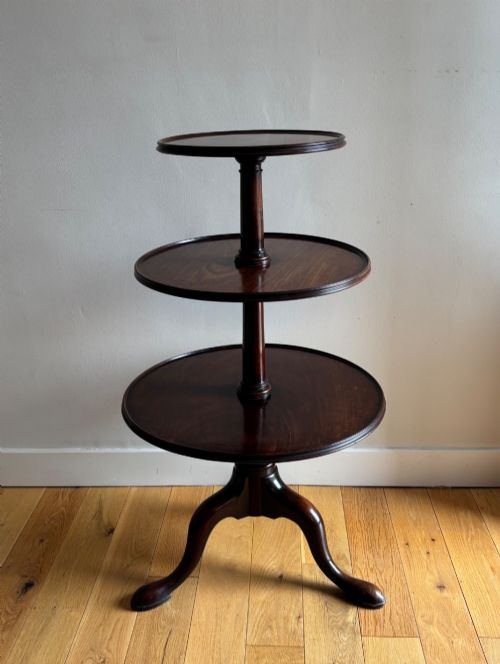
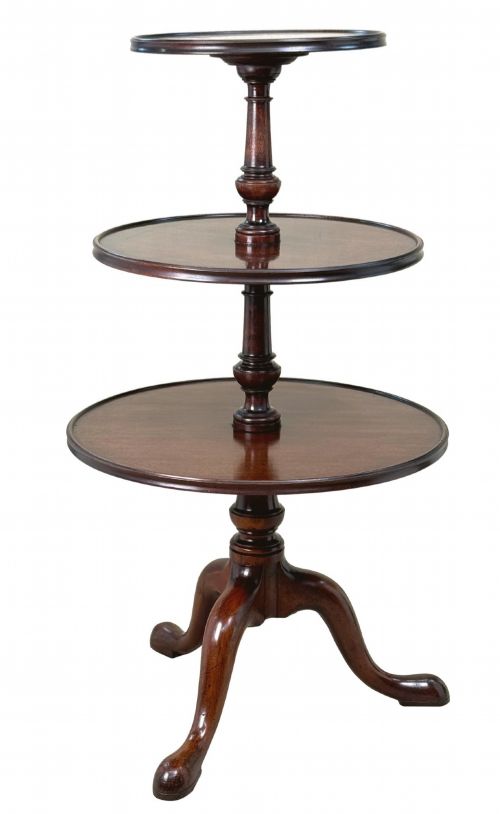
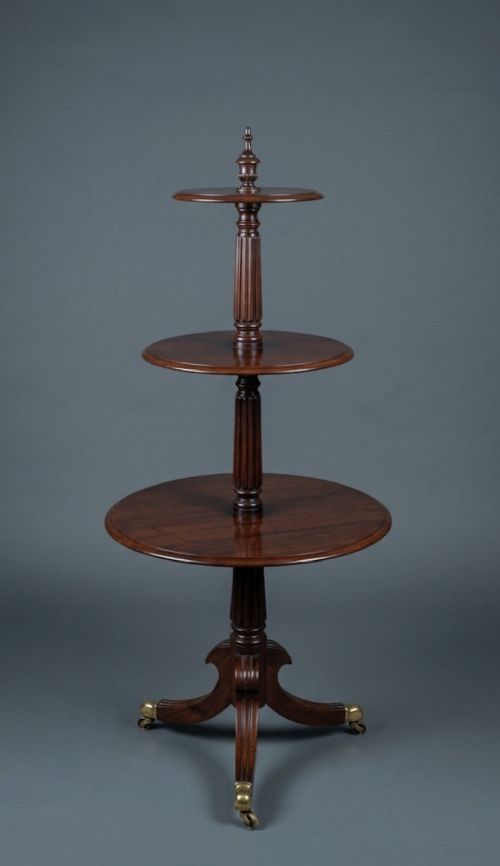
When you search for an antique dumb waiter table, you encounter multi-tiered serving pieces designed to stand beside the dining table. The most common form on this page is the circular three-tier mahogany dumb waiter supported by a central pillar and tripod base.
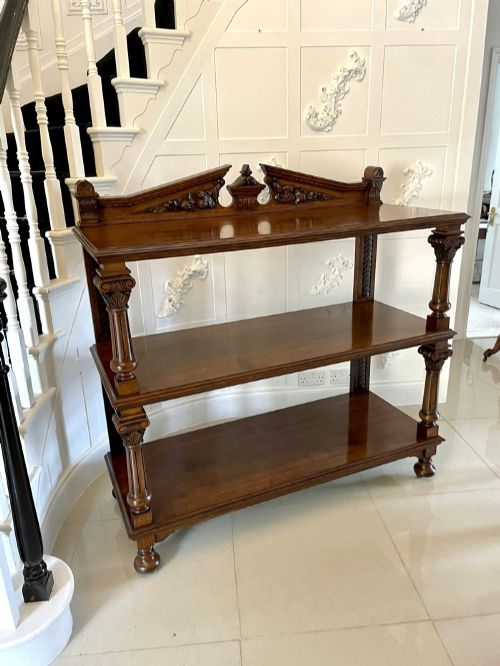
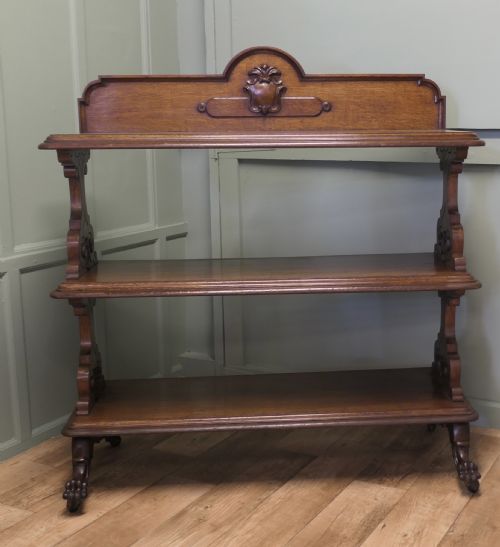
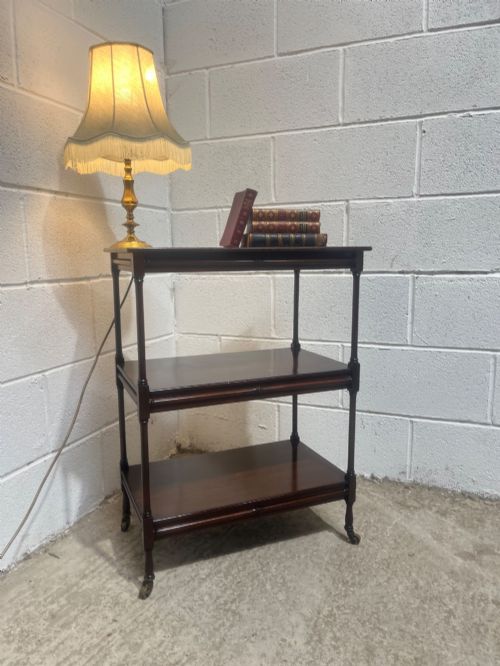
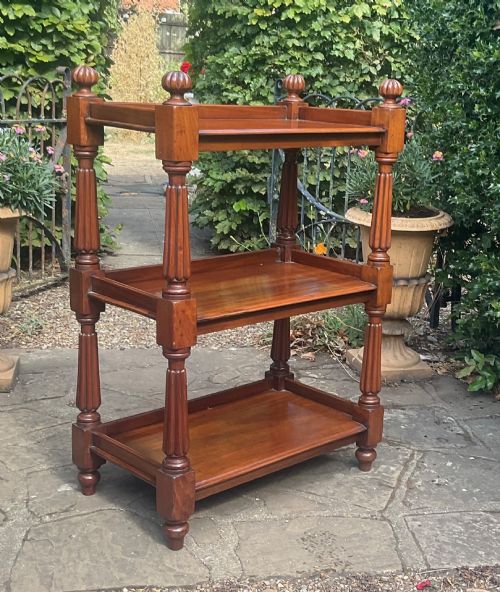
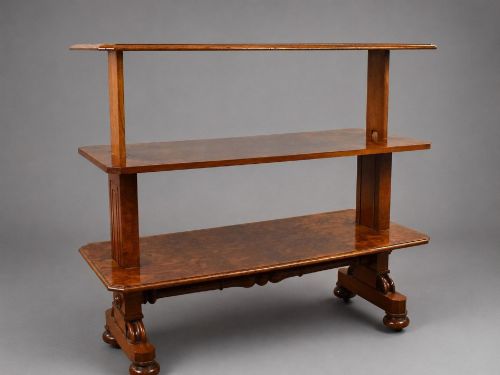
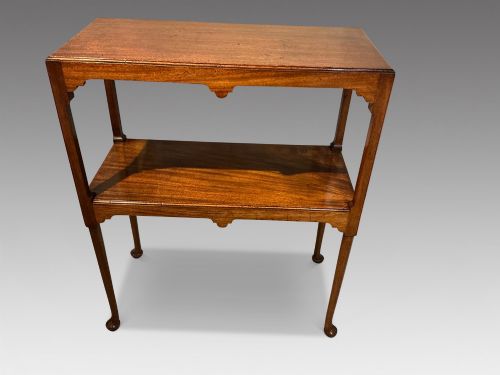
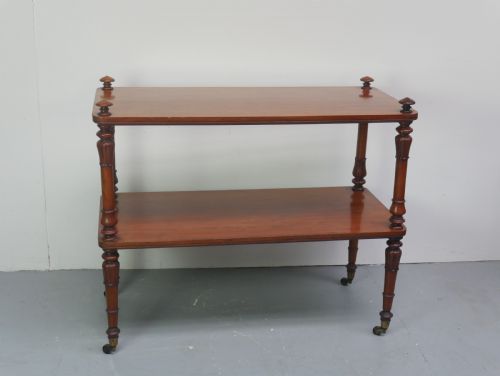
Examples span the Georgian, Regency and Victorian periods, including George III circular models and later oak or walnut buffets with shelves. Pieces range from two-tier drop-leaf tables to revolving stands and tall etageres fitted with original castors.
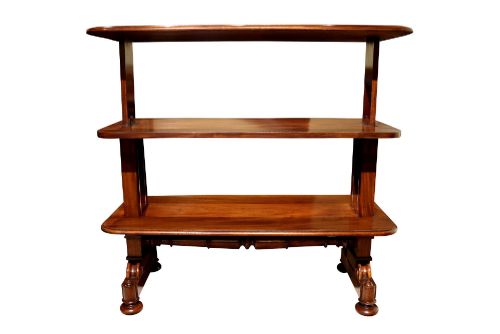
Origins stretch from the late eighteenth century through the nineteenth century, encompassing English country workshops as well as refined urban cabinet makers. The assortment includes specialised serving furniture like rise and fall buffets and telescopic tiers.
Materials and construction
Cabinet makers relied predominantly on solid and veneered mahogany, oak, walnut, and occasional exotic timbers like amboyna and teak. Surfaces frequently incorporate brass hardware, such as castors and turning mechanisms.
Construction techniques involve sturdy central tripod bases supporting graduated circular trays, alongside vertical frames for multi-tier buffets. Rotating tiers require precise pivot engineering to allow smooth turning without wobble.
Some nineteenth-century revolving stands doubled as silent dinner companions that patiently held the port while the conversation flowed.
Craftsmanship and proportion
Quality rests in the balance of the tripod base and the stability of the graduated tiers when loaded. Fine pieces display clean turning on the central pillar and well-fitted joints on drop-leaf or revolving mechanisms.
The choice of timber grain, particularly in figured mahogany, burr walnut or amboyna, dictates the visual hierarchy of the piece. Subtle details like original brass castors and crisp carving elevate a standard utility stand to a considered item of dining room furniture.
Gillows·Eadon And Son Sheffield
The Antique Dumb Waiter Table Glossary
- Dumb waiter
- A multi-tiered piece of dining room furniture used to hold food, plates and glassware. It allowed diners to serve themselves during meals.
- Tripod base
- A three-legged support structure commonly found beneath the central pillar of circular serving tables. This design ensured stability on uneven floors.
- Etagere
- A set of open shelves or tiers used for displaying or holding small items. These structures appear frequently in nineteenth-century serving furniture.
- Rise and fall
- A mechanical feature allowing tiers or sections to adjust in height. This mechanism utilises internal ratchets or screws to alter the vertical position.
- Lazy Susan
- A revolving tray placed on a table or stand to assist in moving food between diners. Versions appear in both table-top formats and integrated tiered stands.
Antique Dumb Waiter Table: Frequently Asked Questions
What is an antique dumb waiter table?
These pieces are tiered serving stands created to hold dishes, glassware and bottles during meals.
They stood beside the dining table so guests could help themselves without servants present.
How were dumb waiters used?
Hosts placed courses, side plates and wine on the separate rotating or fixed tiers.
During dinner, diners turned the shelves to reach whichever dish they required without interrupting conversation.
Where should I place a dumb waiter?
They suit dining rooms, living spaces and large hallways as serving stations or display surfaces.
Their compact footprints make them practical alternatives to sideboards in smaller rooms.
How do I date an antique dumb waiter?
Construction methods, timber choices and leg styles indicate the period of origin.
George III pieces often feature tripod bases and turned mahogany pillars, while Victorian examples introduce walnut, heavier carving and castors.