
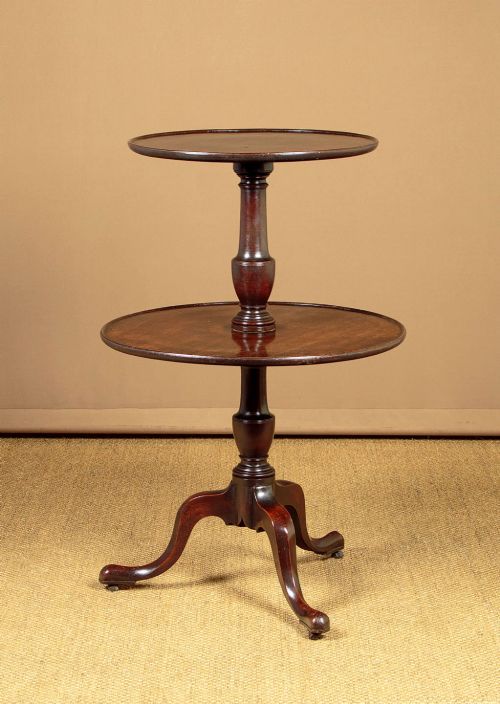
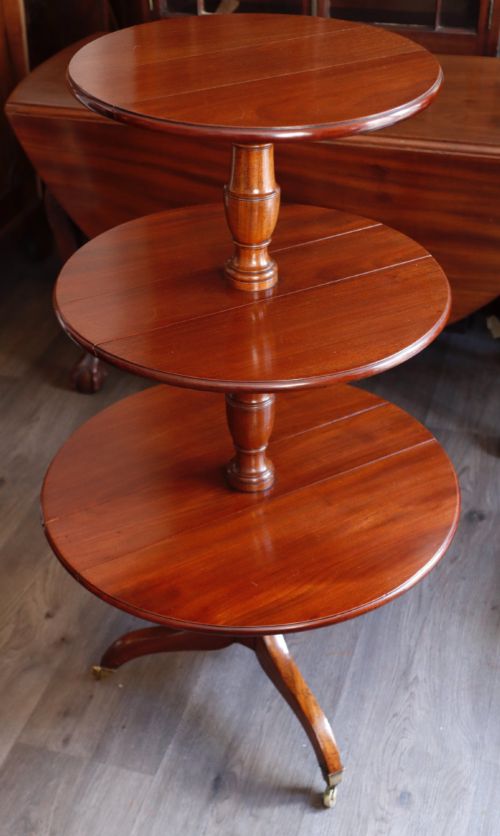
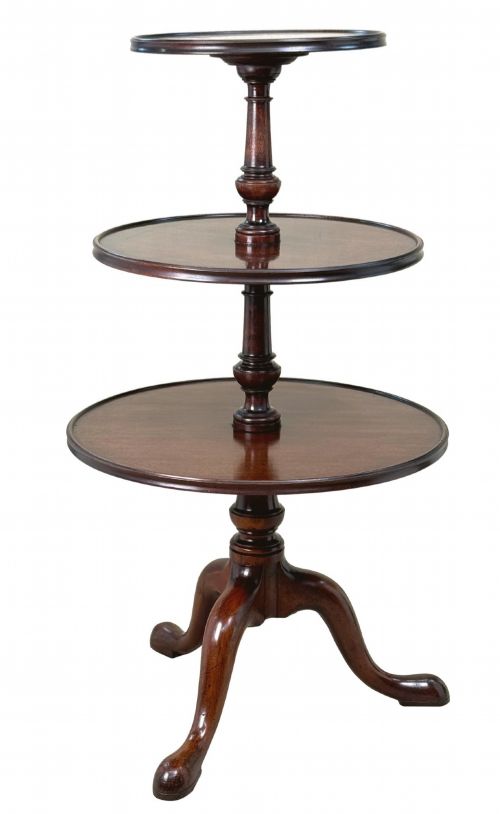
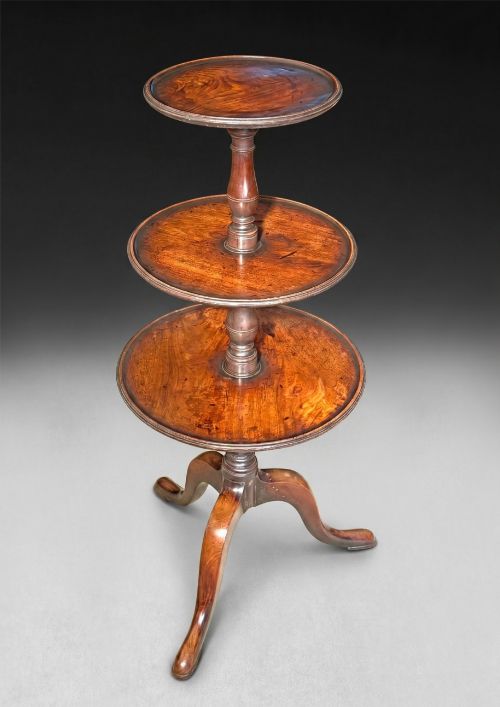


Mahogany Dumbwaiter Stand
A mahogany dumbwaiter stand is a tiered serving piece designed for dining rooms, offering graduated circular shelves for food and bottles.
Mahogany Dumbwaiter Stand
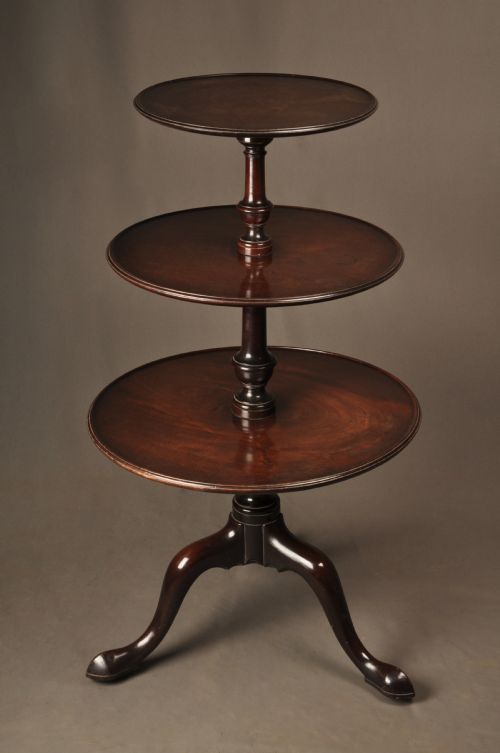
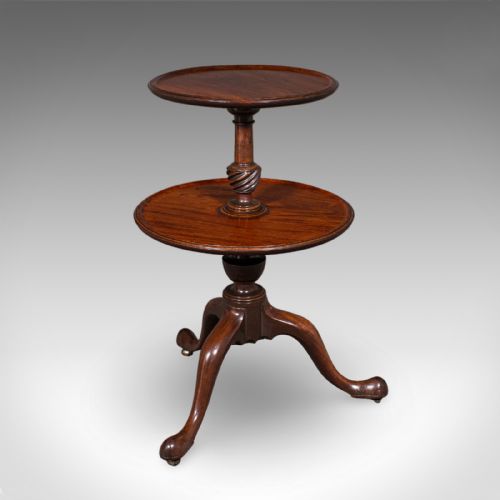
A mahogany dumbwaiter stand is a tiered furniture form designed to hold dishes and bottles during meals, keeping service items close at hand without crowding the dining table. The pieces found here range from compact two-tier serving tables to grand three-tier constructions, often featuring graduated circular trays supported by central pillars.
The most common examples on this page date from the Georgian and George III periods, though later Victorian, Edwardian, and 1920s interpretations also appear. Alongside traditional revolving and fixed tiered stands, the selection includes related forms such as lazy susans, cake stands, and side tables.
How they were made
Makers utilised solid mahogany and polished veneers, sometimes accentuating the timber with satinwood inlay, brass fittings, and ceramic elements. Construction methods involved turning central columns on a lathe and joining them securely to tripod or quadruped base legs, often fitted with castors for mobility.
Many examples incorporate graduated tiers fixed rigidly to the central shaft, while others feature revolving mechanisms or folding drop-leaves designed to save space when not in use.
Materials recorded across the inventory include solid mahogany, brass, satinwood, ceramic, rosewood, and inlaid marquetry.
What varies in quality
Quality in a mahogany dumbwaiter stand rests on the selection of the timber, the depth of the grain, and the crispness of the turned column and leg supports. Superior pieces display thoughtful proportions, balanced tier diameters, and substantial solid mahogany construction rather than thin secondary woods.
The sophistication of the revolving mechanisms and the refinement of brass or inlaid details also distinguish high-end Georgian and Regency workshops from later revival pieces.
The Mahogany Dumbwaiter Stand Glossary
- Dumb waiter
- A tiered freestanding stand used in dining rooms for holding food, glassware, and decanters. These pieces eliminated the need for constant servants during meals.
- Tiered table
- A piece of furniture featuring multiple horizontal surfaces arranged vertically above one another. This design maximises display and serving space on a small floor footprint.
- Tripod base
- A supporting structure featuring three legs radiating from a central pillar. This configuration provides stable footing on uneven floors.
- Lazy Susan
- A revolving circular tray placed on a table or stand to allow easy sharing of dishes. Examples in this category include table-top variants and dedicated stands.
- Drop-leaf
- A hinged table section that folds down when not in use. This mechanism allows serving stands to be stored compactly against a wall.
Mahogany Dumbwaiter Stand: Frequently Asked Questions
What is a mahogany dumbwaiter stand used for?
These tiered stands served dining rooms by holding extra dishes, bottles, and glassware during meals. They allowed diners to help themselves without relying constantly on servants.
Today, they function well as decorative display surfaces in living areas or as serving stands in dining spaces.
How many tiers do these stands have?
Most traditional examples feature either two or three graduated circular tiers mounted on a single central pillar. The tiers generally grow smaller toward the top of the stand.
Some variations also include drop-leaves or revolving mechanisms to make serving easier.
What periods do these pieces come from?
The selection includes pieces originating from the Georgian, George III, and Regency eras, alongside later Victorian, Edwardian, and early twentieth-century examples.
Earlier pieces typically display traditional cabinet-making techniques in solid mahogany, while later items often reflect revival styles.
Do the tiers rotate on all models?
Not all stands revolve, as construction styles vary significantly across different periods and workshops. Many traditional examples feature fixed tiers secured permanently to the central column.
Revolving versions were specifically designed to let diners spin the trays to reach different dishes easily.
How do I care for antique mahogany?
Protect the timber by keeping the stand away from direct sunlight and strong heat sources that can dry out the wood. Regular dusting with a soft cloth helps maintain the polished surface.
Applying a traditional beeswax polish occasionally will nourish the grain without building up heavy residues.