
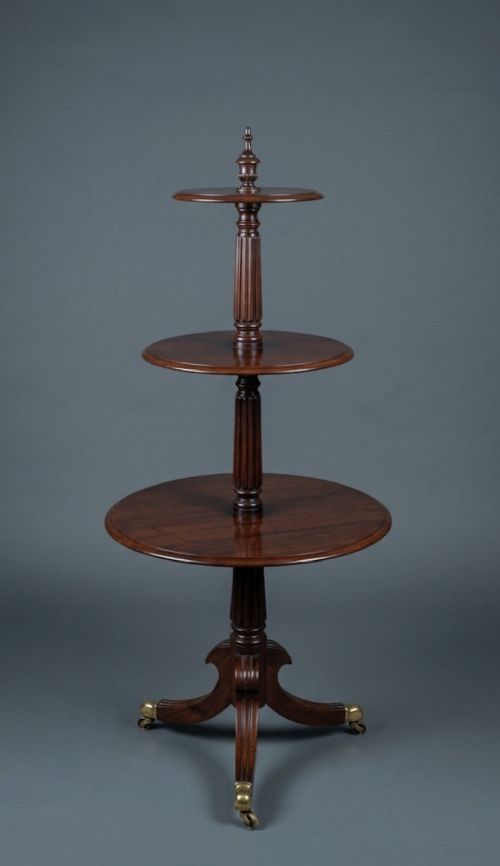


Dark Wood Server Stand
These dark wood server stand pieces are tiered dining room helpers and cabinets, designed to hold dishes and serving items near the table.
Dark Wood Server Stand
When you search for a dark wood server stand, you are looking at utilitarian dining room furniture designed to hold plates, dishes and glassware within reach of the table. The selections here span the eighteenth century, the Regency period, the Victorian era and into the early twentieth century, taking the form of dumb waiters, tiered tables, side cabinets, cupboards and cabinets on stand.
The most common version you will meet on this page is the circular mahogany dumb waiter with multiple tiers, often constructed with folding shelves or drop-leaf sections. Alongside these tiered server stands, the listings include oak side cabinets, occasional tables, and carved padauk wood buffets that serve a similar domestic function.
Origins and periods dictate the exact character of each dark wood server stand, ranging from restrained Georgian proportion to heavily carved Flemish Renaissance revival pieces and Anglo-Indian padauk furniture. Makers referenced in the tradition of these designs include Gillows, reflecting high standards of British cabinet making across the Regency and Georgian eras.
What varies in quality
The choice of timber grain and the depth of carving separate standard examples from finer pieces across these listings. Figured mahogany or richly grained padauk wood with strong natural colour variation denotes a higher grade of material selection.
Proportion and mechanical execution distinguish the upper range of server stands, particularly in multi-tiered dumb waiters with operating folding shelves or drop leaves. Crisp detailing in turned pillars and carved motifs, such as lion masks or classical mouldings, indicates superior workshop execution.
Listings feature server stands spanning the Georgian, Regency, Victorian and 1930 periods, constructed in mahogany, oak, brass, iron and padauk wood.
Gillows
The Dark Wood Server Stand Glossary
- Dumb waiter
- A tiered stand used in dining rooms to hold food and tableware without servant assistance. These server stands typically feature two or three circular graduating trays mounted on a central pillar.
- Padauk wood
- A dense tropical hardwood known for its deep reddish-brown colour and durability. It appears on carved buffets originating from Anglo-Indian trade and workshop traditions.
- Drop-leaf
- A hinged table or shelf section that folds down when not in use to save space. This mechanism is frequently found on circular Regency server stands.
- Galleried
- A low raised rim around the edge of a tray or shelf to prevent items from sliding off. This detail is common on Georgian tiered server stands.
- Cabinet on stand
- A raised storage enclosure supported by an open framework or legs below. These pieces combine enclosed cupboard space with the elevated display of a server.
Dark Wood Server Stand: Frequently Asked Questions
What is a dumb waiter?
A dumb waiter is a multi-tiered freestanding server stand used in dining rooms to hold dishes, glasses and serving items near the table.
These pieces typically feature graduating circular trays mounted on a central turned pillar and tripod base, allowing diners to help themselves during a meal.
How were server stands used?
Server stands were positioned beside the dining table to hold extra plates, silverware, and dishes during long formal meals.
By keeping serving pieces close at hand, they reduced the need for servants in the dining room throughout the Georgian and Victorian periods.
How do I identify a Georgian server stand?
Georgian server stands are typically constructed from mahogany and feature clean proportions, turned central columns, and tripod legs with pad or spade feet.
Many examples from this period include galleried edges on the tiers to secure plates and glassware.
What is padauk wood?
Padauk wood is a heavy, durable tropical hardwood with a distinctive reddish-brown tone that deepens with age.
It appears on nineteenth-century pieces influenced by Anglo-Indian trade, often featuring deep, intricate carving.